North Carolina Quilt Symposium

I recently spent 2 weeks mostly doing quilty things rather than cooking, doing laundry, hanging on the internet, etc. The time ended with the North Carolina Quilt Symposium at Lake Junaluska, NC.

View from the hotel at Lake Junaluska

This was one of the best events I have ever attended in terms of the quality of instruction. The friends who went with me agree, so it wasn’t just me in my little bubble 🙂

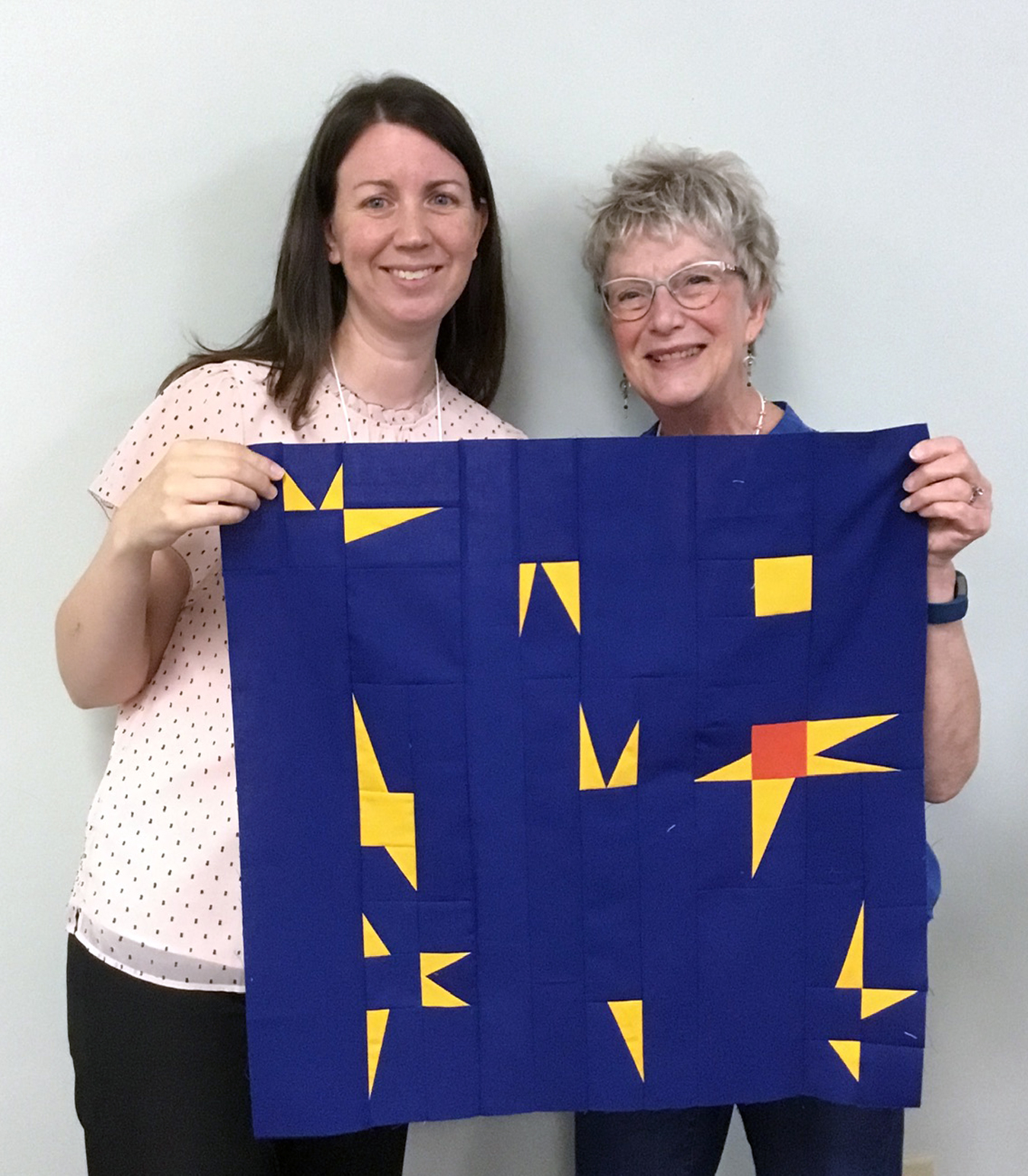
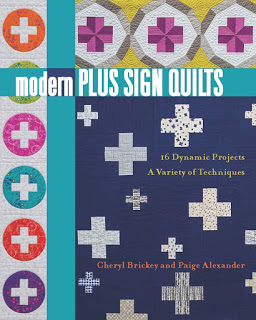
I took a class with Cheryl Brickey (see her website here), who was a wonderful instructor and showed us her personal method of designing modern-traditional quilts using EQ8 (Electric Quilt).  I have used EQ for ages (OK, since EQ5, and they are now up to EQ8) but she showed me some cool new tools I had never discovered.

Cheryl and me with the partially completed quilt I designed and made in class

My second class was with Lyric Kinard.  (Her website is here.)  I learned a lot about creating portraits in fabric.  Here is one that was done for practice at the beginning of the class.  It’s supposed to be the woman who was sitting across from me, but I did not take a photo of her for comparison 😀

This was just a quick practice piece; I promise the woman didn’t really have blue skin!

Lyric went on to teach a much more elaborate and realistic way to do a portrait in fabric, but mine isn’t even far enough along to show.  The whole class was useful and Lyric is an encouraging instructor.

The details of next year’s NC Quilt Symposium are not finalized, but if you want to know more about the symposium and what was available this year, visit the website at NCQSI.org.  I hope to see you there next year, especially, because I have agreed to help recruit teachers!  Come join the fun!

I was able to interview 3 of the teachers at NCQS, so look for posts about them coming up in the next few weeks.

One Mistake Makes Two Quilts!

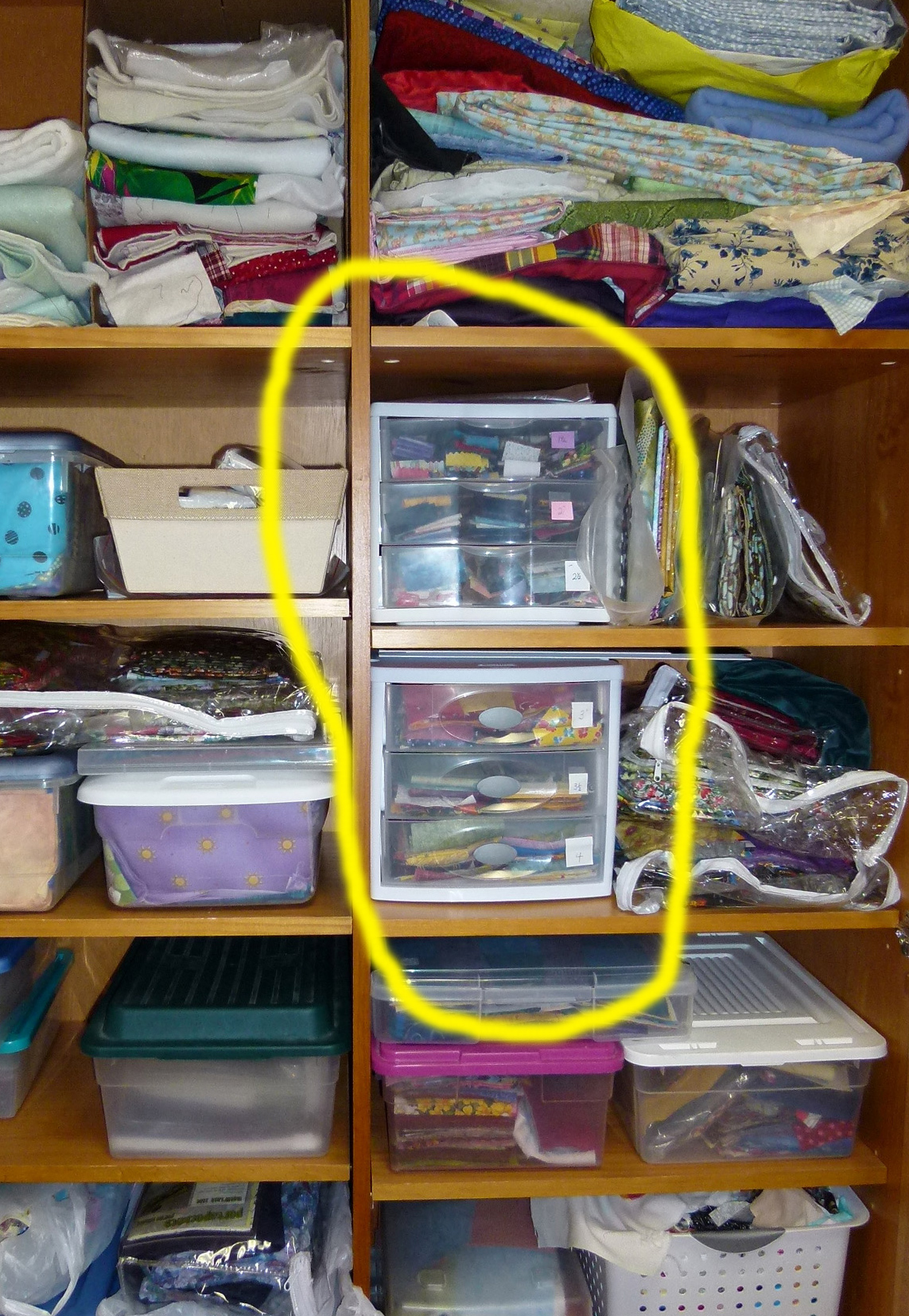
A while ago one of my blogging friends posted a picture of her “red rails” quilt.  She makes these quilts to use up 1.5″ x 3.5″ scraps, so it seemed perfect for me.  I cut my scraps into strips varying from 1.5″ to 4.5″ in width and store them in drawers, sorted by size in 0.5″ increments.  Here are some of those (stuffed) drawers:

Since I had a lot of 1.5″ strips and wanted to make another donation quilt, I got started.  Her quilt is “red rails” because the center strip of every block is red.  I have a lot of blues, so mine became “blue rails”.  I drew it with EQ8 to start with, to be sure I knew what I was doing:

Blue Rails, drawn in EQ8 based on a quilt by Nann at withstringsattached.blogspot.com

I got busy sewing 1.5″ strips together in sets of 3 and cutting the sets into 3.5″ squares.  Then I started making the blocks.  Before I knew it, the 1.5″ bin was almost empty and I had a lot of little 3.5″ blocks.

I joined them in groups of 4, and that’s where I went wrong.  It turns out there is a right way and a left way for the blocks to twirl in sets of 4, but I didn’t realize that at first!

Trust me, no matter how you rotate these two blocks (drawn with EQ8), they do not match up!

So, I will have TWO blue rails quilts, one rotating in each direction.  Here’s the first one, which I am donating this month.  Another doggone learning experience 😀

Blue Rails donation quilt, about 40″ square

What have you learned lately?


Clothesline Basket Fun

It’s been over a year since I purchased the Indygo Junction pattern for a basket made of covered clothesline, so I expect everybody else in America has tried this already. Anyway, it was fun.

The pattern gives basic instructions for starting the basket, shaping the bottom, and then shaping the sides.  Instructions are given for two types of handles, and for making the lining.  The basket itself was easier than I expected, then the lining was a little tricky.  Probably my fault because I changed the instructions 😀

My husband sometimes asks, “What is this one for?”  The answer is, “For making something I’ve never made before.”  Which means I have no idea of a use for this basket, but I do want to make at least one of (almost) everything just for the experience!  (Bonus: this used a lot of scraps!)

What about you?  Do you have a plan for everything you make?

I Dislike Quilt-As-You-Go

Quilt-as-you-go (QAYG) has been around at least since the 1970s, and I have tried it in several forms.  Back when I wanted to use high loft batting, I made this quilt in sections and joined them using Georgia Bonesteel’s method.  The backing seams were sewn by hand.  It worked out fine, but that was a lot of hand stitching.

Queen size quilt made by qultl-as-you-go method

Jewel Box, queen size, made in 2003

More recently I read about using thin batting so pieces can be joined with batting in the seam.  Unfortunately, this method suggests quilting the front pieces WITHOUT backing, then tacking on a back after assembling the front.  That means most of the quilting is hidden from the back; the only thing that shows is the stitching used to attach the back over the actual quilting!

I’ve also seen QAYG done by using batting rather than batiste as a base for string piecing.  This means no quilting shows on the front!

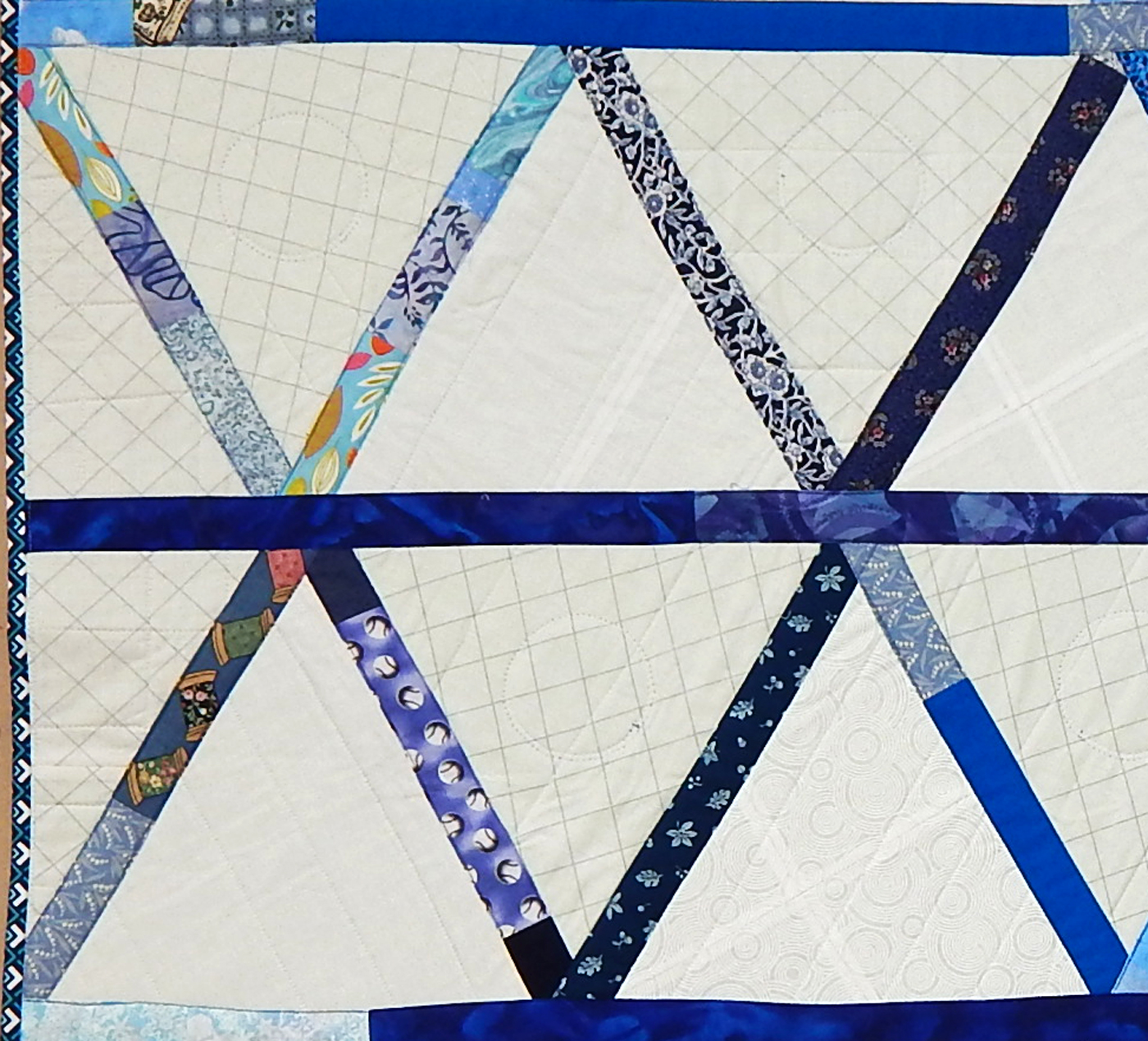
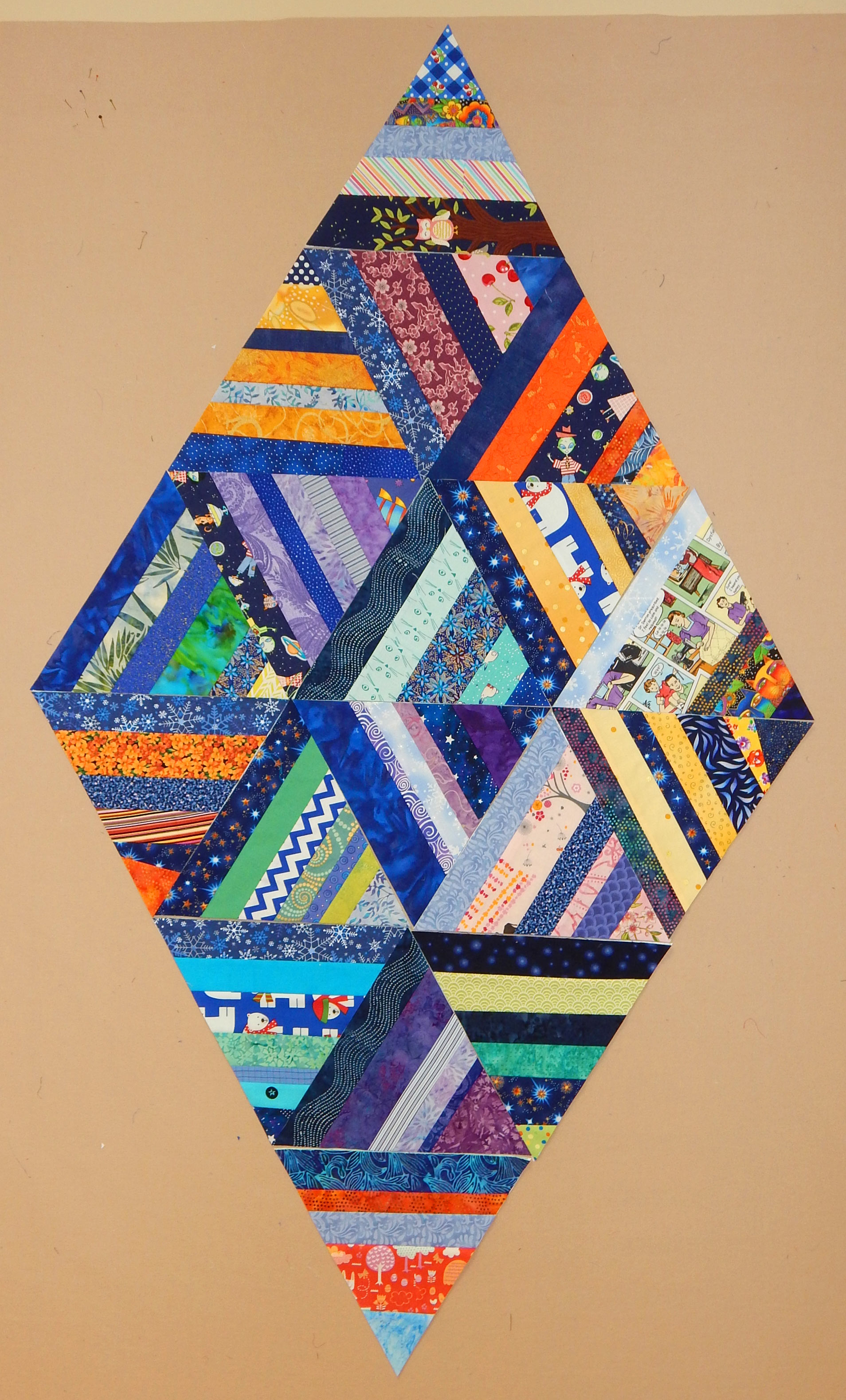
The more I read about QAYG methods, the more I didn’t care for any of the options.  I decided to re-visit it anyway because students had asked for a QAYG class.  I chose the string piecing on batting option, but made the blocks with the backing included so the quilting would show on the back.

Back of quilt, showing quilting lines

The quilting is meant to show on the back, though white thread on white fabric doesn’t show much!

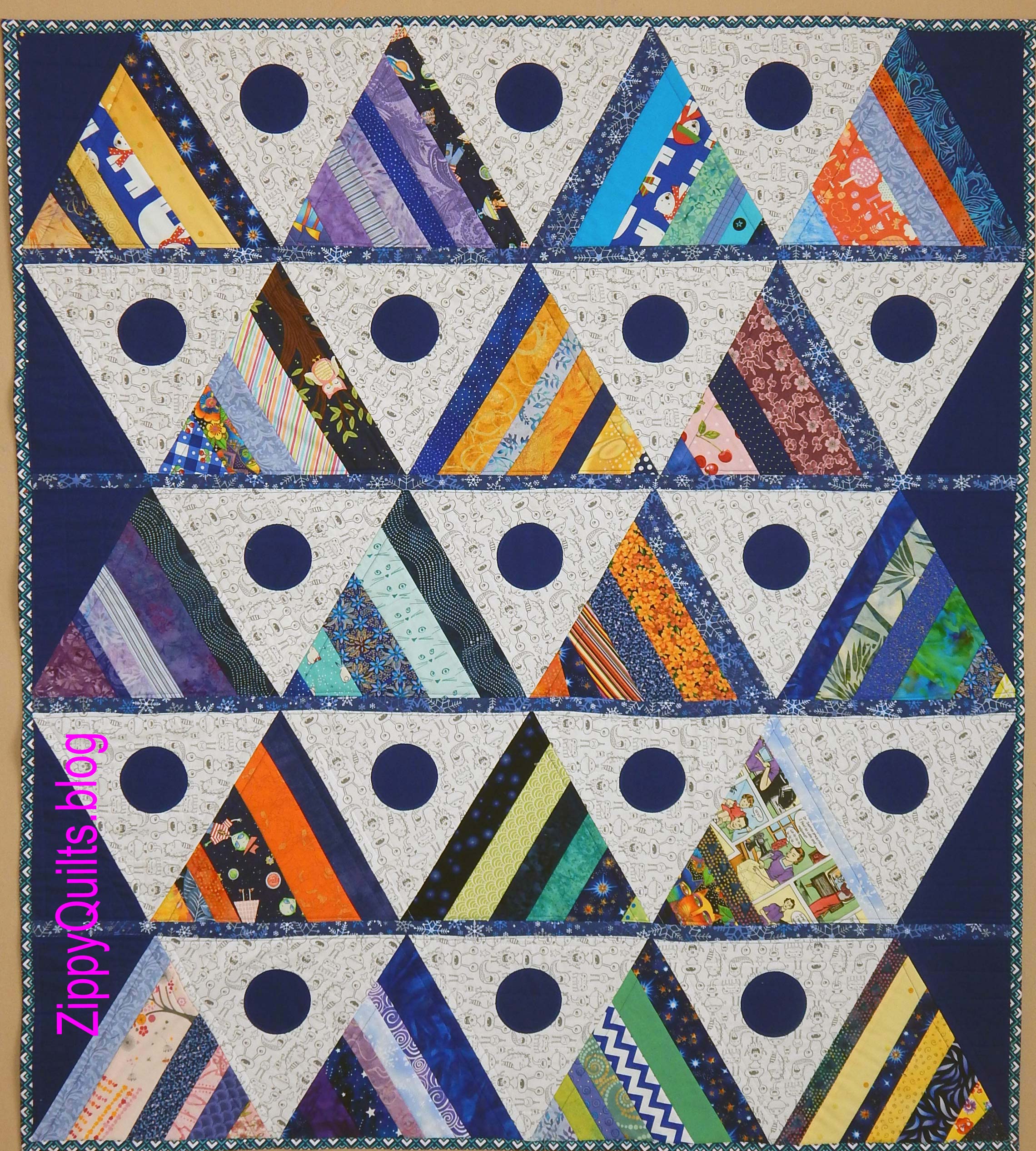
I kind of liked the triangles arranged like this on the design wall, but decided to save this option for when I can make the whole thing look 3-D by careful placement of color.

Here is the front of the finished quilt:

After joining the triangles with seams that included front, batting, and back, I covered the seams in back with fabric strips.

The result was awfully bulky.  Next time I may just settle for the “new” method that doesn’t show much quilting on the back.

Well, another lesson 😀  The next attempt will be closer to perfection!

Current Series, Parts 4 and 5

I’ve been making a series of improvisational blocks from a bundle of fat eights and a single solid blue fabric, which is intended to tie them together visually.

Each set of 4 blocks has a theme, such as triangles from a strip set in this one

I trimmed each block to 6-1/2″ wide; the length is random

and random arrangement of free-cut squares in this one.

All blocks are 6-1/2″ in one dimension to give them some chance of fitting together eventually!
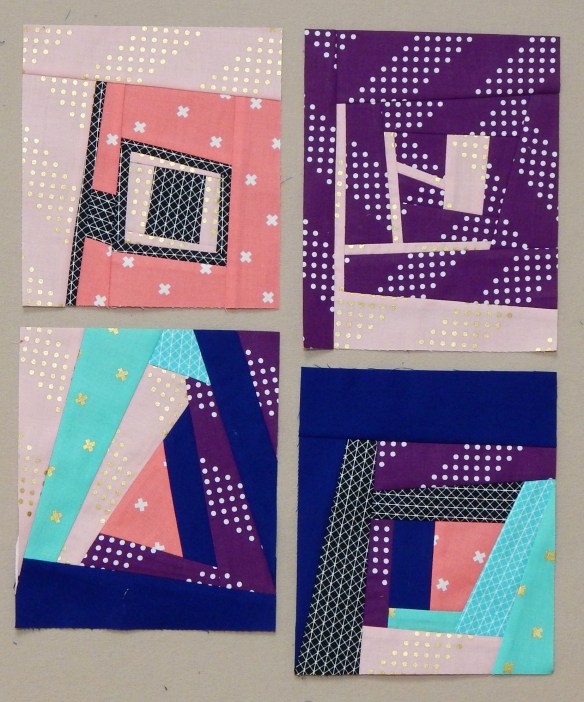
Set 4 had the theme “log cabin”, and I am fond of little lines in my designs, so it had some of those, too:

“Lines” was the theme for set 5:


Despite using a bundle of coordinating fat eighths and a unifying solid, I think these are getting to be too diverse to go together well. I’ll try to attack that problem in the next set. Please stay tuned, and share any suggestions you may have!


Best Bag Handles

I can’t seem to quit making tote bags, and I’m especially happy to have discovered foam batting, which makes them nice and stiff and doesn’t need to be quilted unless you just want to.

This is one I made several years ago

As a bonus, I’ve discovered that foam batting makes terrific handles for large totes.  I just wrap fabric around it and sew it down, avoiding the awful task of turning a fabric tube inside out to make a handle.  The resulting handle is quick to make and comfortable to carry. Here’s how:

Cut 2 pieces of foam batting about 1-1/2″ wide and about 1″ longer than you want the finished handles to be.  Cut fabric for handles about 4-1/2″ wide and about 3″ longer than the finished handles will be.

Use a heat-resistant straight edge to turn under a crisp 1/2″ on one long edge of each handle.  (I’m using a metal tool made by Dritz for turning up hems.)

Now turn the same long edge under an additional 1-1/4″ and press well.

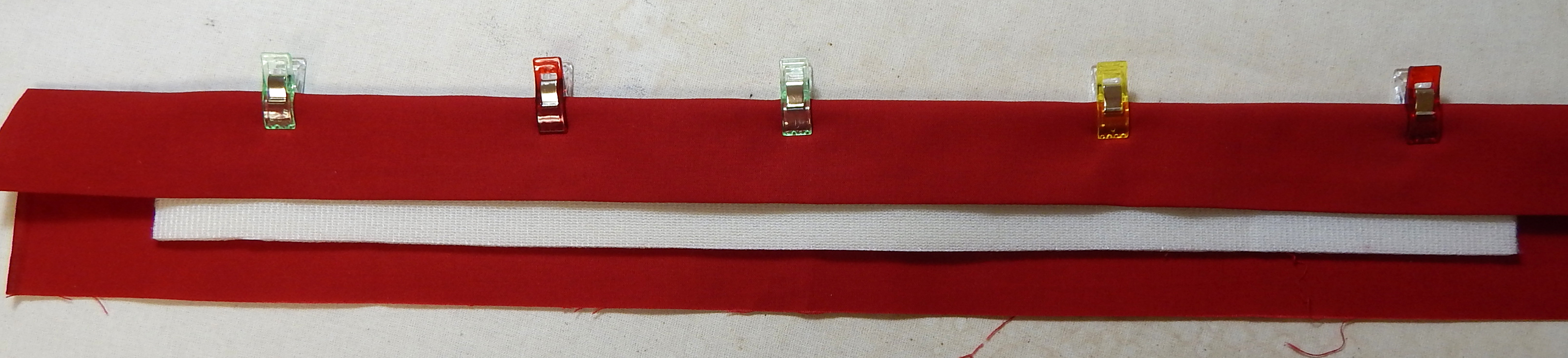
Tuck the batting into the handle, centering it between the ends, so that one long edge of the batting is firmly inside the handle.

I like to use clips to hold everything in place

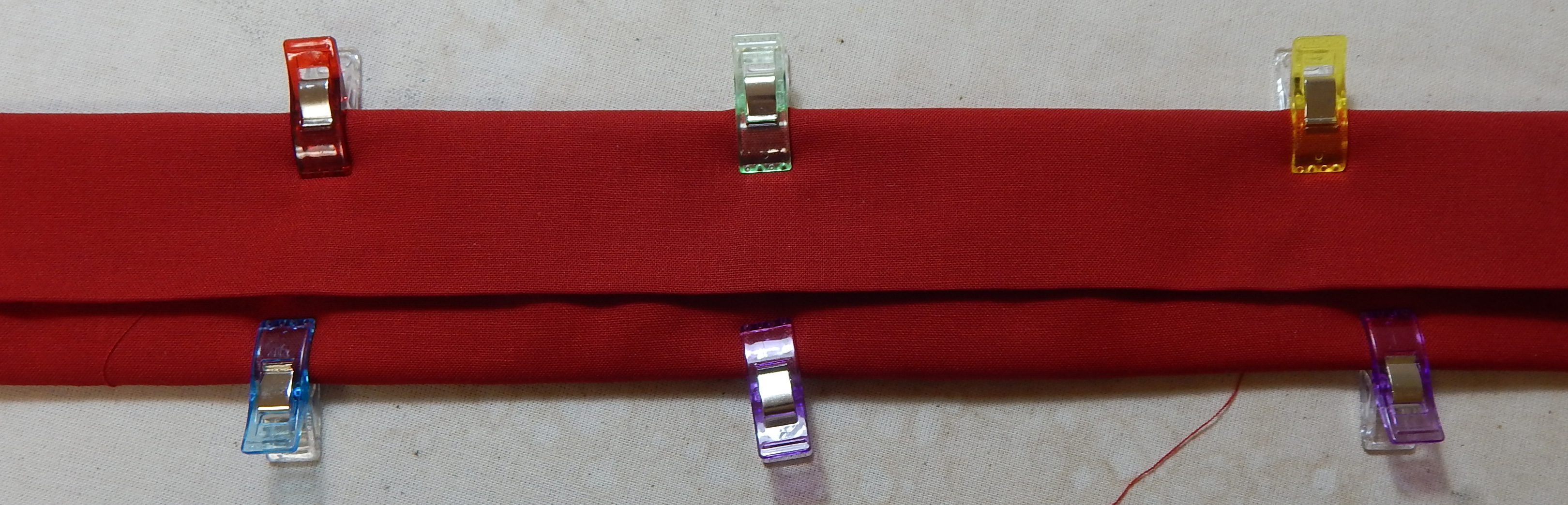
Now turn the remaining long edge of the handle fabric snugly around the exposed long edge of the batting and tuck this raw edge under the folded 1/2″ edge.  The ends of the handle will have raw edges, but the long edges will all appear finished now.

Topstitch close to the folded edge.  Place a second line of stitching near the other long edge of the handle so that you have a nice professional-looking handle.

Attach handles as usual, allowing about 1/2″ of the batting at each end to be sewn down to the bag.  The rest of each end, without batting inside, will go smoothly into the side of the bag so you won’t have much of a bulge where the handles are attached.  Sew that down, too.

And you’re good to go!


Donation Quilt Catch-Up

I now belong to THREE groups that make donation quilts, and it may be a bit much.  I’ve decided to focus on the group I’ve been working with the longest, both because it was the original and because we donate the quilts locally.  (I fear there’s some truth to Garrison Keillor’s quip that most donation quilts sent to other countries go to hot climates where their best use is as compost.)

I see from my notes that I fell behind on donation quilts over a year ago due to being over-committed.  Duh.  Anyway, here are my recent attempts to catch up.

I found this panel in the SCRAP BIN at a shop where I teach, so I got it for $1 an ounce! The finished quilt is 34″ x 44″.

This top was started over a year ago when I wanted to experiment with half-rectangle triangles. The finished quilt is 40″ x 48″

This was made from slabs swapped in one of my groups. I spy some orphan blocks incorporated into slabs!

This one was done for leaders and enders, and is going to have to be entitled “Nobody’s Perfect”! Finished size is 34″ x 39″

I made this after starting the blocks as a class demonstration last time I taught “Twinkle”. Finished size is 40″ x 40″

I can just hear somebody saying, “Well!  That certainly is a variety!”  It would be more efficient to make the same pattern multiple times, but I just can’t do it.

What are your favorite donation quilt patterns?


Making a Strip Set

I was excited to get Maria Shell’s book Improv Patchwork a while back, because I’m an admirer of her quilts.  (This picture of the book is from her website, where you can order an autographed copy of the book.)

I first encountered her work when I saw this quilt:

Maria Shell

No Borders Treasure Map, by Maria Shell, from her blog

The quilt above appeals to me because I am OVER all the plus quilts that have been everywhere for years now, and Maria’s quilt is a fun allusion to the plus sign without being the same-old-same-old.

I read Maria’s book as soon as it arrived,  She has lots of suggestions, including making strip sets and cutting without rulers.  Just for starters I made a strip set.

I based the arrangement of strip sizes on the first few bars in the bar code for the word “quilt”.  Yes, I’ve done something similar in the past when I used a QR code from Planned Parenthood of the Greater Northwest’s condom campaign to make this quilt.  This time, with the bar code, I didn’t even try to get the whole code in, or to make it scan.

I like it!  What I don’t know is what I’m going to do with it!  It seems to need to incubate for a while.  Any suggestions?

To be continued…

A Travel Sewing Machine

As I was carrying my sewing machine up the steps a few weeks ago, it occurred that the price of repair for my shoulder (if I hurt it, which I haven’t yet) would be a lot more than the price of a lighter sewing machine for travel. Of course, I have a wonderful rolling travel case for the heavy machine, but that case doesn’t do stairs.

I considered for quite a while, since it seems to me that my home already contains enough “things”. I decided that, since I’m planning more sewing travel in the coming year, a lighter machine was worth the investment.  (A little more self-justification: I was the only serious sewist I know who owned only one machine!)

After some research, I settled on a Bernette 33, which is made by Bernina and sold by my Bernina dealer.  It is just what I was looking for:  smaller, lighter, with no computer parts to worry about.

Bernette 33, my new travel companion!

So far it performs just fine.  I’ve mainly used it for piecing, since that is most of what I do when I go to sewing gatherings or teach.  It certainly doesn’t feel as sturdy or sew as smoothly as my Bernina, but I think it is “just right” for travel.  And the price was right, too.

Of course I made it a cover to match the bag that carries its accessories:

This fun fabric came in prints of two sizes, so I had one of each to use

How many sewing machines do you own?


Twinkles All Around

Twinkle is an attractive and easy quilt by Swirly Girls Design, and I taught it recently at Studio Stitch in Greensboro. We used the Tucker Trimmer for the half square triangles (HSTs) and everyone seemed to have a good time.

First, here’s my shop sample in a glamour shot:

Twinkle, a pattern by Swirly Girls Design, was made because I had some fabulous leftover fabric

Then, here are some of the wonderful blocks made by the people in class.  I’m sure I took more pictures, but apparently my camera quit part way through!

This one was two-color instead of scrappy and it worked quite well

BJ got several blocks made. Look closely and you can see the astronaut near the upper right corner

Arranging the stars on a design wall before sewing them together was very helpful–I don’t think anybody made a mistake!

And a few more for good measure!

Isn’t it fun to see everyone’s individual choices!

My next class at Studio Stitch is basic binding on March 14.