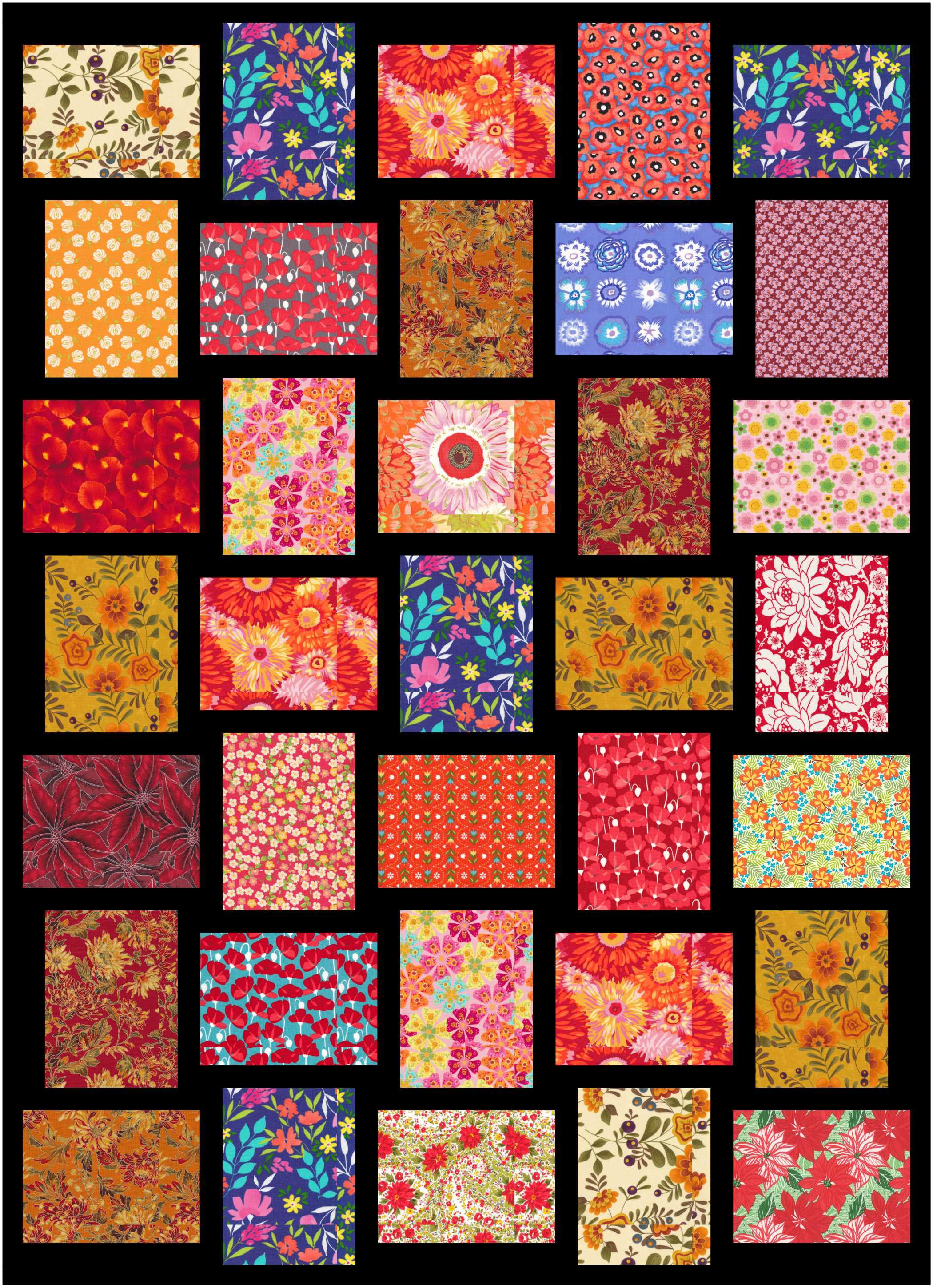
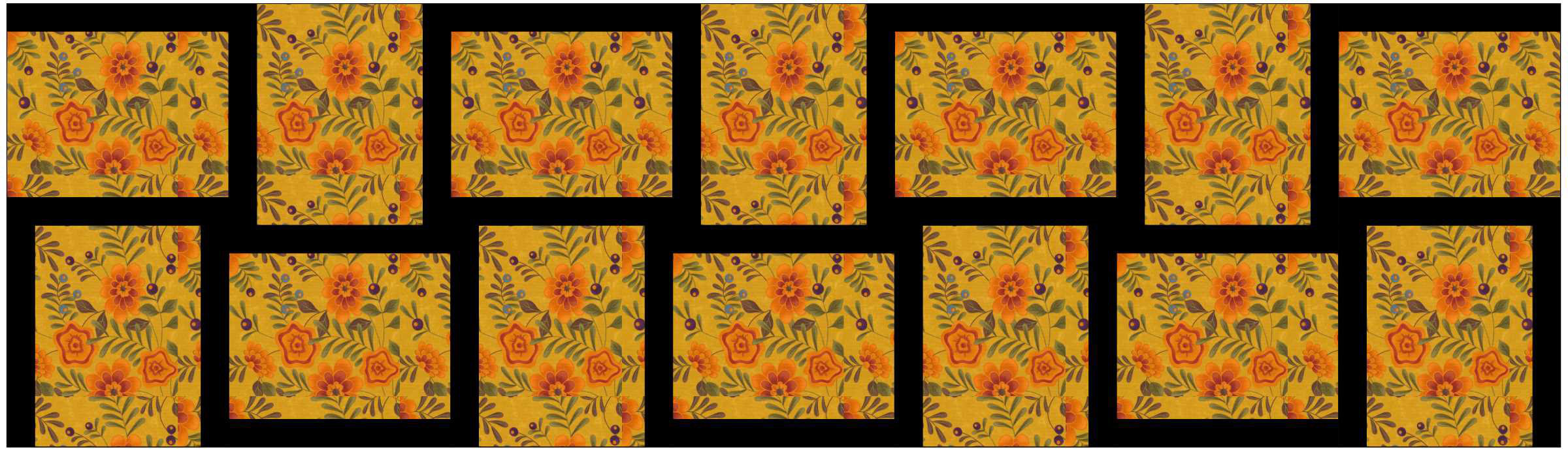
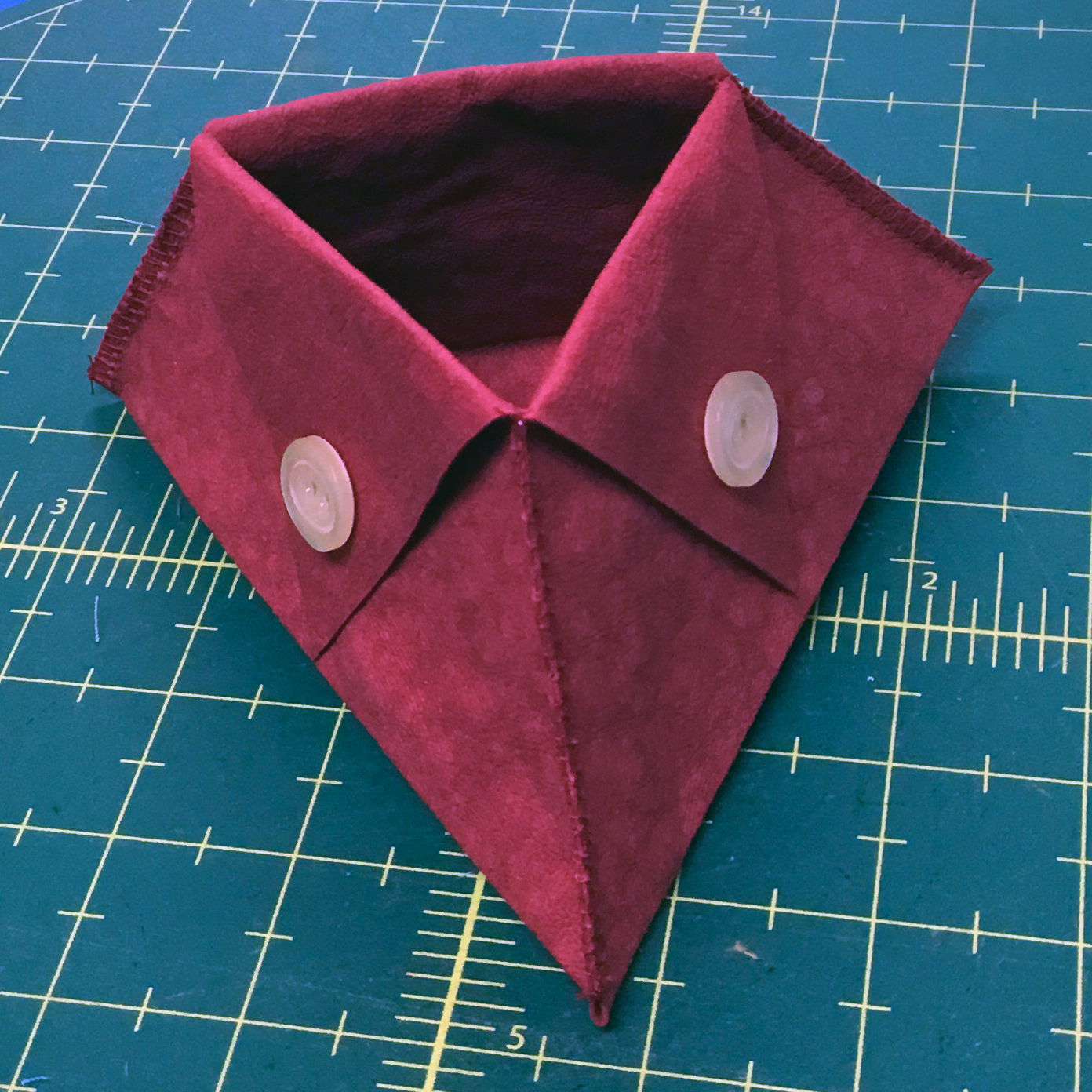
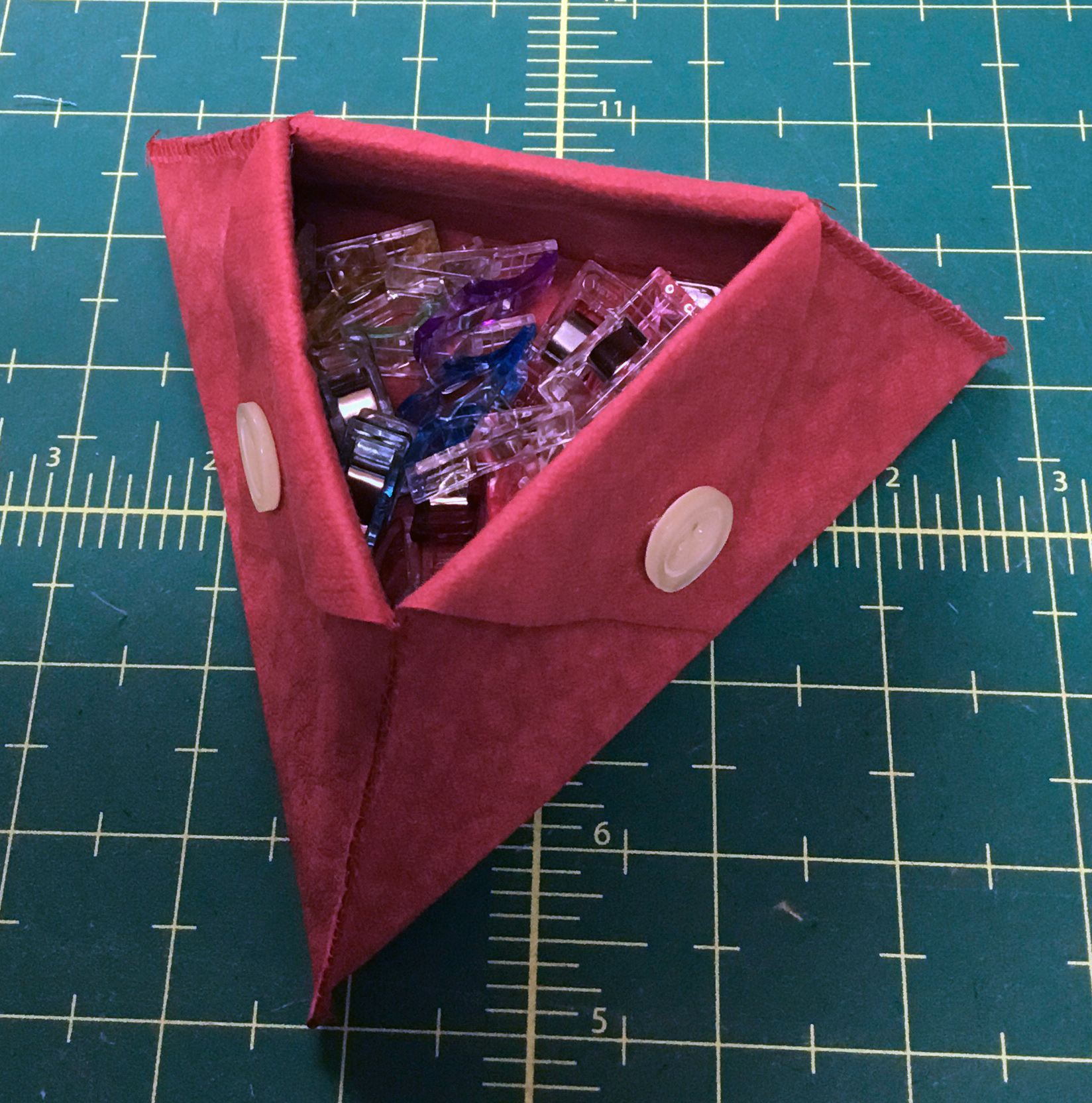
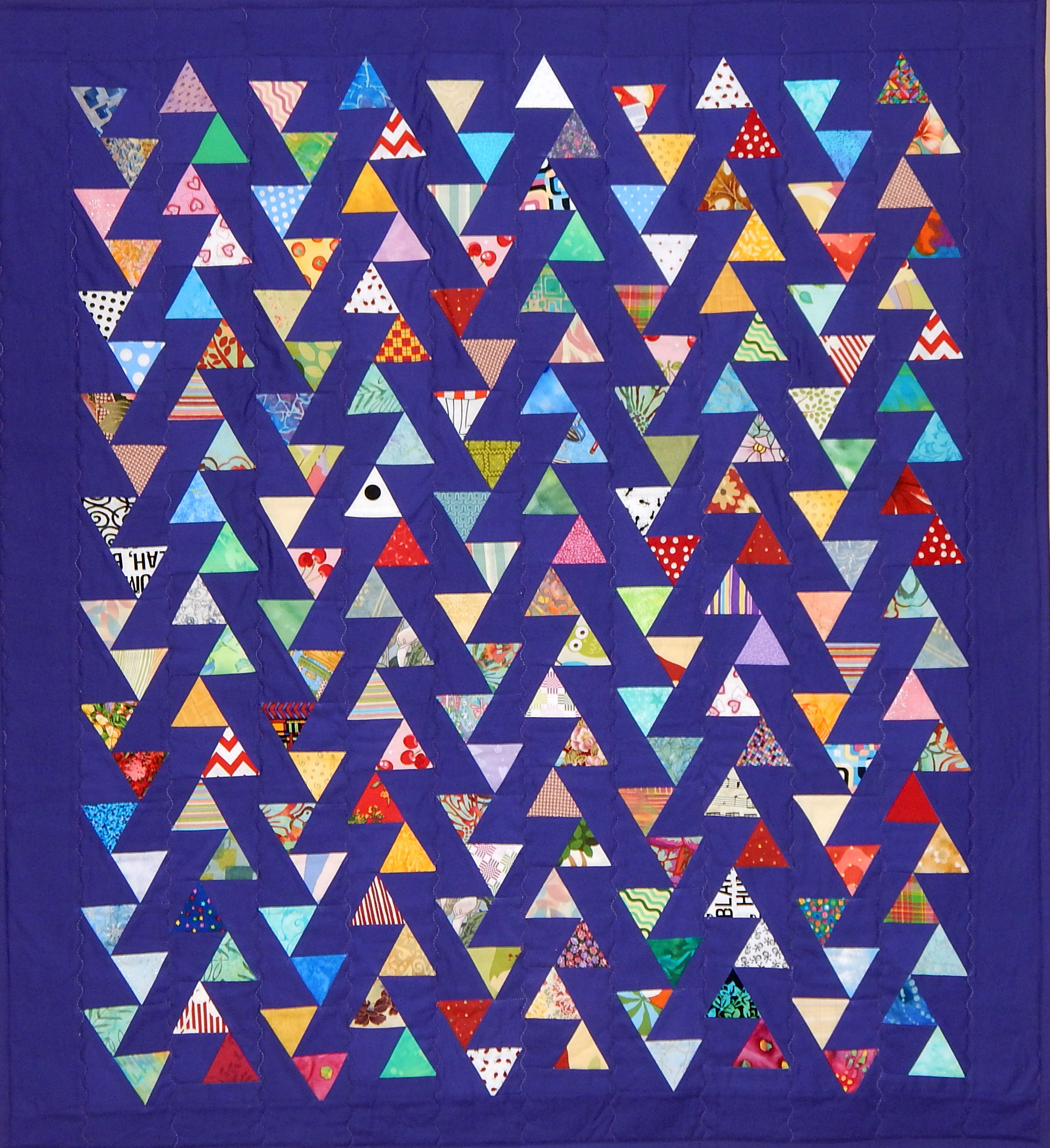
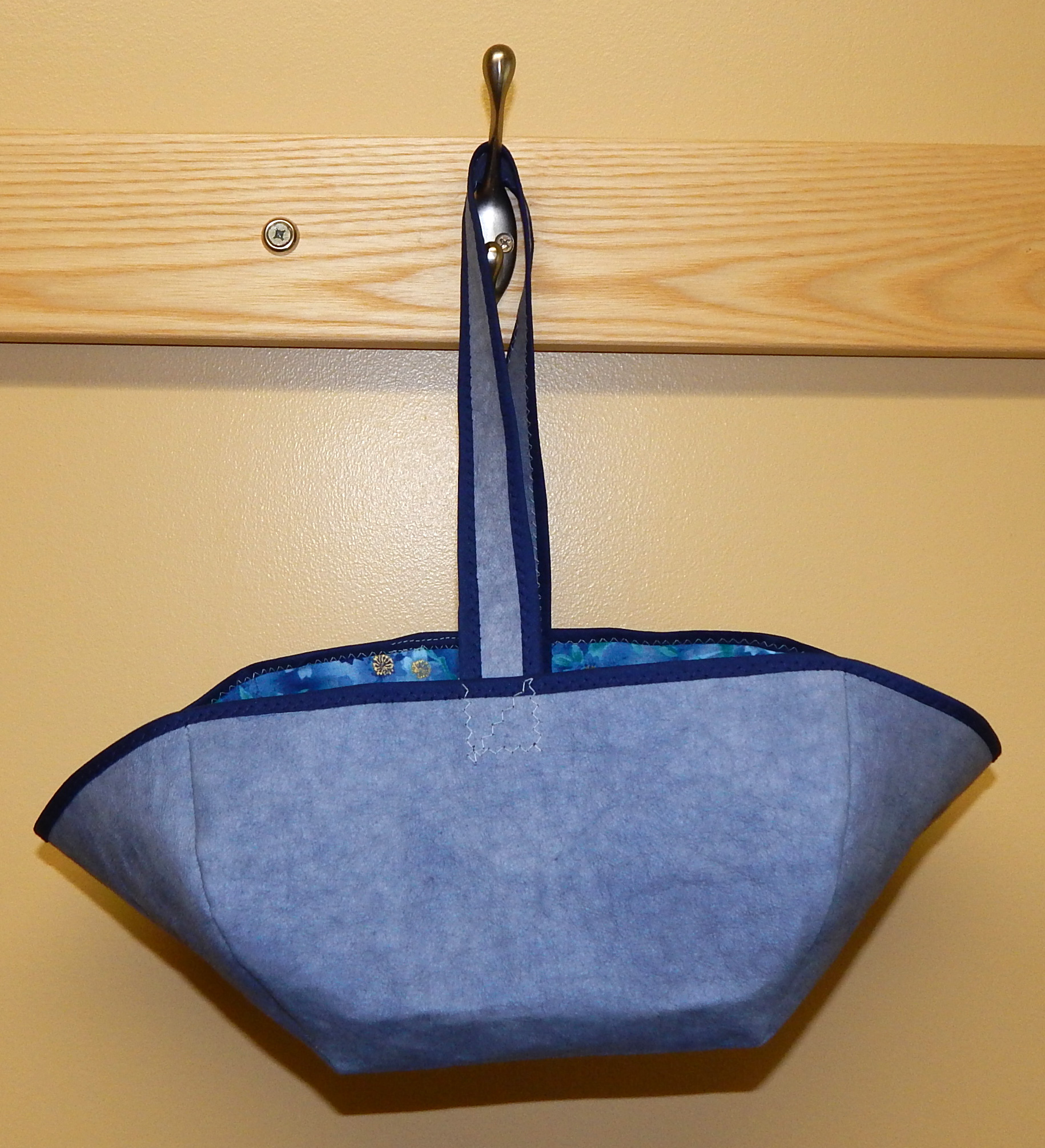
When I mentioned recently that I was making a basket to hold scraps as I work on a project, my blogging friend Elizabeth asked how I decide what to do with the scraps. This first post will be about how I design scrap quilts; the second in the series will be about how I use inspiration from other quilters; the third will be about how I modify published patterns for scrap quilts.
My first improvised scrap quilt was made close to 20 years ago. I absolutely just starting sewing scraps together and kept it up until I had a collection of blocks. The scraps were all from an Amish-style quilt I had made, which kept the blocks cohesive.

I then added 2 shades of yellow for sashing.
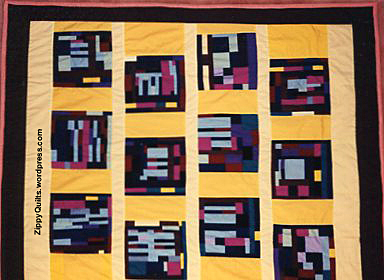
Nothing Is Wasted, my first improvisational quilt, 2001-2002
Using scraps from a single project is one way to be sure the scraps all play well together, assuming the fabrics were well coordinated in the original project. After making the quilt below for Modern Quilts Unlimited with some yummy Cotton Couture fabrics provided by Michael Miller…

My Zippy Star Quilt and Pillow as shown in Modern Quilts Unlimited, Summer 2014
I started sewing all my tiny scraps together and added a tiny paper-pieced star to make a donation quilt for the Quilt Alliance annual contest:
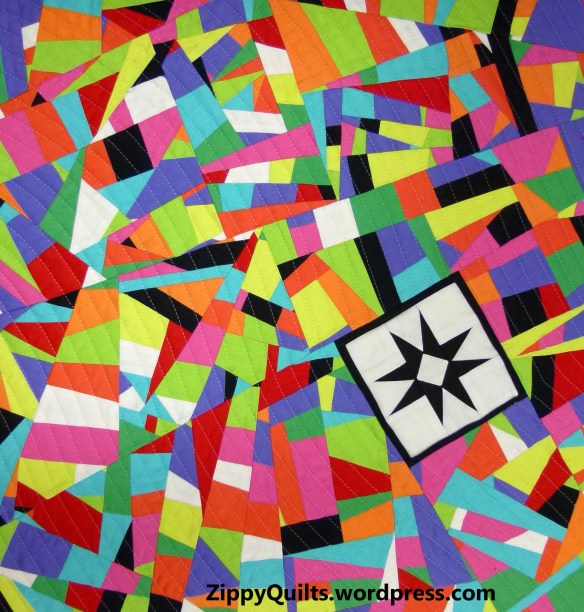
Confetti Star, 20″ x 20″, 2014. Some of these pieces finish less than 1/4″ square
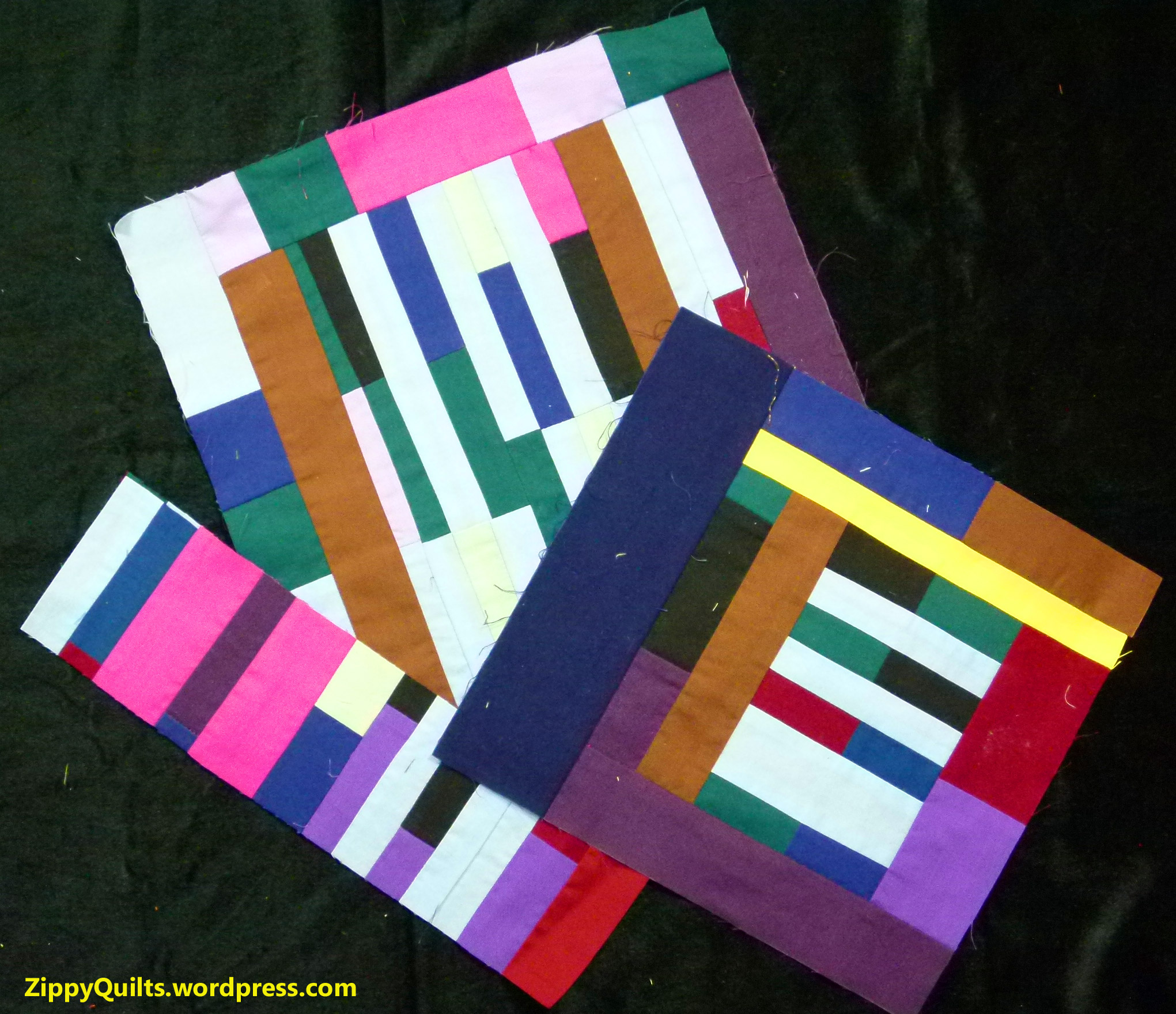
I then started combining scraps of a single color to make blocks. I called them “slabs”, since the idea of making single-color scrap blocks came from Cheryl Arkison (though hers are much more orderly than mine). Here is one example of a quilt made from these single-color blocks: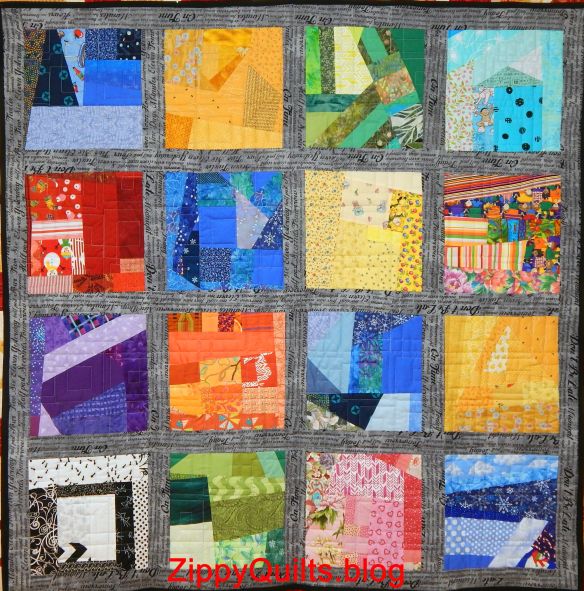
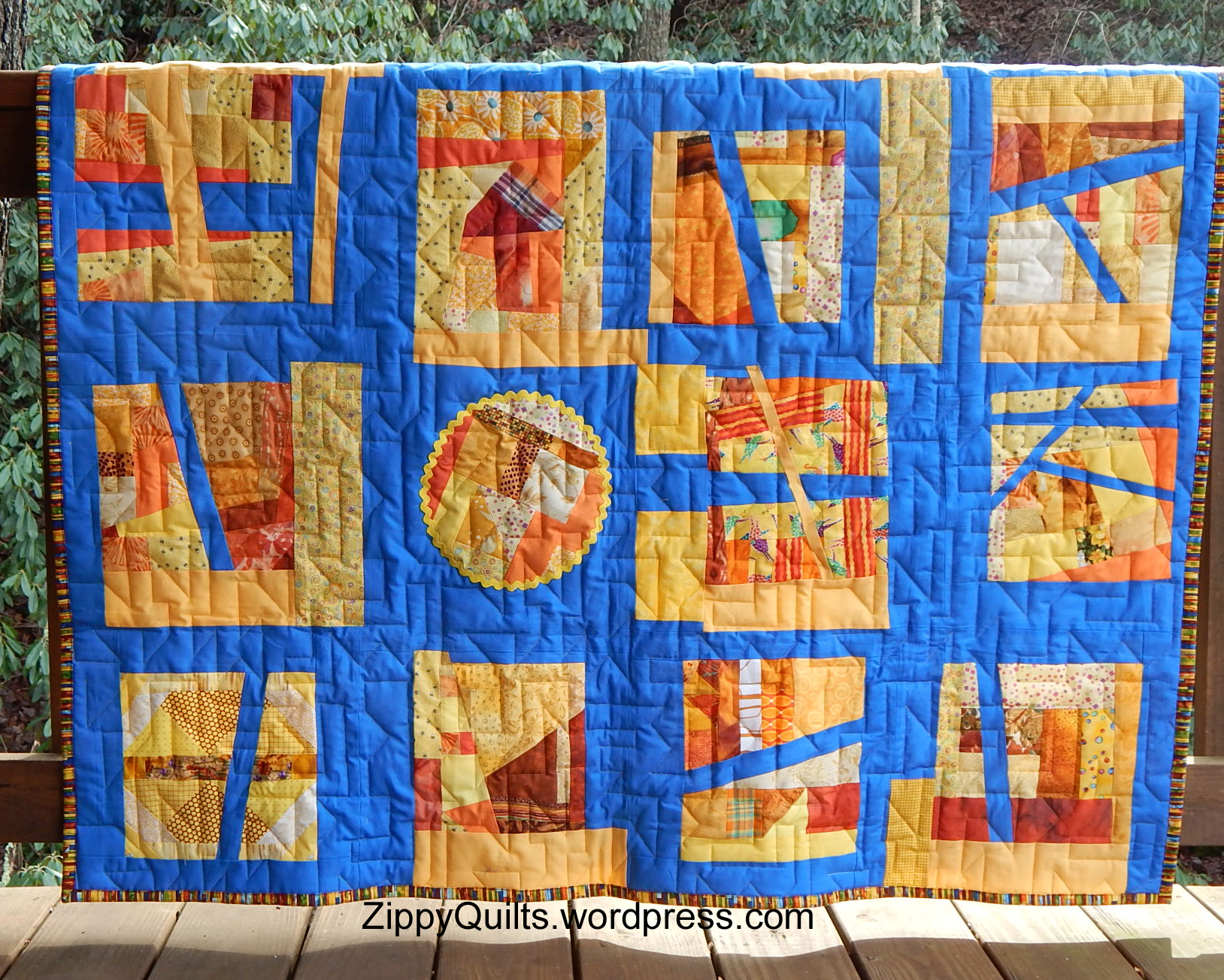
On at least one occasion I decided a collection of yellow and orange scrap blocks were booooring, so I cut them up and inserted some bright blue before combining them in a quilt:
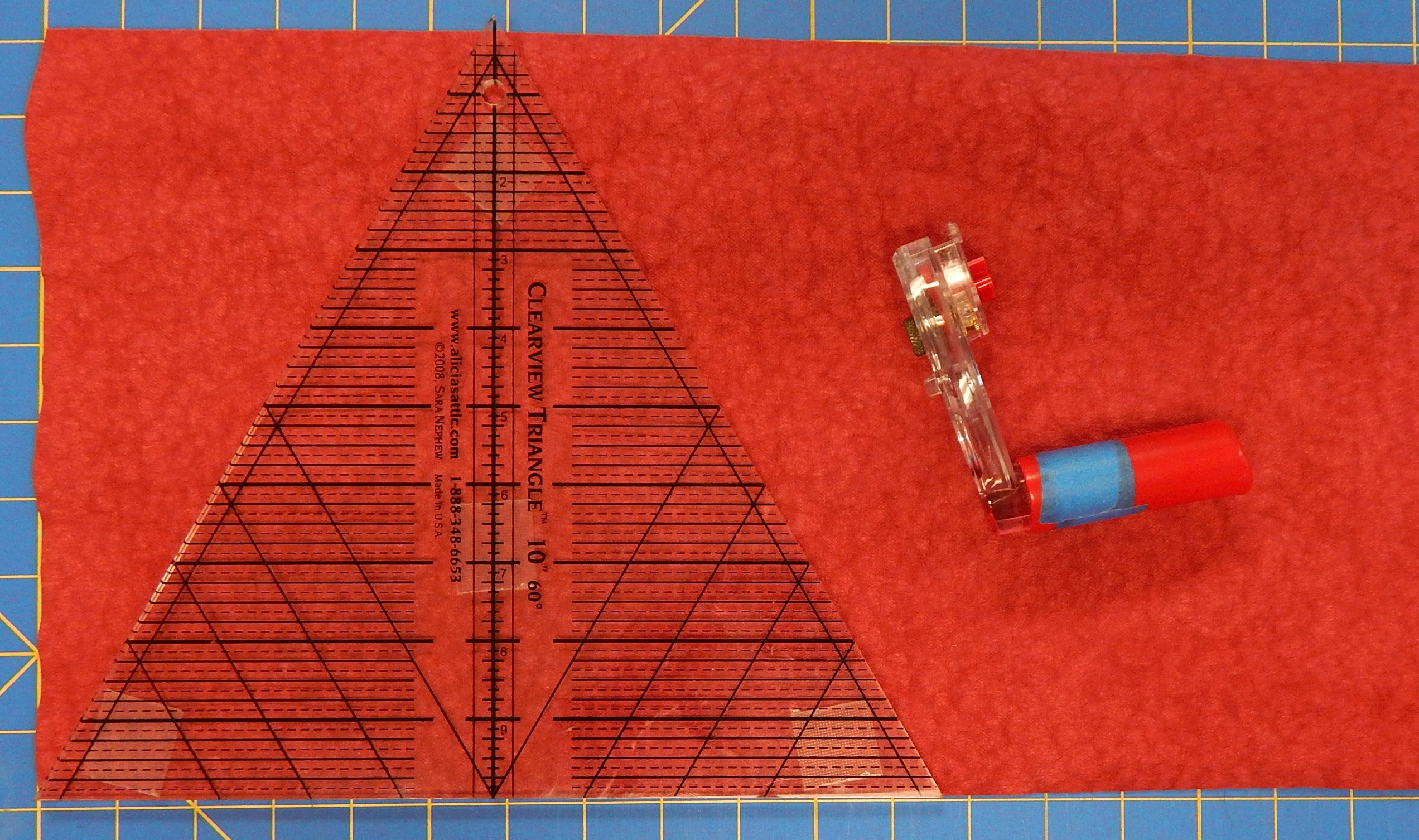
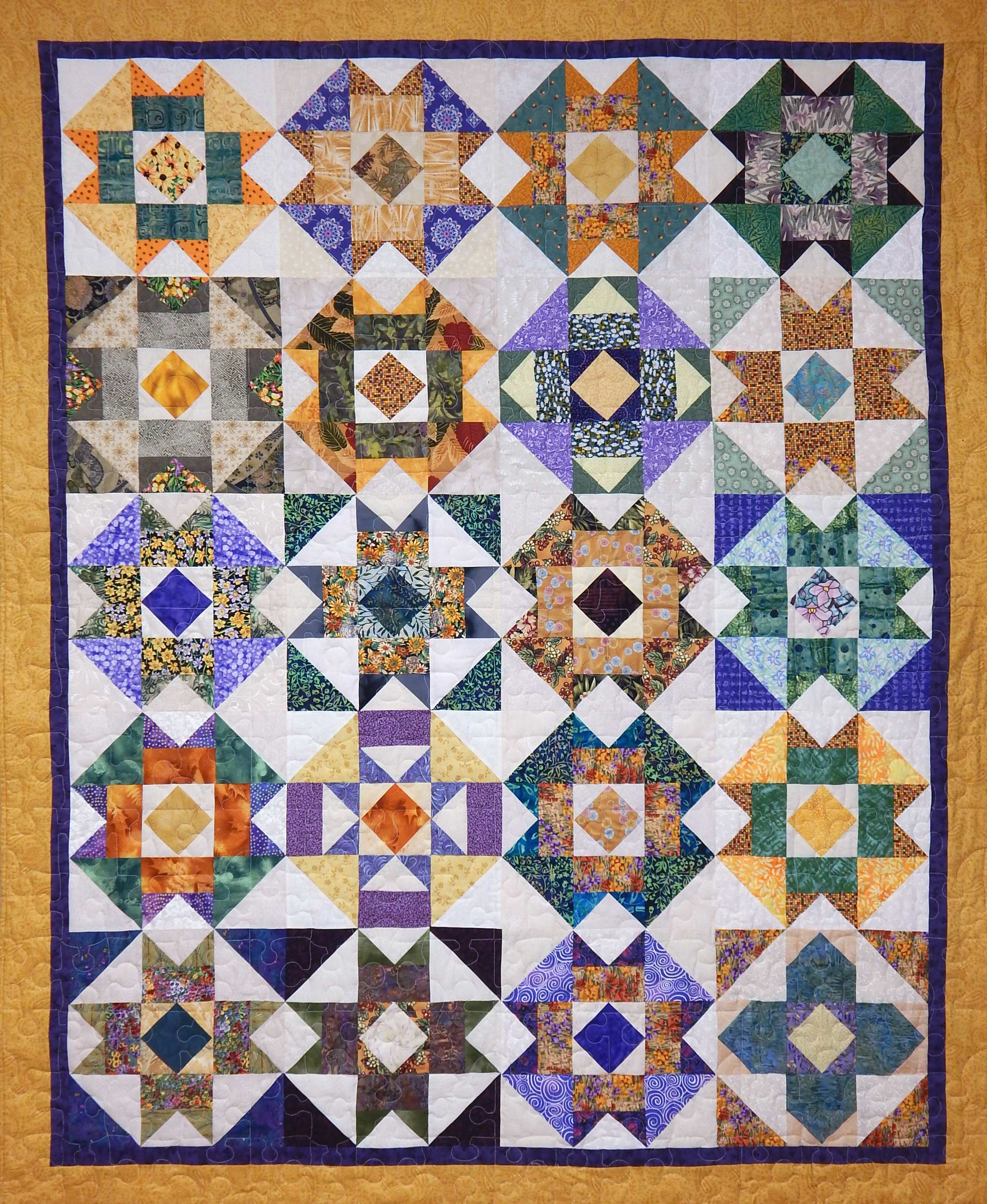
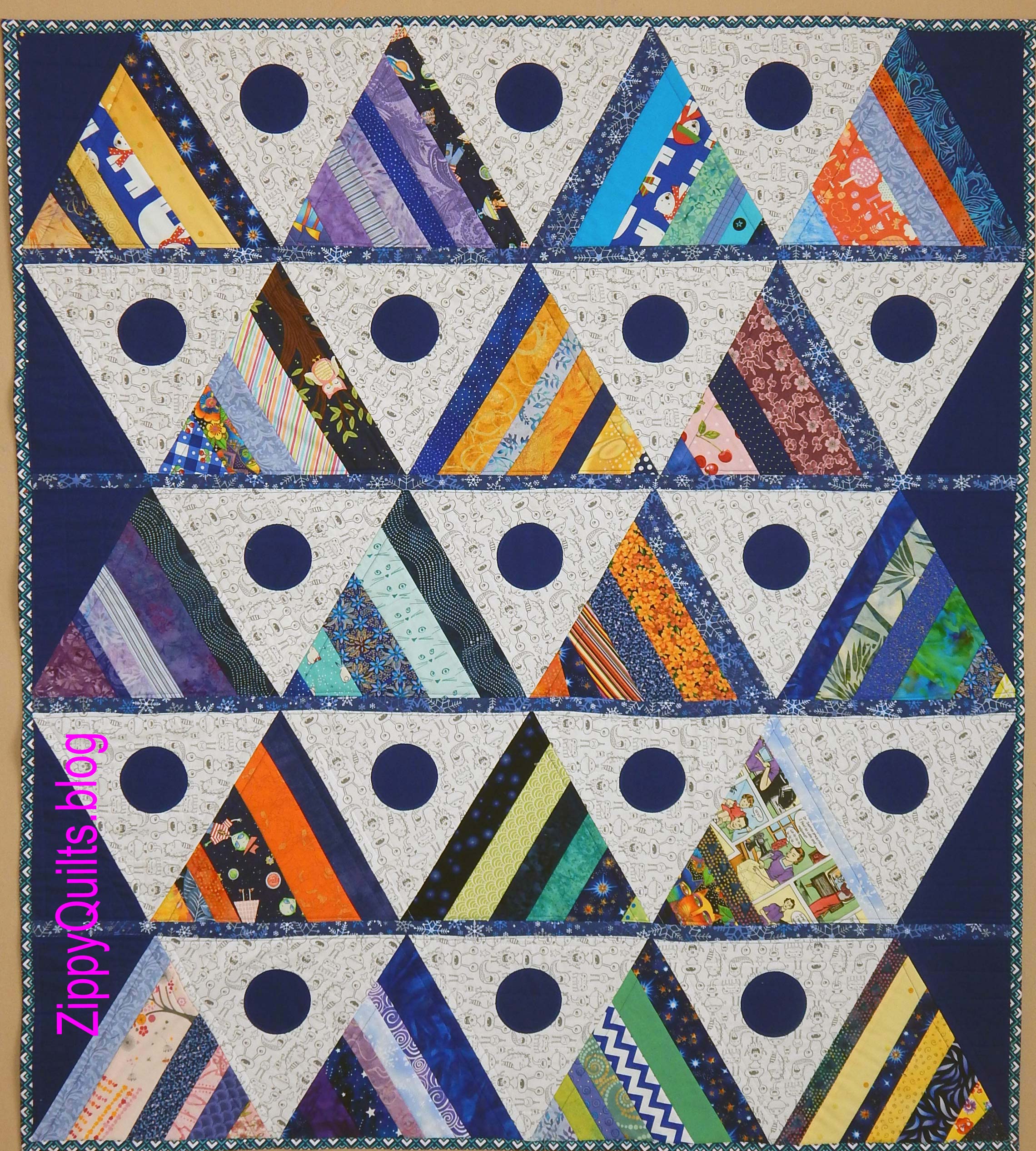
Sometimes I am “forced” to design a new quilt because the scrap bins are overflowing. When the strip bins got out of hand last spring, I designed this quilt. The idea of putting a circle in the alternate blocks came from my friend Jerri. The triangle blocks were because I have a 60 degree triangle ruler 🙂
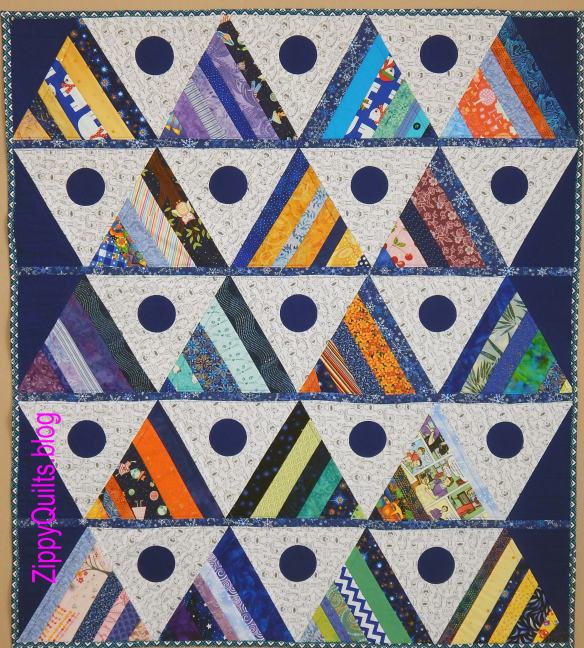
Machine applique of these circles was done after the quilting, so there was no need for further stabilizer
On another occasion, some friends and I had way too many 2.5″ blocks, so we developed these blocks and set them on point. That quilt hung around for a long time “needing something”. Eventually I added a central motif, and here it is:

The petals were fused on with Heat’n’Bond, and then I buttonhole stitched around them
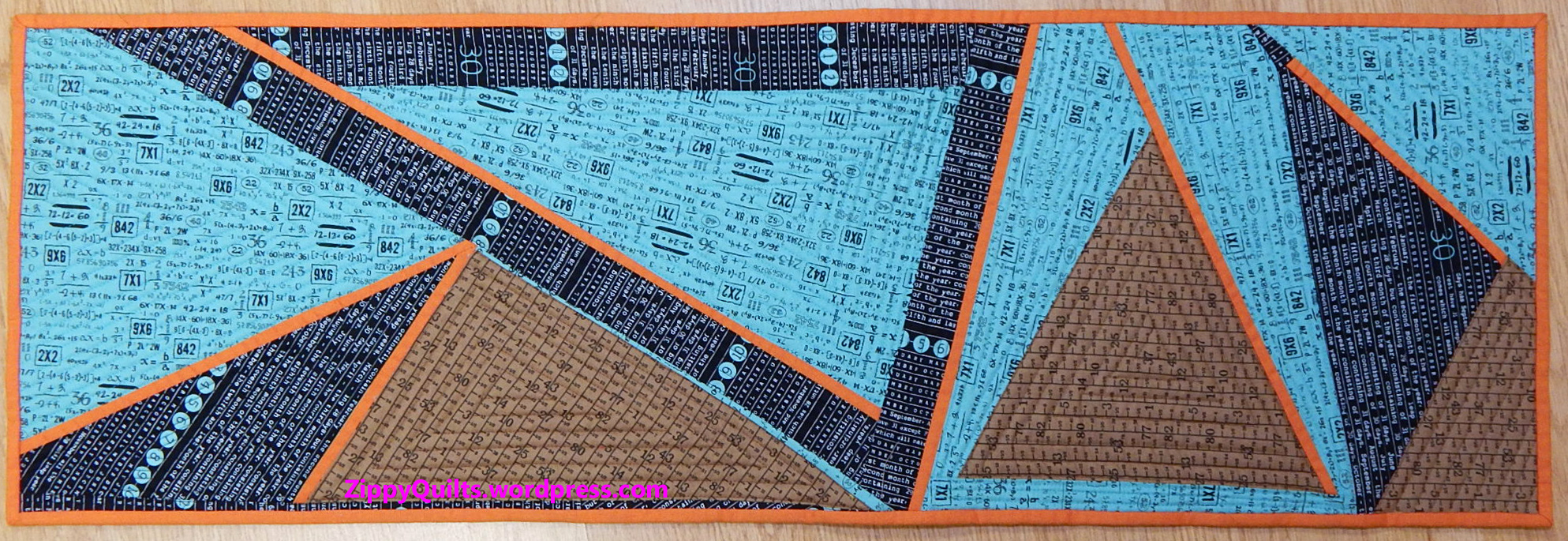
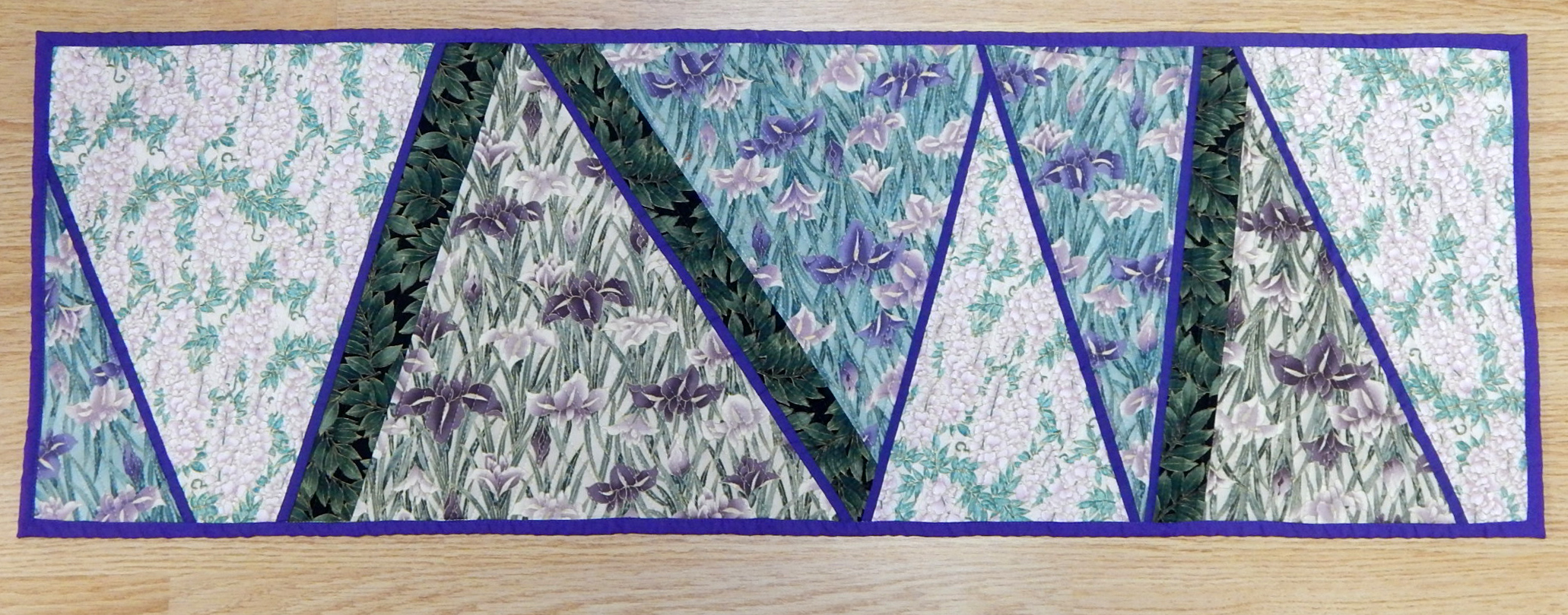
Another design process I like to use is to simply fill a piece of batting with scraps. For the table runners shown below, I selected a group of fabrics for the top and a piece of backing fabric about 6″ longer and wider than the finished runner. I spray basted the batting to the backing, then started filling the space on the batting with pieces of fabric from my collection. I didn’t sew them down until I had a whole section done, since this type of designing involves cutting off bits here and there to keep edges even.
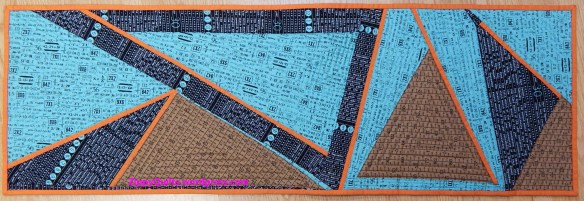
Here is one of the samples for my improvised table runner class

I have taught this method as a class, but it proved to be too unstructured for some people, who really just wanted to make my runner. I continue to use the method for myself but have not attempted to teach it to others again!
So, in response to the question of my process for designing scrap quilts, it’s really just “by the seat of my pants”. I do start with a collection of fabrics I like together, but otherwise it’s sew first, plan later. What I’m not showing, of course, is all the “fizzles” that got thrown out along the way!
Please stay tuned for Part II, scrap quilts inspired by other quilters. And go visit Elizabeth, who inspired this post!
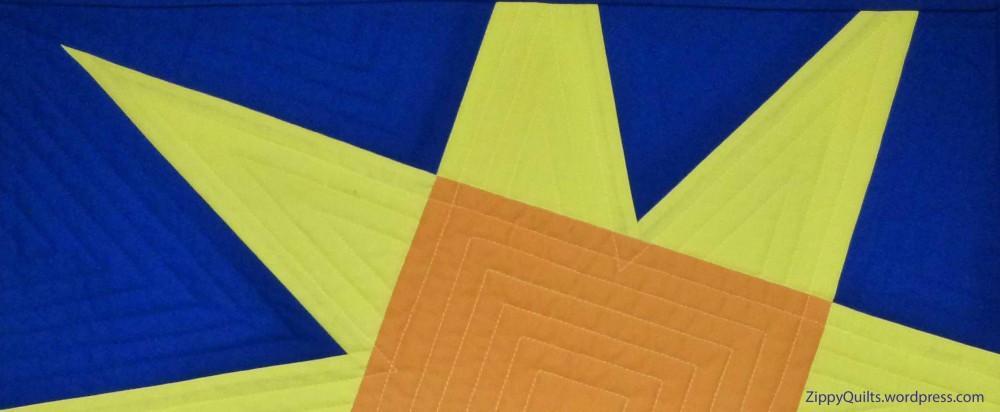


 If you’ve ever tried quilting with metallic thread, you know what a find this is! Julia said she had no trouble quilting with it. Here’s what it looks like on the quilt:
 This thread is very thin, intended to show the quilting but not necessarily the stitches. I did some stitch in the ditch with it and found it much better for that purpose than regular thread I have used in the past.
  I also did some quilting that was meant to show, and that worked out equally well.