Paper Piecing Without Tears

That is, without tearing out the paper! Here’s the story:

My friend Elizabeth recently started a series of free FPP (Foundation Paper Pieced) New York Beauty blocks. She’s releasing one free block every Wednesday for the month of June, so if you’re interested, head over there: OPQuilt.com

Here’s my first block from her series:

Foundation Paper Pieced block designed by Elizabeth Eastman

Now back to the issue of what to use for foundation!

I recently saw water-soluble foundation paper at Studio Stitch and had to try it.

This paper is meant to dissolve in water and is intended for many uses, including foundation piecing. The 12 sheets were about $11. Like many Pellon products, it is also available by the yard if you can find a place to buy it from the bolt. The price on Amazon makes it look like it may cost less that way BUT will it run through my printer? I don’t know. At the very least I’d have to cut it into 8.5″ x 11″ sheets first.

The Pellon sheets did run through my printer without difficulty and the image quality was good.

I happily stitched the block and then turned to the issue of removing the paper.

I dampened the seams only, thinking to dissolve the paper there and then remove the pieces as I would if I were tearing it off traditional-style.

The paper turned into a soggy mess along the seams. The pieces did lift off pretty well, but paper pieces remained in the seams.

That said, the amount of paper left in the seams was small and it was very soft, not stiff like the usual FPP paper. I don’t think it will be a problem.

One final test for this paper! I stitched a scrap of the Pellon wash-away paper to a scrap of fabric. Then I put the fabric in a net bag, to simulate having it inside a quilt, and ran it through a gentle cycle wash as I would a finished quilt. Here’s how the back looked:
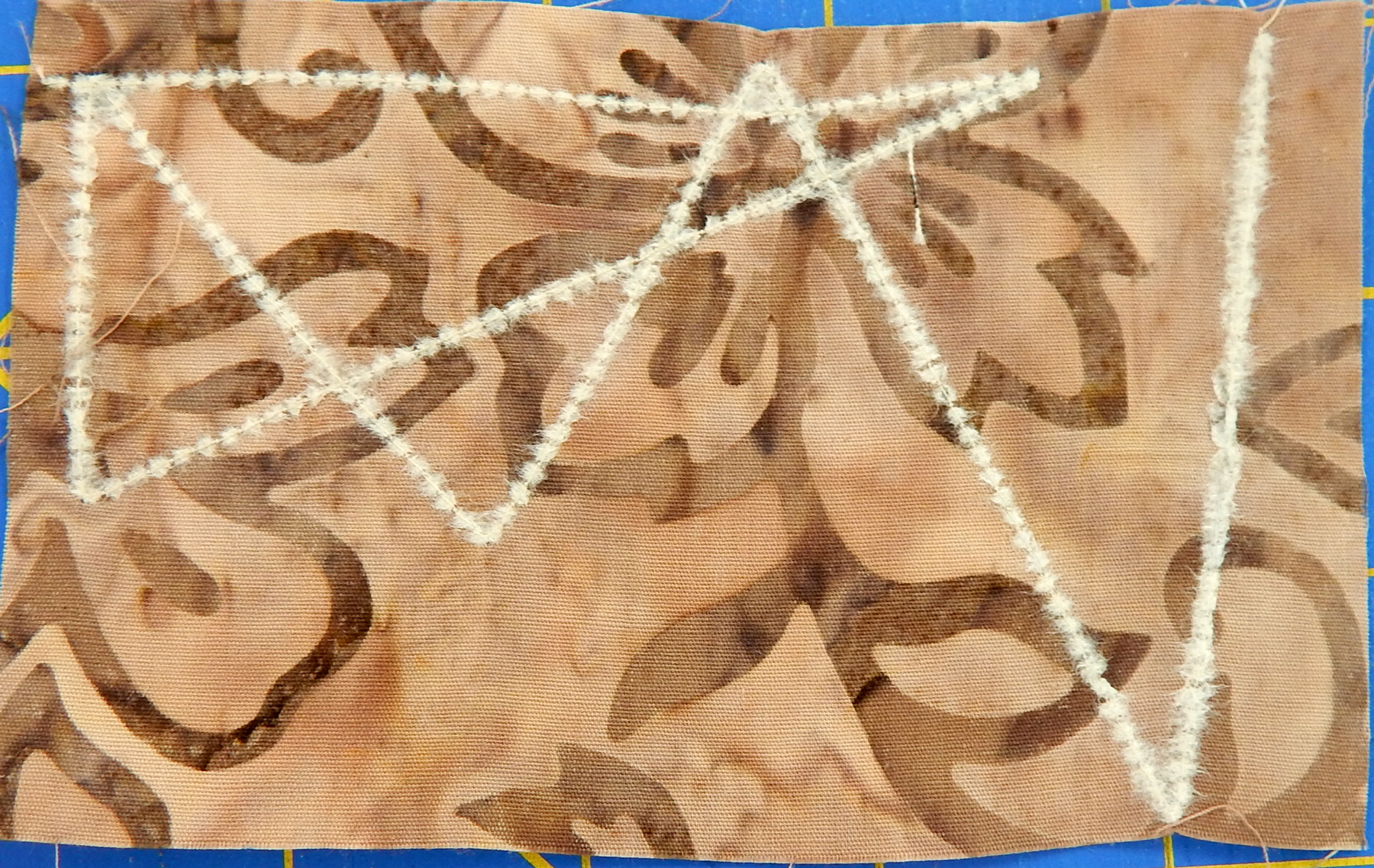
Back, after washing

This looks acceptable to me. I think the Pellon wash-away paper would work just fine.

Pellon Water Soluble Stabilizer

Pros: It works well in the printer, it does dissolve almost completely in water, it is transparent enough to use for tracing, I was able to glue it with water-soluble glue without problems.

Cons: A bit pricey (almost $1 a sheet). It is water soluble so don’t plan on using a steam iron! And the claim that it “dissolves completely” wasn’t entirely true, though I don’t think the small amount left in the stitching will matter.

However, this wash-away paper isn’t the only alternative to traditional newsprint-type FPP paper. More next week–please stay tuned!

Knot: A Finish

It  seems like forever since I started this quilt, but here it is finally. It’s my modification of Sherry Shish’s “Simply Cornered” pattern.

Quilt Stats

Name: Knot

Design: “Simply Cornered” by Sherry Shish

Made by: me

Quilted by: Linda

Size: 47″ x 47″

This post marks the beginning of my tenth year of blogging. I’m still enjoying it, especially the opportunity to connect with other quilters around the world. Thank you all for reading and following!
Susan’s Ideas Explode

I took a class with Susan Cleveland at AQS-Paducah this year and it was excellent. Susan manages to be both pleasant and precise as a teacher and has many, many tricks for improving quilt making skills.

Thinking of Susan’s creativity and sense of humor, I decided to make my SAQA donation quilt a picture of ideas exploding out of her head.

Here’s the resulting piece:“Susan’s Head Explodes”, 12″ x 12″, a tribute to Susan Cleveland

Susan is known for (among other things) her binding techniques, prairie points, and Dresdens. All these involve her signature precision and attention to detail. I used some of her techniques in this little quilt and added several of my own. Here are some details.

First, the martini glass. Please note that I have no idea whether or not Susan drinks alcohol; I just couldn’t resist this use of a prairie point!

You can see my binding up close in this detail photo. I used a flange to accent the edge. The little spheres are wool balls cut in half, a technique I learned from Susan.

The red exclamation mark is made with Kraft-Tex to avoid any risk of fraying on such a small element.The flamingo is a plastic button! Following a suggestion from a reader (Elizabeth, in response to my Habitat House), I removed the shank and glued the button to the quilt.

For one of the prairie points, I put a clear spherical button inside to hold it open a little. This button was one of my happy finds in Paducah, so it deserves to be in the piece!

The wool blend felt used for batting was a suggestion in a recent book by Sue Bleiweiss. It worked quite well in terms of being stable and easy to use.

Quilt Stats:

Name: Susan’s Head Explodes!

Designed and made by: me, with inspiration from Susan Cleveland

Finished size: 12″ x 12″

Materials include: Commercial cotton fabric, hand dyed fabric (Cherrywood), hand dyed embroidery thread (Artfabrik, Laura Wasilowski), Kraft-Tex (C&T), plastic buttons, commercial rick rack, wool felt balls, a polymer clay button, wool blend felt for batting, and various commercial threads.

Note: As always, the links in this post are for your convenience. They are not affiliate links.

Trying A New Binding Technique

I’m always on the lookout for ways to improve my binding (as well as my other quilting skills). Recently I ran across a video (YouTube, of course) showing how to use the Bernina #71 foot for binding. Here’s the link: https://www.youtube.com/watch?v=tpl-7L4SEzM

I have no idea who this woman is, but she’s using 2″ binding, which is my usual. I also use Quilter’s Dream Request Loft batting (the thinnest loft), which is part of why the narrower binding works.

After watching the video several times, I tried it out.

As you can see, the binding looks pretty good, and it’s still all done by machine. I achieved a more consistent width using this foot than with my usual method with the walking foot.

I did have some trouble with the corners, but I thought my binding was pretty good for a first try. (And no, I didn’t take a picture of a messy corner!)

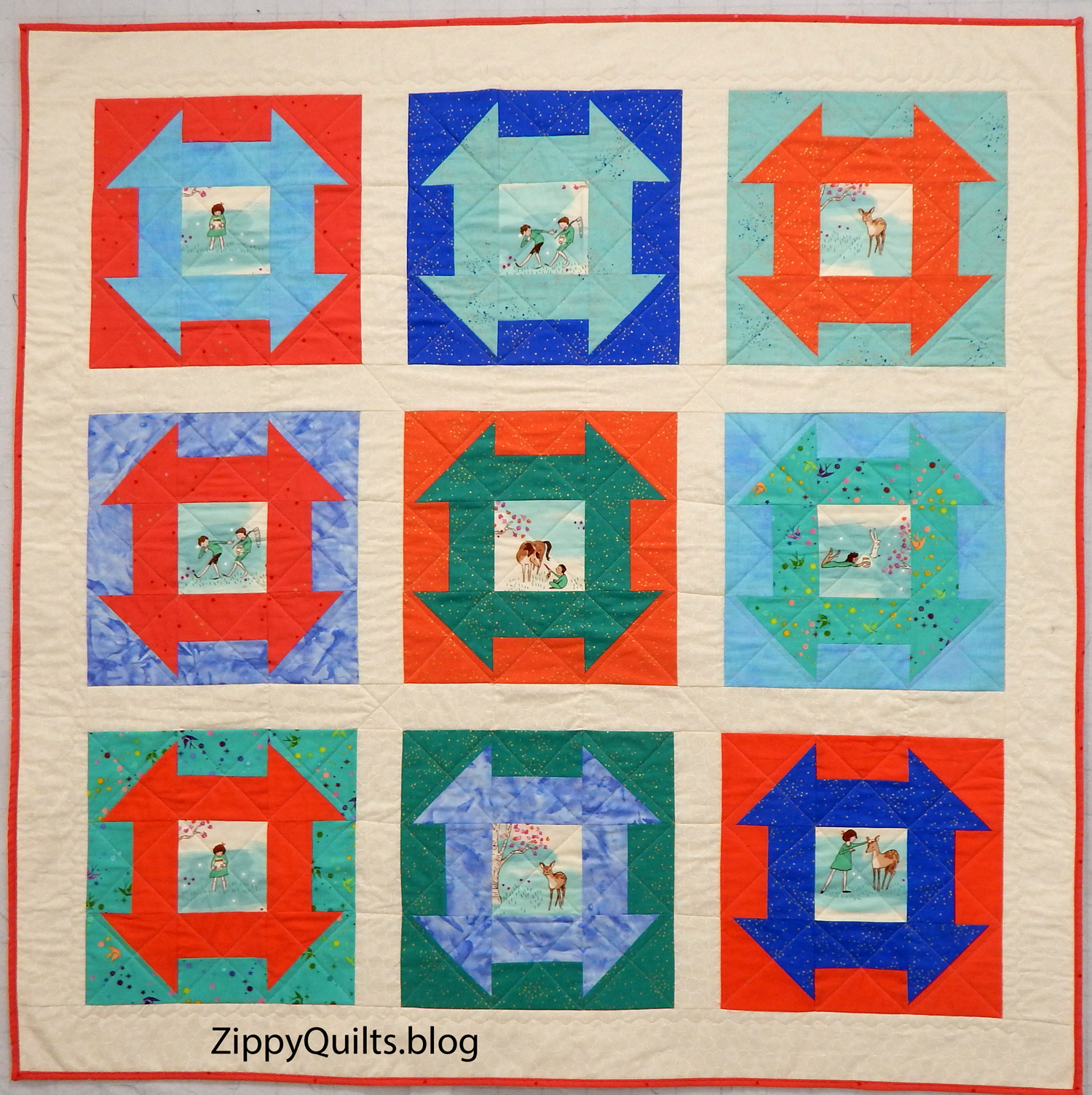
Here’s the finished quilt, which is one of the samples for the beginning quilting class I’ll be teaching later this year. This is a pattern I modified from the book Jump Into Patchwork and Quilting. Specifically, I re-drafted it so the monkey wrenches are made with the flip-and-sew method rather than with half square triangles. This floats the wrenches so beginners will be less likely to cut off a point.

Photo courtesy of C&T

I’ll be using the book as a text for the class so students will have a written reference at home. The book is bright and modern and I think it will appeal.

It also has some easy projects students will be able to do on their own. This book costs only a bit more than a pattern, so it’s a good value. (The book is available from Studio Stitch or C&T.)

I’ll be making another sample before offering the class. Meanwhile, here’s the information on this one.

Quilt Stats:

Name: Making Waves Modified

Source: I re-drafted a pattern from the book Jump Into Patchwork and Quilting

Finished size: 48″ x 48″

Made and quilted by me.

AQS Paducah 2022

After a 2 year wait due to you-know-what, 3 quilty friends and I finally met up in Paducah for AQS Quilt Week.

Paducah is an interesting town to walk around. There are lots of old houses as well as some interesting new ones. These two were next door to each other!

Then there is the gigantic Hancock’s of Paducah, a must-visit for fabric collectors. I saw a woman there wearing a shirt that declared, “Quilting and Fabric Collecting are Two Different Hobbies”. Apparently I agree 😀

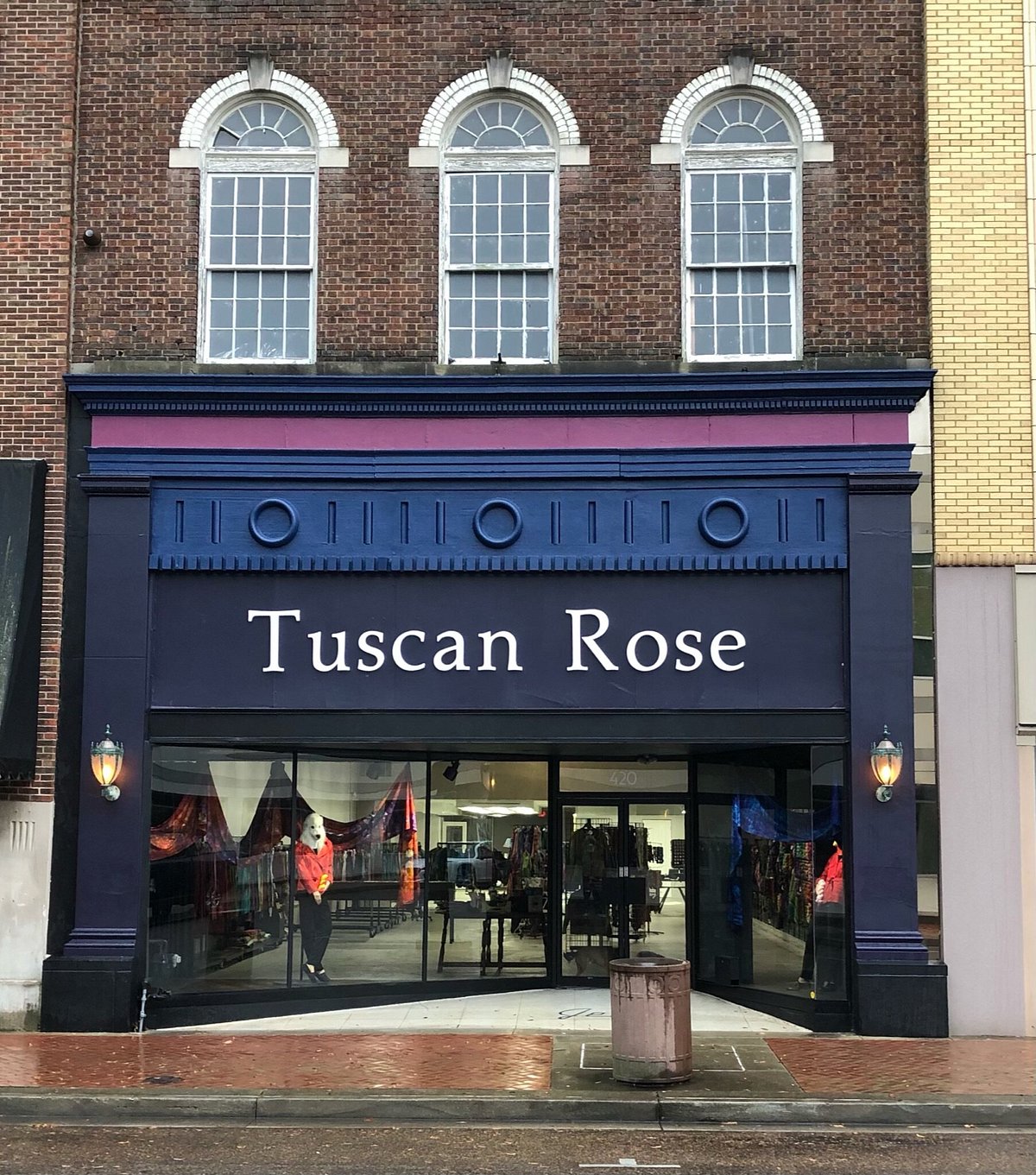
There used to be a number of other fabric shops, including Eleanor Burns’ Quilt In A Day, but they have closed due to COVID. We did find an interesting shop, though.

Photo courtesy of Trip Advisor

Tuscan Rose is a wonderful shop selling clothing, apparently collected from thrift shops and then overdyed. Of course I bought a shirt, and so did one of my friends. Tuscan Rose also had such beautiful hand dyed yarn that I was tempted to resume knitting. (As a favor to the beautiful yarn, I left it to be bought by someone who actually knits well!)

The quilt show itself was something of a disappointment. There were hundreds of beautiful quilts, but before long it was overwhelming. The workmanship was exceptional and I think I would have enjoyed seeing a few of them, but after a couple of dozen my head was spinning.

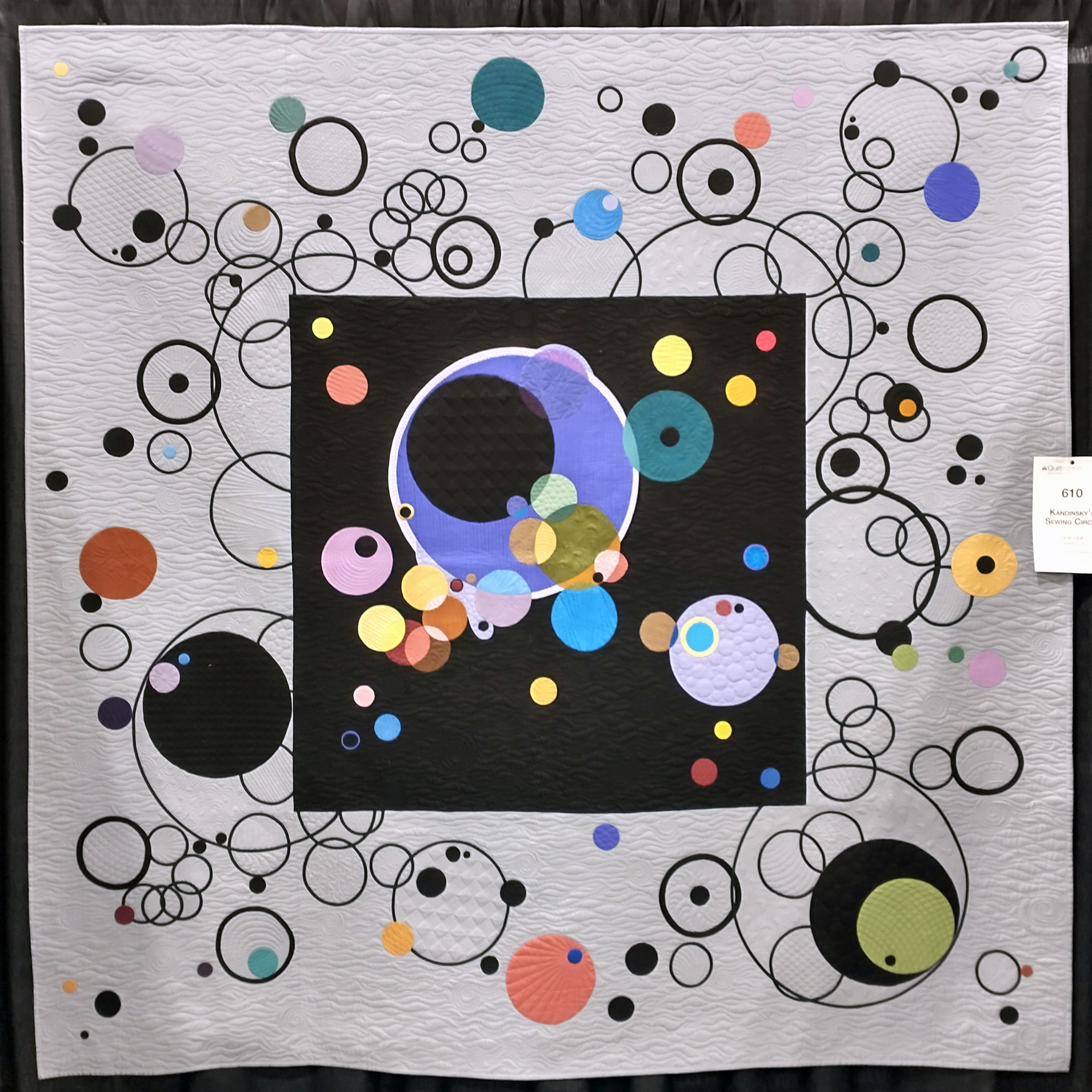
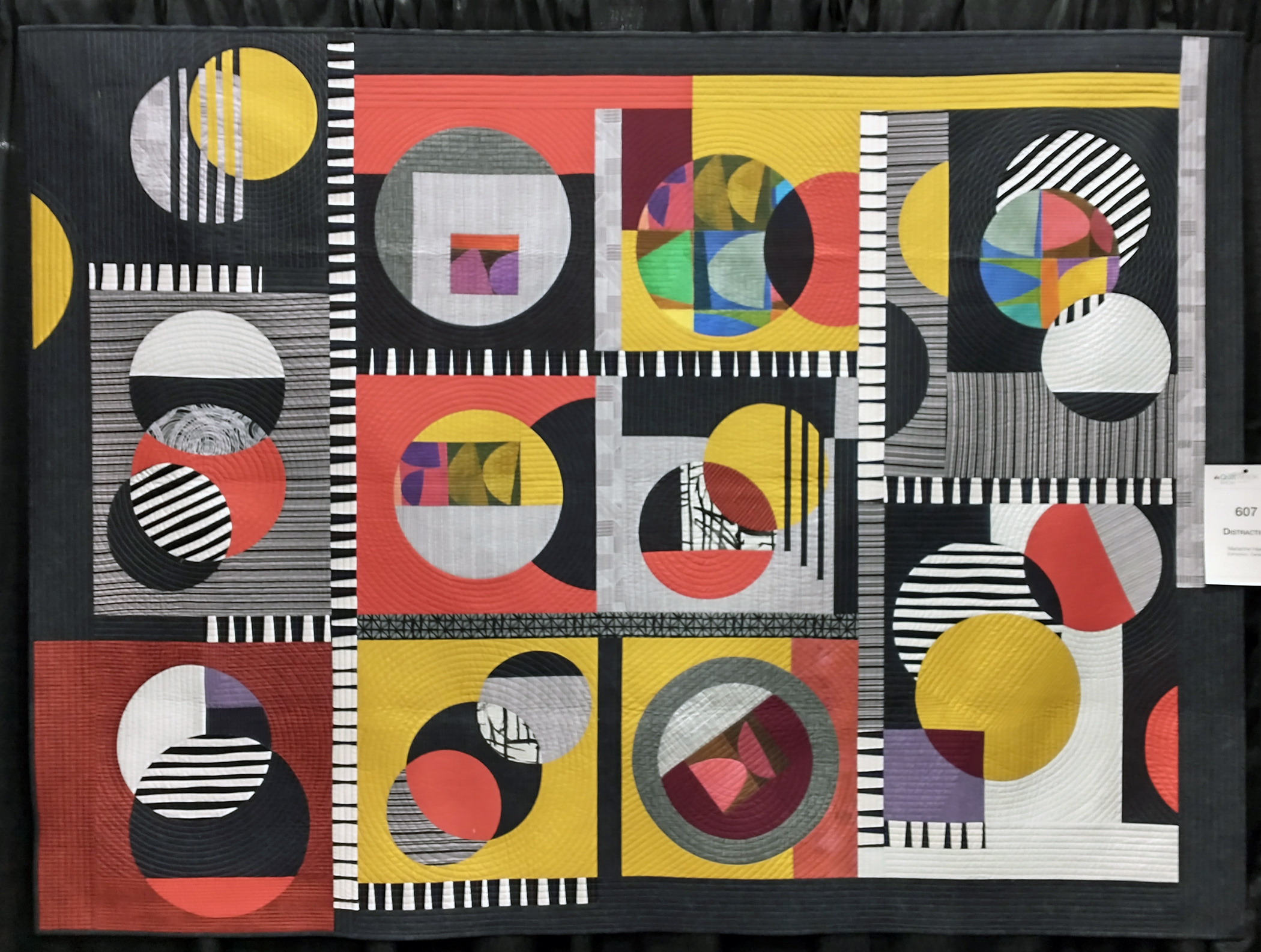
Modern quilts were rare. Here are a couple of my favorites.

Kandinsky’s Sewing Circle by Holly Hull

Morning Fog by Sarah Lykins Entsminger

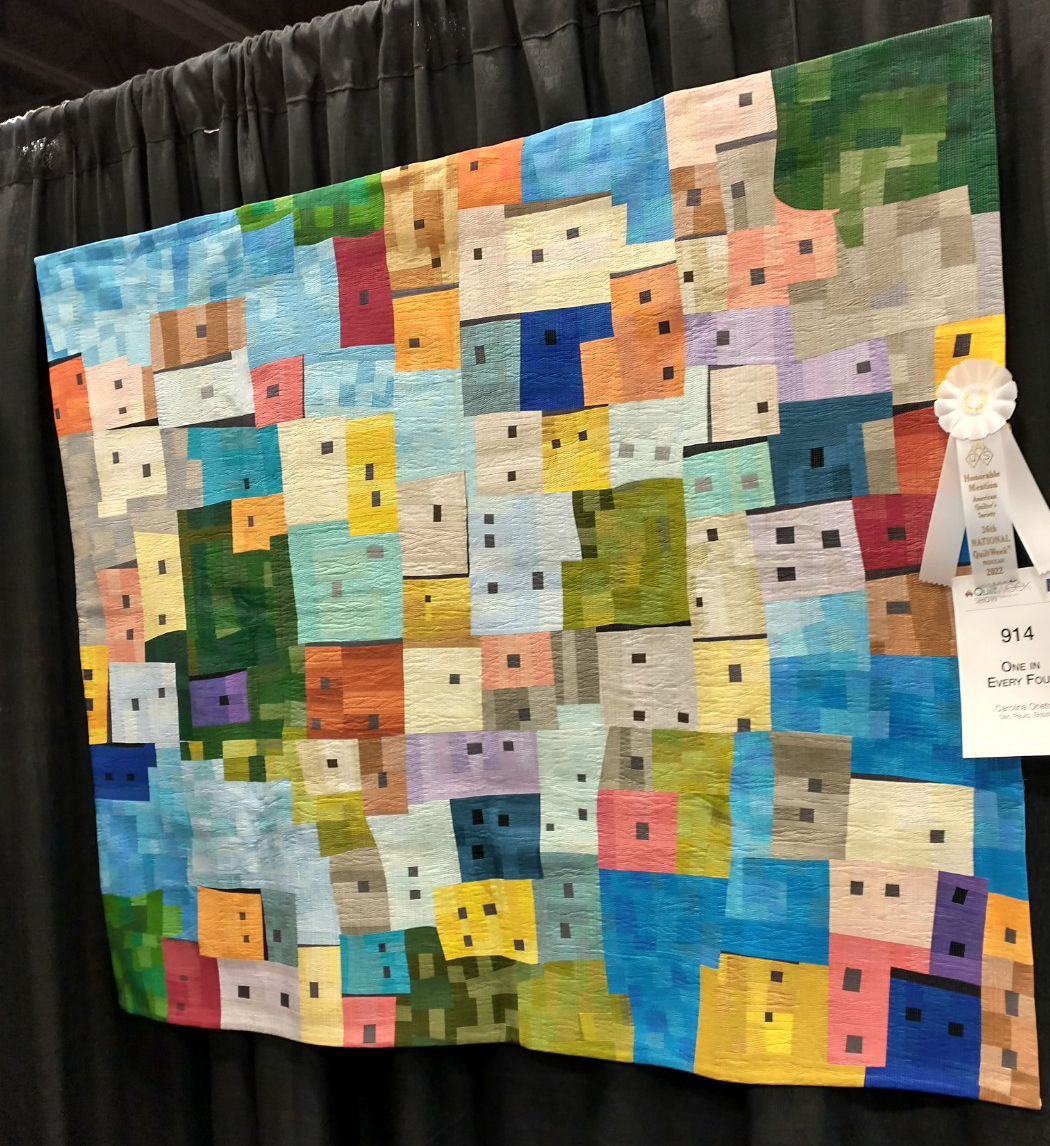
I also liked this one, but I can only assume that nobody at AQS understood what “one in every four” referred to, based on the AQS history of avoiding even a hint of controversy.

One in Every Four by Carolina Oneto

I didn’t hear that any of you were going to Paducah. What is your experience with AQS shows?

Happy Habitat House

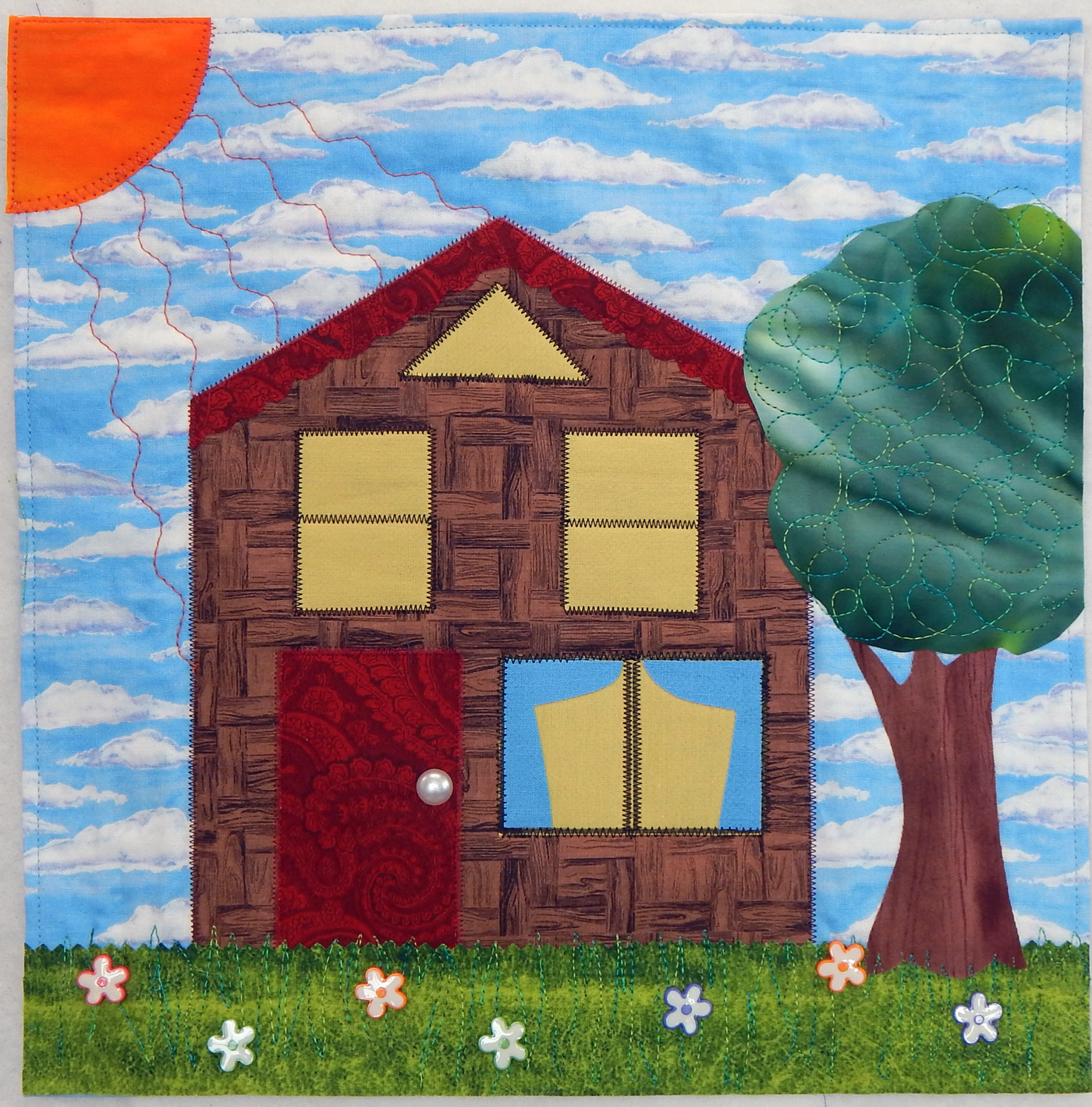
The Gate City Quilt Guild, which I recently joined, makes little house quilts for the local Habitat for Humanity. Each family then gets a little quilt as part of the ceremony in which they take over their new house. Of course I wanted to make one, so here we go!

The quilts are approximately 12″ x 12″, so I began by cutting two 13″ squares of fabric, one for the front and one for the back. I recently read in Sue Bleiweiss’s latest book that she uses a wool-blend felt for the batting in her art quilts, so I gave that a try. I cut the felt 12″ x 12″.

This is the back

I turned the edges of the front fabric to the back, turned under the edges of the backing fabric, and edge stitched the 3 layers together. The felt “batting” was easy to work with and avoided the puffiness that can distort a quilt when using regular batting.

I used Heat n Bond Lite to fuse the door, windows, and roof to the house, then fused the house to the quilt top.

The finished quilt front

I added stitching to the grass and tree for texture, and to make rays from the sun to show sunshine falling on the house. I collect fun buttons, so I had a round one for the door knob and some little flowers for the yard.

The buttons were shank-type, so I had to make little holes in the quilt to push the shank through so they would lie flat. The felt batting was extremely stable, which helped a lot with this process. Here’s the back, showing the button shanks held in place with little pins.

Although I like my quilt, I must say that there are some very talented quilters in the group and some of the houses were more realistic than mine! I look forward to learning a lot from these ladies.

Quilt Stats:

Name: Happy Habitat House

Size: 12″ x 12″

Designed and made by me

I hope the family who receives the quilt will enjoy it, though of course it is unlikely to look like their real house!

Tossed 9 Patch

The other day I considered what to do with my large stash of 5″ squares.

Bin of 5″ squares from a variety of sources

It occurred to me that I might be the only quilter in the world who hadn’t yet made a tossed 9 patch quilt.

Just on the off chance you haven’t made one yet, here’s the drill.

The 9-patch block was 15.5″ with raw edges. Drawing done with Electric Quilt 8.

Start by making a 9 patch (duh). I cut a bunch of light colored 5″ patches and enough red 5″ patches for 22 nine-patch blocks, then used various 5″ squares from my bin for the four corners.  (Yes, that only got rid of 88 5″ squares. Still…)

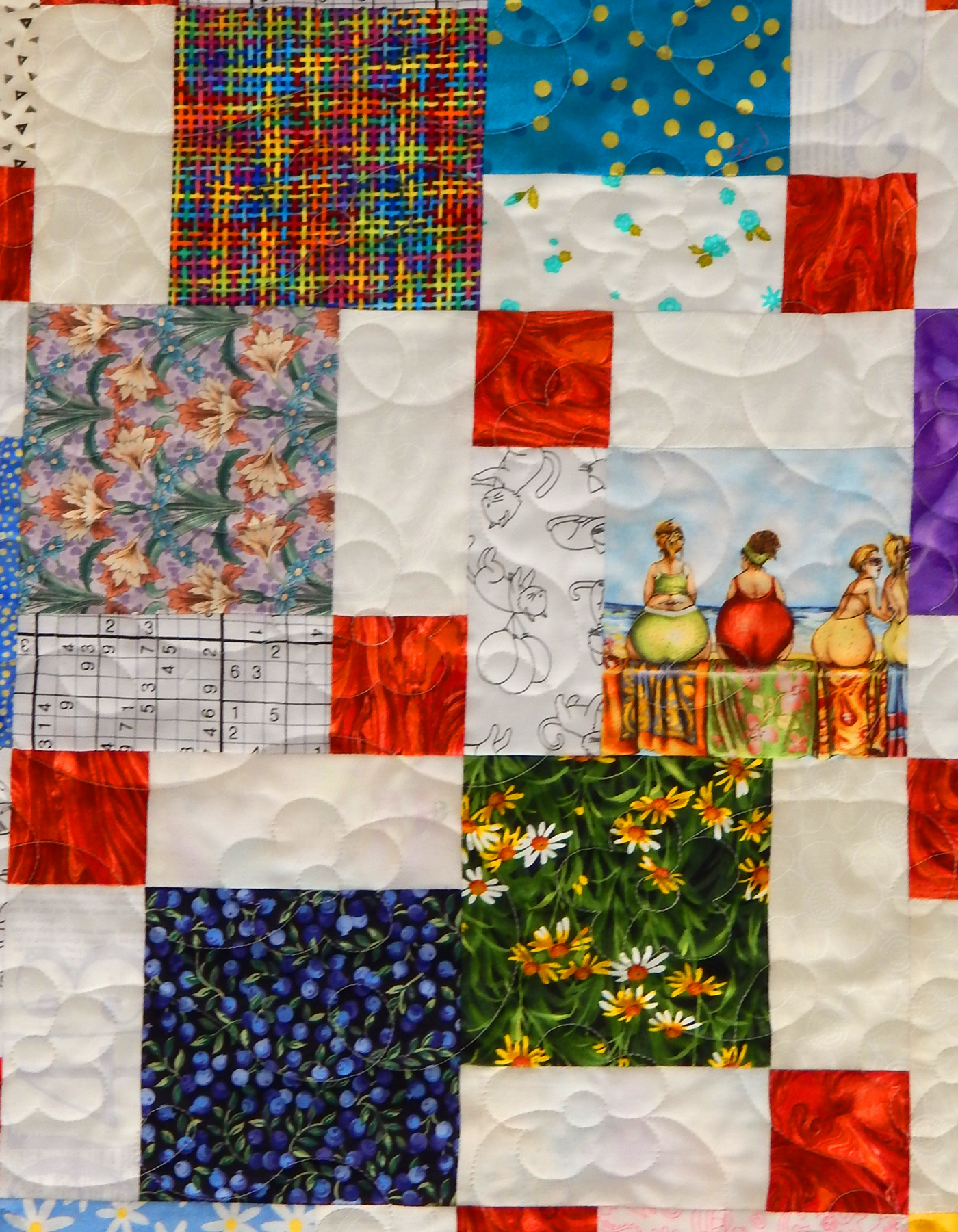
I included some old favorites from the 5″ bin:

Blueberry fabric bought in Maine, one of the Moda wildflower fabrics, the fruit ladies from Elizabeth’s Studio, and some of my favorite metallic dot fabric.

After assembling the 9 patch blocks, I cut them in quarters, resulting in 88 blocks like this:

This is one quarter of the original 9-patch block. Drawing done with Electric Quilt 8.

When all my 88 blocks were made, I played with layouts until I had one I liked. There are a lot of different ways to cut the 9 patch block, and even more ways to lay out the resulting blocks, so it took a while.

After it was quilted, I decided on a blue and white striped border, which I cut on the bias.

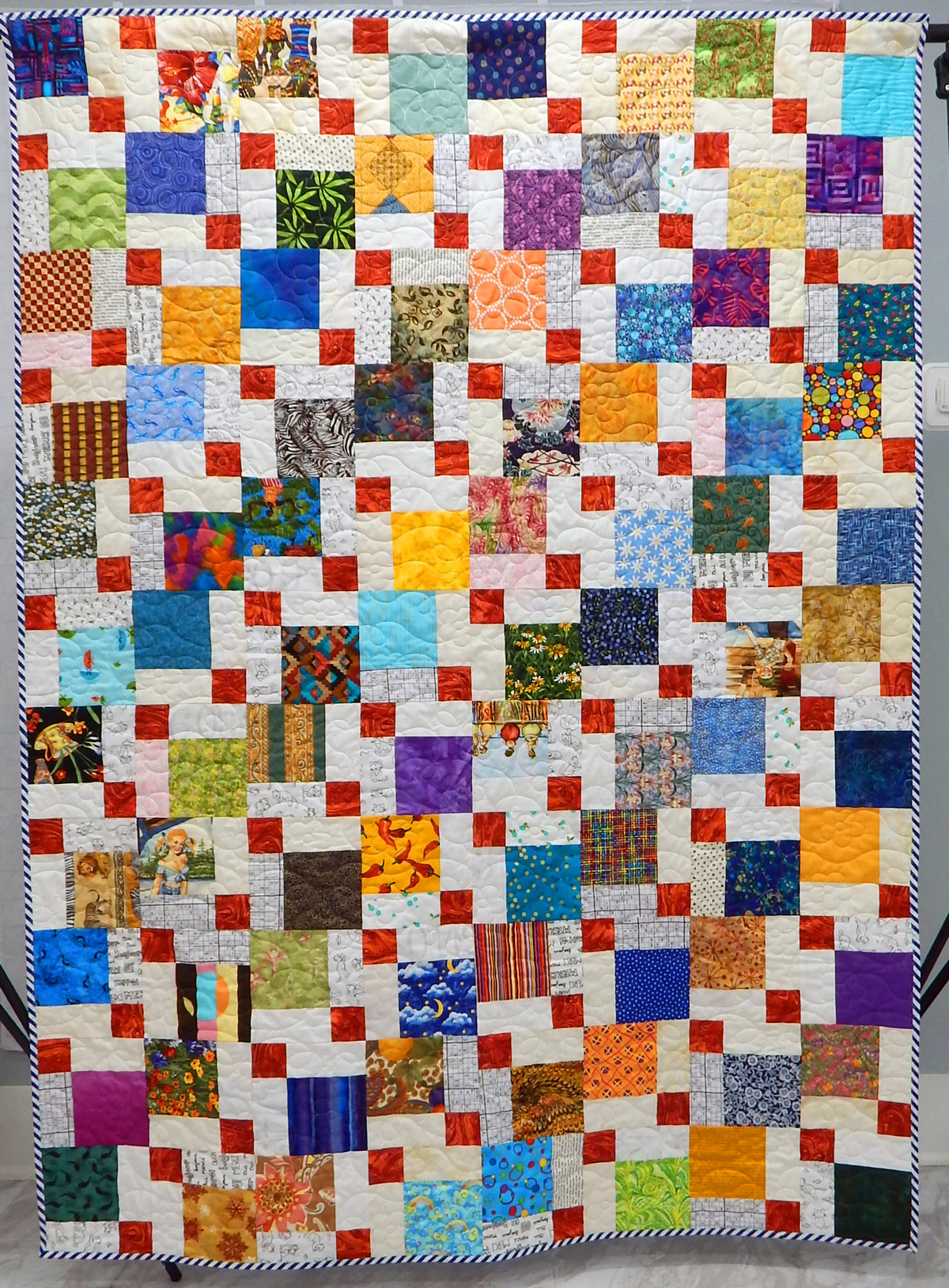
And here’s the finish:

Quilt Stats:

Name: Tossed 9-patch

Designed and made by: me, though of course there is nothing new under the sun, This idea has been around forever.

Finished size: 51″ x 71″

Quilted by: Linda

Super Fans Tutorial

When I showed this quilt last week, I promised a tutorial on how to make the blocks. So here goes!

The first (most important?) step is to choose a block size for which you have a square-up ruler in your collection. This makes the whole process easier, as you’ll see.

No my ruler isn’t a trapezoid, but I had to take the picture at an angle to avoid reflections!

Then choose a couple of strips that are about 2″ longer than the square-up ruler. My ruler trims to 9.5″ (for a finished 9″ block), so I chose strips about 11.5″ long. You can either cut wedges for your strips, or join the strips and then trim the edges to make them wedge-shaped. I had a bunch of 1.5″ strips, so I did the sew-and-trim way.

Continue to add strips to each side, alternating sides. Alternating sides makes it easier to keep the block symmetrical. It isn’t necessary to use 1.5″ strips–you can use any width from about 1″ on up.

Press all seams open to decrease bulk. And when you trim seams to make a wedge, leave at least 1/2″ of width at the narrow end to avoid extra bulk when adding the next strip.

The seam that is circled at the bottom just meets because the strip was narrowed to 1/2″ at that end

The piece will, of course, tend to curve. To counteract that tendency, I sometimes add longer strips to correct for the way the edges want to angle down at both ends.

Here’s a longer strip I added to be sure the edges weren’t curving too much.

Keep checking to be sure the block is outside the edges of the ruler at both the top and bottom of each strip.

And finally comes the happy day when the block is as wide as it needs to be at the top!

From here on you can add shorter strips. Align them at the bottom of the block to start sewing. Keep checking, and when the piece is wide enough, trim all edges with your square-up ruler.

When trimming, I pick a line near the middle of the ruler and lay it along a seam near the center of the block to get everything as even as possible.

I stitched about 1/8″ from the edges

Stay stitch all edges! This is important because you really, really don’t want those seams to start coming undone, and because there are many bias edges.

DONE!

You may notice that the last strips (bottom corners) are a bit wider than the others. That is done to avoid the possibility of having a seam in the block come at a corner when joining to other blocks.

Quilt Stats

Name: Super Fans

Designed and made by me, with inspiration from Pinterest

Finished size: 47″ x 65″ (5 x 9 blocks, 9″ each, with 1″ border on all sides)

Quilted by: Linda

There are 18 pieces in the sample block above. That means the finished quilt has approximately 810 strips. Thank goodness I didn’t calculate that until now!!!


Super Fans!

I haunt Pinterest in my “spare time”  looking at pretty quilts. OK, maybe it’s “procrastinating time” rather than actual “spare time”, but you get the picture 😀

After seeing a number of lovely string quilts, I was forced to make lots of string blocks and assemble them into this “super fan” quilt.

There are many similar examples on the internet. I did not use a fabric foundation, as many string quilters do.

I made no attempt to use the same number of strips in each block, and my husband points out that the blocks do vary quite a bit. All good, I say.

I used strips from my scrap bins.

Those scrap bins are filled by cutting all leftovers into uniform strips, which vary in width from 1.5″ to 4.5″. These strips are useful for many things, from tying up packages to adding just the right bit of color to some projects. They do often overflow, though.

Here are a few of the other projects made from the strip bins:

And WOO! Paducah quilt week is only a week away!!! If you’ll be there I’d love to meet you!

Meanwhile, I’ll have a tutorial next week on how I did this fan block.

More Magic Kaleidoscopes

We had a good time at Studio Stitch with the magic kaleidoscope class. It’s always fun to see the fabric people pick and how the blocks turn out. For the first student, I managed to get both a photo of the fabric and a photo of some of the blocks:

For two students, I failed to get any pictures at all! For the remainder, I got pictures of blocks only:

I thought all the students did a great job!

And my class demonstration quilt came back from the quilter, so here it is:

Here’s a detail:

And here’s the back, showing my effort to get rid of all related fabrics!

Stats for my quilt:

Name: Sassaman Kaleidoscope

Finished size: 52″ x 62″

Designed and made by: me

Quilted by: Elisabeth Pugh