Wonky

I’m currently on a program of finishing 2 UFOs (unfinished objects) before starting each new project. I caught up quite a bit last year, but there are a few things still to be done.

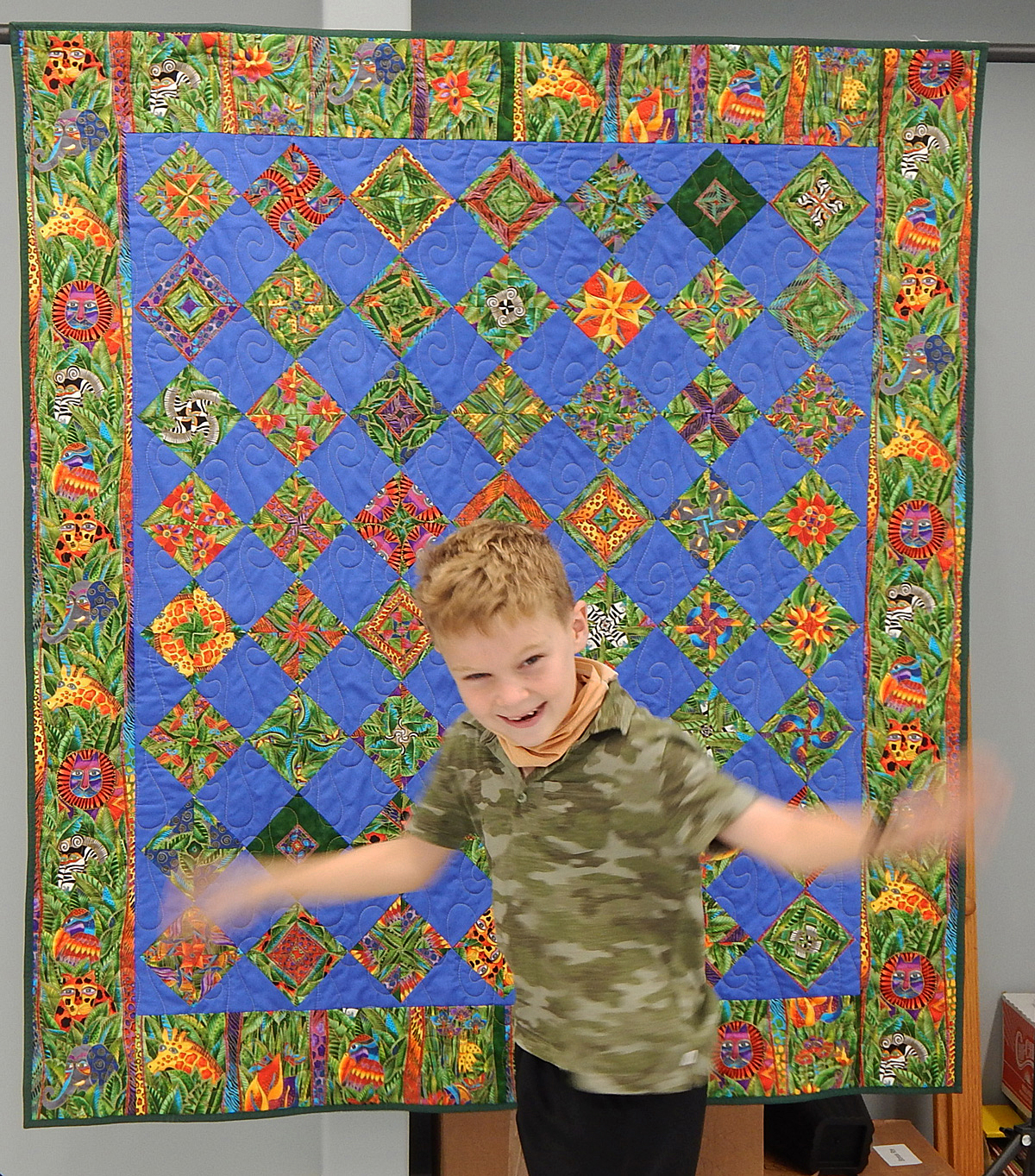
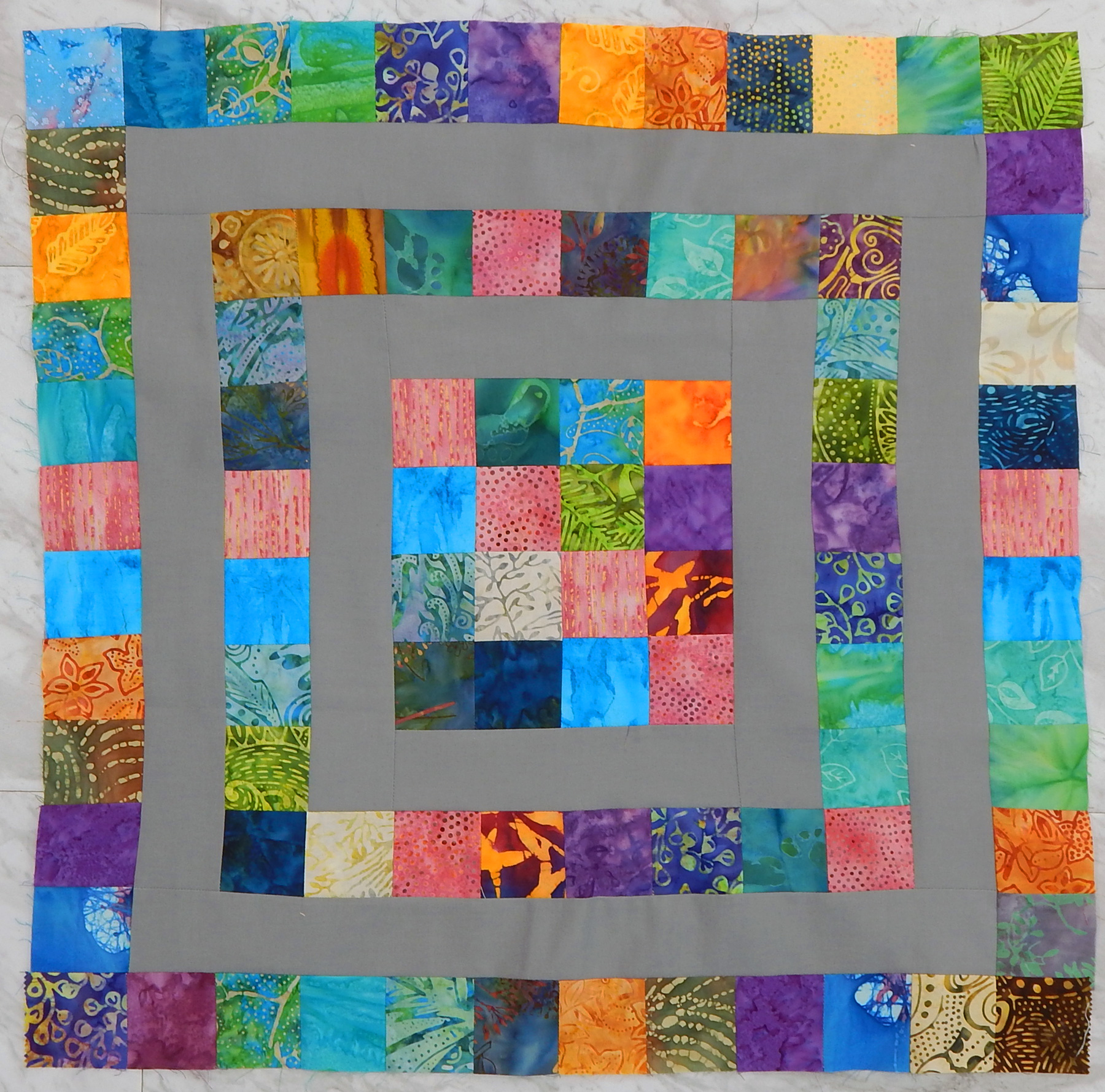
Most recently I pulled out these swap blocks from a long time ago. They should finish 24″ square. Of course, since they are medallion style blocks, there’s plenty of opportunity for the size and shape to get “off” with each additional border.

There was one in the group that surely was not perfectly square. I put 4 of them together anyway, figuring this could be a picnic quilt and “fixing” the wonky block was way too fiddly.
This worried me a little, even in a picnic quilt. (OK, like most quilters, I’m more than a little O.C.)

Then my daughter came along and said, “It’s not wonky, it’s organic in design!” Ha! So there! Art-speak is frequently useful!

Finally, the Move!

Aha! We are finally in our new home and loving it.

It includes a specially-designed quilt closet for storing finished quilts on wire shelving with good ventilation.

There are vents at the base of the doors to let air in

And a vent on the side wall at the top to let air out, encouraging passive circulation.

And it’s nice to know the quilts will be well treated now, because some of them had a little accident on the trip here.

Luckily the boxes that got damp contained finished quilts. I just washed and dried them and they are just fine.

The rest of the quilts (for the second part of the move) were packed like this.

So, once I can get my studio set up, the quilt making will begin again! Here’s a picture of the studio

And the special knob for the studio door

There’s a house attached to the studio, as well as a yard.

If anybody is looking for a great builder in the N.C. triad area, you should know that our house was built by My Granville Home of Greensboro. They were wonderful! Feel free to contact either me or the Granville people with questions.

A Little Finish

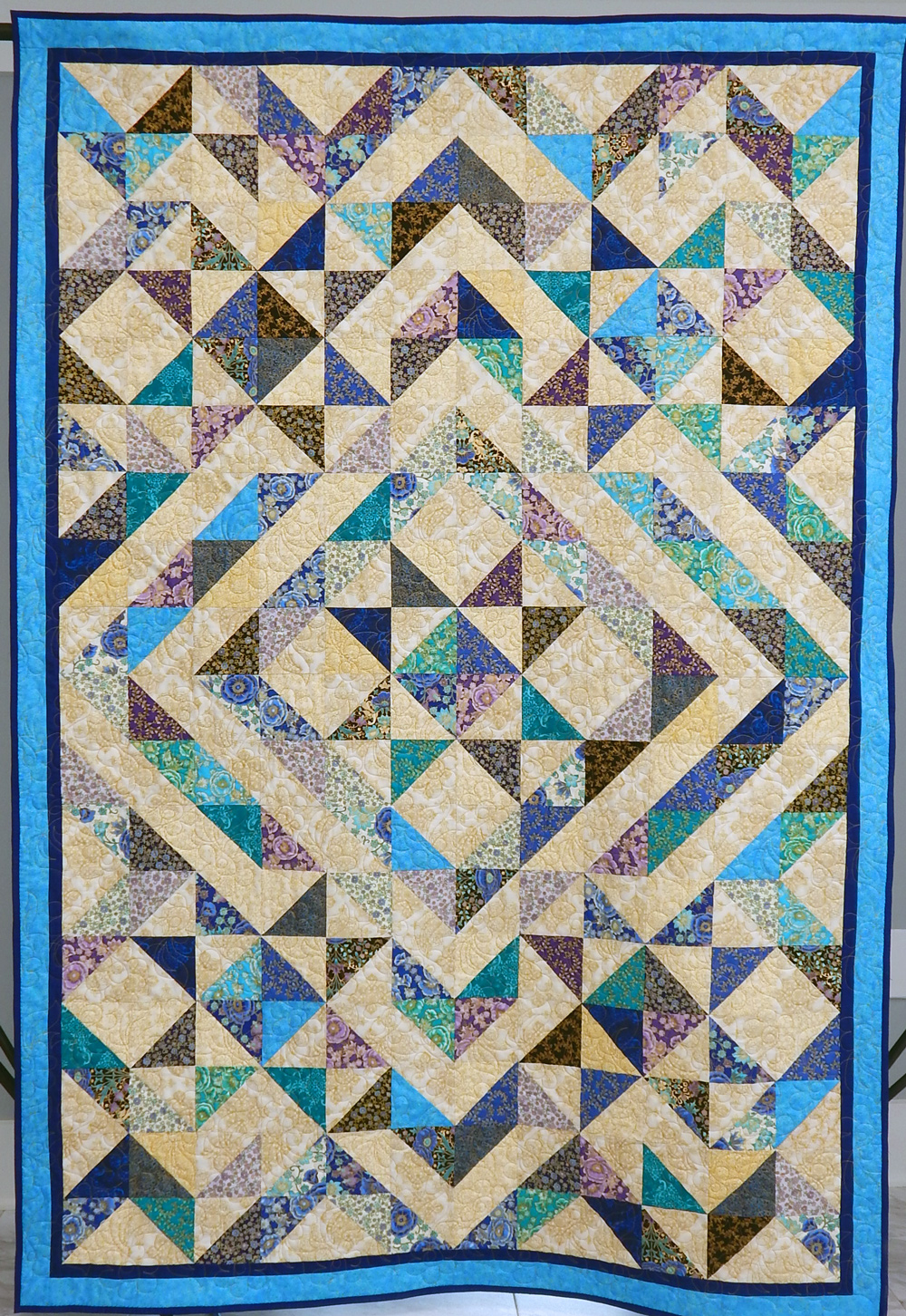
This is a quilt top I made as I was working out the details of the Lightening pattern I did for Studio Stitch a while back.

This is only 36″ square, so it will be a quilt for Ronald McDonald House in Winston-Salem, where they use this size for incubator covers.

I quilted this on my domestic sewing machine (a Bernina 550). I did not use the BSR stitch regulator primarily because it is packed somewhere in a moving box, though honestly, I don’t feel the need for it. I quilted a meander because it is fast and easy.

My blogging friend Clair pointed out some time ago that gold thread goes with almost any quilt top, and I’ve found that to be true! This is my favorite gold thread because it does look really gold but it is NOT metallic. (Metallic thread can be a bear to quilt with.)

As always, I used Bottom Line in the bobbin. I love that thread! If you have it in black and white you can blend it with almost any backing, though I have bought a few other colors as well.

And FYI, nobody paid me to say all this, and I bought the thread with my own money, etc, etc.

In case you missed it, here’s the quilt for which this was a practice piece. Last I looked Studio Stitch still had the pattern available free with purchase and even had one bundle of fat quarters left of the fabric.

Thanks for reading, and have a good week!


Virtual Design Wall

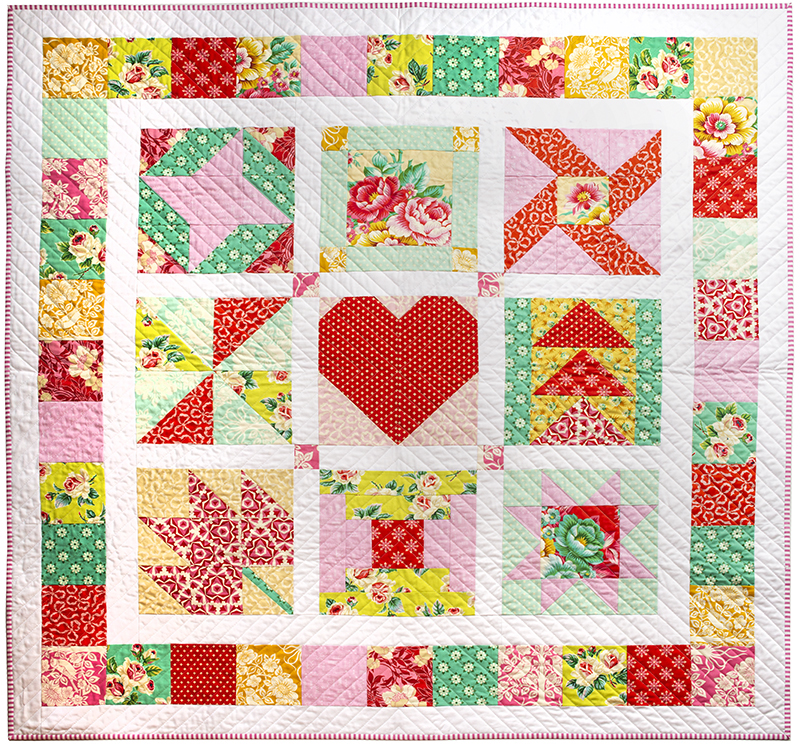
I’m making a queen sized quilt from my 100 Tula City Sampler blocks using this design. I made several layouts in EQ8, my design software, and chose this one.I love this layout, but it’s turning out to be a bear to piece!

BTW, I don’t recommend this design particularly. The sashing is waaay too fiddly.

Anyway, I have assembled the top in 4 quarter panels to improve the accuracy of my piecing. Now I’m ready to assemble the panels into a quilt top, but we are still in our rental house so I don’t have much of a design wall.

I thought I would wait until I have a big design wall in the new house, but then I had another thought. I took a picture of each of the quarters, edited them all with Photoshop, and custom printed them so each quarter is 7″ square. The pictures aren’t perfect, but I think they’ll work!

Now I can play with arranging the quarters in various ways. The printed colors aren’t great (I used regular printer paper) but this is going to be much easier than moving 4 big panels around on a big design wall. I may even use this technique again when I have a big design wall available.

I’ll let you know what happens.

Some Finishes

The random number generator picked comment #3, by Mary Lindberg, as the winner of the book on quilt finishing. I have been unable to contact her. If you read this, Mary, please contact me by 6:00 this evening so I can send your book. If I don’t hear from Mary I’ll ask the random number generator to select someone else.

It seems like I’ve done a lot of quilt-making in 2021, but had little to show for it. Here, at last, are a couple of finishes. These are made using blocks from a batik swap with one of my groups, done during COVID time when we couldn’t get together.

This first one is lap size, made just for fun. It doesn’t have a home yet, but I’m sure it will find one.

Name: Batik Swap One

Size: 66″ x 54″

Blocks by: Jeri, Mary B, Rena, and me

Quilted by: Julia Madison

Here’s the second quilt from swap blocks. This one is twin size, intended for use on one of the bunk beds in the “brothers’ room” at our new house.

Name: Brothers’ Bunk Quilt

Size: Twin

Blocks by: Jeri, Mary B, Rena, and me

Quilted by: Julia Madison

And speaking of the quilter, look at these pretty sunflowers she did on one of the quilts:

Last but not least, here is the latest stack of quilts made by the same group. I’ve been slow to deliver them, but they finally went to Ronald McDonald house this past week.


The Rest of the Story

True confession: The reason I made that shirt a couple of weeks ago was to work out the kinks in the pattern so I could make THIS shirt:

I found this fabric at Studio Stitch a couple of months ago and knew I just HAD to make a summer shirt from it! But of course I didn’t want to risk ruining it, so the first one was a practice piece made from inexpensive fabric. (A sewing teacher a number of years ago encouraged me to make my fitting “muslin” from fabric I could wear so the work wouldn’t be wasted.)

I love this fabric because it reminds me of Japanese summer yukata. I’m pretty sure the sharks are quirky American humor, though.

I wanted little red buttons in the shape of blood drops, but of course there were none to be found. Perhaps it’s just as well. The pin, a vintage James Avery sand dollar, surely is more socially appropriate 😀

A Terrific Resource for Quilt Finishing

The Ultimate Quilt Finishing Guide is not exaggerating in its name. I was not immediately enthusiastic because it isn’t a “modern” quilt book, but it really is “ultimate” in being very comprehensive. Pretty much everything you’ve ever learned or wanted to know about borders, batting, backing, and binding is in this book, whether you’re a modern or traditional quilter.

Photo courtesy of C&T

It’s a single resource for all the stuff I keep forgetting, like how to make bias binding from a square of fabric.

I also like the book because the authors often agree with me 😀  For example, they suggest choosing border fabric after completing the center of the quilt. This has been my method for years unless I have a specific reason for buying the border fabric at the same time as the fabrics for the center.

There is a section on squaring up the quilt top when it’s finished, and another section on squaring the quilt up after it has been quilted. This is a major hassle for many quilters, so it’s nice to have it all clearly explained and well illustrated.

There is a discussion of how to measure for borders and then attach them without distorting the edges of the quilt. I should have read that years ago, before I learned the hard way!

Other helpful topics include:

  • Choosing batting
  • Joining batting pieces
  • Binding for both plain and fancy edges

The only thing I disagreed with in the entire book is the method for joining binding ends. I’m sure the way described in the book works just fine, but I love Susan Cleveland’s “Kiss, Twist, and Wiggle” method.

An extensive section covers just about every type of border imaginable, which I particularly like. I certainly could draft any of these using EQ (Electric Quilt design software), but here they are with an explanation of how to do the math to make them fit! That last is the most important, and there are practical work-arounds when needed. For example, when a border is one that makes turning corners difficult, the authors suggest using corner squares. I like it.

This is a comprehensive guide that I’m happy to add to my quilt library. Although most of the samples in the book are more traditional looking, the authors do include many borders that would work for modern quilts, especially as the modern quilt movement seems to be diversifying a bit.

Here’s one last picture from the book:

Photo courtesy of C&T

If you’ve read this far, leave me a comment and I’ll draw a name to receive a free copy of this book. Sorry to say I can only ship to U.S. addresses. I’ll draw the winner on Sunday, July 4, a week after this post goes up. I think I can find your email if you’re a subscriber to these posts, but if you want to be sure please leave an email in your comment. And thanks for reading!

Please note: C&T provides books and products for me to review. I choose those that I like the very best to tell about in my blog.

Scrappy Triangle Swap Blocks

I’ve belonged to a block swap group for a long time, but we have done extra during COVID. Here’s the latest, a scrappy triangle block. In case you want to know, it’s made with the tri-recs tool, available several places–just ask Ms. Google.

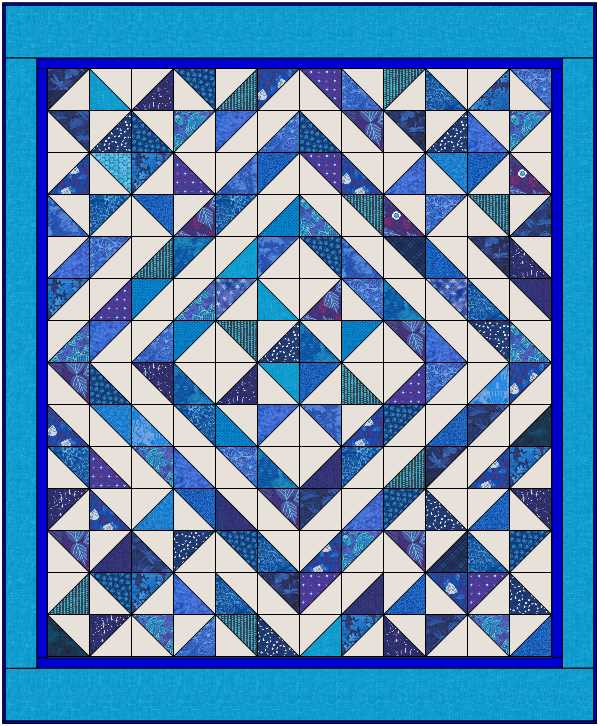
What we haven’t done is put any of these into a quilt! Here are some ideas on layout:

And in case you’ve never made improvised scrap blocks, here are directions. We’ve been using single-color scraps, but there’s no reason the color scheme can’t be scrappy.

Start by choosing 2 scraps you like and sew them together any way you care to. If one has a curved side, you can choose to sew the curve or cut it off straight.

Trim up an edge so you can add something else.

Keep adding pieces, checking occasionally to see if your template is going to fit on the scraps.

It’s fine to add BIG pieces too in order to move things along.

Press all the seams open. Too much bulk otherwise with all those seams.

Finally, cut around your template and assemble the block.

What templates do you like to use?