Which is why I put her name in the header, figuring it would attract her attention. I’m so sorry to have confused some readers! If I don’t hear from Mary within a week I’ll ask the random generator to try again. Meanwhile, thanks for reading.
Category Archives: Quilting
Calling Mary Lindberg…
You were the winner selected by the random number generator. Please email me your address so I can send your book! Thanks! ZippyQuilts(at)gmail(dot)com
A Terrific Resource for Quilt Finishing
The Ultimate Quilt Finishing Guide is not exaggerating in its name. I was not immediately enthusiastic because it isn’t a “modern” quilt book, but it really is “ultimate” in being very comprehensive. Pretty much everything you’ve ever learned or wanted to know about borders, batting, backing, and binding is in this book, whether you’re a modern or traditional quilter.
It’s a single resource for all the stuff I keep forgetting, like how to make bias binding from a square of fabric.
I also like the book because the authors often agree with me 😀 For example, they suggest choosing border fabric after completing the center of the quilt. This has been my method for years unless I have a specific reason for buying the border fabric at the same time as the fabrics for the center.
There is a section on squaring up the quilt top when it’s finished, and another section on squaring the quilt up after it has been quilted. This is a major hassle for many quilters, so it’s nice to have it all clearly explained and well illustrated.
There is a discussion of how to measure for borders and then attach them without distorting the edges of the quilt. I should have read that years ago, before I learned the hard way!
Other helpful topics include:
- Choosing batting
- Joining batting pieces
- Binding for both plain and fancy edges
The only thing I disagreed with in the entire book is the method for joining binding ends. I’m sure the way described in the book works just fine, but I love Susan Cleveland’s “Kiss, Twist, and Wiggle” method.
An extensive section covers just about every type of border imaginable, which I particularly like. I certainly could draft any of these using EQ (Electric Quilt design software), but here they are with an explanation of how to do the math to make them fit! That last is the most important, and there are practical work-arounds when needed. For example, when a border is one that makes turning corners difficult, the authors suggest using corner squares. I like it.
This is a comprehensive guide that I’m happy to add to my quilt library. Although most of the samples in the book are more traditional looking, the authors do include many borders that would work for modern quilts, especially as the modern quilt movement seems to be diversifying a bit.
Here’s one last picture from the book:
If you’ve read this far, leave me a comment and I’ll draw a name to receive a free copy of this book. Sorry to say I can only ship to U.S. addresses. I’ll draw the winner on Sunday, July 4, a week after this post goes up. I think I can find your email if you’re a subscriber to these posts, but if you want to be sure please leave an email in your comment. And thanks for reading!
Please note: C&T provides books and products for me to review. I choose those that I like the very best to tell about in my blog.
Scrappy Triangle Swap Blocks
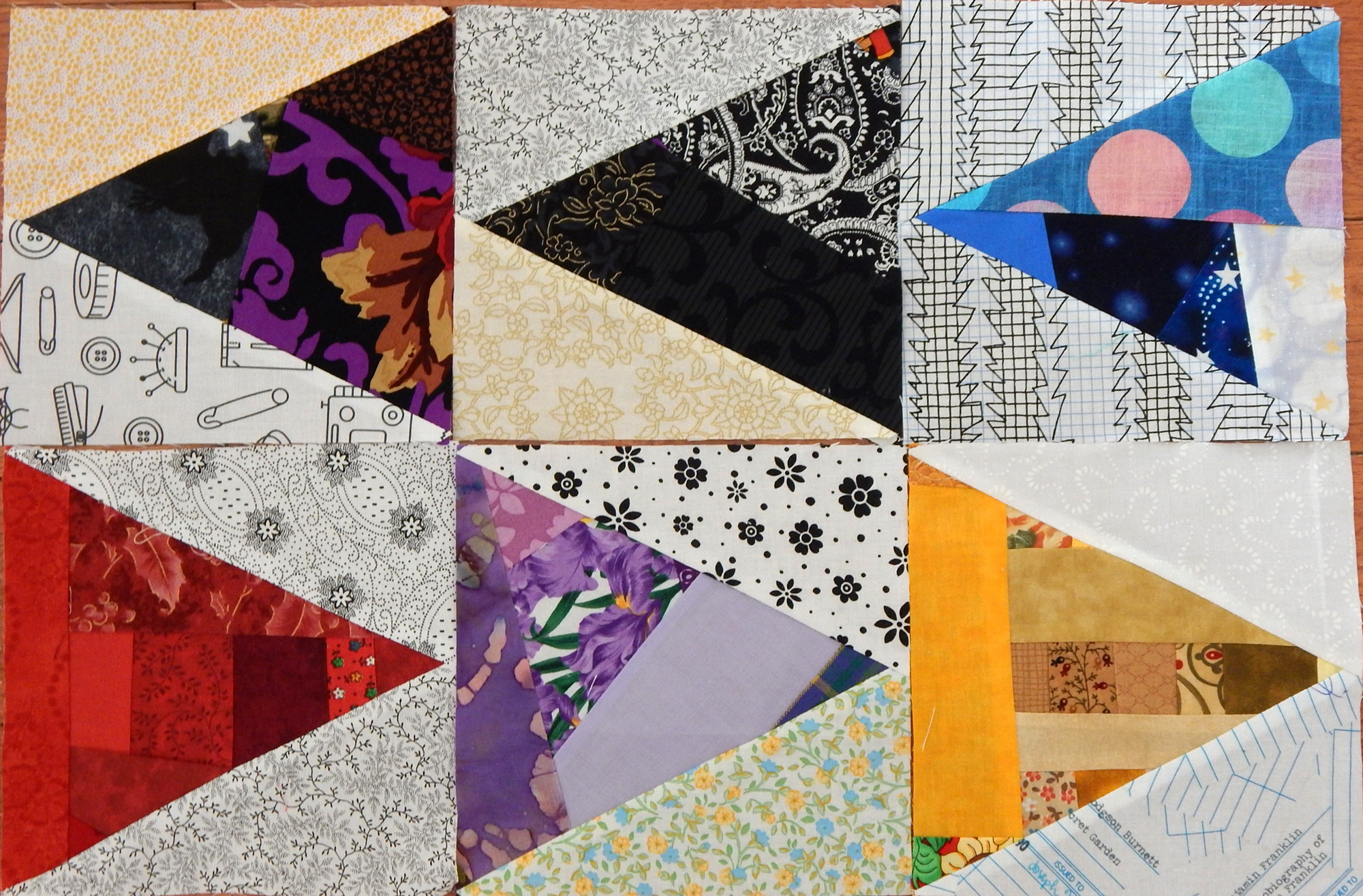
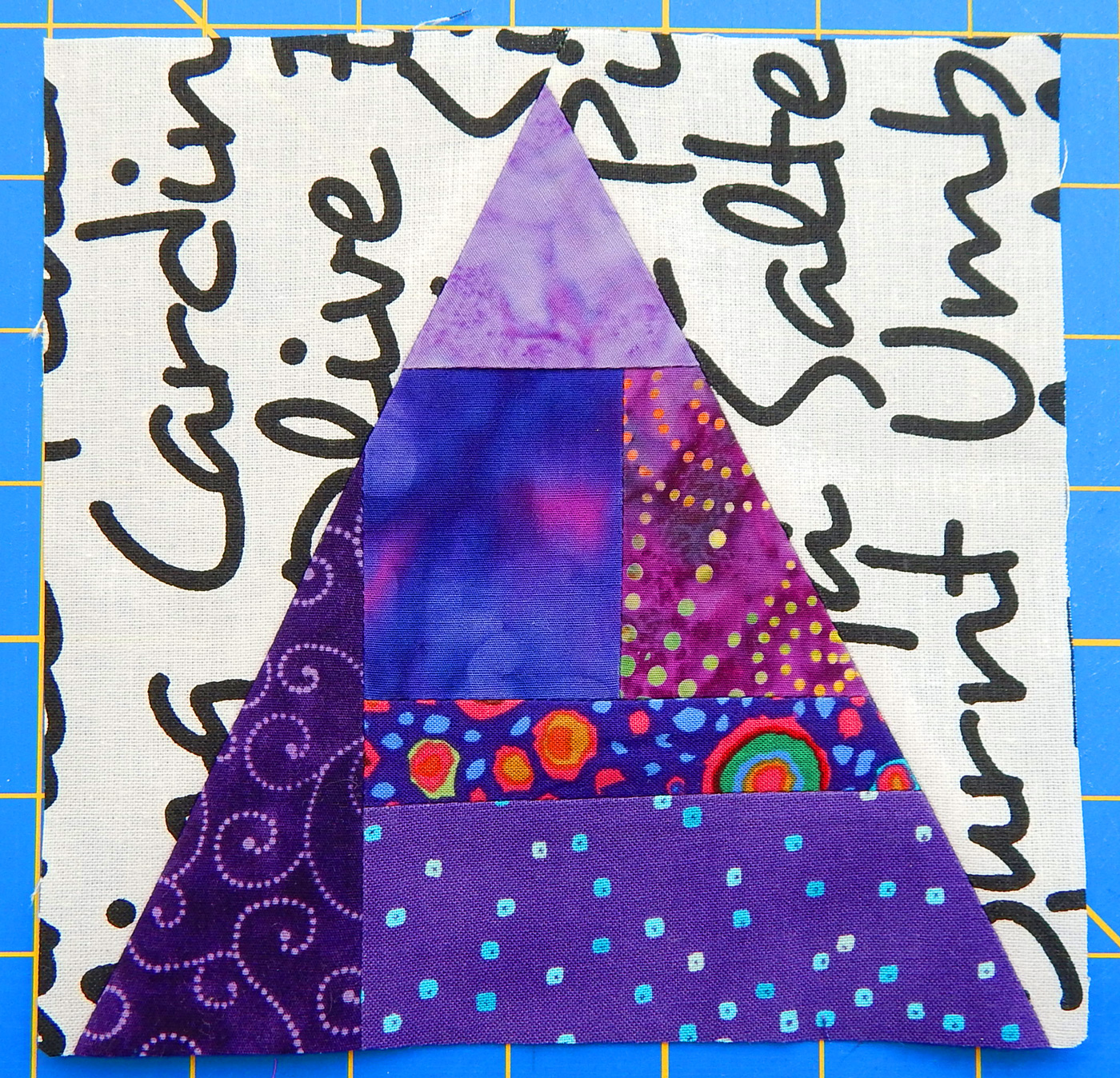
I’ve belonged to a block swap group for a long time, but we have done extra during COVID. Here’s the latest, a scrappy triangle block. In case you want to know, it’s made with the tri-recs tool, available several places–just ask Ms. Google.
What we haven’t done is put any of these into a quilt! Here are some ideas on layout:


And in case you’ve never made improvised scrap blocks, here are directions. We’ve been using single-color scraps, but there’s no reason the color scheme can’t be scrappy.
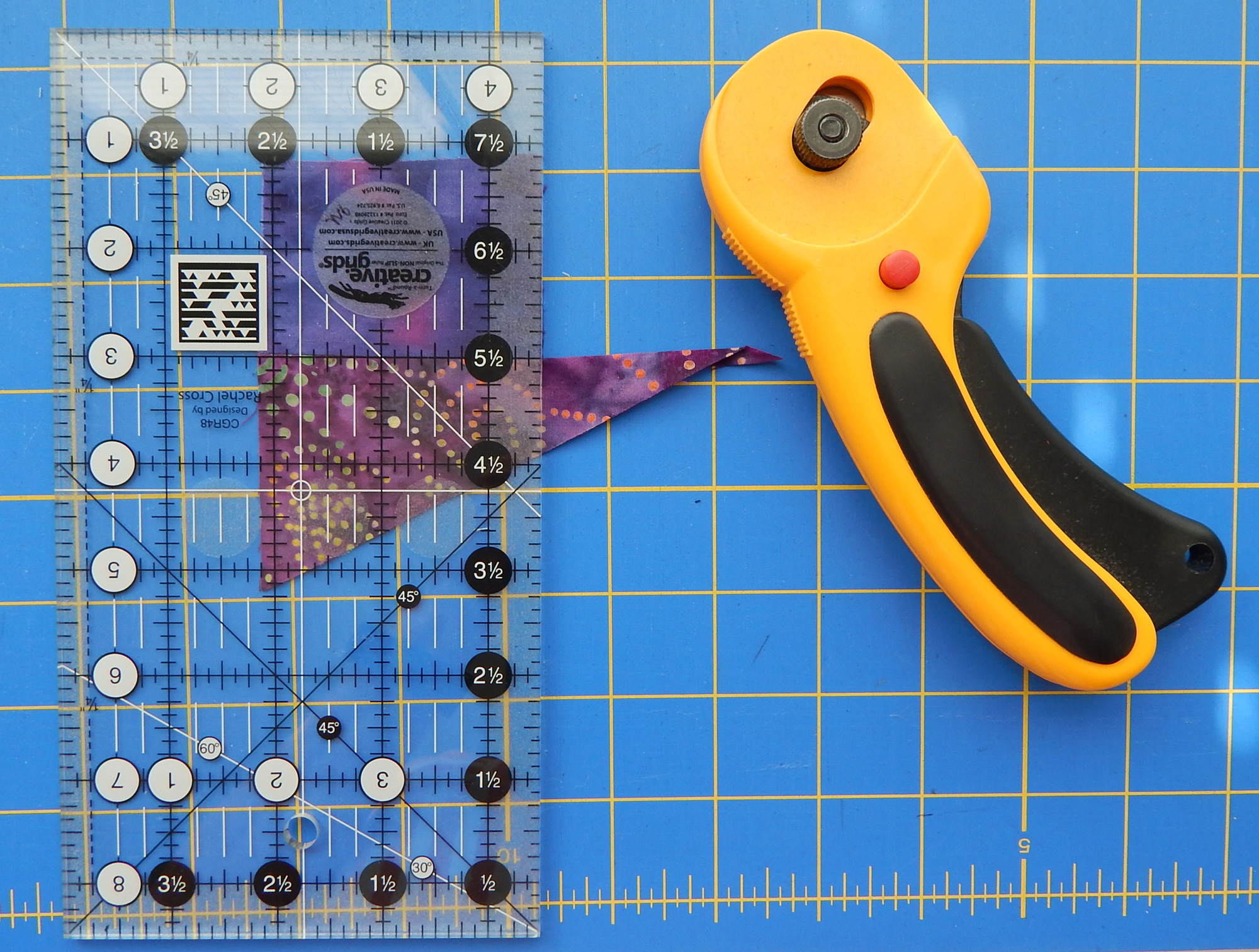
Start by choosing 2 scraps you like and sew them together any way you care to. If one has a curved side, you can choose to sew the curve or cut it off straight.
Trim up an edge so you can add something else.
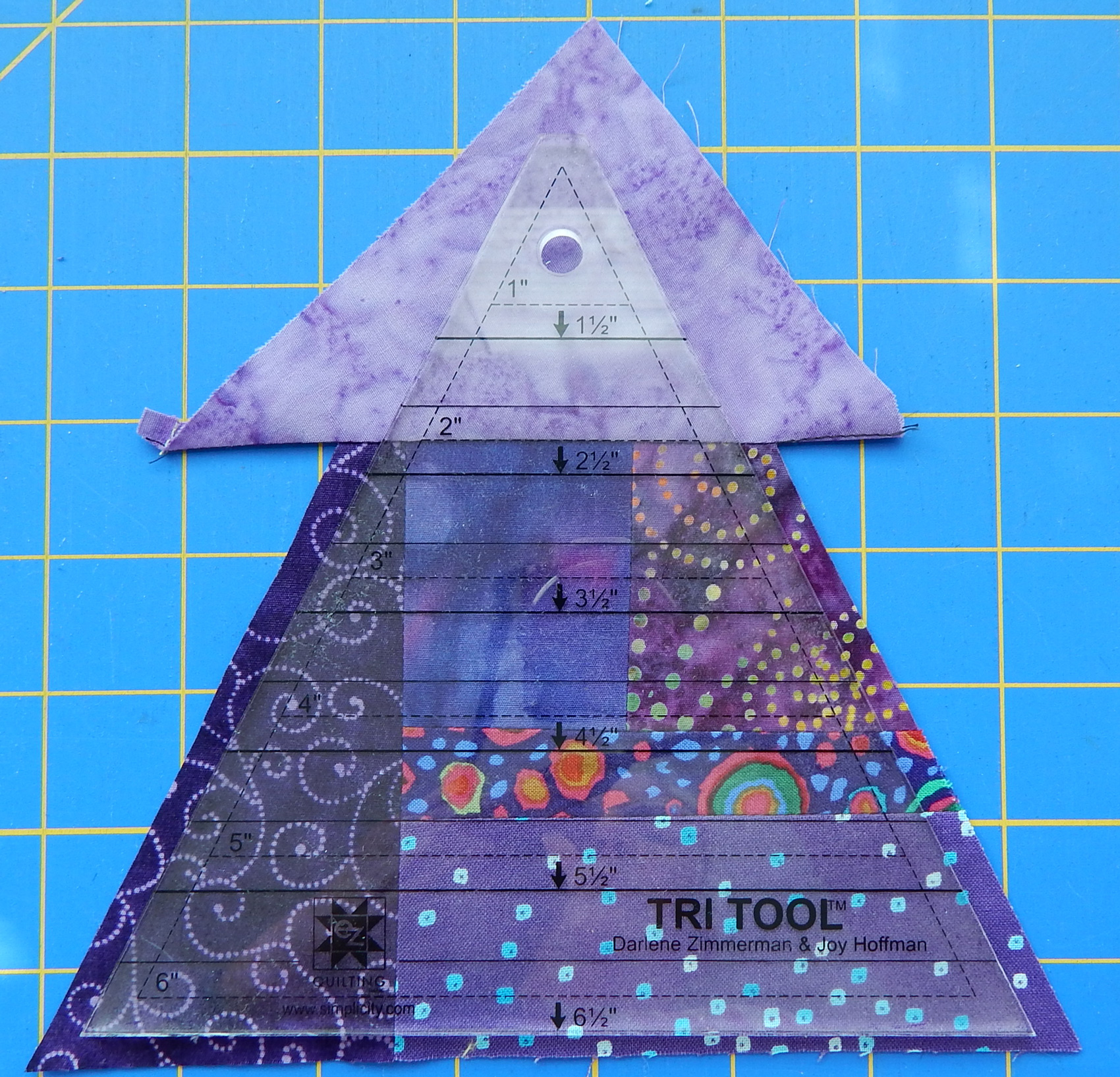
Keep adding pieces, checking occasionally to see if your template is going to fit on the scraps.
It’s fine to add BIG pieces too in order to move things along.
Press all the seams open. Too much bulk otherwise with all those seams.
Finally, cut around your template and assemble the block.

What templates do you like to use?
Many Ways With Walking-Foot Quilting
Despite the fact that it typically takes longer than free-motion quilting, I usually prefer to quilt with my walking foot.
I’ve been working on samples for a class on walking-foot quilting I’ll be teaching later this year.. Some of these samples confirmed my previous preference for Superior brand threads, and for polyester threads particularly.
This sample was done with a famous brand of cotton quilting thread. The stitches with this thread did NOT want to sink into the quilt sandwich. They came loose at every opportunity. That was a particular problem because of the number of stops and starts in the design. I generally have good luck using the lock stitch on my machine at the beginning and end of each section, but this thread just popped right back out. Ugh.
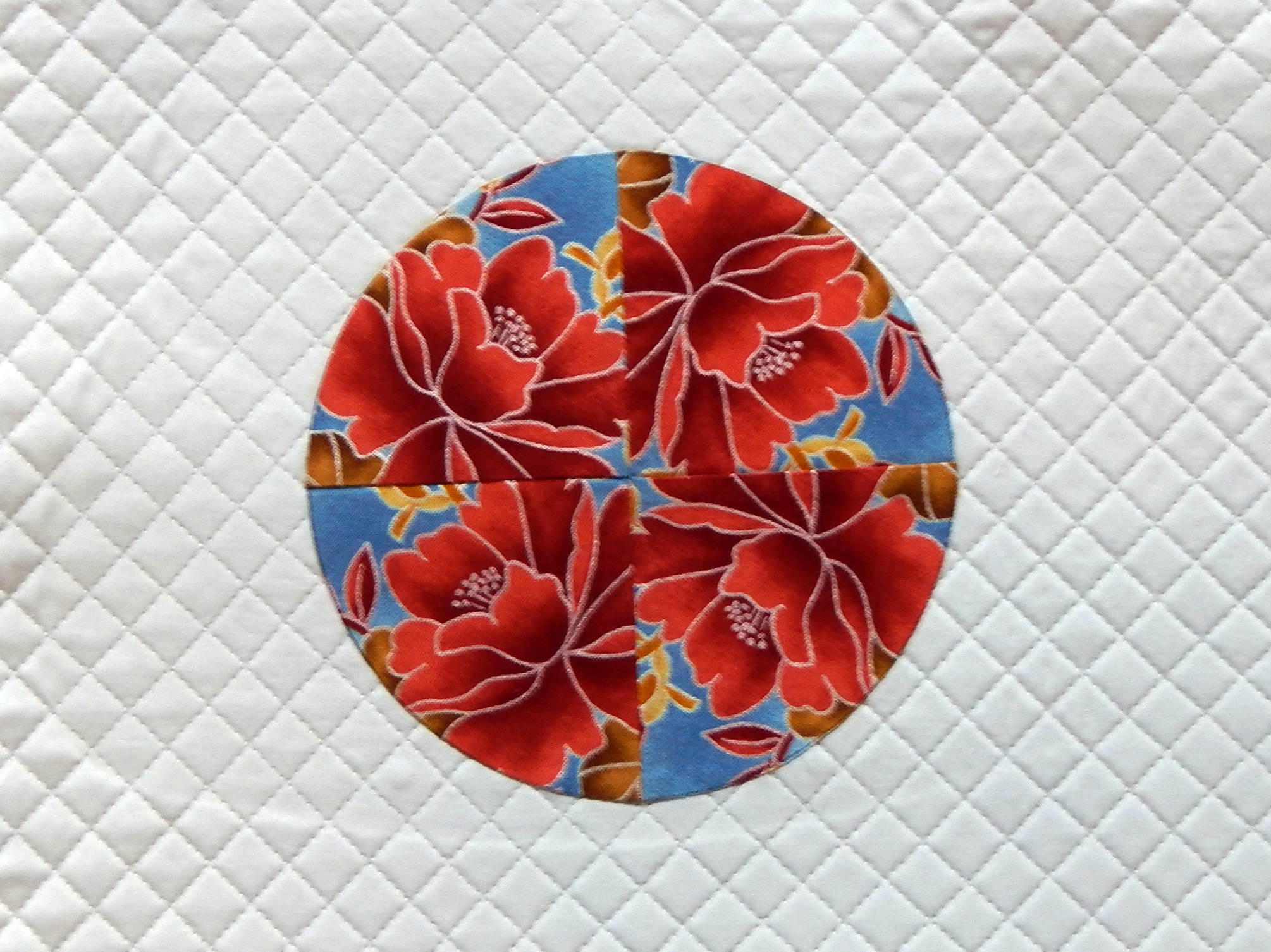
This background was quilted with Superior Bottom Line in both the bobbin and the needle. That combination did its usual great job of showing the lines without making the thread stand out. I often use this pattern as background for fusible applique, so that’s what I did with this example. After all, what else was I going to do with that orphan block from which I cut the circle?
Then I just made a bunch of straight lines with various threads and stitches. I expect this is what most people will want to do.
There are a lot of fun quilting threads out there. So far I’ve been happiest with polyester for a number of reasons, but I also have some King Tut (cotton) that works quite well.
What’s your favorite thread for machine quilting? Maybe I’ll find something new!
Eight Years
I’ve now been blogging weekly for 8 years. One of the best things about it is “meeting” people from all over the world and reading about what they are doing. Some of them have been at it even longer than I have, though many of the bloggers I’ve “met” have since quit writing.
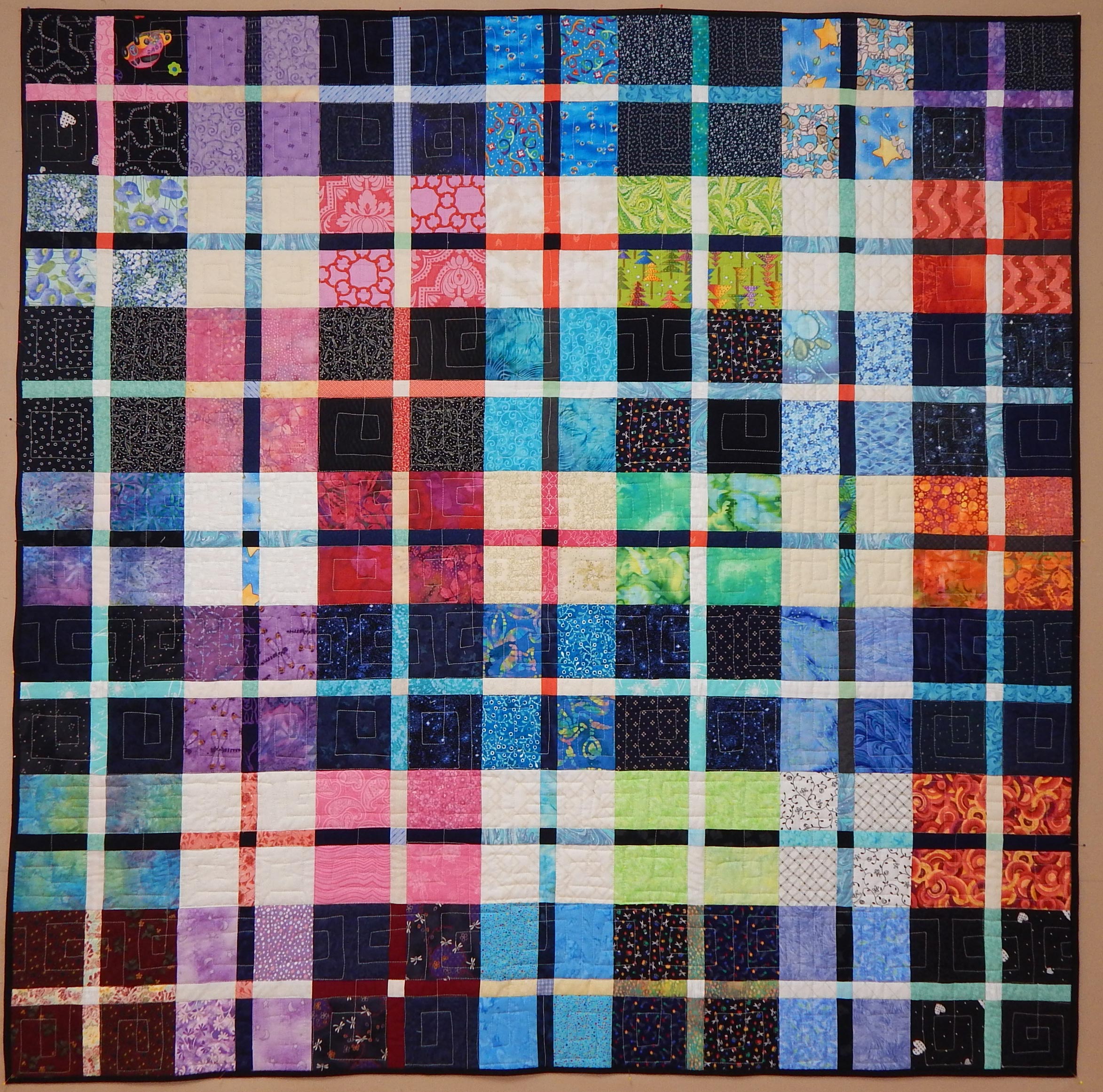
Here are my current favorite quilts from each of the years I’ve been blogging.
I’m going to delete many of the older posts since I doubt they are serving any purpose at this time. I have had a book made for each year, as suggested by my friend Linda, so I can always look back at them if I want.
My Favorite Color Update
I bought the pattern for “My Favorite Color is Moda”, thinking I would repurpose the fabrics I had decided not to make into a temperature quilt.
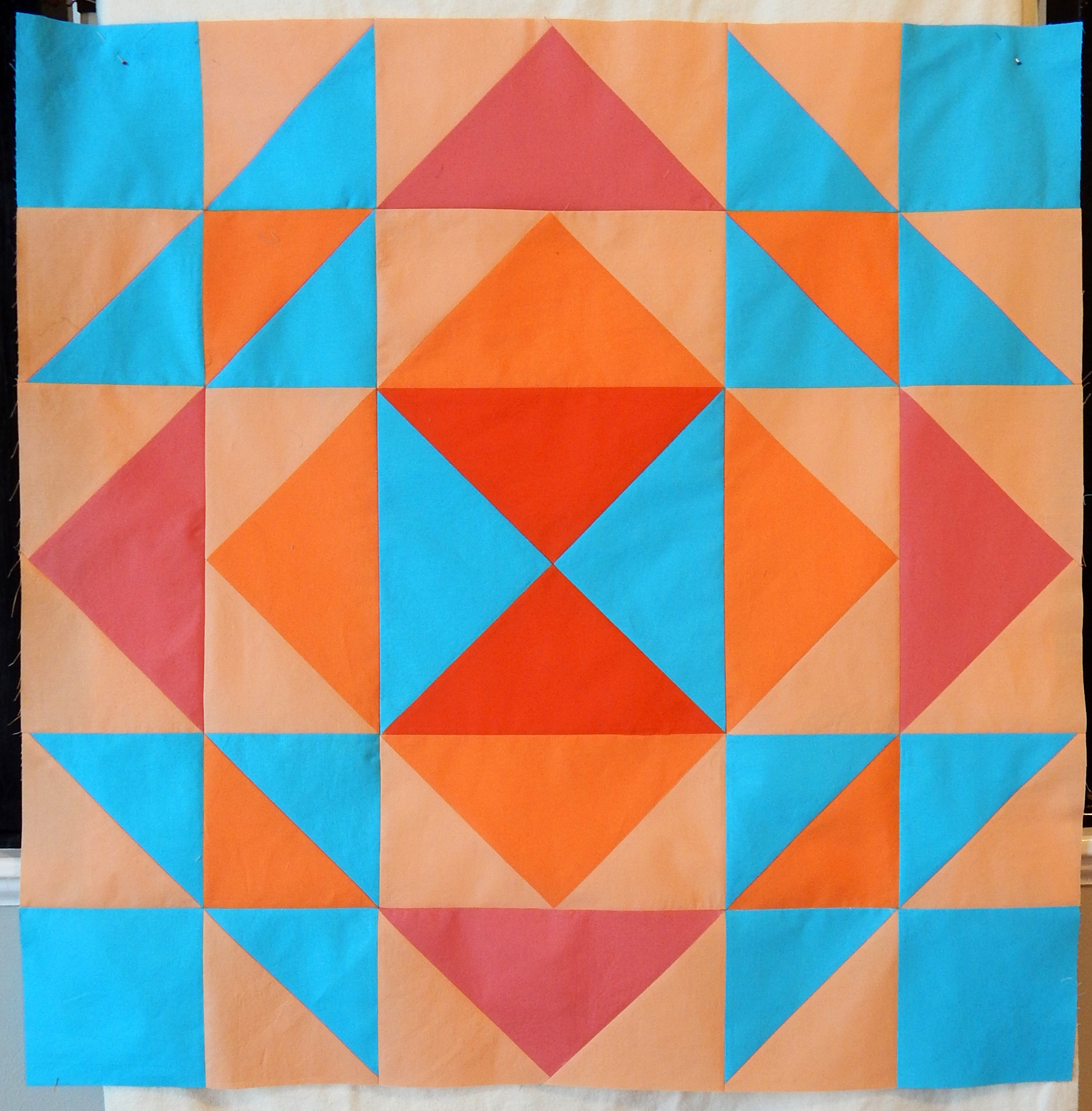
Block 1 was big (36″ square!) and bright:
Then I found that many of the other blocks were repeated in different color combinations. Oops, I don’t like making the same block twice. Made a few anyway.
Things went sideways for me from there, though two of my friends finished their quilt tops and one even has it quilted and on her bed already!
So I simply made block 1, which was 36″ x 36″, into a quilt to be donated to Ronald McDonald House. They send that size to the hospital for use on preemie incubators.
Anybody else doing this pattern? How’s it coming along?
Landscape Quilting Books
I’ve been making landscape quilts for years and have collected several books on the subject. Since I’m going to be teaching landscape quilting again soon, I thought I’d list the books I am familiar with as a resource for anyone interested in the subject. This absolutely is not an exhaustive list of all the books available; it’s just brief reviews of the books in my own collection.
Create Landscape Quilts by Meri Henriques Vahl, C&T, 2021. This is by far the best of the bunch if you want to put people in your quilts. She covers all the basics but particularly excels at detailed directions for including realistic people. Since I have a “hang-up” about drawing people, this was especially helpful for me. Of course, she has a number of examples of art quilts that do not include people, as well. Her technique is basically collage with a tulle layer on top. Look at the amazing detail in this sample of her work! Book available here.
Happy Villages by Karen Eckmeier, 2nd Edition, The Quilted Lizard, 2014. This book presents step-by-step instructions for making a number of landscape quilts. It is easier to jump right in here because of the specific instructions, but some of the pieces she uses are tiny. I used tweezers. This is another collage technique with a tulle layer on top. Connecting Threads had it here for less than the used book site I generally go to.
Mickey Lawler’s Skyquilts by Mickey Lawler, C&T, 2011. This is a fabric painting book, entirely different from the previous two. It does address some basic principles, and if you enjoy fabric painting this is a good place to start. The author uses several different dyes and paints, which are explained in the book. I did not invest in most of them, but did enjoy using my Setacolor dyes and her ideas. I particularly like her suggestion to use tracing paper over your finished quilt to decide where/how to quilt it, since quilting lines can make all the difference in any type of quilt. It is available from C&T as an e-book here, or I found a good price on a used copy at Abe Books (use their search feature to find what is available).
Easy Batik Landscape Quilts by Patricia L. Brown, AQS Publishing, 2011. The technique here takes advantage of the natural variability in batik fabrics to make more realistic looking landscape quilts without having to apply paint or other media. Ms. Brown makes paper patterns and uses piecing and applique to assemble her quilts, so a tulle layer is not necessary. There are examples of both realistic and abstract designs with specific instructions for making a number of them. I have found that batiks are, indeed, excellent for landscape quilts, but I don’t have the patience to make paper patterns the way she does. (I made one landscape quilt using patterns I designed in a workshop with Georgia Bonesteel years ago, so I did try!) At the time of this writing, Connecting threads had a good price on it here.

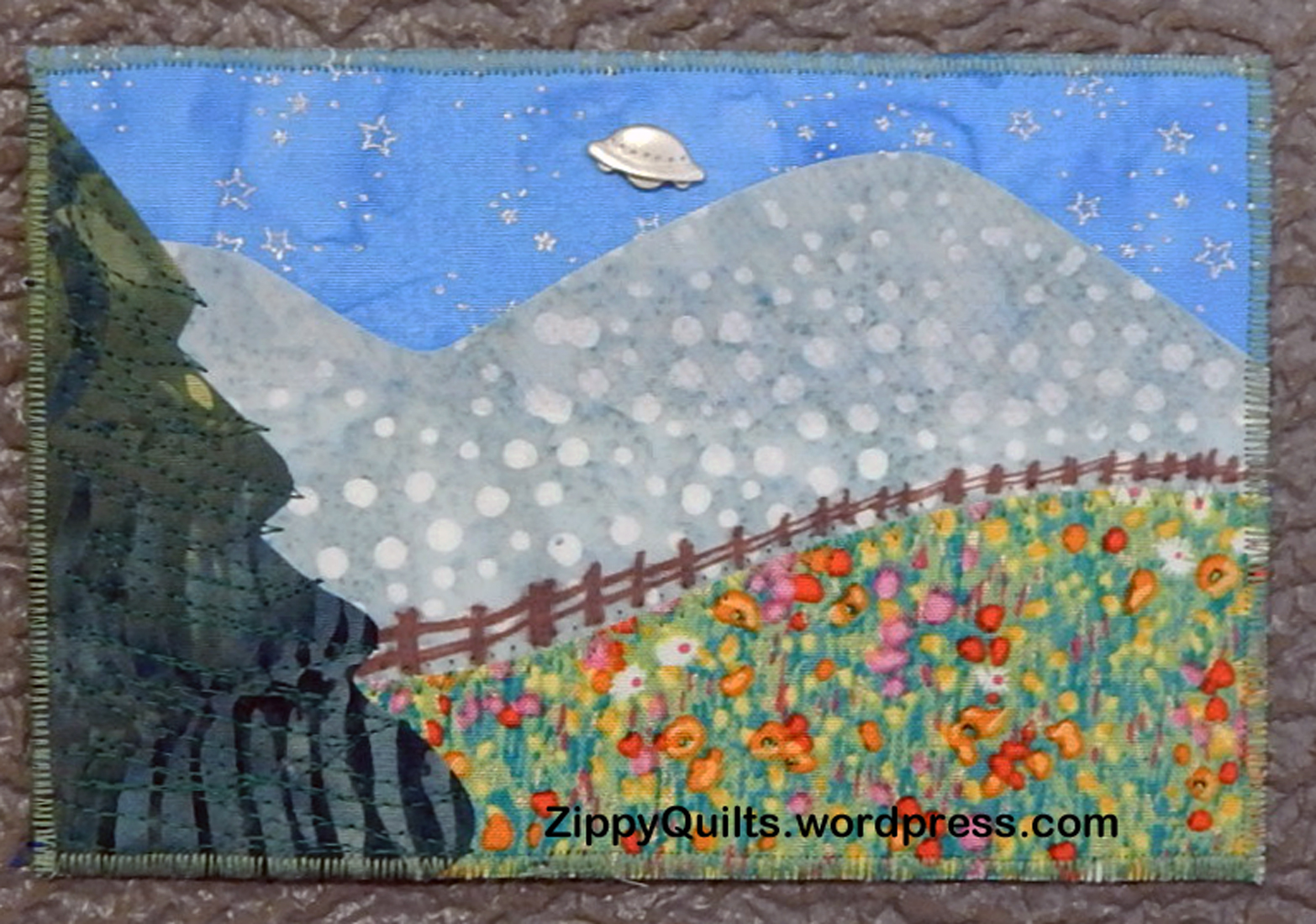
The mountain in the background is made from a batik so did not need to be painted to have the right appearance. The commercial prints in the foreground were altered with markers.
Accidental Landscapes by Karen Eckmeier, The Quilted LIzard, 2008.This book has an excellent discussion of the elements and techniques that make a successful landscape quilt without resorting to technical language or going into too much detail. The sample projects she uses to teach techniques are easy and helpful. Her examples are much less elaborate than those in most of the other books, which is especially nice if you’re just getting started. The publisher sells it through Amazon.
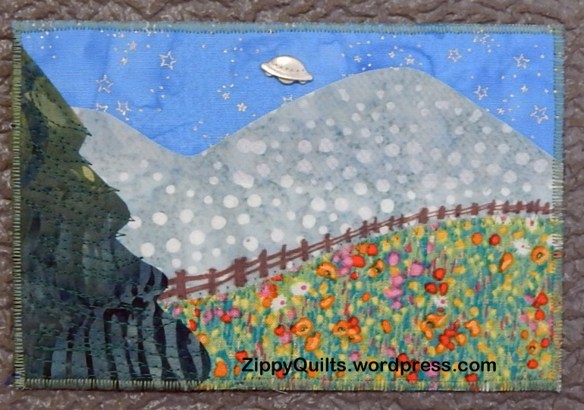
Points of View by Valerie Hearder, Martingale, 2007. This book covers a variety of media that can be used in landscape quilts, from commercial prints to fabric crayons, paint sticks, and embroidery. She constructs the quilt on a muslin base, which I have found helpful. She shows how to use tulle and batiks as well. If you want just one book that covers a variety of techniques, this is a good one. I particularly like the way she plays with scale to add interest to some of her designs. This was available through Thrift Books at the time of this writing–use the search feature to find available copies.

This one was made with fused fabric, using techniques I learned several years ago from Laura Wasilowski
The Art of Landscape Quilting by Nancy Zieman and Natalie Sewell, Krause, 2007. I love Nancy Zieman’s practical approach to sewing and quilting, and this book starts with how to generate ideas and goes right through to finishing the quilt. There are no instructions for making specific quilts. Instead, the authors use many pictures of landscape quilts they have made to explain a variety of techniques for making your own designs. At the time of this writing, the book was unavailable through Thrift Books and available but not cheap at Abe Books. It was $71 on Amazon, so better check your library!
Landscape Quilts for Kids by Nancy Zieman and Natalie Sewell, Krause, 2004. This is a fun book that covers all the basics. I especially enjoyed her idea of cutting out people and animals and applying them broderie perse style to the quilts. She gives tips on how to print pictures of your own kids on fabric for use in landscape quilts. Amazon had one left at a reasonable price as of this writing, but Abe Books had a better price for a used copy; use the search boxes to see what they have available.
There are many more landscape quilts waiting to be made from the pictures I’ve taken at beautiful places we have visited.
Please note: the links are for your convenience; they are not affiliate links for which I get paid. I do receive books from C&T for review, but I only review the ones I like!
A Preschool Project
Our younger grandson is energetic and curious about everything, and one day he walked over to the sewing machine and said, “I want to see what this does!” He selected some scraps and sewed them together with a little help and a lot of watching to keep his fingers out from under the needle! Luckily, my machine has a speed control so I was able to slow it way down to lessen the risk.
The next time he came to visit, we got out the scraps. He chose everything he liked and we glued the scraps to a piece of paper (8.5″ x 11″, which we used to call “typing paper”!). I didn’t help with selection or placement, only encouraged him to cover the paper completely.
We then went to the sewing machine, where I operated the foot pedal and he guided the fabric-covered paper. He learned how to guide the piece under the foot, and we turned the speed up a little! (Note: If you do this, don’t let the child see where the speed control is!) We used a zigzag stitch to cover the edges more easily, and tried a few other stitches, too.
It took several visits for him to finish the piece with all the edges tacked down. He enjoyed the sewing and was very good at clipping stray threads. I then let him choose a tote bag to which we attached his art quilt 🙂
He was very proud of his creation, though he’s still at that age where kids do the fake smile when they see a camera. The lovey got to ride home in the bag along with a couple of other toys he had brought along.
If you have children who try this, please send me pictures of their creations so I can share. And have fun!
Teaching Again!
Hooray! The pandemic is finally well enough controlled around here for Studio Stitch to start offering classes again! We’ll still all wear masks, which means classes will be scheduled for half days so we won’t have to figure out lunch. But it is SO encouraging to have the opportunity to be with other quilters again and feel a little bit normal. Most of us have now been vaccinated, so it feels much safer, though we will continue to take care!
Here’s what I’ll be teaching in the next couple of months.
Better Binding Painlessly, May 11. This is a basic binding class that teaches techniques and answers common questions about how to bind a quilt without going crazy doing it.
Little Landscapes, June 1 in the afternoon and June 2 in the morning. This is an introduction to landscape quilting. We make little landscapes in class to learn the basics so you’ll be ready to make landscape quilts of any size on your own.
Plaidish, June 10 afternoon and June 11 morning. This is a free pattern available from Kitchen Table Quilting. It’s a great way to learn about color, value, and matching the corners on tiny pieces.
There’s more information about all of these classes, plus many others, on the Studio Stitch website. If you’re near Greensboro, I hope to see you 🙂