Eight Years

I’ve now been blogging weekly for 8 years. One of the best things about it is “meeting” people from all over the world and reading about what they are doing. Some of them have been at it even longer than I have, though many of the bloggers I’ve “met” have since quit writing.

Here are my current favorite quilts from each of the years I’ve been blogging.

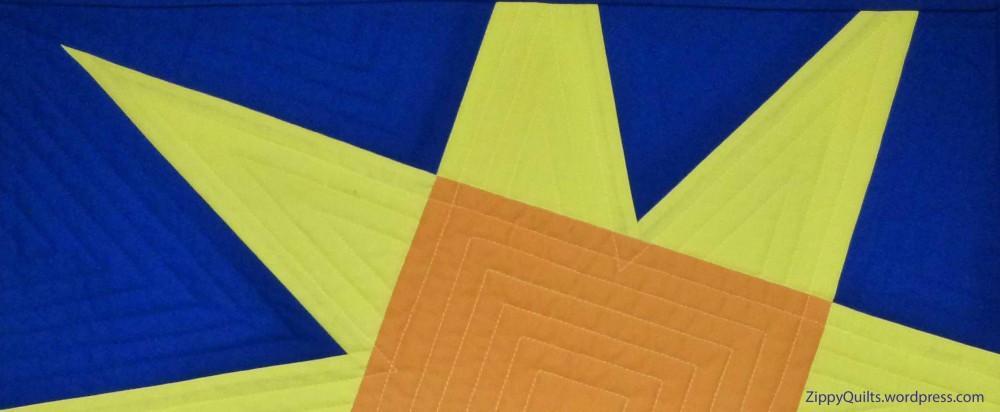
Rising star art quilt

Rising Star, made for the Quilt Alliance TWENTY contest in 2013

quilt photo

My Zippy Star Quilt and Pillow as shown in Modern Quilts Unlimited, Summer 2014

modern quilt

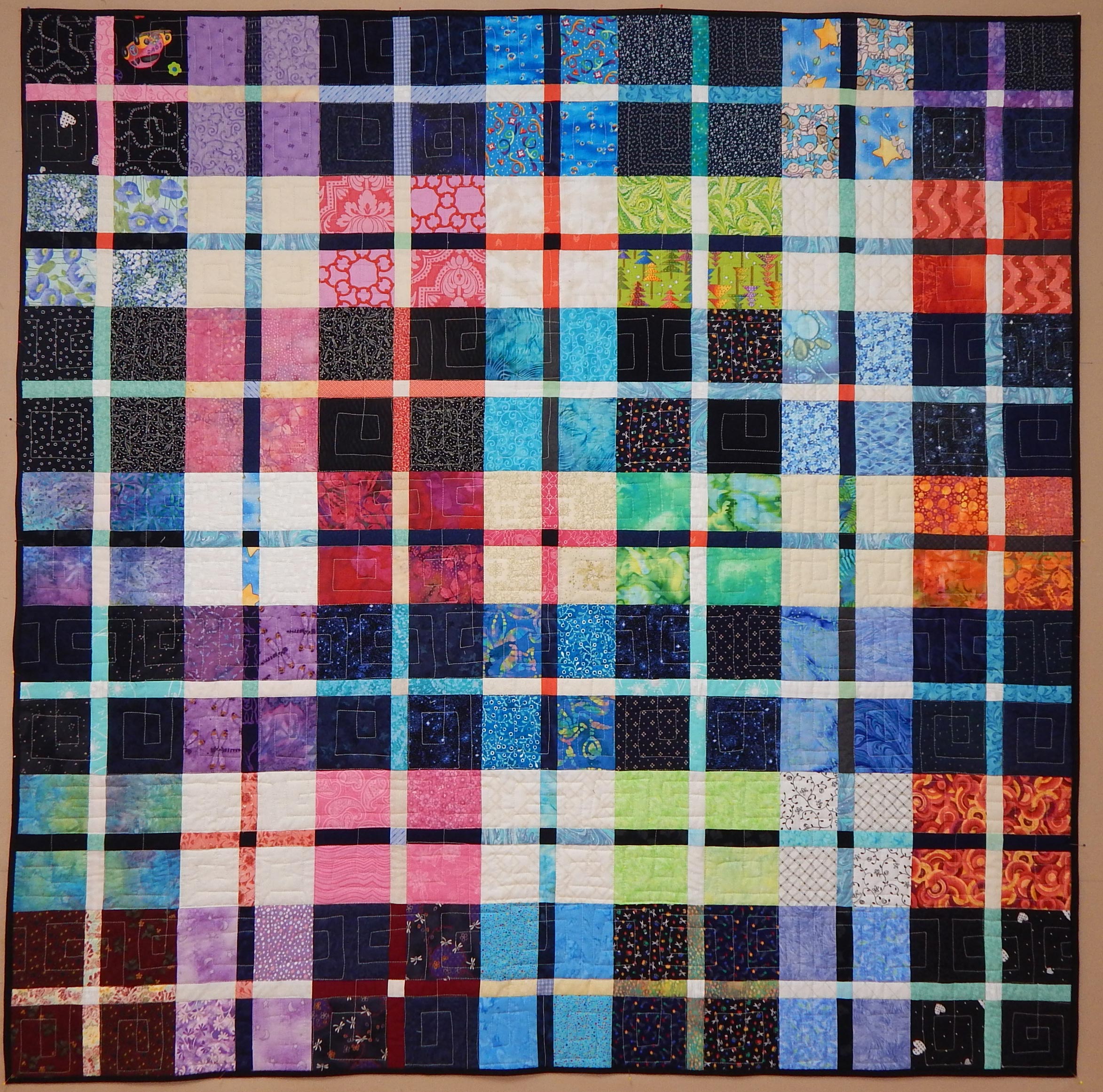
Happy Squares, designed and made by me, 2015

improvisational quilt

Cherrywood Toss, 2016.

scrap quilt

Scrap quilt made with strips that finish 1″ wide, 2017

Equilateral Triangles, 2018

My “Little Green Man” quilt, June 2019

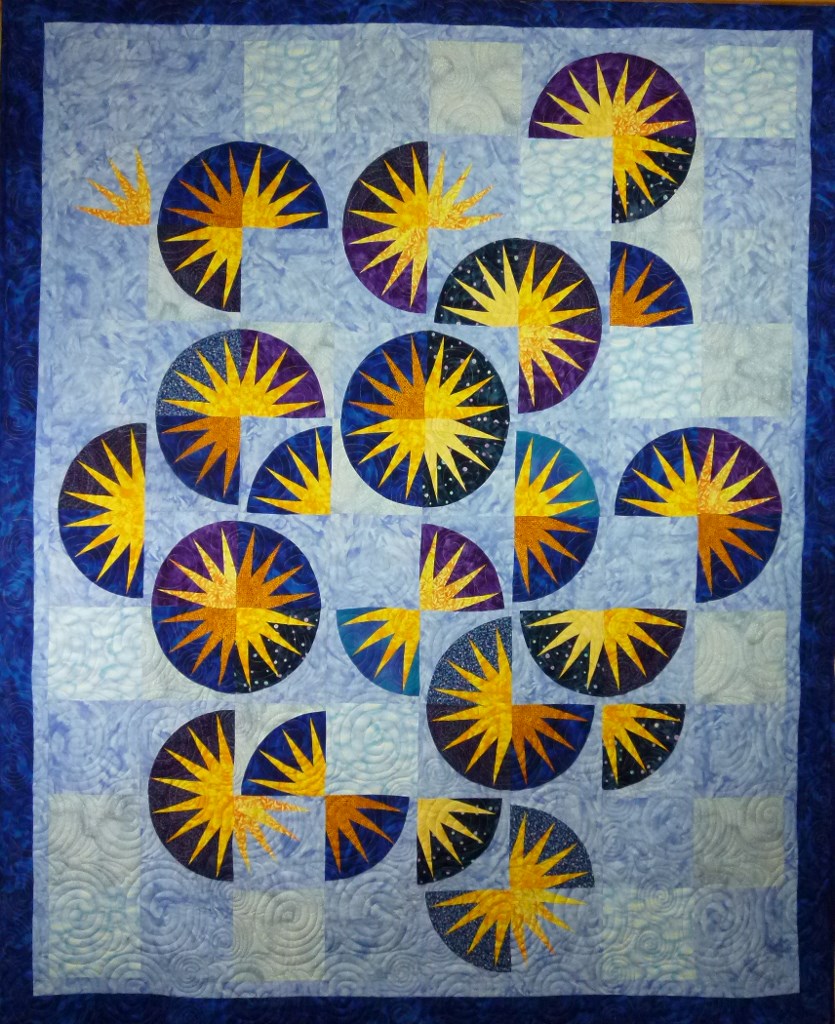
“Clamshells? Really?” 2020

I’m going to delete many of the older posts since I doubt they are serving any purpose at this time. I have had a book made for each year, as suggested by my friend Linda, so I can always look back at them if I want.

My Favorite Color Update

I bought the pattern for “My Favorite Color is Moda”, thinking I would repurpose the fabrics I had decided not to make into a temperature quilt.

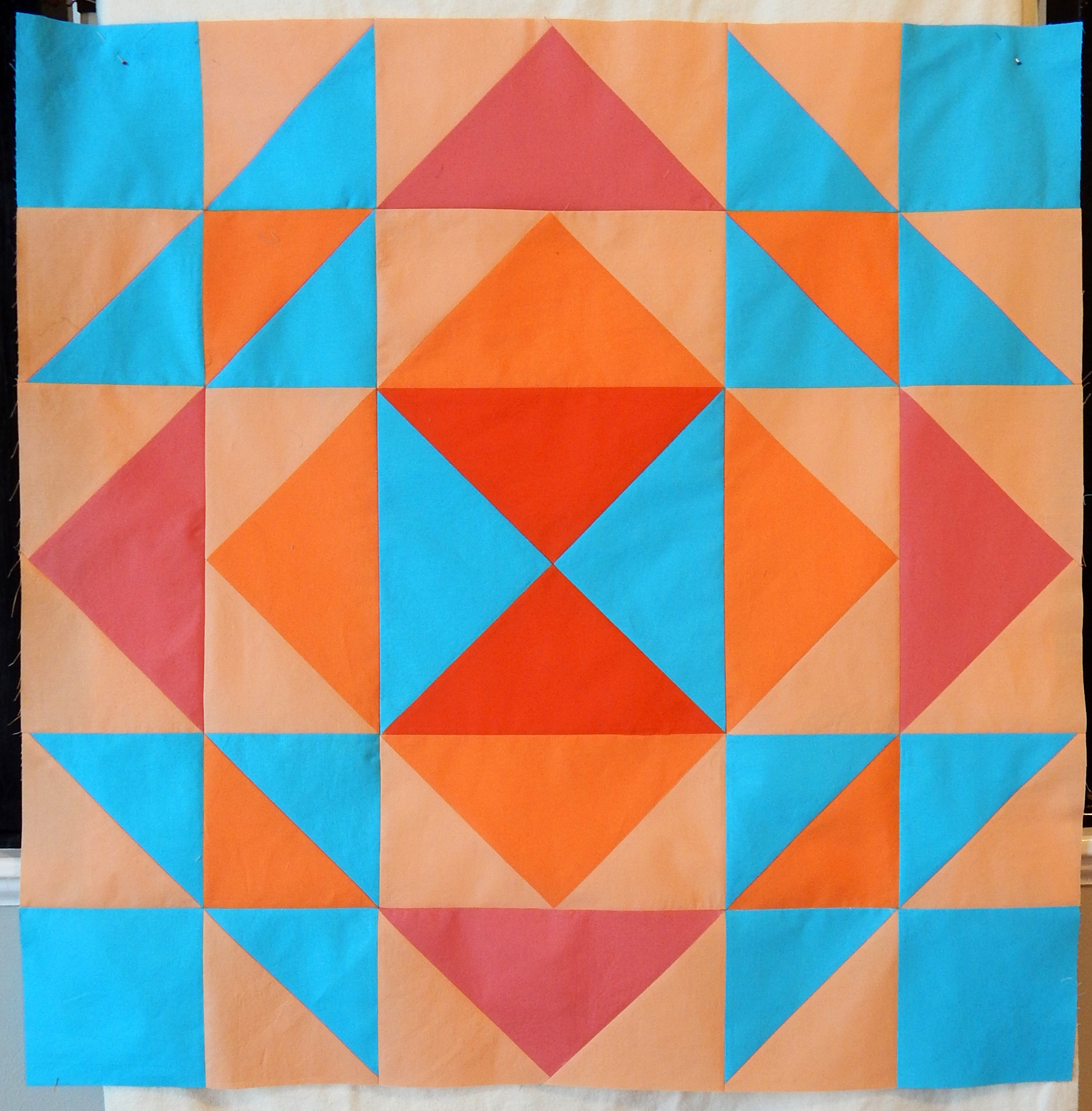
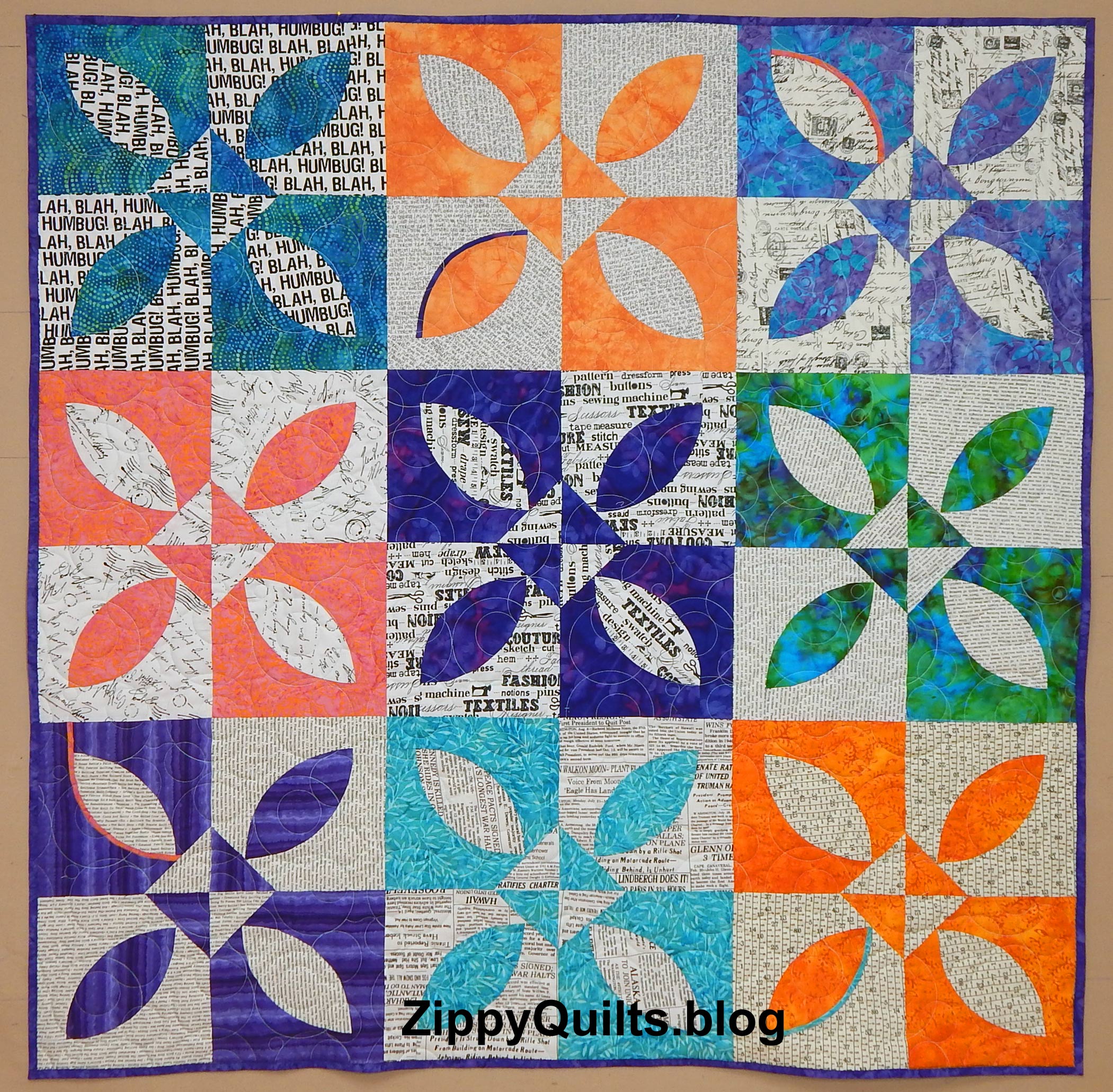
Block 1 was big (36″ square!) and bright:

Then I found that many of the other blocks were repeated in different color combinations. Oops, I don’t like making the same block twice. Made a few anyway.

Things went sideways for me from there, though two of my friends finished their quilt tops and one even has it quilted and on her bed already!

So I simply made block 1, which was 36″ x 36″, into a quilt to be donated to Ronald McDonald House. They send that size to the hospital for use on preemie incubators.

Anybody else doing this pattern? How’s it coming along?

Teaching Again!

Hooray! The pandemic is finally well enough controlled around here for Studio Stitch to start offering classes again!  We’ll still all wear masks, which means classes will be scheduled for half days so we won’t have to figure out lunch.  But it is SO encouraging to have the opportunity to be with other quilters again and feel a little bit normal.  Most of us have now been vaccinated, so it feels much safer, though we will continue to take care!

Here’s what I’ll be teaching in the next couple of months.

Better Binding Painlessly, May 11. This is a basic binding class that teaches techniques and answers common questions about how to bind a quilt without going crazy doing it.

Little Landscapes, June 1 in the afternoon and June 2 in the morning.  This is an introduction to landscape quilting.  We make little landscapes in class to learn the basics so you’ll be ready to make landscape quilts of any size on your own.

Plaidish, June 10 afternoon and June 11 morning. This is a free pattern available from Kitchen Table Quilting. It’s a great way to learn about color, value, and matching the corners on tiny pieces.There’s more information about all of these classes, plus many others, on the Studio Stitch website.  If you’re near Greensboro, I hope to see you 🙂

What Shapes Tesselate?

In addition to the practical way of designing tessellations presented last week by Jean Larson, there is a whole field of mathematical theory and practice related to tessellations.  I loved geometry in high school, but the theoretical stuff quickly gets beyond me.  Here is a summary of more practical implications.

A shape is said to tessellate if it can cover a plane without gaps, extending to infinity in all directions.

The regular polygons that will tesselate are:

  • Triangles.  All triangles will tessellate.
  • Quadrilaterals (4-sided shapes) all tessellate, and all can be divided into triangles, just by drawing from corner to corner.
  • Hexagons (regular hexagons) will tessellate, as we know well from English paper piecing.

From there it gets complicated as to which figures will tessellate and which will not, but to go on with practical information:

It’s perfectly OK to draw lines inside your tessellating shapes, which may mean they don’t all look alike anymore.  An excellent example is this pattern by Alison Glass.  The design is composed entirely of equilateral triangles, all the same size, BUT she has drawn lines within some of the triangles to create secondary designs.

Illustration from AlisonGlass.com

It’s OK to use more than one shape to cover a surface, or more than one size of the same shape, as long as the whole pattern can be continued to infinity.  (Who knew?)  Here’s are examples, drawn in EQ8:

This tessellating design is composed of squares of 2 different sizes

This tessellating design is composed of 2 different shapes.

Many of our traditional quilt patterns are actually tessellating designs.  The second example above is just a recoloring of Tumbling Blocks.

There are many, many ways to create tessellating designs, and I’ll direct you to some additional resources next week.  Meanwhile, one of my favorite easy ways to create tessellating designs is something called “pattern blocks“.  The link takes you to a fun site where you can develop patterns consisting of one or more shapes.  This works because the angles of all the pieces are either 30, 60, 90, or 120 degrees.  I just love that the site is intended for kids–it’s all I can do to wrap my head around it!  And I have no idea how to tell which combinations will tessellate except to try.  Here’s one I made on the site that I think will tessellate:

And FYI, the MQG published a brief article on tessellations back in January.  Access it here.  You’ll have to log in with your usual password first.

Next week: more resources to help you create tessellating designs.

Tessellations again!

In a moment of madness, I agreed to do a program on tessellations for my MQG in Greensboro.  I’ll be posting the same information here so we can all share it and so that these blogs can serve as “handouts” for my presentation.  To start, here’s a blog written by my friend Jean Larson, who has designed and made several award-winning tessellation quilts.  To view some of Jean’s quilts, click HERE.  –MJP

Tessellating designs make me happy.  Tweaking those designs is even more fun.   I want to share the joy of starting with a very, very simple design and watching it blossom.  

Start with a simple gridded block and create a light/dark design.  Here, I’ve started with a 3 x 3 grid.  Then re-color the same block with the lights and darks reversed

.The grid lines are only for design purposes, and each block can be constructed with a single square block with 2 corner triangles attached using any method you prefer.

Here are some design possibilities…Quilt_1A simple “cat head” quilt using only 2 colors.

Different looks can be achieved with variations in the color placement.

Blocks can be inverted and turned for even more quilt designs.

Just imagine all the possibilities with color in these!!!!!

It’s even more complex when you design with a 6×6 grid.  Here are the positive and negative versions of another block.

These blocks can be constructed using half-square triangles integrated with larger fabric pieces.  If these blocks were to finish at 6 inches by 6 inches.  The center column on each block would be a single 3.5 inch wide by 6.5 in long piece of fabric.  The side strips would include some half-square triangles.

A couple of the quilts that can be made:

Looks like spools, some gray, some white, all standing up.  Same quilt with alternate blocks turned a quarter turn yields a different  clearly recognizable tessellation.  Reminds me of tessellating doggie rawhide chews 😉

Now back to the spool quilt from above.  The “thread” areas have been colored in.  No blocks have been turned.

Jean spool 5This shows the power of color and value (lightness and darkness).   The colored part, being next to the gray and being closer in value to the gray, unites those parts of the block, and gives the illusion that we have all gray spools on a white background, some standing up, some lying down.

I hope these examples can be the seeds to sprout some design experimentation with tessellating shapes.

  1. Start with 2 square grids
  2. Create a positive design, and its negative design
  3. Alternate them in a quilt layout
  4. PLAY!
  5. And play more with color!

Happy Quilting (and Designing)!!   –Jean Larson


Tula Update

After finishing the first 100 Tula blocks, I tried out various layouts using EQ8. There are, of course, multiple layout options in the book, but I wanted MANY options. Also, I wanted a queen sized quilt for the bed in our new house, which will be finished some time.

I searched the internet and found a number of ideas.  Here are the options I drew in EQ8, obviously with EQ’s standard blocks instead of my Tula blocks.  It’s so easy to audition various layouts with EQ that I just played for a while.

And here is a start on the layout I selected.

I love this layout, but it’s turning out to be a bear to piece!

I decided to assemble the quilt top in 4 quadrants then join them to avoid those loooong rows that would have to be assembled if I did the whole thing a row at a time.

Here’s a start on the first quadrant, shown on the makeshift design wall:

It will be done some time, maybe before the house is done and maybe not!  A race, perhaps?

More Exercise and a Swap Top

After laying out the blocks for my second swap quilt on the living room floor, I had to move them to the spare bedroom upstairs to make room for people to walk.  (Some people just don’t understand that it’s a design floor, not a walkway!)

That led to more trips up and down stairs as I sewed the blocks into rows and returned each row to the layout so as to keep them in order.  That’s where the exercise came in 😀

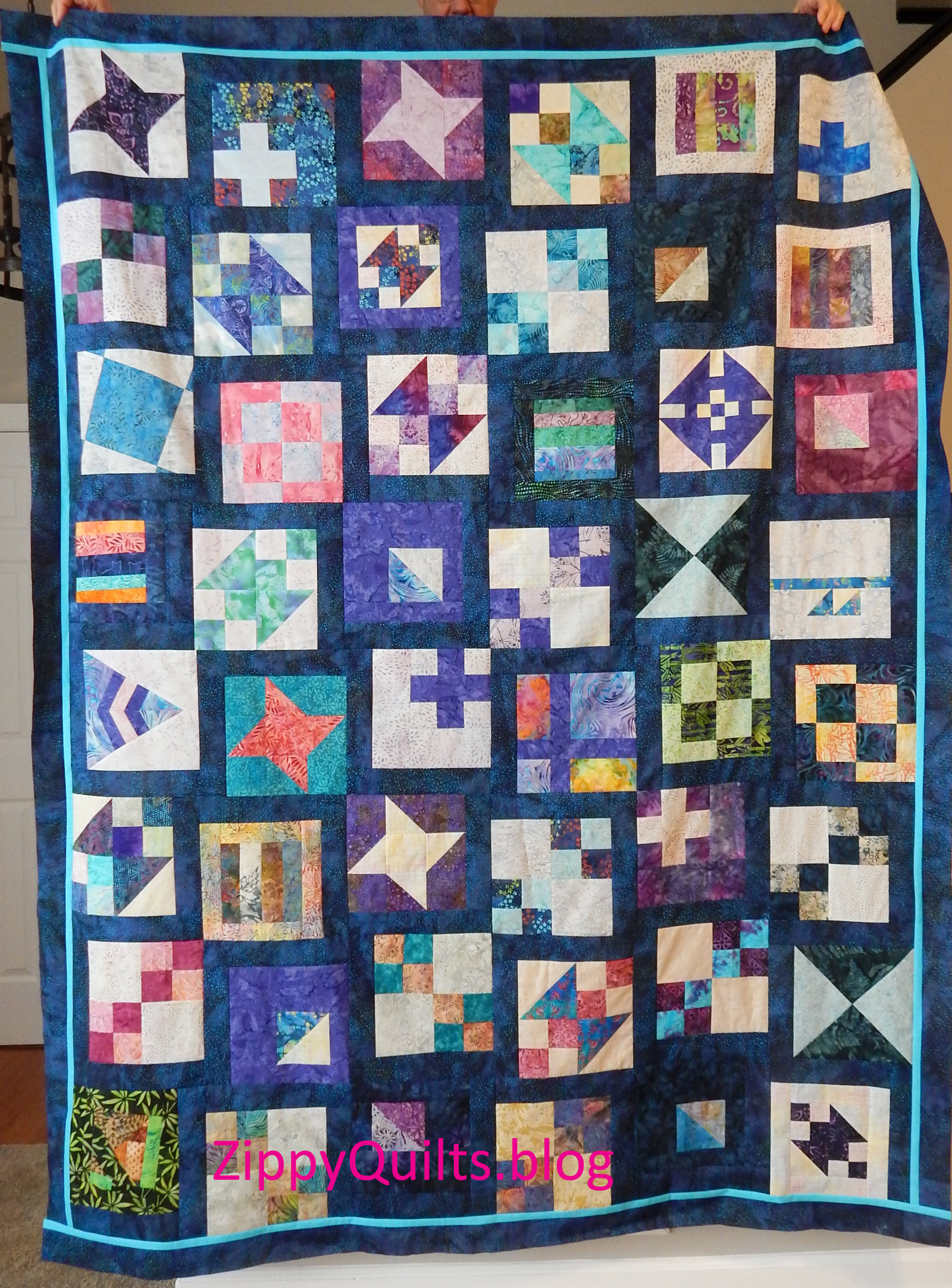
Finally I added borders, so here’s the finished top (twin size), ready to go to the quilter.  (Are you reading this, Julia?)

This is the second quilt made from blocks I’ve swapped with friends when we couldn’t get together to quilt due to you-know-what.

What have you been up to lately?

More Donation Quilts

Before I show the latest group of donation quilts, I want to say how happy I am that my long-time blogging friend Melanie has started posting again.  She’s an expert in medallion quilts and does beautiful work, so you may want to check her out here.

These quilts are going to Ronald McDonald House, so here’s a last look at them before they go.  

improvisationally pieced quilt

“In Fairyland”, original design, 2013.  53″ x 67″.  I like it, but it’s never been used, so off it goes.


Serendipity I”, 2020, 51″ x 61″. Pattern is from Love Jelly Roll Quilts.


Black and floral quilt

Unnamed, 55″ x 69″, 2011.  Made to use some of my huge stash of florals, but never used.

Kaffe Leftovers, 48″ x 60″, 2020.

I designed “Spring Sun” using piecing papers from a Judy Niemeyer pattern, 2012-2014.   It was juried into an AQS show but has never been used, so it’s time to donate it.

“Elizabeth’s Village”, 40″ x 40″.  Center design is by my friend Elizabeth and pattern is available in her Payhip store. I added borders so it would finish crib size, 2020.

“Baby Stars”, 45″ x 45″, 2019.  Pattern is “Lucky Stars” by Atkinson Designs.

Star Swap Quilt, original design, 2019. 40″ x 40″.

I hope the families at Ronald McDonald House get enjoyment and comfort from these quilts.  They were just stored in a closet here, so they need to be used.

2020 Review, Part II

Here are the rest of my 2020 project completions.  As previously mentioned, shelter-in-place was an opportunity!

I designed and made Fiddlesticks after seeing a number of similar quilts on the internet.

Pineapple Fabrics requested pineapple blocks for a children’s hospital donation project, and my friend Chela and I each made several.

I finally finished this little art quilt, which was started several years ago

This quilt used up a lot of scraps!

I made numerous projects inspired by books I reviewed for C&T.  The quilt on the left is a modification of a pattern that appears in New Patchwork and Quilting Basicsby Jo Avery.  The block on the right is one of my favorites of the year; the pattern is in Quilt: Modern Curves and Bold Stripes.

The quilt above is modified from my friend Elizabeth’s Merrion Square pattern.  The pattern is available in her Payhip shop and includes several variations.

This quilt was made with a jelly roll I won in a contest!  The pattern is in Love Jelly Roll Quilts.

Who can resist the colorful fabrics by Kaffe Fasset? I made two quilts with them. This pattern is available free from Free Spirit Fabrics, here.

And here’s the quilt made with leftover blocks:

Above is another Scrap Quilt, 64″ x 64″. I was planning to teach it in January, but the COVID numbers have gotten too high here for that to be safe right now.

This is the quilt in crib size

The quilt above is another I developed for Studio Stitch.  I think they still have some kits left if you’re interested.  My friend Mary just sent me a picture of her completed quilt from the kit!

This next quilt, 12″ x 12″, was just a block for years after I took a leaf pounding class.  I finally quilted it, and I’m happy with the result.

Here are 3 that I know you’ve seen before, but they were completed in 2020, so gotta show them:

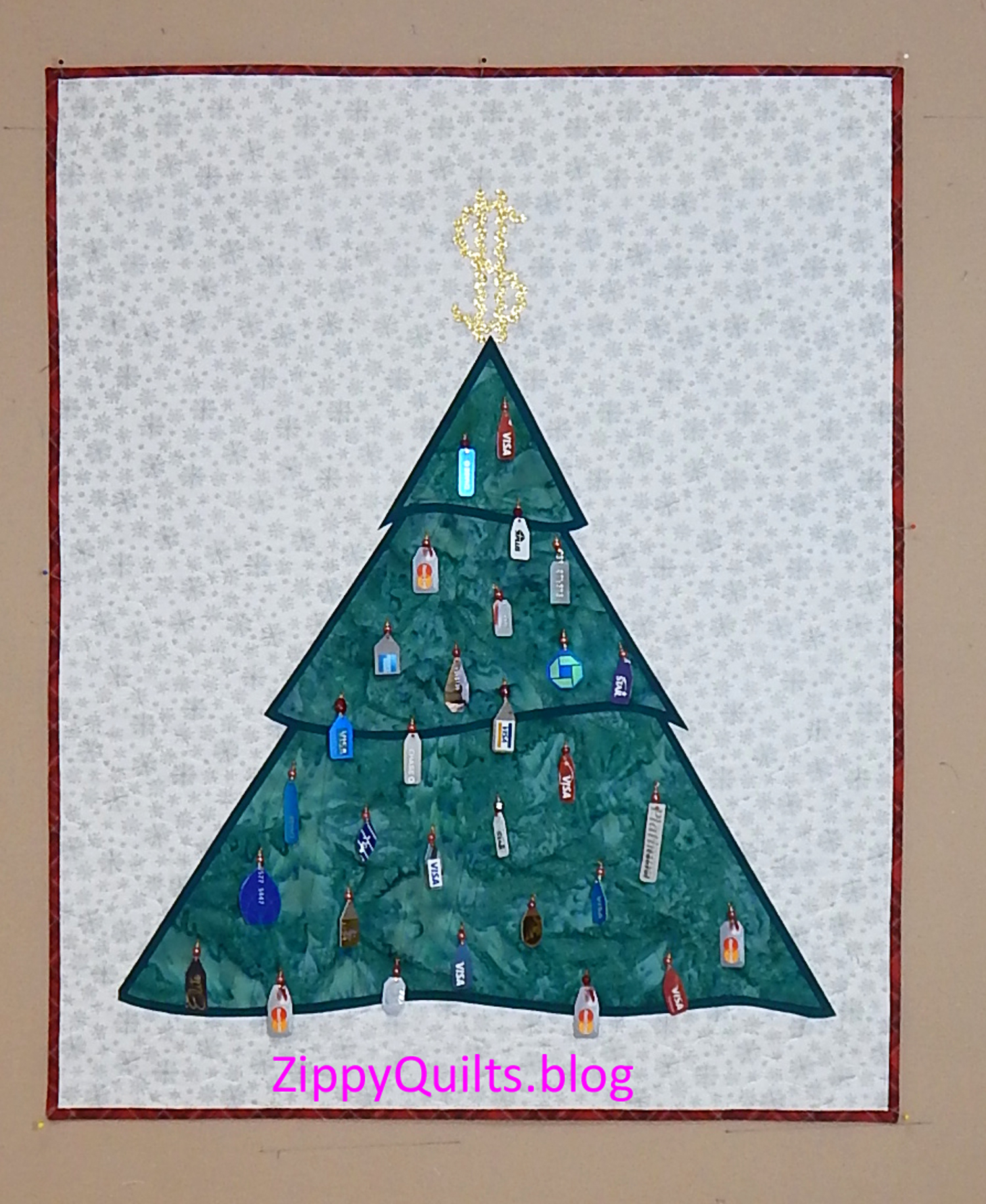
And finally, here’s my end-of-year art quilt.  I’ve had this idea in mind for some time so I was glad to finally get it out on fabric.  I think the tree topper needs a golden starburst around it, so I’ll be adding that before the next holiday season, but at least the quilt is mostly done.

Xmas, 25.5″ x 31.5″

Whew!  2020 had some redeeming accomplishments despite all the “challenges”, as we like to call them!  I hope you find that the year had some good points for you, as well.

2020 Quilt Review, Part I

Every problem being an opportunity, I think we’ll review the projects completed in 2020 because of the opportunity to spend much more time at home 😀  In fact, I got so much done that I’m splitting it into two posts so my head doesn’t spin.  Here’s part I:

Plaidish was made from a free pattern available from Kitchen Table Quilts

I designed the quilt above based on a barn quilt I saw every time I drove to town.  The design was created in EQ8 and Eileen Fowler at McCall’s Quilting transformed it into a design of her own, giving me credit for inspiration.

The above quilt was designed in EQ8 and made with scraps.  Studio Stitch offered the pattern free with purchase.  I loved using all my colorful scrap strips.

I made a bunch of postcard-sized art quilts as samples for a class I plan to teach on making landscape quilts.  COVID happened, so the class hasn’t been offered yet.

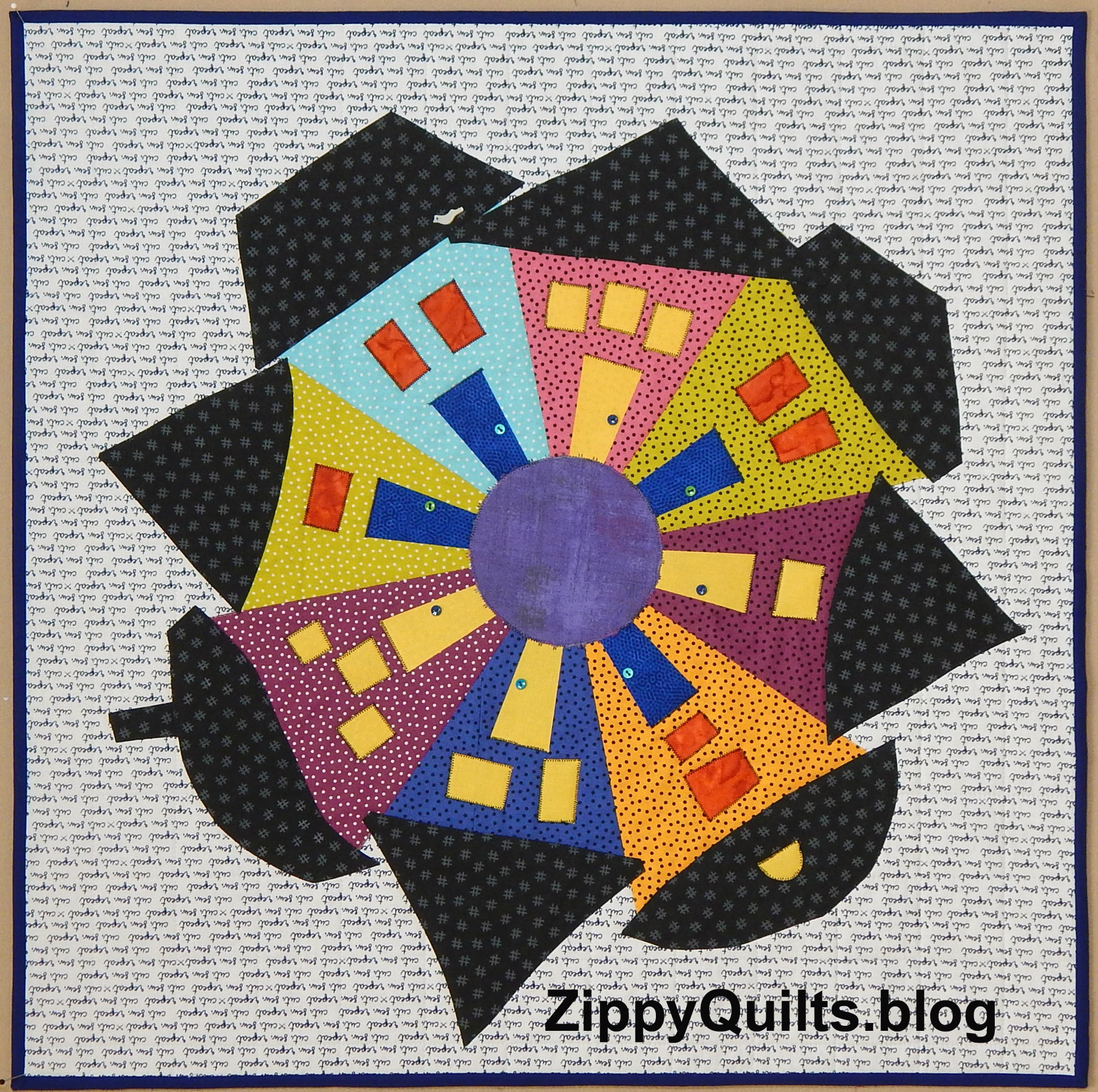
I designed and made this little neighborhood after seeing similar projects online. Isn’t the internet a great source of inspiration?

I made a bunch of donation quilts, including the two above constructed from orphan blocks.  Several quilts went to a local at-risk infant project, and there’s another pile waiting to go to Ronald McDonald House.

I took a class with friends at A Stitch in Time and made this fall quilt.  They still have the pattern if you want to make one, too.

I made this orphan block up into a little quilt for the SAQA auction.

Like everyone else, I made a zillion of these. At least my model is cute 🙂

I enjoyed making this quilt and the templates from Elisa’s Backporch made it easy.

That is surely enough for one post!  To be continued…