Tidbits: One may be for you

1.  Here is some beautiful fabric that just arrived from the Michael Miller company!  It’s for my next magazine project (for Modern Quilts Unlimited).  I love to use batiks for the “solids” in my quilts because of the texture and highlights they give to the design.

Michael Miller batiks

Michael Miller Batiks

2. Who wants these selvages I’ve been saving? I know the author of one of the blogs I read commented that there is a selvage quilt in her future, and I’m pretty sure there’s none in mine.  Comment or e-mail me if you want them.Selvages

Melanie, whose blog is

Melanie, whose blog is Catbirdquilts.wordpress.com

3.  For those who may want  more traditional lessons on color than the ones I’ve provided in my design series, my friend Melanie in Iowa has some nice posts.  You can find them here and here.  I think you’ll like them!

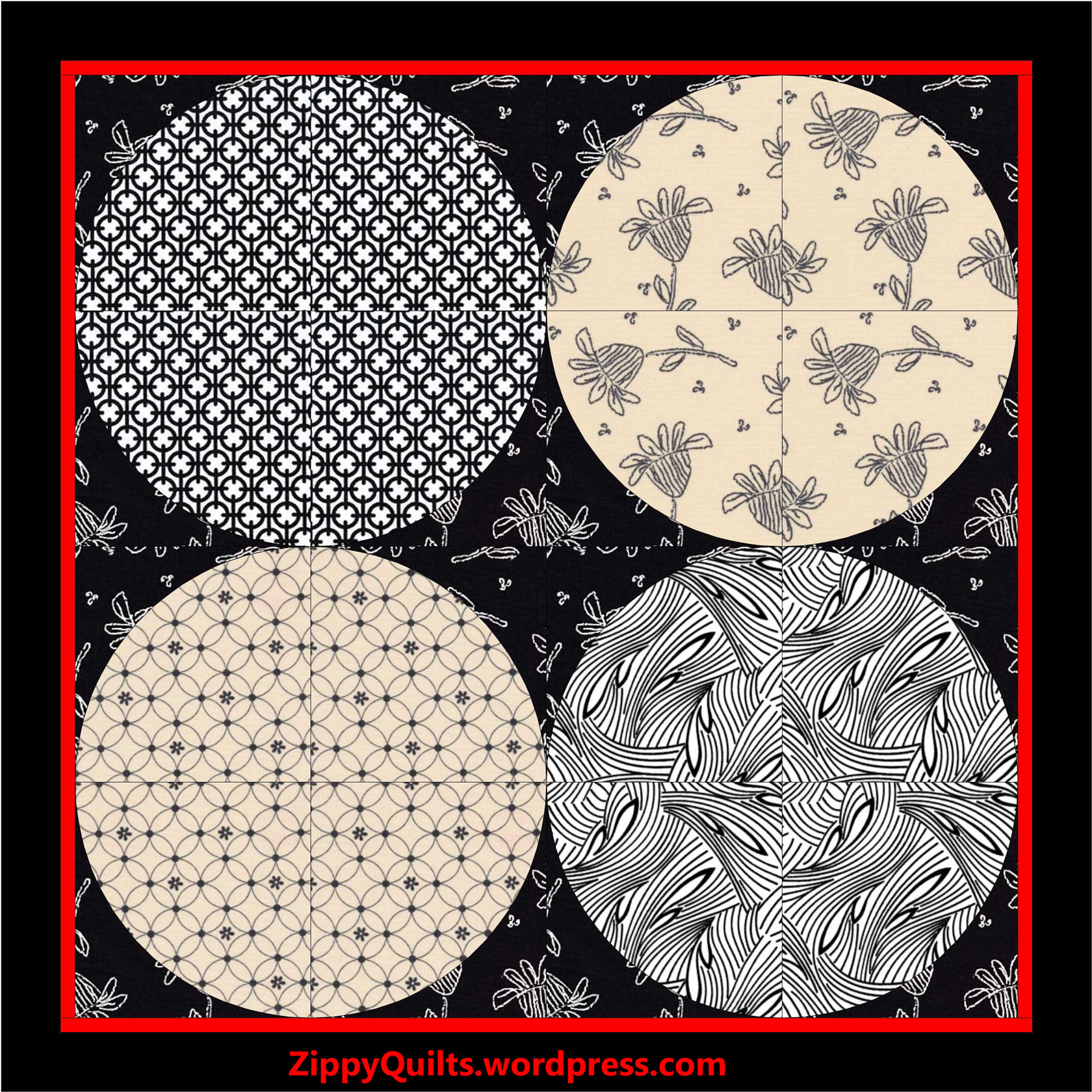
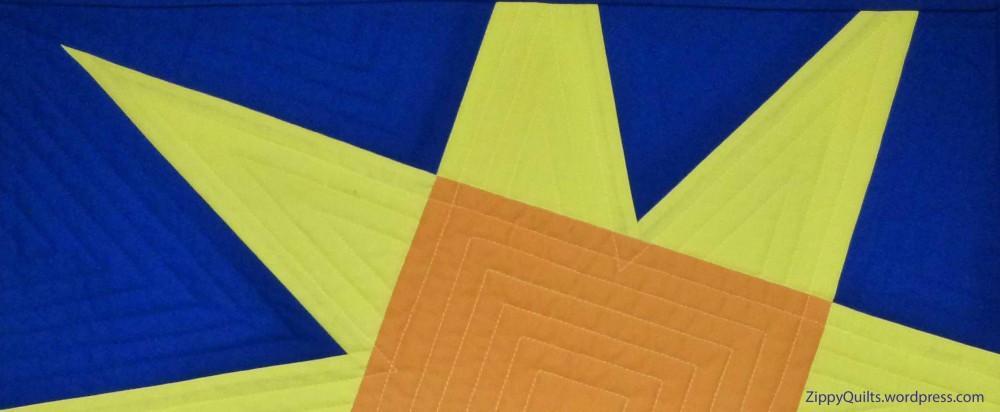
Zippy Star quilt by Mary J Puckett

Zippy Star I, which was sold at the Asheville Quilt Show

4. Woo!  I recently sold a quilt at the Asheville Quilt show!  And it’s a good thing, because–

5. My digital camera somehow got a little piece of lint inside (at a quilt show, of course) and I can’t get it out!  Any recommendations for a good replacement?

6.  I aim for a blog length of around 350 words.  I figure my attention span is short, so yours may be too 😀

7. And the more pictures in the blog, the better. So here’s my October finish, another quilt for Ronald McDonald House.  I quilted it on my new Bernina 530QE. There’s definitely a learning curve to that BSR, but I’m pleased with the result.

free motion quilting

Free motion quilting with my new Bernina


Meet Jo Glover–The BigStitch Quilter

big stitch quilting

BigStitch Quilting by Jo Glover

Big Stitch quilting has gotten to be a big deal in the past few years, so I was thrilled when Jo Glover, who published the original directions for BigStitch Quilting, spoke to our guild last year.  She agreed to be interviewed for this blog.  Here’s what she said about her development of the technique:

Jo Glover photo

Jo Glover

“In 1988, when I started quilting, I was more interested in the line designs of the quilting, rather than the patchwork.  It frustrated me that my fine hand quilting–natural thread on muslin background–didn’t show.”

“In 1991, I went to Japan and saw their sashiko with its strong visual impact.  Thick light thread on solid dark fabric.”

big stitch quilting

Another sample of Jo’s BigStitch Quilting

 “Upon my return to the US, I started using a high contrast #8 pearl cotton, longer stitches, with the traditional rocker motion of hand quilting with a hoop and thimble.
I was pleased to find that larger scale designs looked good with the longer, thicker stitches.  The new needlepunched cotton battings permitted a longer distance between quilting lines.”

BigStitch quilting

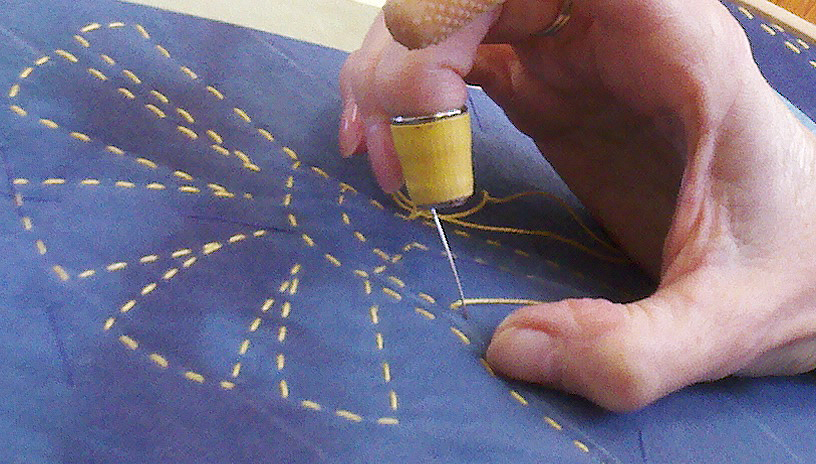
Jo Demonstrates BigStitch Quilting

“BigStitch was coined in the booklet I wrote and copywrited in 1993 (under my name at the time, Jo Walters).  It still sells.”   [You can get a copy of Jo’s booklet directly from her for $7.50; just e-mail her at GloverGirl52 at gmail dot com for her mailing address, and of course give her your address.]
 “To reach a wider audience, I uploaded a series of BigStitch lessons.  They are available at no cost on YouTube; just search “BigStitch Jo Glover” for the 5 lessons and Gallery.  I’m for the preservation of hand quilting.” [Here is the link to Jo’s YouTube lessons.  I am so impressed that she did this!]
BigStitch quilting

Matisse’s Goldfish, by Jo Glover

 “Right now, I’m stitching straight lines about 1/3 inch apart, using crochet thread AND NO HOOP OR THIMBLE, ssshhhh.  My friend Jane Cole brought this style, called chiku-chiku, to my attention.  (Chiku-chiku is the sound a sewing machine makes when stitching) Jane got it from Quiltmania magazine, issue # 100, in an article featuring the originator, Akiko Ike.”

Jo Glover quilting

Pillow with close lines of BigStitch quilting by Jo Glover

 “Mixing fine hand quilting, BigStitch, and machine quilting (and now, chiku-chiku) in the same quilt is fantastic.  I do prefer solids or hand dyed fabrics to showcase the hand stitching.  I see many Modern quilters featuring their machine quilting on solids, and that’s great.”
Quilt by Jo Glover

Amerika Blooms by Jo Glover

 “Quilters I have known and loved include Gwen Marston, Jonathan Shannon, my friend Jane Cole, the Gee’s Bend quilters, Fran Skiles, Jacquie Gering and Katie Pedersen, and Yoshiko Jinzenji.”

5 Things I’m Grateful for in Quilt-World

Gratitude is always a good exercise, as I was reminded when I met with an old friend the other day. So, here are 5 of the things I’m most thankful for in my quilt life:

1. Good friends! Some of my best buddies are people I’ve met through quilting, and, as I’ve mentioned before, joining a quilt group is a great way to make friends.

quilt group

Some Quilty Friends

2. New challenges. I count any day in which I learn something new as a success.

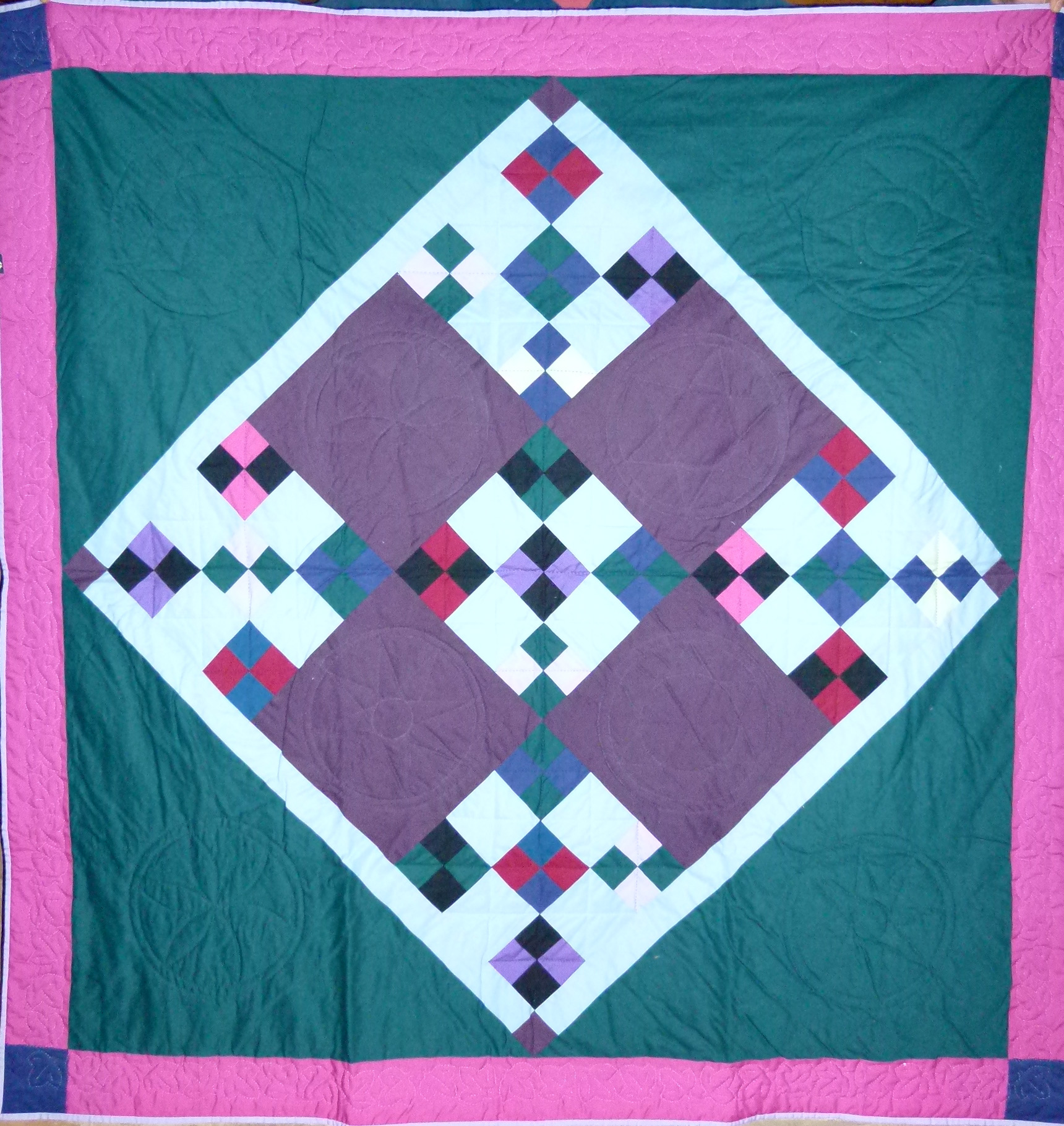
Amish design quilt

I made this quilt when we lived in Pennsylvania.  The biggest challenge was to design and produce the stencils for the quilting.

3. A creative outlet. Like many quilters, I’ve had careers with a scientific focus. It’s nice to have the opportunity to do something that engages my creative side.

applique art quilt

This leaf, made in class with Laura Wasilowski, was a fun way to be more creative than I am when I make bed quilts

4. The opportunity to help. Giving a quilt, whether through a charity or through a personal contact, gives me the opportunity to do something for someone. Often it’s a situation in which there’s no other way to express my concern.

modern quilt

One of my quilt groups makes quilts for Ronald McDonald House

5. The circle is unbroken. When I quilt, I feel connected to my ancestors who made quilts, to friends who use my quilts, and to people all over the world engaged in similar activities. I don’t think about this very often, but it is definitely part of my quilting experience.

wheel of mystery quilt

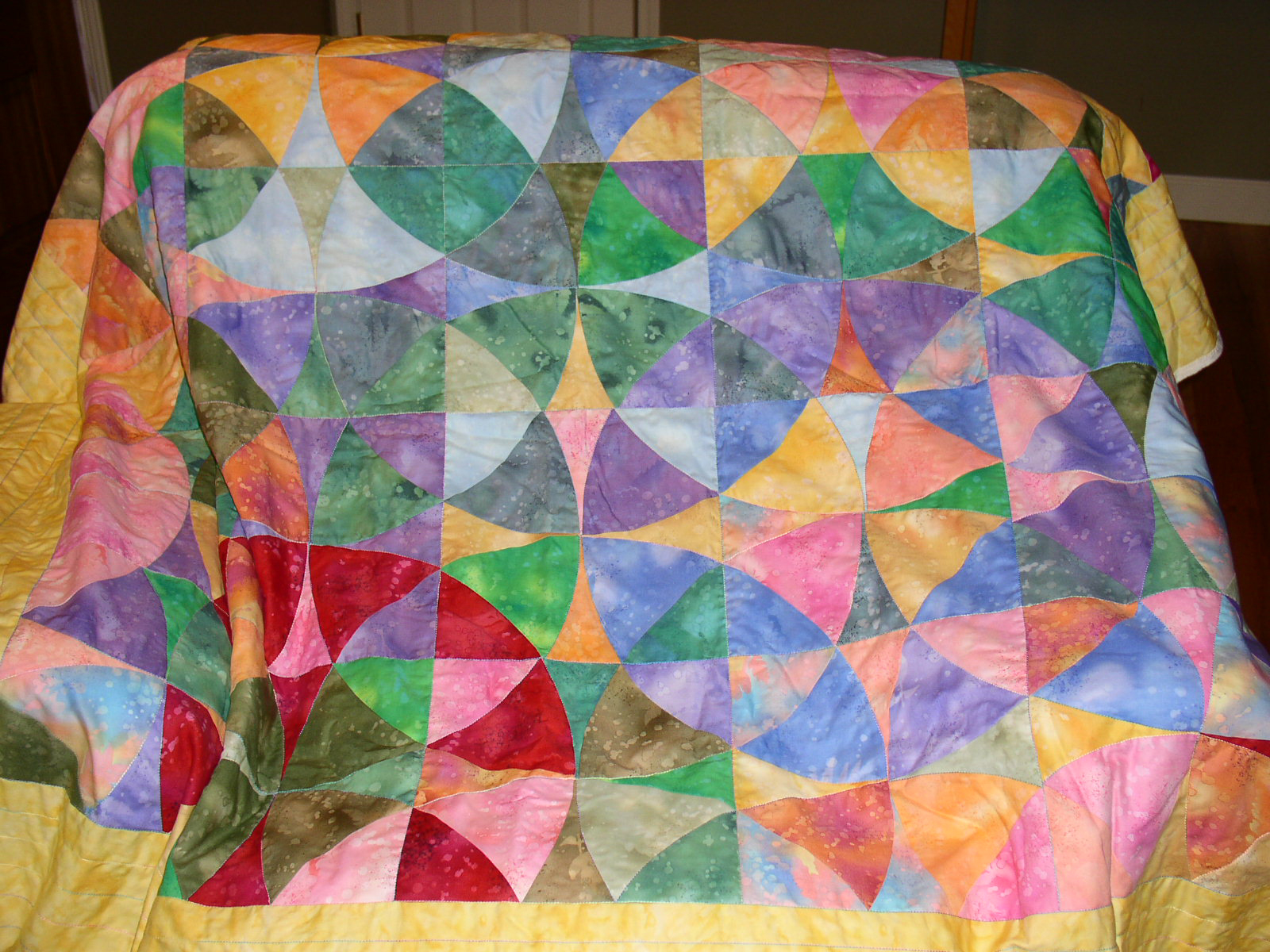
I made this quilt to learn curved piecing.

So, what are you thankful for?

Your Inner Designer: 3 Formulas for Modern Quilts

It seems to me that, when learning a new skill, there is often a “formula” or basic idea that, once mastered, provides a way into successful practice of the new skill.  So here are 3 ideas for you to try.  See if one of them helps you create designs that you like.

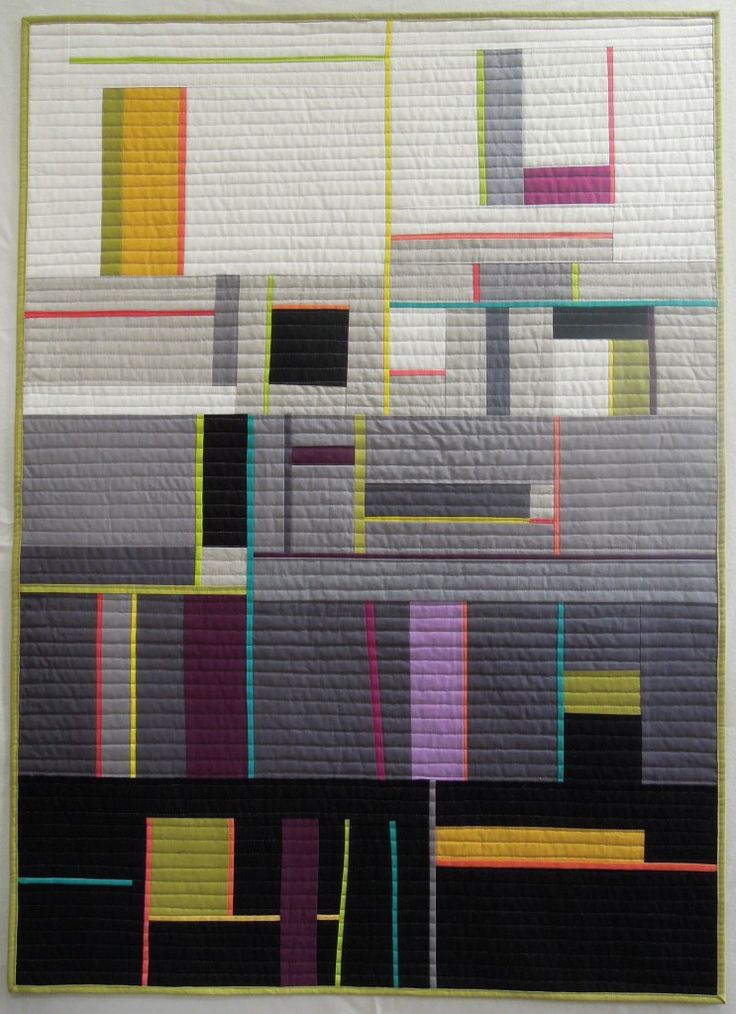
1. Use lots of “negative space”, and start by making this background space in a shade of gray.  (The person who brought my attention to this “rule” of modern quilting has asked to remain anonymous 😉 )  Here are some examples, but I’m sure you know of lots of others:

modern quilt

Shades of Gray by Terry Aske. 2nd place award in the Modern category, Quilts Canada 2014

modern quilt

Found on lilysquilts.blogspot.com

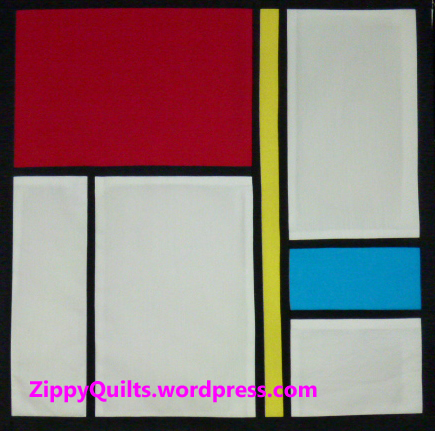
2. Another common way to “design” a modern quilt is to make it an obvious take-off from a piece of 20th Century art (or occasionally more recent art).  My design below is by no means an exact copy of any of Piet Mondrian’s work, but it certainly is an imitation of him:

modern quilt design

Thanks, Piet! by Mary  J. Puckett

Sometimes I do see modern quilts that are a direct imitation of an artwork.  However, my preference is to look at a lot of work by one artist, or by a group of similar artists, then close the book and draw something original that “references” the works I’ve studied.

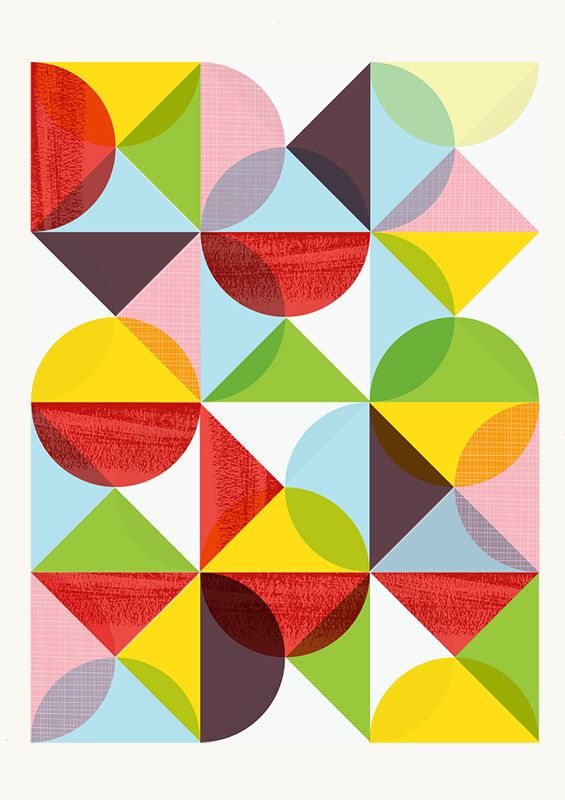
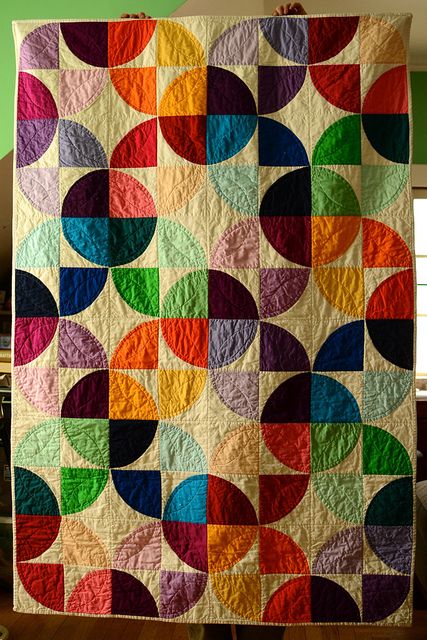
For example, here’s a print I found at an Etsy shop called “Handz”.  Compare it to the quilt just below it.  It’s not a copy, but it could have been based on the print.  Or they could have both been inspired by another source altogether.

modern art print

Mid Century Modern Art print found at Handz on Etsy

modern quiilt

finished – modern drunkard’s path by m_soto on Flickr

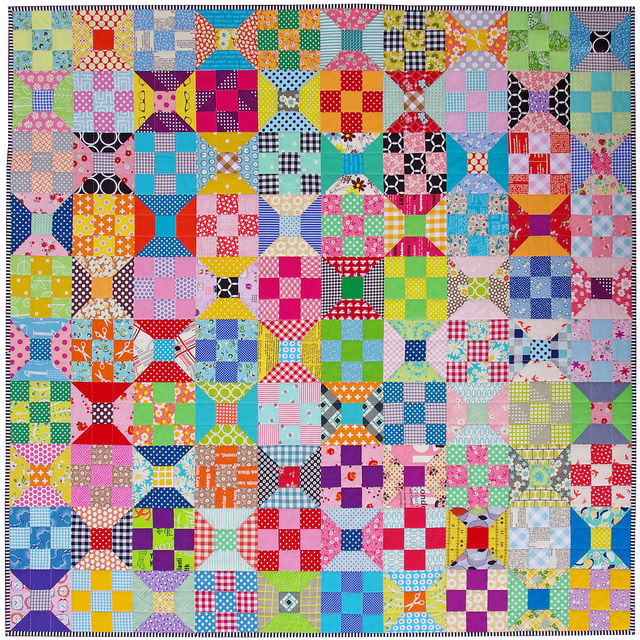
3. Just start with modern fabric.  One of my favorite “modern” quilters is Rita at Red Pepper Quilts.  Many of her quilts are traditional designs, but she uses bright, modern, fabrics and her quilts always look fresh and modern to me.

modern quilt

Spools and Nine Patch Quilt by Rita at Red Pepper Quilts

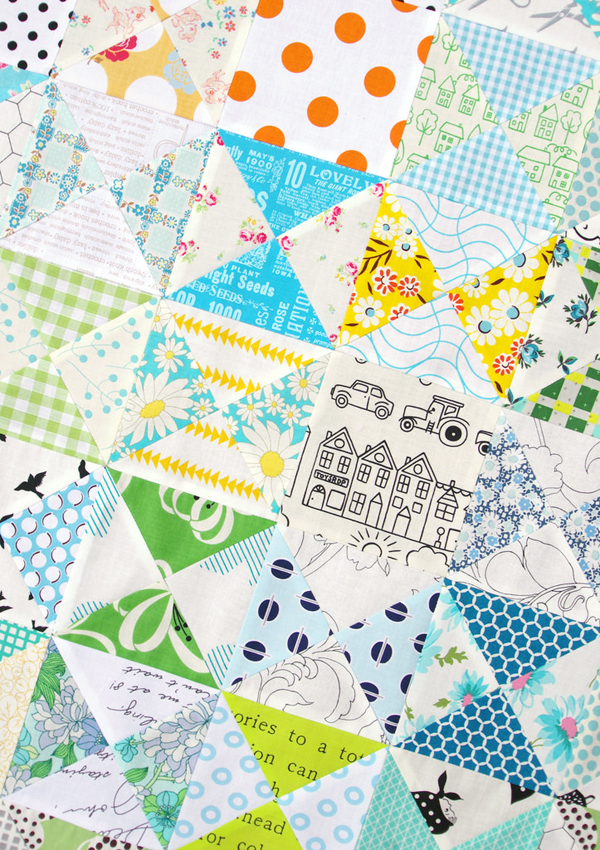
Here’s a detail of another of Rita’s quilts:

modern quilt

Detail of a quilt by Rita at Red Pepper Quilts

Give some of these ideas a try, and let me know what you come up with!

3 Favorite Quilts from 1 Quilter!

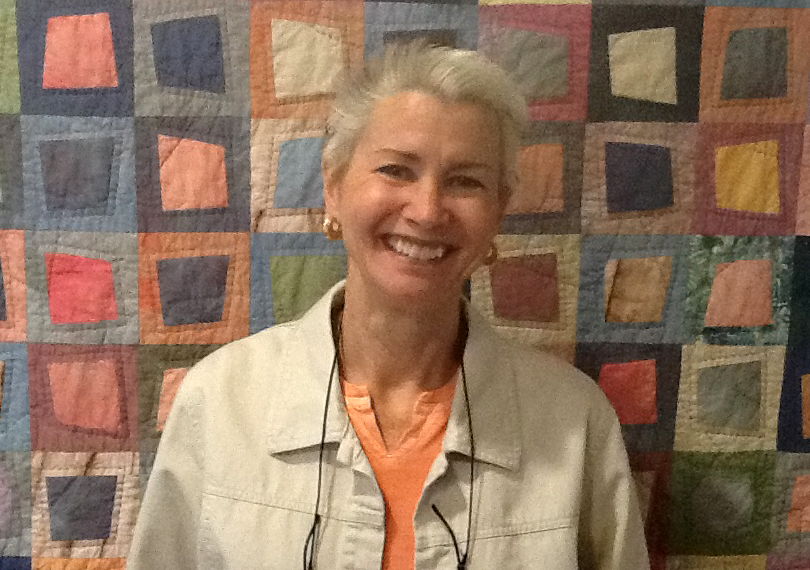
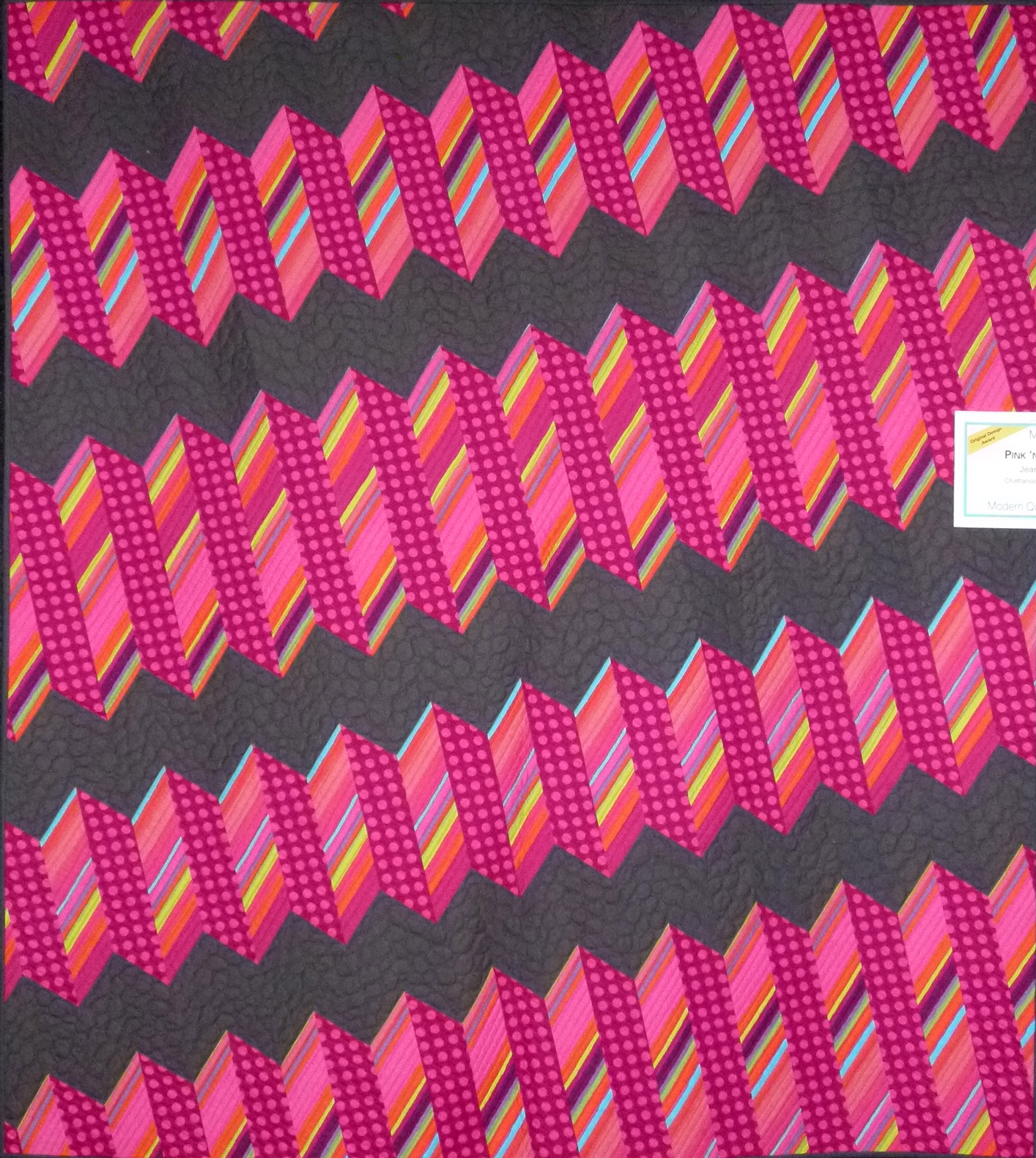
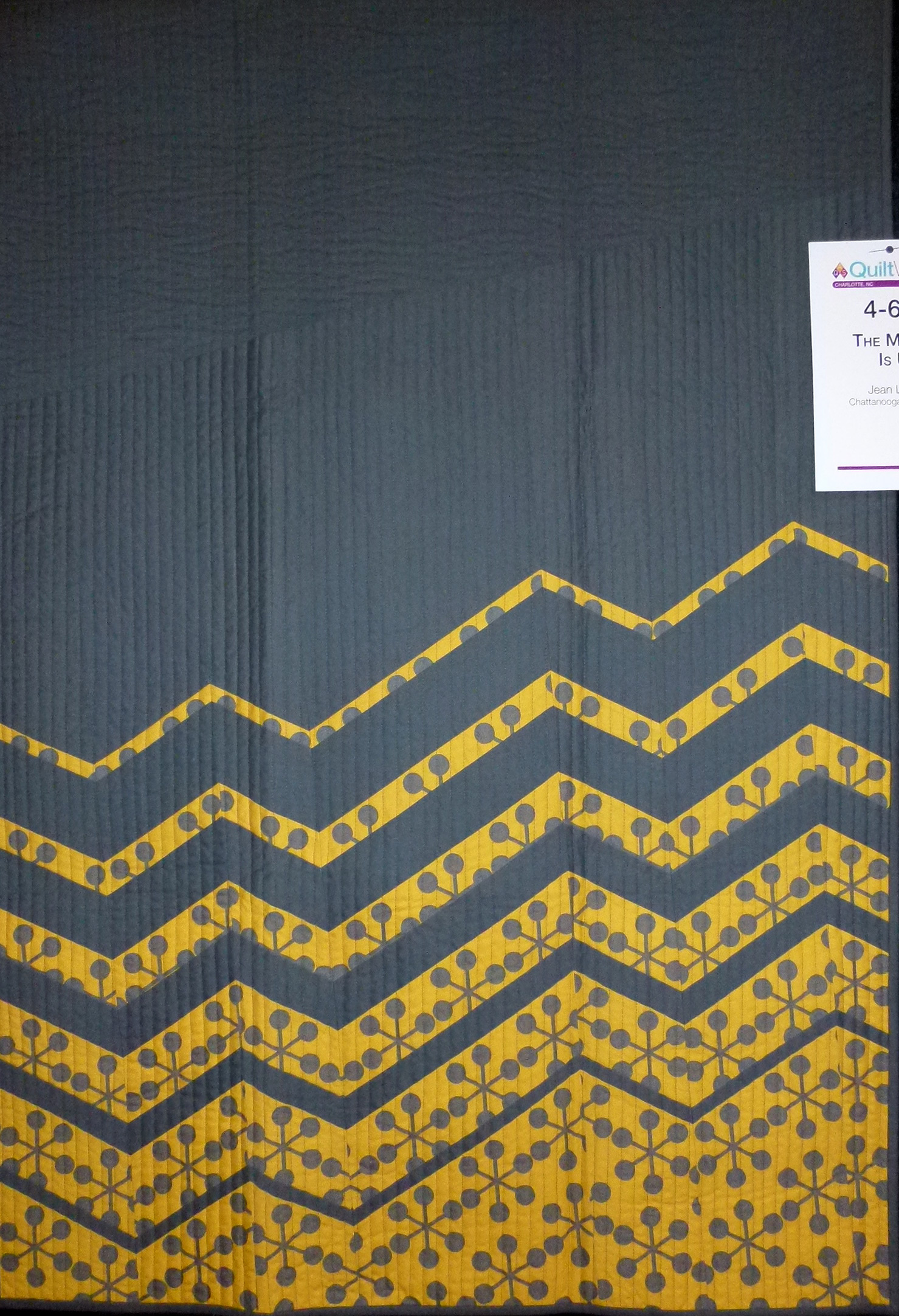
When I noticed that 2 of my favorite 11 quilts at AQS-Charlotte were by Jean Larson, I knew I had to meet her. Luckily, while I was trying to figure out how to contact her, she contacted me! Jean has lived in Chattanooga since the early 1970s, so we met at AQS-Chattanooga.

First, as a refresher, here are the two quilts that attracted my attention at AQS-Charlotte:

modern quilt AQS

This quilt by Jean Larson won the Original Design award in the Modern Quilt Challenge!  The Modern Quilt Challenge exhibit was on display at AQS Charlotte as well as other shows during the year.

modern quilt, AQS Charlotte

The Market is Up, another quilt by Jean Larson

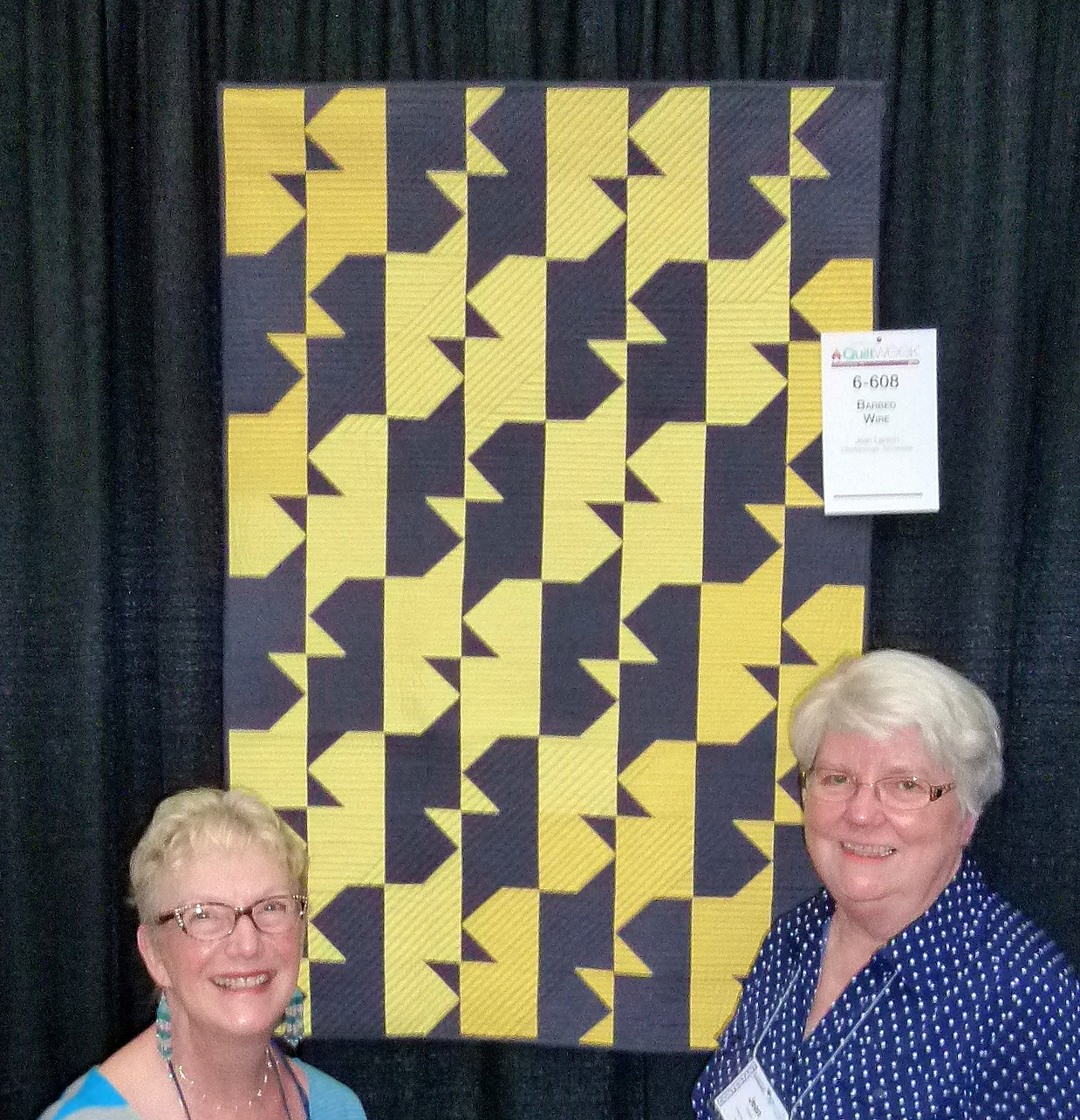
Jean entered a different, and maybe even more interesting, quilt in AQS-Chattanooga:

quilt AQS Chattanooga

Jean (right) and I pose in front of her quilt, “Barbed Wire” at AQS-Chattanooga

There are so many things to see in this simple quilt!  First, the design is tessellated!  Jean is a mathematician by training, so she explained it to me, but I’m going to have to ask her to write a guest post to explain it to you.  More on that later.

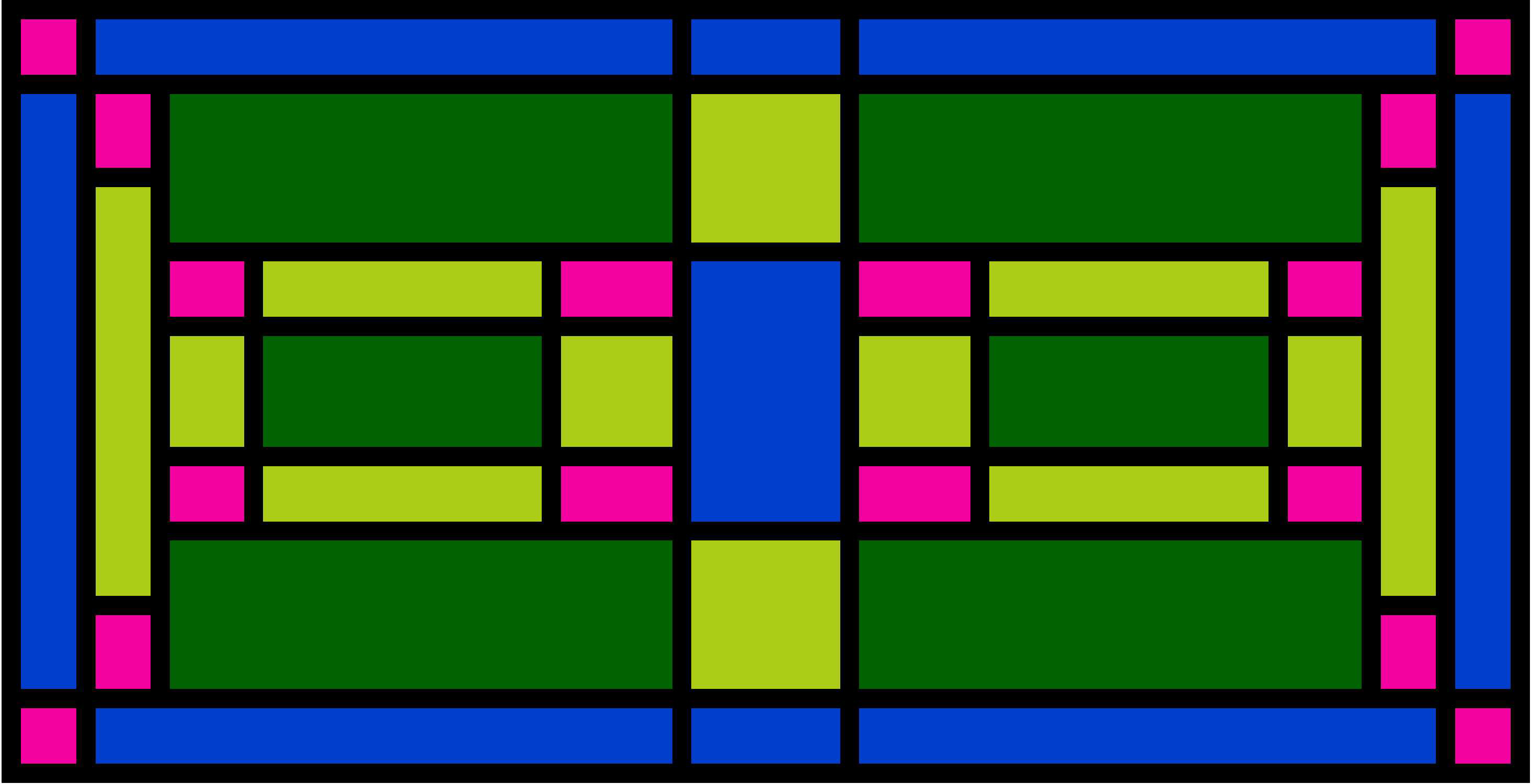
Second, those variations in yellow are for real, not just trouble with exposure on my camera 😉  The two yellows add complexity to the quilt.  And finally, although I couldn’t see it until she pointed it out, this quilt is actually a grid of squares in alternating colors:

Look at the quilting, too!

So, here’s a little bit about Jean:

She’s had several starts at quilting.  Her first quilt, in 1976, was a traditional log cabin made with the quilt-as-you-go method and using poly-cotton fabrics, which were about all that was available at the time.  Her second, in 1984, was an orange and turquoise quilt that she worked on while potty training her two adopted boys!  She began quilting seriously in the late ’90s.  In 2012 she discovered modern quilting through a neighbor, and she hasn’t looked back since.  She’s an active member of the Chattanooga Modern Quilt Guild and apparently knows everybody–numerous people stopped to chat with her while we were talking about quilts at the AQS show.  She had a quilt accepted for the first QuiltCon in 2013, and it has been published several places as an example of good use of negative space.  Here it is:

modern quilt

Lanterns, by Jean Larson, was accepted for Quilt Con 2013

Jean says she likes simplicity and alternative grid work in quilts.  She is inspired by geometric shapes and by fabrics–especially stripes.  She loves the mathematics of tessellations and plans to make more tessellated quilts.  I look forward to seeing them!

And I’m going to beg her to write a guest article on tessellations for my next design-your-own-quilt post.  If you know Jean, encourage her to do it!

Your Inner Designer 6: Copy Somebody Good!

Truly original ideas in design are really, really rare  More often good designs are inspired by other good designs, and most designers start by copying other people.  There’s nothing wrong with that–just give credit!

Door with art glass window

Glass window, designer unknown

For example, here’s a door I admire in a friend’s house.  It got me thinking that it would be nice to make her a table runner with a design similar to the glass in the door, especially since the dining table is right by the door.  I may start out by copying the design, but my table runner won’t be an exact copy.  I want it to be obviously inspired by the door, but I probably couldn’t make an exact copy even if I wanted to.  And I’m not going to sell it as my own “original” design without reference to the door, either.

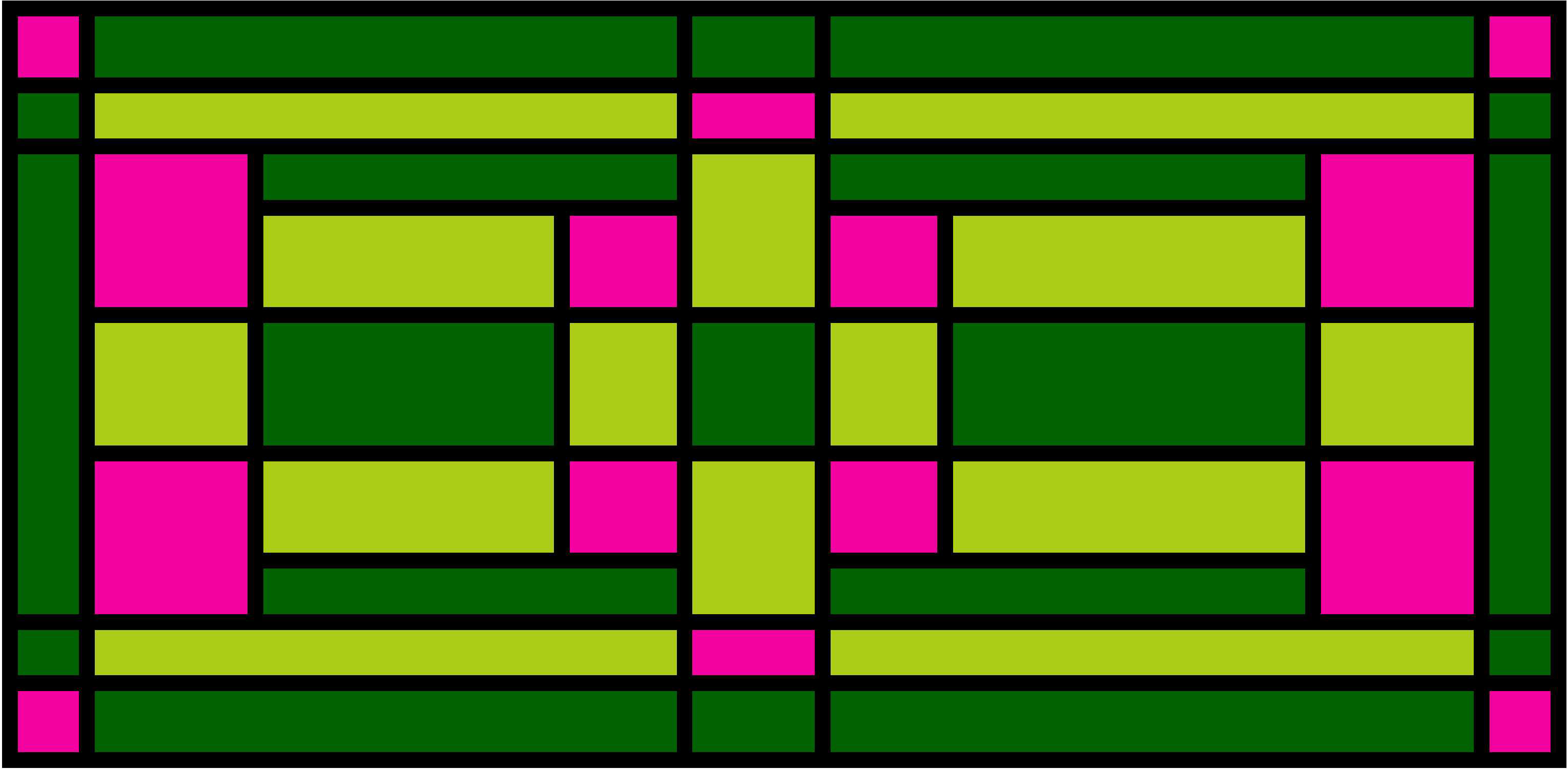
Here’s the first attempt:Craftsman inspired table runnerThat may be obviously inspired by the door, though in fact both are inspired by Frank Lloyd Wright and Craftsman styles of design. If you don’t know much about those styles of design, Google them.  There are many similar designs to be found, so I can make LOTS of designs of this style without copying any of them.  Here’s the second try:Craftsman style table runner

This one has a little more detail.  Another master of this style, popular in the early years of the 20th Century, was Charles Rennie Mackintosh.  William Morris textile and wallpaper designs were the same historical period, and you may have seen Moda’s extensive line of William Morris-inspired fabrics.

One last try:table runner

So go look at some books on the history of design (the history of advertising works too) and make some designs inspired by what you see.  It’s a good starting place when you think you don’t have any ideas, and you’ll eventually come up with something your really like.  Then it’s time to make a quilt!

Here are the first 5 posts in this series:

Your Inner Designer 5: A Program to Make Your Own Palette!

Quilt Design 4: Choosing Your Color Scheme

Your Inner Designer 3: New Blocks From Old

Your Inner Designer 2: Many Block Arrangements

Find Your Inner Designer, Part 1

10 Quilty Secrets

Several of the blogs I read have recently revealed “10 Quilty Secrets” and I thought it sounded like fun, so I’m playing along. If you would like to see some other bloggers’ secrets, here are the links: The original post seems to have been at 13Spools.com, and the idea has been picked up by several blogs I follow, including Catbird quiltswombat quilts, and Christa quilts.

And so, here are my 10 Quilty Secrets:

1. Although I’m participating in Marti’s UFO (unfinished object) finish-a-month this year, I had FAR MORE than 12 UFOs at the beginning of the year. Oops, still do! Here’s the August finish, a quilt for Ronald McDonald House made from orphan blocks:August-finish

2. My nearest LQS (Local Quilt Shop) is an hour away, which I take as an excuse to have a good stash at all times 😉

3. If I start a quilt and don’t like it for some reason, I abandon the plan and turn it into something else–another quilt design, a table runner, whatever.

4. And sometimes those I-don’t-like-this projects just become long term UFOs 😦

5. In my world, a good quilt is a fast quilt.  I’m not patient enough for the zillions of little hand-pieced hexies, for example.cartoon hexie

6.  For that matter, I DON’T EVEN LIKE hexies!  Yikes!

7. I value good design in quilts and in other useful objects.

8.  I LOVE to learn new techniques and try new things, so I take lots of classes  Even if they seem like stuff I could do easily without a class I always learn something.

9. We’ve moved a lot, and one of the best ways I’ve found to make new friends is to join a local quilt group.

10. I think every quilt needs a little purple!

So, what are some of YOUR quilty secrets?

3 Perfect Ideas

Pieced quilt, circles

The Perfect is the Enemy of the Good

1. The perfect is the enemy of the good.

I made this quilt a long time ago to practice circles, and the quotation that inspired it came to mind recently when I was debating which quilts are “good enough” to be submitted to juried shows.  It probably is obvious that the design above is more interesting than the “perfect” one shown below:

pieced quilt, circles

Perfect Isn’t So Good

2. “Perfect” is well enough done that you are satisfied when you look at it, but not so over-worked that you’re sick of quilting by the time you finish it.

To make a perfect quilt, It helps to start with:

  • The right pattern for your skill level
  • Fabric you love
  • Techniques you enjoy (e.g., paper piecing, applique, whatever)
  • The right tools, well maintained

3. You may be more capable of “perfect” than you think.  It helps to have friends who keep you honest!  I recently had trouble making my seams line up on a medallion-style block and my friend Jerri said, “You’re too good a quilter for that!  You just don’t want to bother!”  Oops, she was right.

And here’s a book that helped me with “perfecting” my blocks:  

Sneaky Piecing by Beth Ferrier

I found this book with lots of tips on how to improve piecing accuracy and got a lot better with just a little practice!

I recommend the book if you want to improve some of your skills, too.

pieced quilt block

Swap Block–88 little squares!!!

And look at this lovely swap block with the corners all matched up!  It isn’t perfect, but it’s good enough 🙂

11 Favorites from AQS Charlotte

The quilts at AQS in Charlotte were inspiring, and there were more modern ones than at most AQS shows. Here are 11of my favorites. They aren’t necessarily the judges’ favorites; those are available on the AQS website here.  I judge mainly on innovative or attractive overall design; the judges have another set of rules.  I hope you enjoy my choices!

quilt AQS Charlotte

Joy, by Peg Collins of Colorado

The Modern Design Challenge had loads of great quilts, but I only took pictures of my very, very favorites:

modern quilt AQS

This quilt by Jean Larson won the Original Design award

modern quilt, AQS Charlotte

The Market is Up, another quilt by Jean Larson

quilt AQS Charlotte

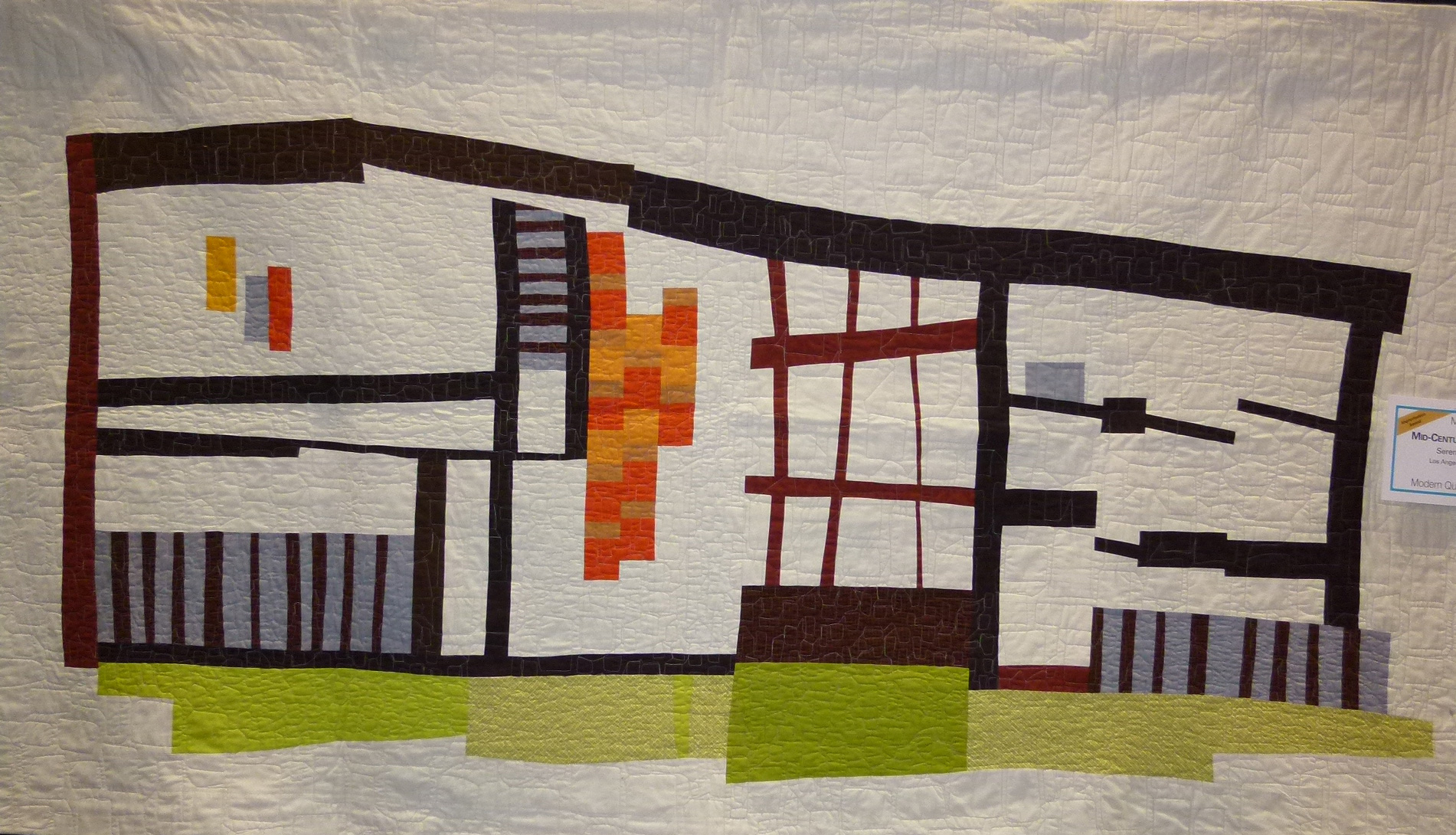
Mid-Century Modern II, by Serena Brooks, won the Improvisation award

modern quilt AQS Charlotte

Canopy by Helen Garland

There was a display of art quilts, including this one by an art quilter whose work I really like:

art quilt AQS Charlotte

Artfabrik, by Laura Wasilowski

And I liked this quilt by Miriam C. Coffey, who is in one of my guilds:

quilt at AQS Charlotte

This, That, and the Other, by Miriam C. Coffey

And there was a big display of quilts from the Tentmakers of Cairo.  I’d heard about them (from you, Bert!) so I was glad to see some of their work:

Tentmaker of Cairo quilt

quilt by Haissan Kamal

And finally, some quilts I just liked for various reasons:

Dear Jane variation at AQS Charlotte

Jane As A Teenager, by Anya Tyson

art quilt at AQS Charlotte

Out of my Box, by Kathy McNeil

quilt at AQS Charlotte

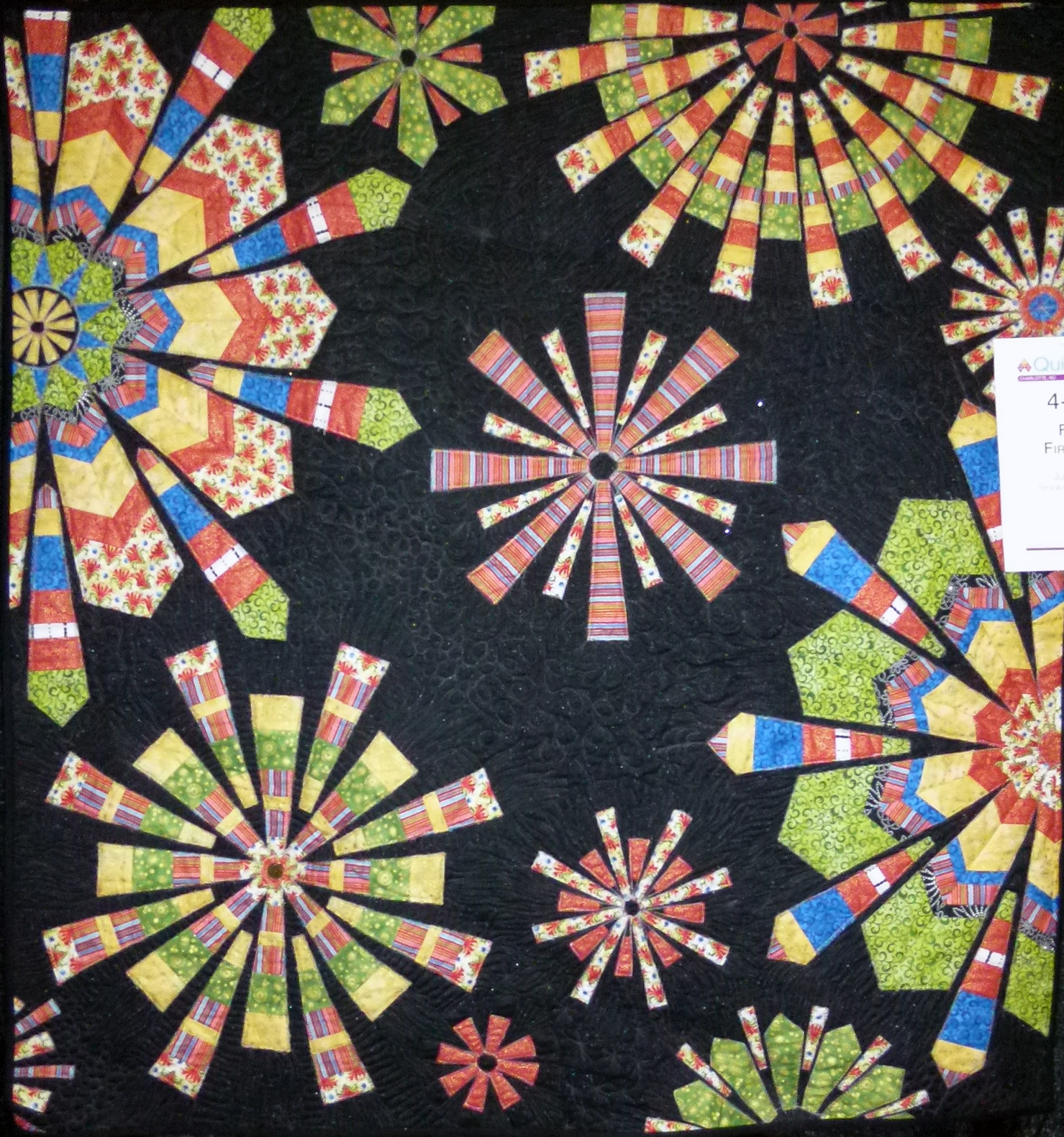
Fiesta Fireworks by Julia Graber

Your Inner Designer 5: A Program to Make Your Own Palette!

I mentioned Design-seeds.com in my last post as a good color resource, but there are SO MANY others!  Today I’m going to tell you about just one, and I hope you’ll check it out and enjoy it.  Others to come in the future!

—Today’s Feature: Palette Builder—

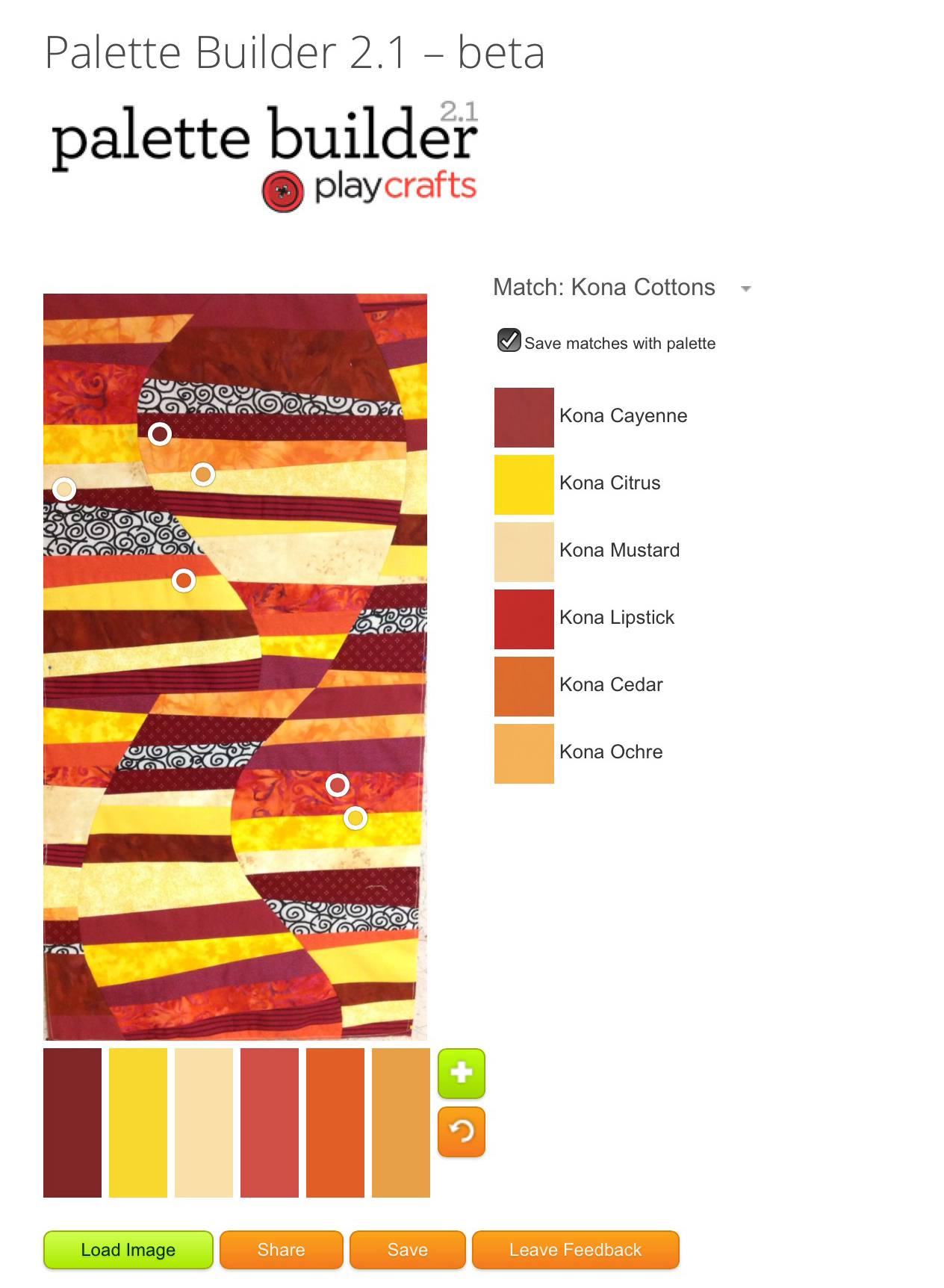
screen shot from Palette Builder

Here’s a palette from a picture I took

It’s free!  It’s easy to use!  Anne Sullivan and friends have a fun app accessible from their blog at Play-Crafts.com.  Just go to the blog, choose PaletteBuilder from the menu along the top, and you’re IN.  You can upload a picture of your choice and the app gives you a palette that looks a lot like the ones on Design Seeds with two fun differences:  PaletteBuilder uses YOUR photo, and it gives you colors in Kona Cotton that closely match your palette!

screen shot from PaletteBuilder

Palette made from my quilt

But let’s say you love the palette in my “Study for New Mexico” quilt and want to use it for a quilt of your own.  Just find the quilt on my blog, load the picture into PaletteBuilder, and there you go.  The Kona cottons are chosen for you!

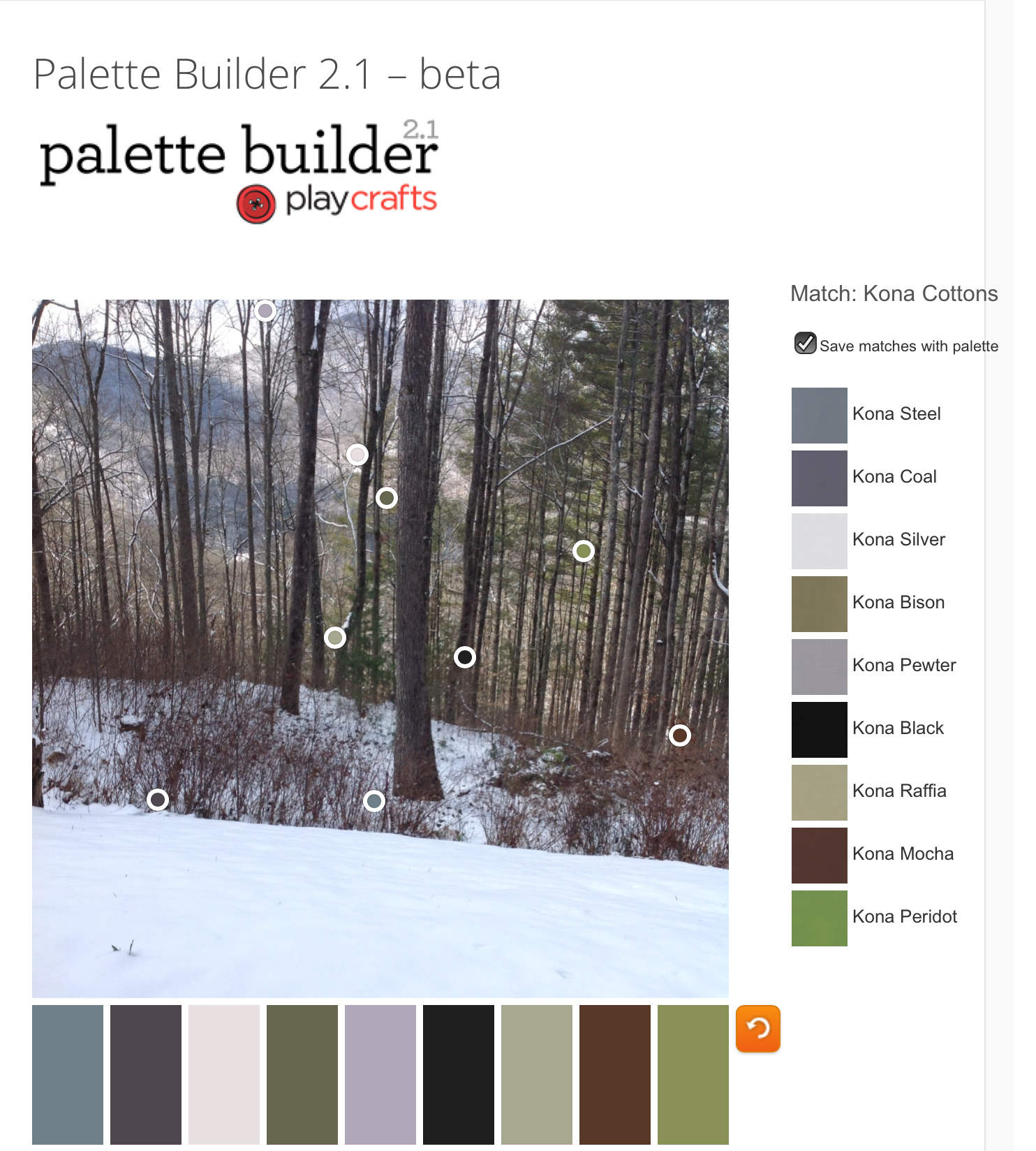
screen shot from PaletteBuilder

PaletteBuilder may “see” individual colors better than your mind does

This program may be especially helpful with a picture like the one above.  First, I wouldn’t have thought to put those shades of lavender in there, but I’m pretty sure they would show up well as shadows if I were converting this picture to a landscape quilt. Second, if you’re working on a desktop computer instead of an iPad you can move some of those little circles to sample parts of the picture that might have been left out (like the purple crocus in the top picture.)

So if you have a photo with lovely colors that you would like to see in a quilt, you can start here for your palette.  Now, go have some fun!

Here are the previous posts in this series (click on the title to go to the post):

Quilt Design 4: Choosing Your Color Scheme

Your Inner Designer 3: New Blocks From Old

Your Inner Designer 2: Many Block Arrangements

Find Your Inner Designer, Part 1