Slabs in 4 Colors

One of my quilt groups is swapping slabs, those blocks made up of scraps all in a single color range.  (The name was given to this block style by Cheryl Arkison, who blogs at Dining Room Empire, if you want to check her out.)  We all have MORE than enough scraps in all possible colors, so each of us requested slabs of a specific color.

It turns out these are addictive!  Usually we make only 2 blocks for each recipient, but I got a little carried away….and this is only half the blocks I’ve made so far.

Improvised quilt blocks

Just a few of the slabs 

Aren’t they pretty?  And such fun!  So fair warning to my quilt group friends:  I HAVE the scraps and I know what to do with them!  You will be getting lots of blocks this time!  Which should give the option of taking a break to those of you who have weddings to plan, etc.

If you think I’m kidding about making extra, just look at the scrap bin. Something must be done!Scrap-Basket

What are you doing with your scraps these days?

My Modern Sampler: Humbug Star

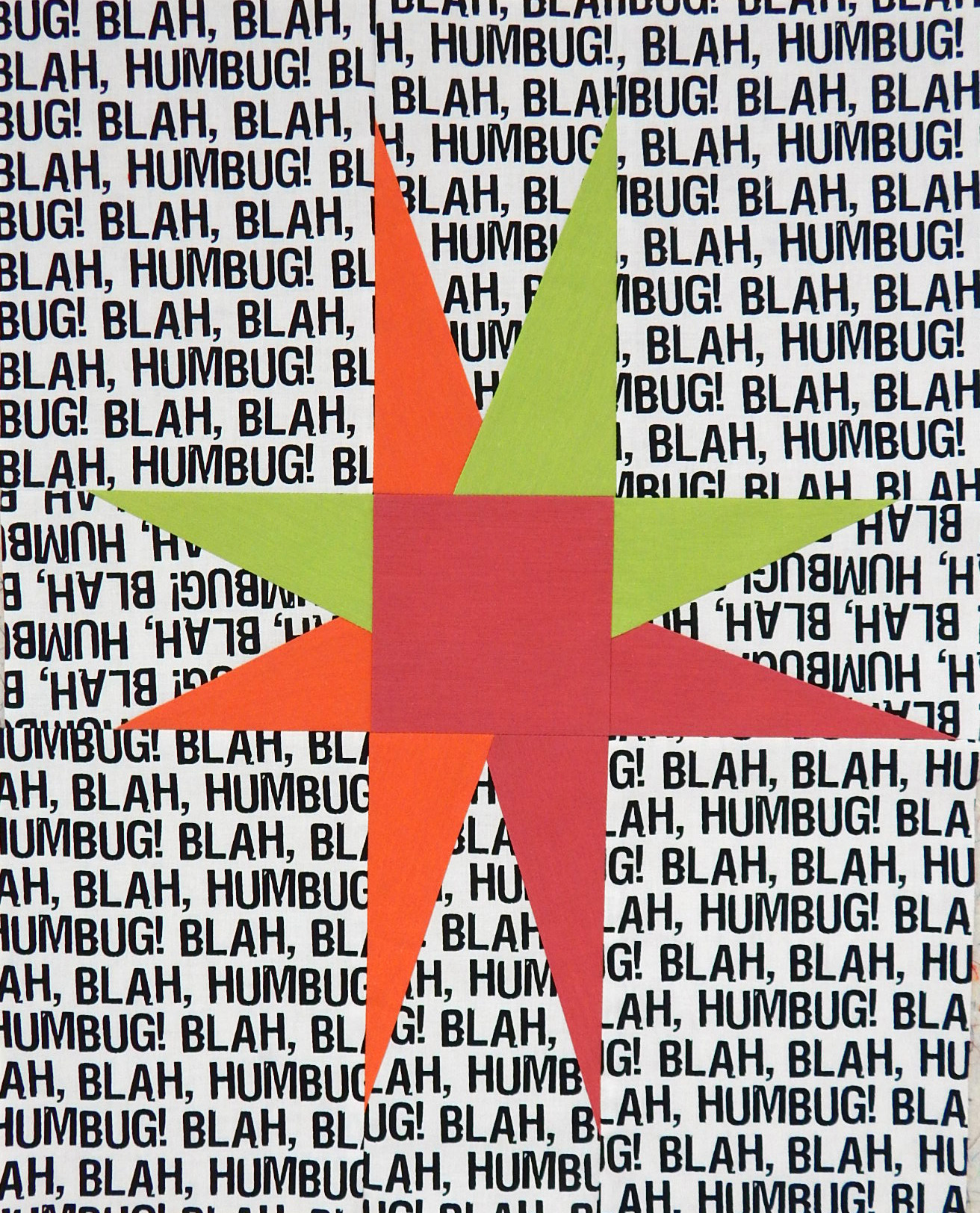
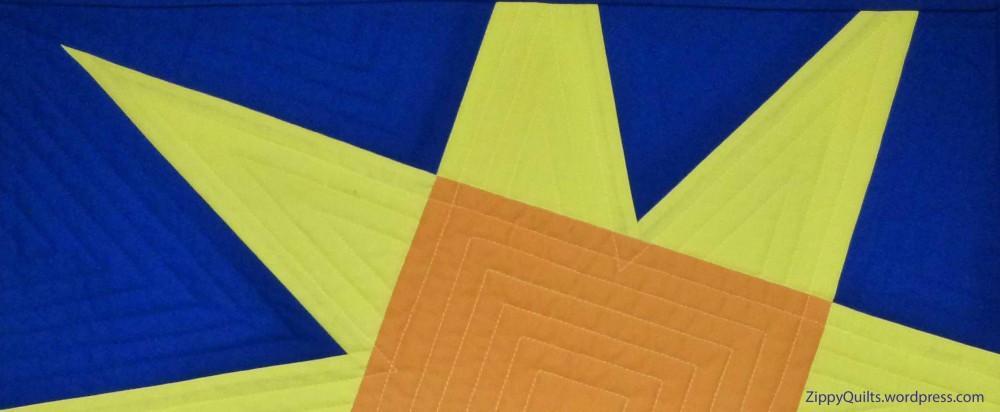
I recently read one of Gwen Marston’s books, and she had directions for a sew-and-flip star.  Like most of modern quilting, this star has been published by multiple people in multiple places, so it’s not new.  However, if you’ve never done sew-and-flip, you can find my tutorial below.  It’s a very fun technique.

flip and sew star

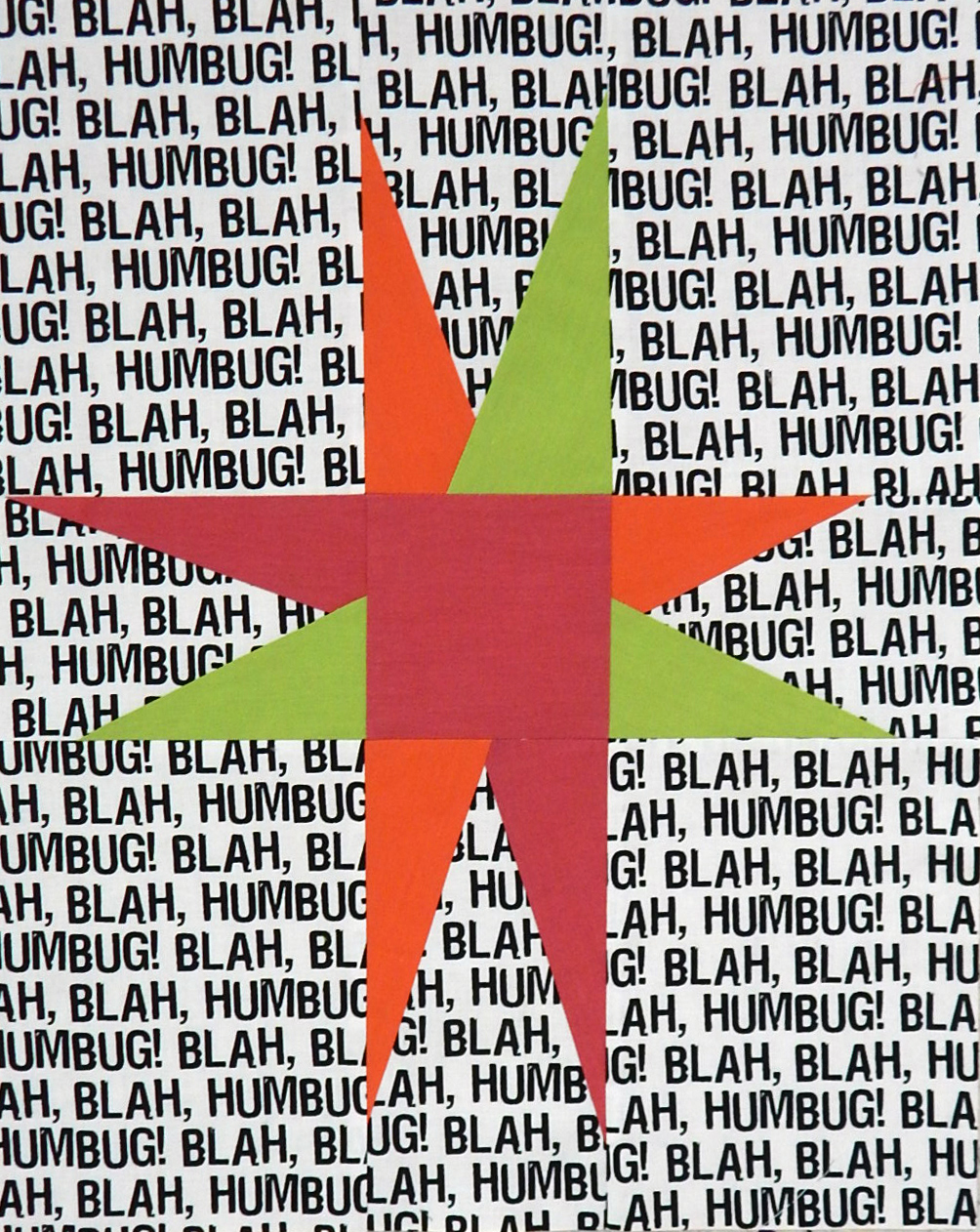
There’s a major flaw here!

So, HUMBUG!  Can you see what I did wrong?  I didn’t see it until I took the picture!  I rarely rip out seams in my improvised blocks, but this was too much for the perfectionist who whispers in my ear much of the time.  So here’s the corrected block:

Sew and flip tutorial

Humbug Star

This block finishes 12″ X 15″.

Here are the links to my other modern sampler blocks so far.

My Own Modern Sampler–It May Take A Year!

The Modern Sampler Continues

Improv Block I


And here is the tutorial on the sew-and-flip star.

This project was originally developed for Modern Quilts Unlimited magazine.  You can read about it here.

Unfinished block size 15″ x 15″

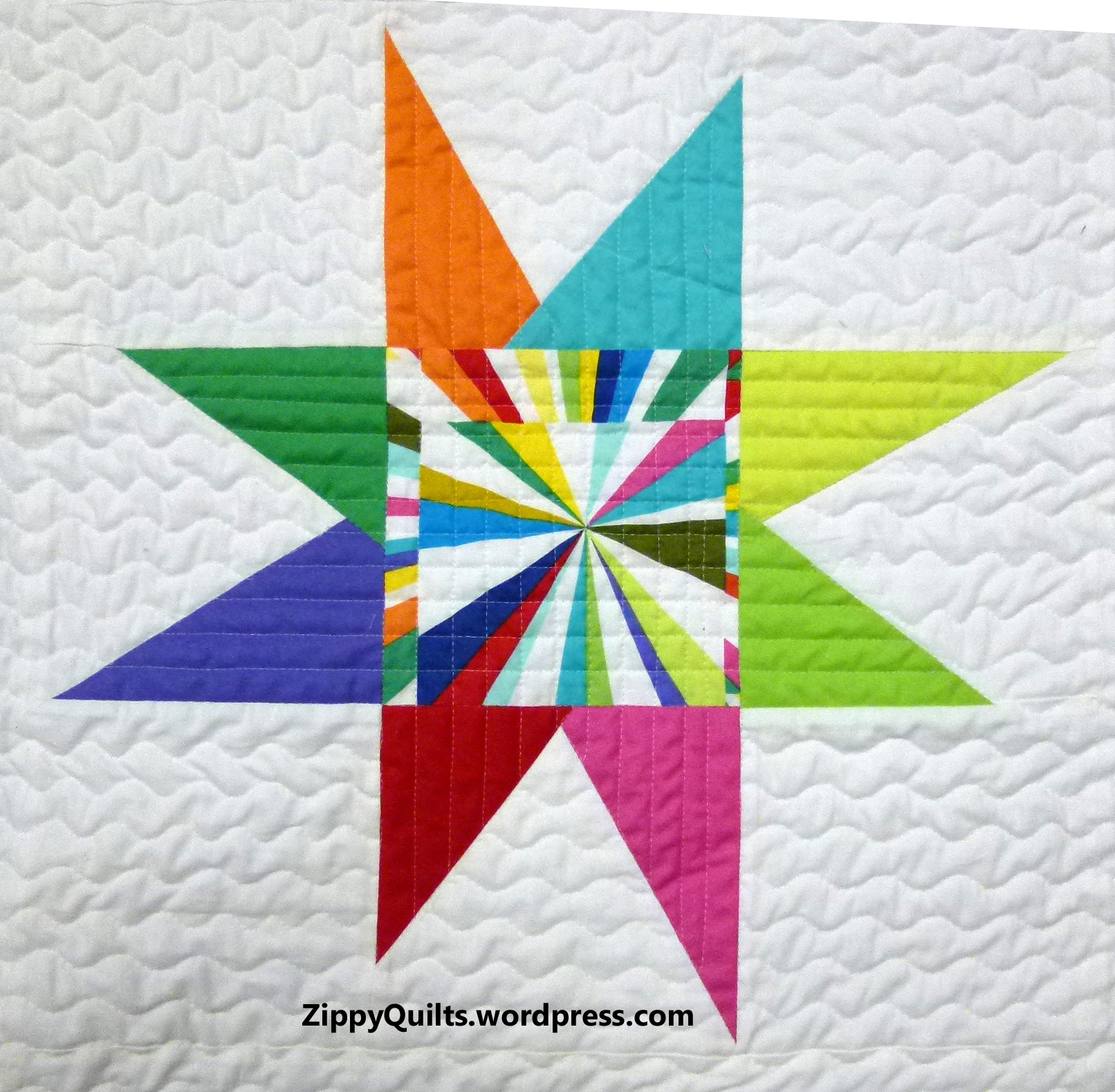
modern star block

This block finishes 14-1/2 x 14 1/2 inches

Fabric Requirements

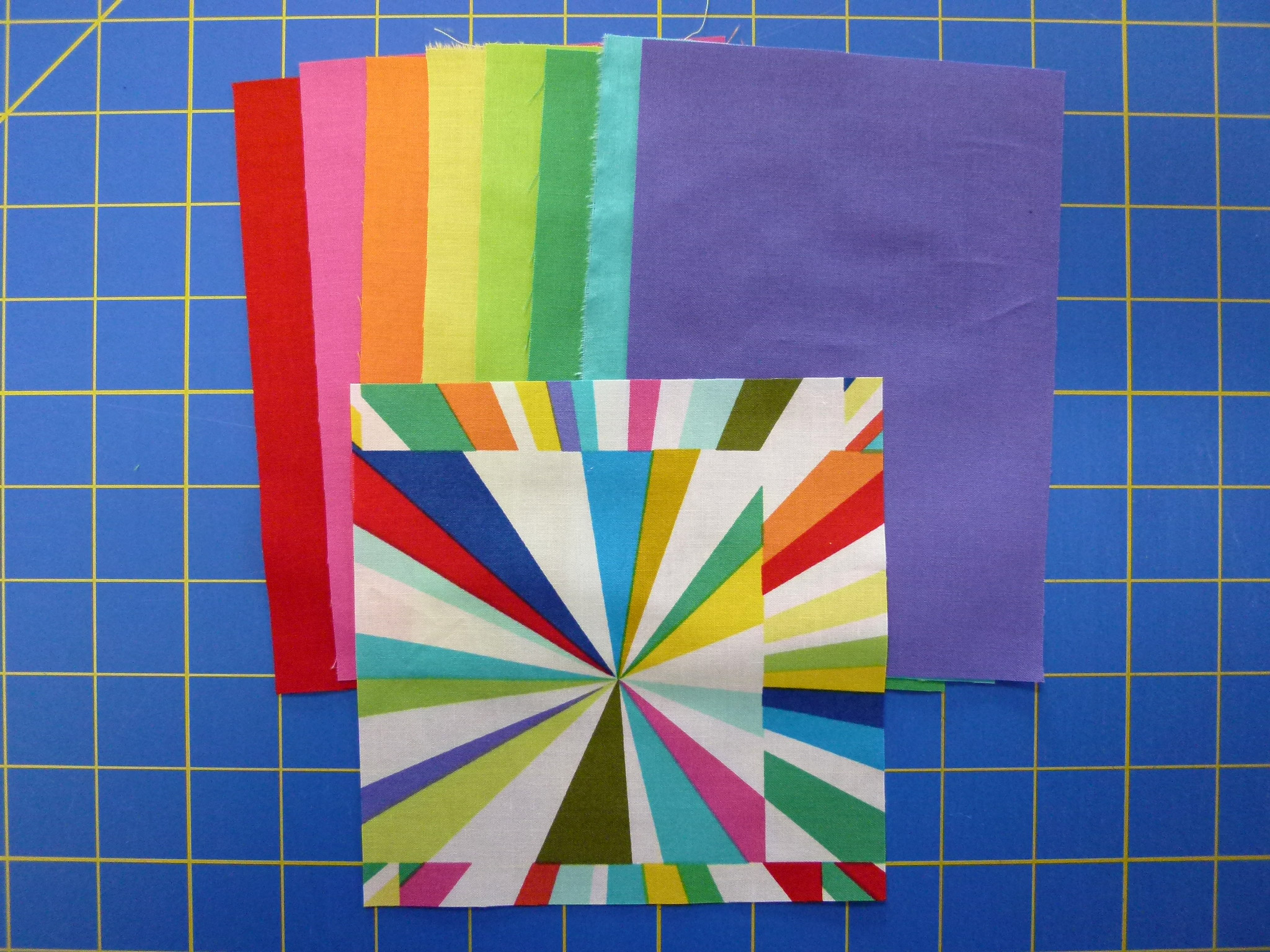
modern quilt fabric

Fabrics supplied by Michael Miller Fabrics

Background fabric 16 1/2″ x 16 1/2″

Star center fabric 5 1/2″ x 5 1/2″

Eight solid fabrics for star rays, each 6 1/2″ x 4 1/2″

Piecing Instructions

Note: all seam allowances are 1/4″.

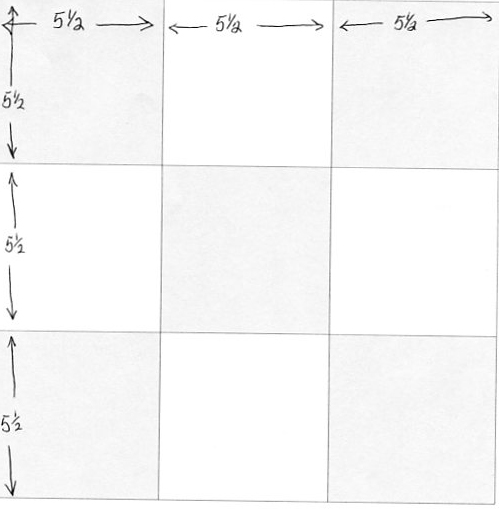
  1. Cut the background fabric into a 9-patch of 5-1/2 inch squares as shownCutting Diagram
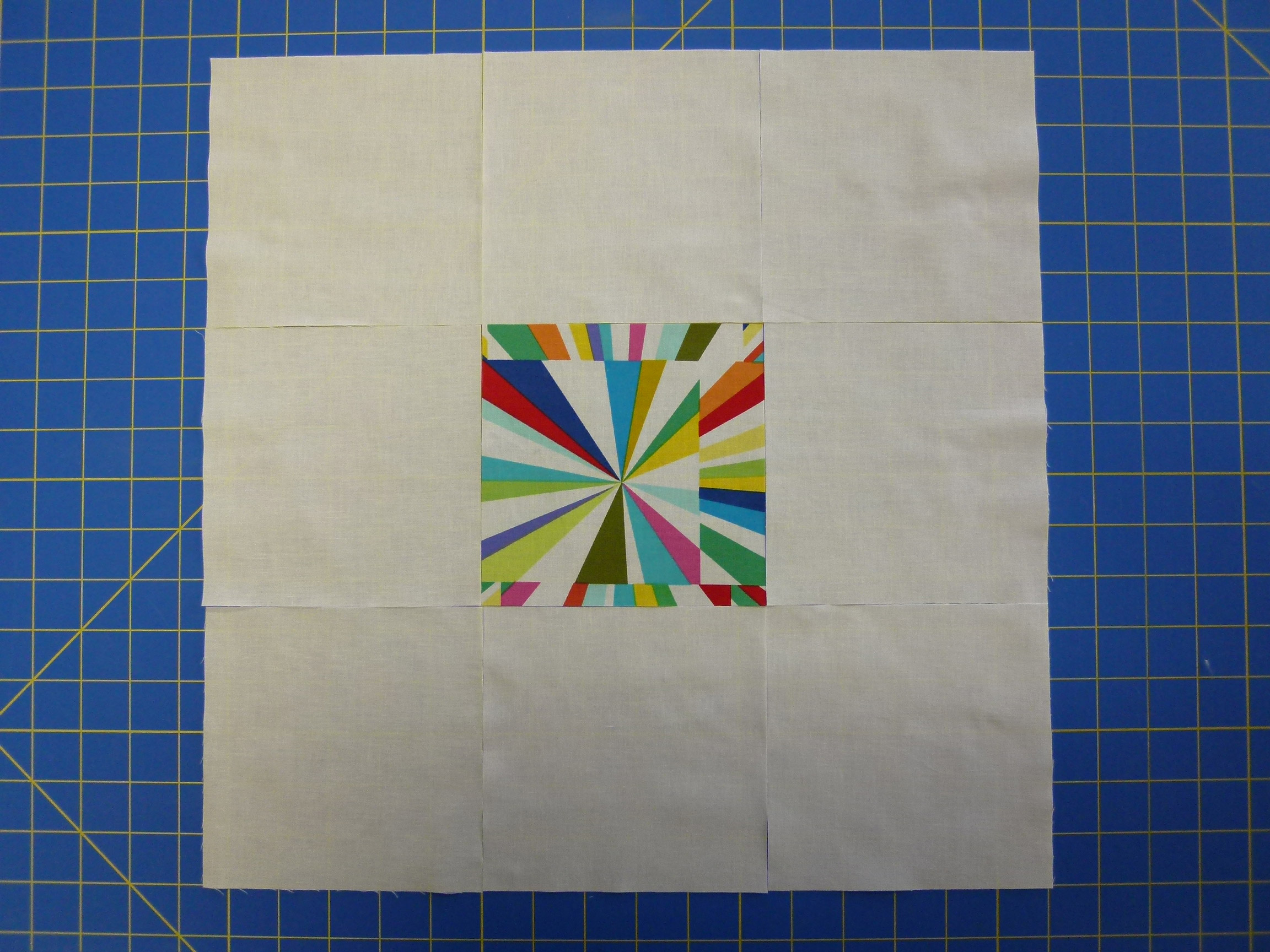
  2. Remove the center square and replace it with a 5-1/2 inch square of your center fabric

    Center square surrounded by background squares

    Center square surrounded by background squares

  3. For star rays, build 2 rays on each of 4 background squares as follows:
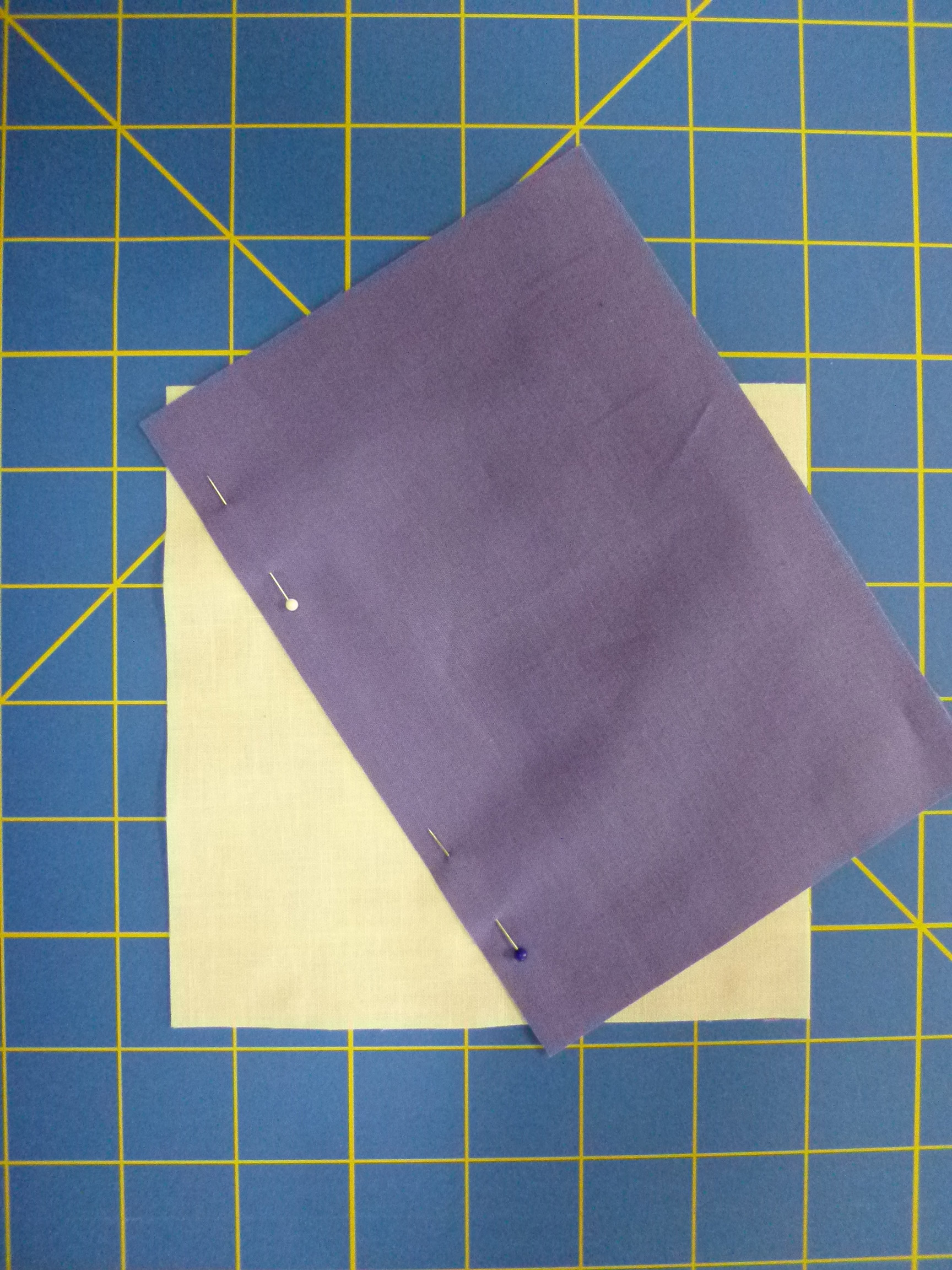
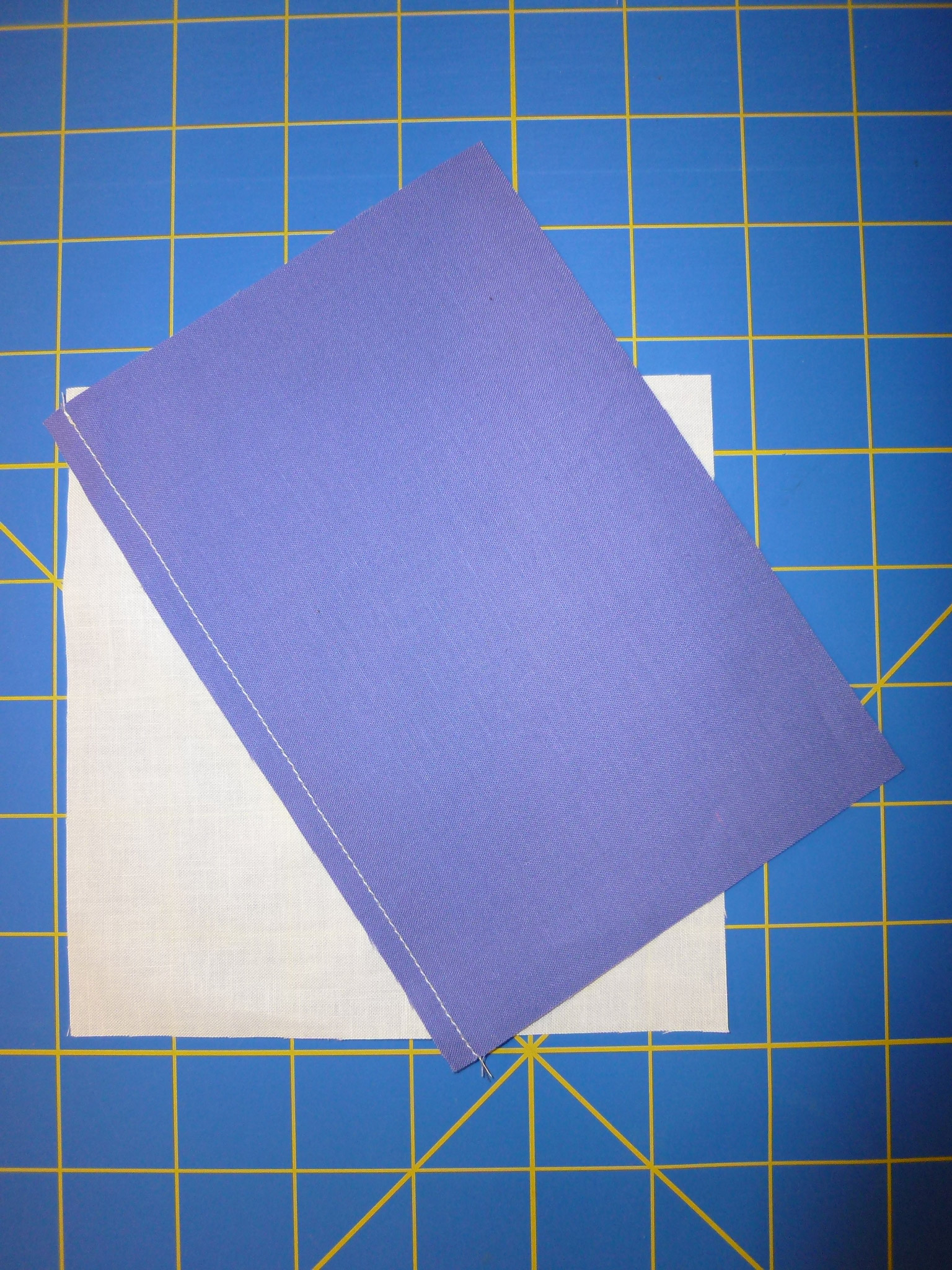
  • Lay the one 6 1/2″ x 4 1/2″ piece of solid fabric on a 5 1/2″ x 5 1/2″ square of the background as shown.   Place pins approximately where the 1/4″ seam will be along the long edge of the ray and turn along the pins to check placement.  Diagram-3-web Adjust if needed to make a star ray that suits you and to completely cover the foundation piece where the star ray will be.  Note that you will need to have your ray end at least 1/4″ from the edge if you want to see the point.  However, if you want blunt points there’s nothing wrong with that!  Here’s an example:Blunt point example
  • Reposition the pins and stitch 1/4″ from the edge of the ray as shown below:Diagram-5-web
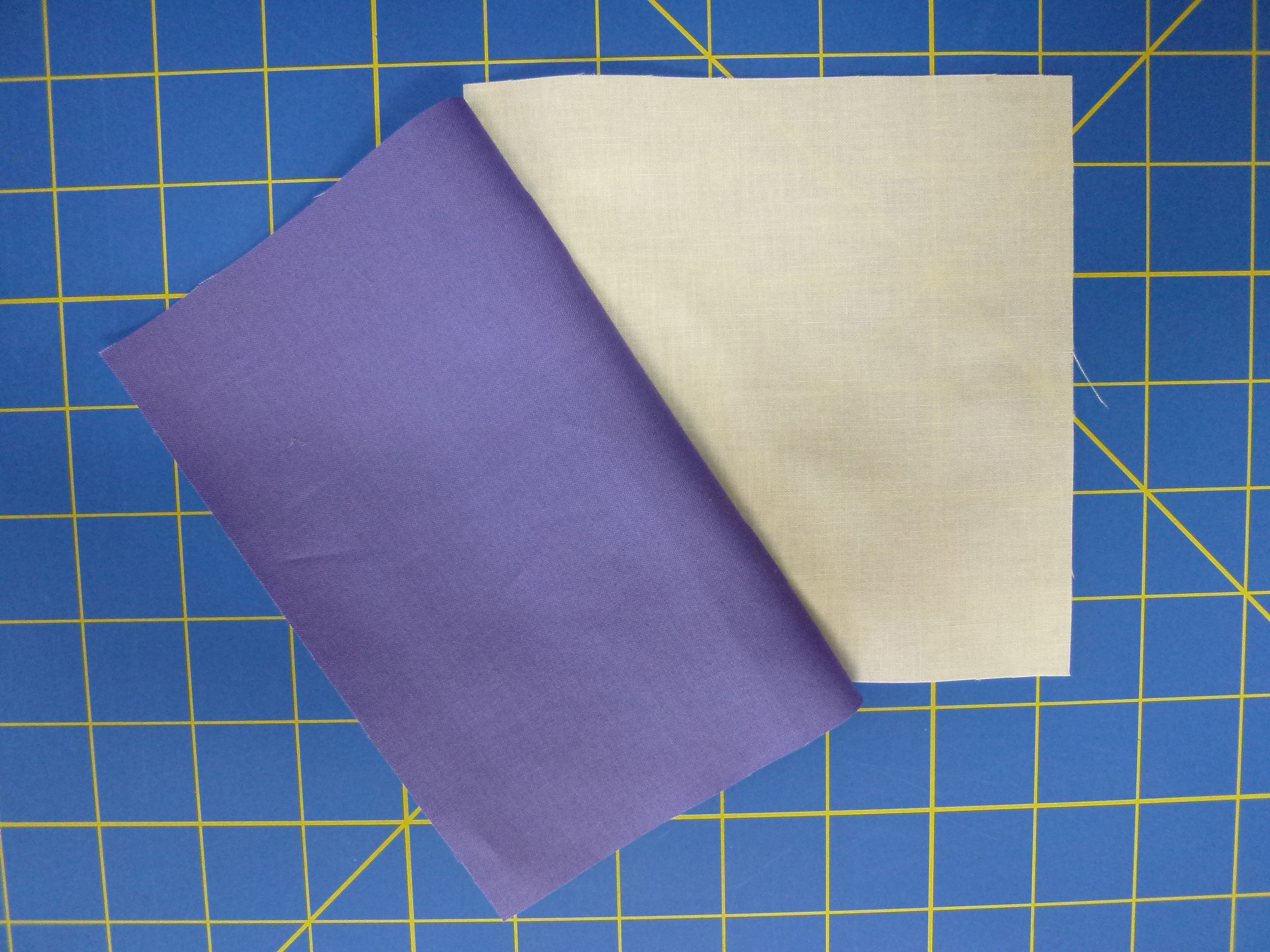
  • Remove pins, turn the ray back into place, and press. Trim the side and bottom edges of the ray even with the foundation fabric.  Do not remove the foundation fabric under the ray, as it helps keep everything square and stable.Diagram-4-web
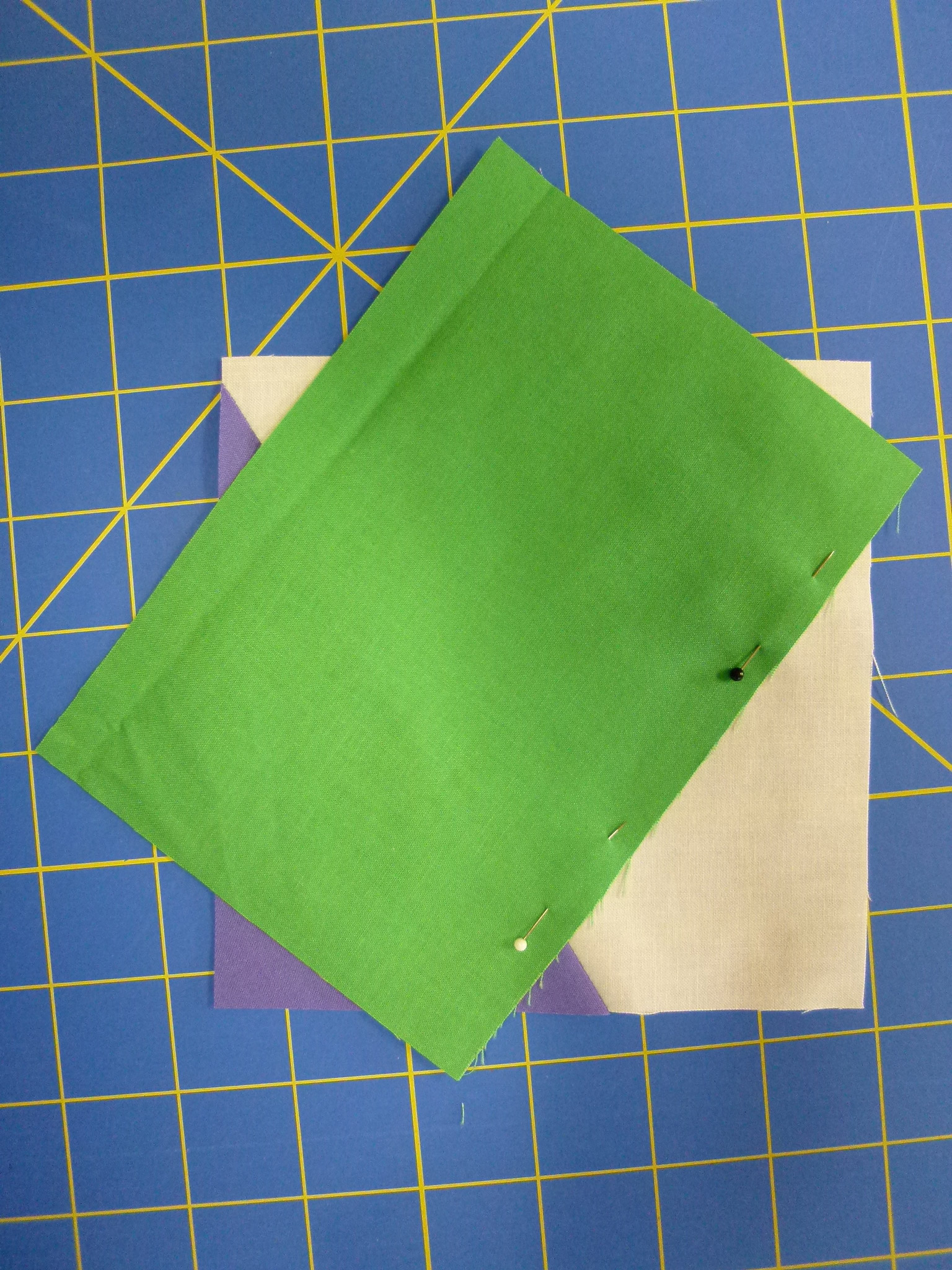
  • Place the fabric for the second ray, pin and test position, then stitch, press, and trim as for the first ray.Diagram-6-web Note that the rays need to overlap at least 1/4″ away from the raw edge where this section will join the star center. It’s fine to overlap more than that.

    Diagram-7-web

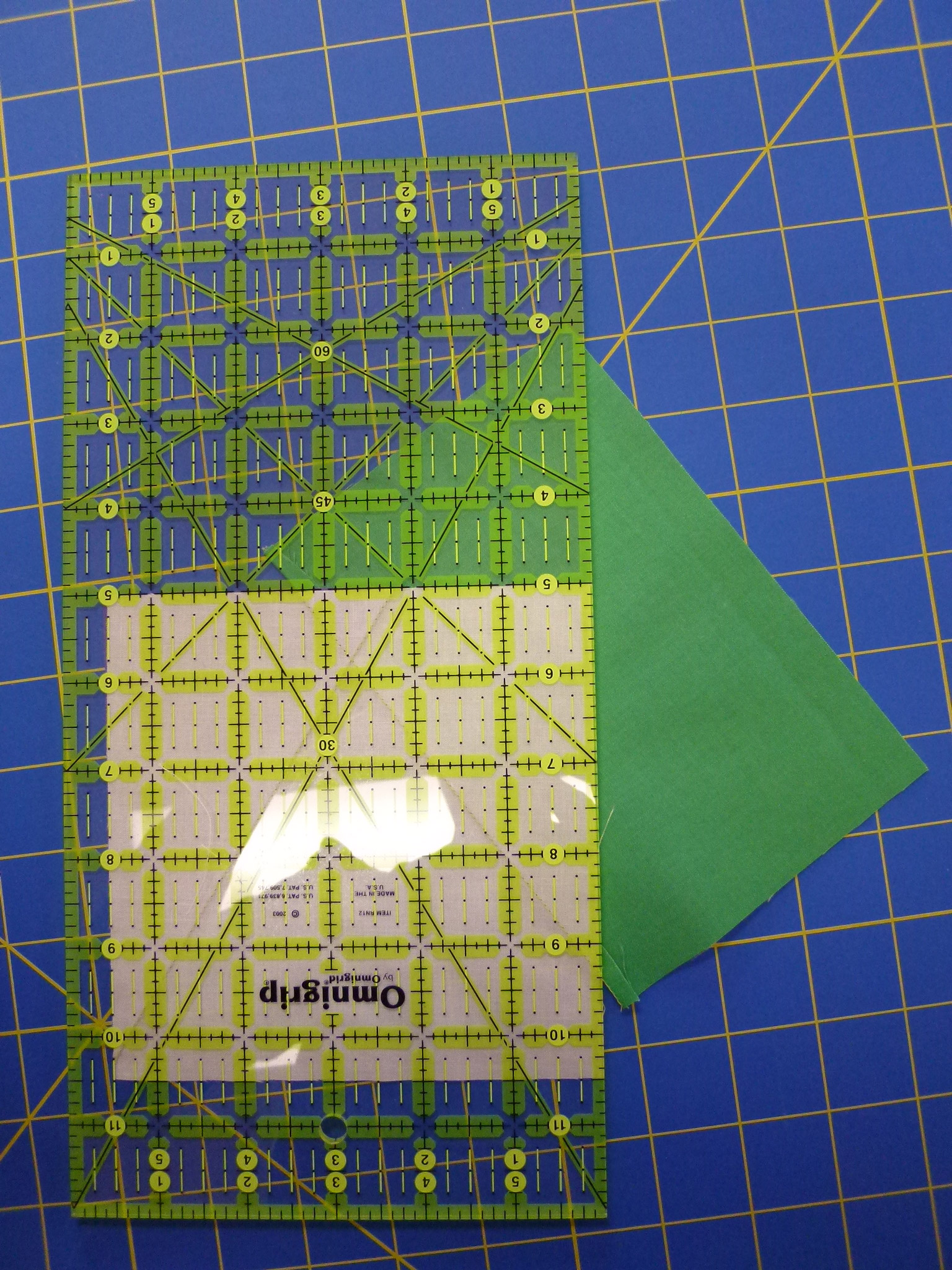
    Press the second ray and trim to match the background block.

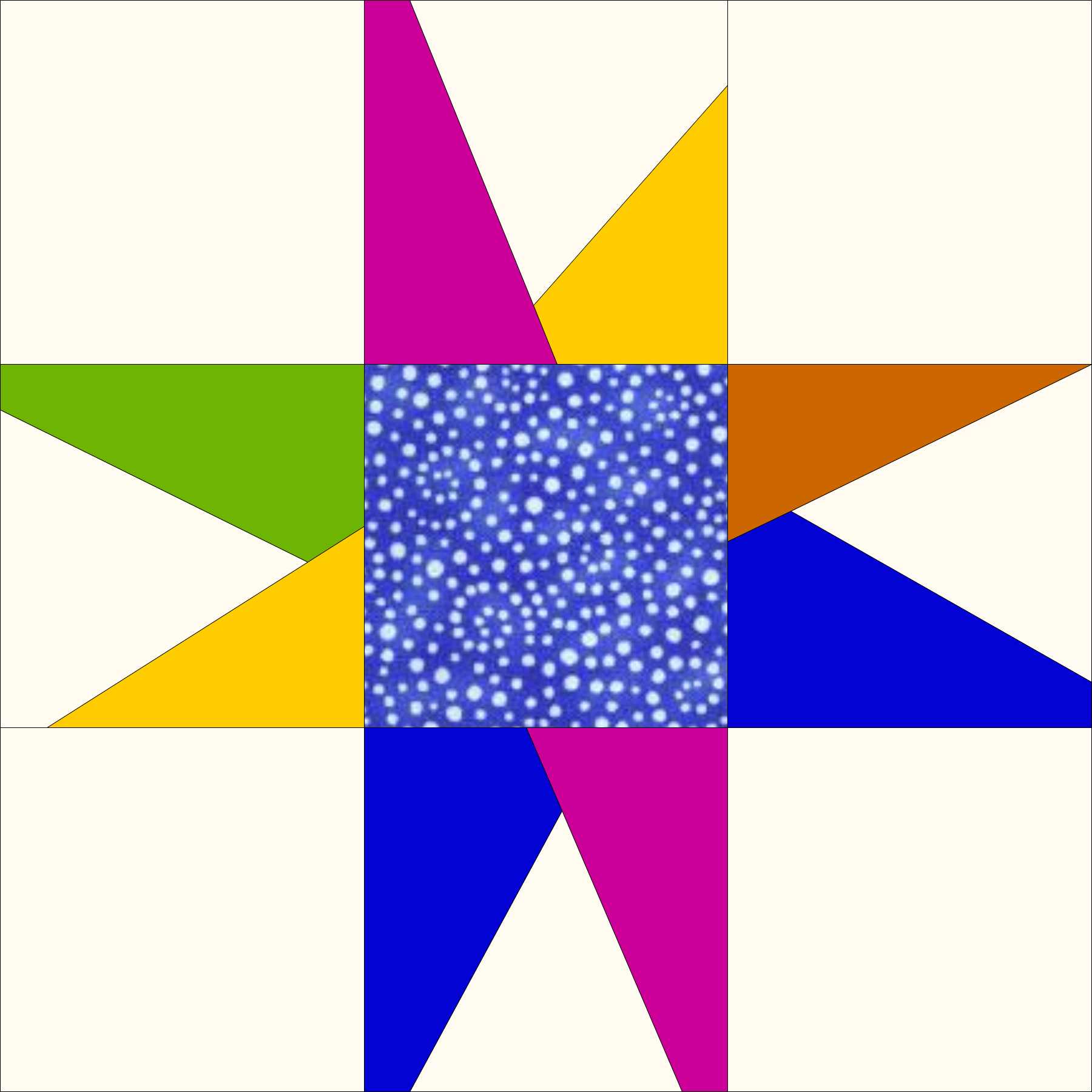
  1. After building 4 sets of 2 star rays, re-assemble the 9-patch with the plain corners, printed center, and colored rays.

    modern star block

    This block finishes 14-1/2 x 14 1/2 inches

8 Projects for April and May!

In keeping with the plan to finish a UFO a month during 2015, here is the April finish.  Since this fabric has been waiting for about 5 years, I’m calling this a significant finish!

donation quilt

Flower Fairies, A Donation Quilt

The second April finish is not only finished but delivered to the Quilt Alliance for their 2015 challenge. This one is called Cat Circus. The Laurel Burch fabrics reminded me of how just one cat can be a complete circus (polite word for disaster) in just a matter of minutes in any room in the house. I love cats, so that’s OK by me.

Quilt Alliance

Cat Circus, my 2015 Quilt Alliance challenge quilt

And here is the May finish, along with two other donation quilts I made in April and May. This means 6 so far this year–I’m caught up through June!  I’ll have more information on some of these in a later post.  They are an improvisational quilt, an orphan block quilt, and a quilt using Cuddle charms and cat fabric.

I made two more blocks for My Modern Sampler this month.  You can read about the improvisational one here, and I will blog about the Humbug Star at a later date.  For now, here’s a preview:

Finally, I bound the Charley Harper quilt that came back from the quilter a while ago.  These organic cottons from Birch are stiffer and less silky than my usual quilting cottons, so I washed the quilt when it was finished.  That helped some with the stiffness and also made the quilting stand out more.

Charley Harper

Turning Twenty Again pattern in Charley Harper fabrics

On to the June projects–I’ll have much more news coming up!

My Modern Sampler: Improv Block I

Sherri Lynn Wood’s book finally arrived,Improv Handbook, Sherri Lynn Wood and I’ve been enjoying it.  I have NO intention of making a full-size quilt for every exercise in the book!  However, an improv block for my sampler quilt seemed just right.

The first exercise in the book involves cutting fabric into squares, then using background fabric as needed to join them improvisationally.  I’ll mostly let the pictures speak for themselves here.

Improv quilt block

I chose  2 fabrics and a background to start–my notes are lying on the background fabric

Improv block

Then I cut a bunch of squares

About half way through, the design looked too static to me, so I cut a triangle of background fabric to set in the middle and throw the whole thing onto diagonal lines.

Improv block

I joined some of the pieces, but then…I decided to add a triangle!

The finished block:

improv quilt block

The finished block, which will be 12-1/2 inches square

This ended up resembling my previous work much more than it resembles Sherri Lynn’s quilts.  I think that may be sort of the point 🙂  Here are some of my previous improv blocks:

I’ll probably go on to Improv Block II, etc, as I go through the book.  Stay tuned!

The other posts in my modern sampler series can be found here:

My Own Modern Sampler–It May Take A Year!

The Modern Sampler Continues


One Quilt, Two Lessons

Check out these fabrics!

Fat quarter bundle

Alison Glass Handprint fabric and neutral linen

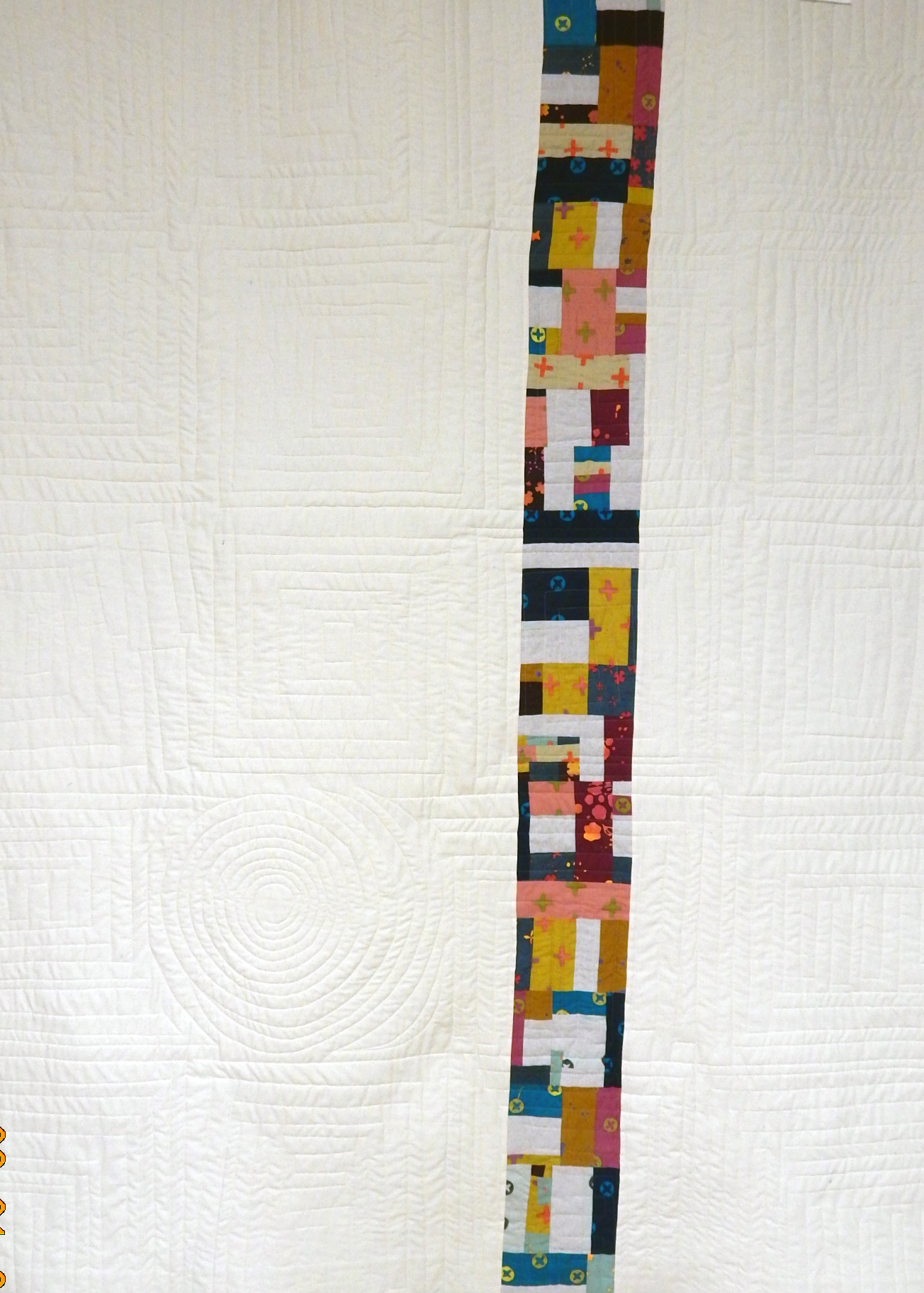
A friend gave me the FQ (fat quarter) bundle of lovely Alison Glass handprint fabric and I combined it with a neutral linen fabric I’d been saving for something special. I started with Karla Alexander’s instructions for a quilt, but (as my friends all know) I never really follow instructions so it diverged…improvised modern quilt blocks

The blocks were lots of fun to make.  I followed the instructions for a while, then started cutting the blocks up and inserting strips.  Then decided NOT to trim all the blocks to one size.  I adjusted the sizes of the linen sashing so that all the rows came out the same length, and made the rows of different heights to allow for the different block sizes.

And I slashed the sashing and inserted some strips in that, too.

When I had the top all made, I basted it with spray basting as usual.  BUT I didn’t have enough of the first can.  Then the SECOND can was a different brand and almost empty as well!

Determined to get the doggone thing basted, I resorted to some spray-on stuff that was supposed to bond the fabric to the batting when I ironed it.  This last stuff left SPOTS on the handprint fabric, which is light weight (almost like voile).  YIKES!

Lesson 1:  Be patient until you can get to the store for a can of basting spray.

Finally (after buying basting spray) it was basted and I started quilting.  Enter Lesson 2: this linen is a loose weave of large fibers and doesn’t play well with a tight weave of small fibers. YIKES AGAIN!  No matter how I changed the pressure on the quilting foot or otherwise fiddled with it, the quilting distorted the top and the backing.

improvised modern quilt

The finished quilt

Now it’s finished and I like it.  I appreciate the texture of the linen, but I’m not sure I’ll use it again.  I took this to my last modern guild meeting and people were positive about it, but one of the more experience sewists told me linen is usually stretchy, so at least it’s not just me!

improvisational quilting

Here’s the quilt back–that column was straight when I started!

Well, I try to learn something new every day, so I’m calling this a SUCCESS! 😉


4 Quilt Tops–Help Me Choose!

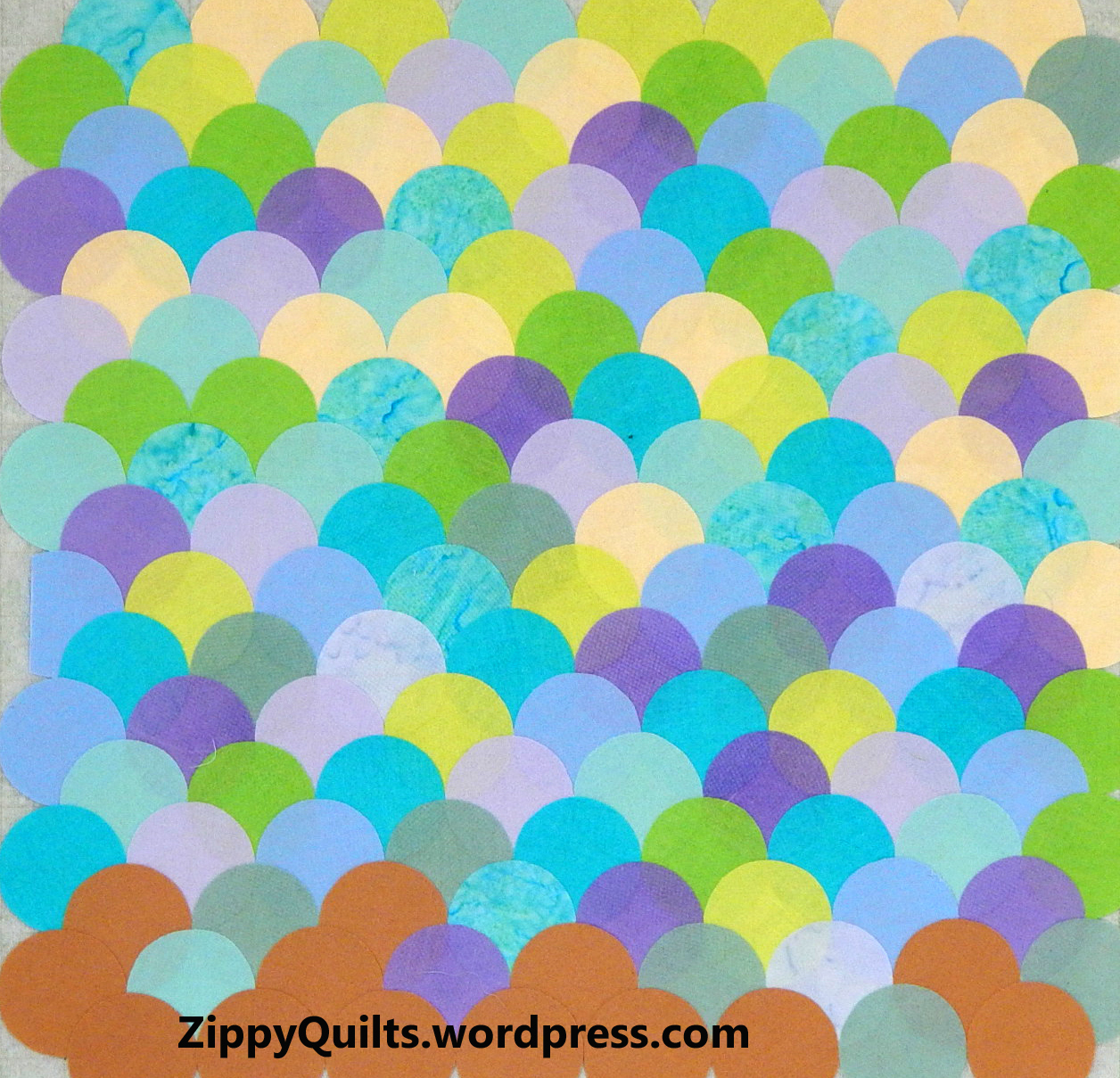
The theme of the Quilt Alliance challenge this year is “Animals We Love”.  It gave me a hard time–I tried for weeks to think of something–then all of a sudden I had more ideas than I knew what to do with!  So here are 4 tops I’ve made, and I need to decide which one to submit.  Please tell me which you think is best!  It may help if you’ll tell me why you like it as well (or why you hate it).  All are 16 inches square, which is a requirement of the challenge.

#1: Cat Circus was designed using EQ7 and made using templates.modern quilt block

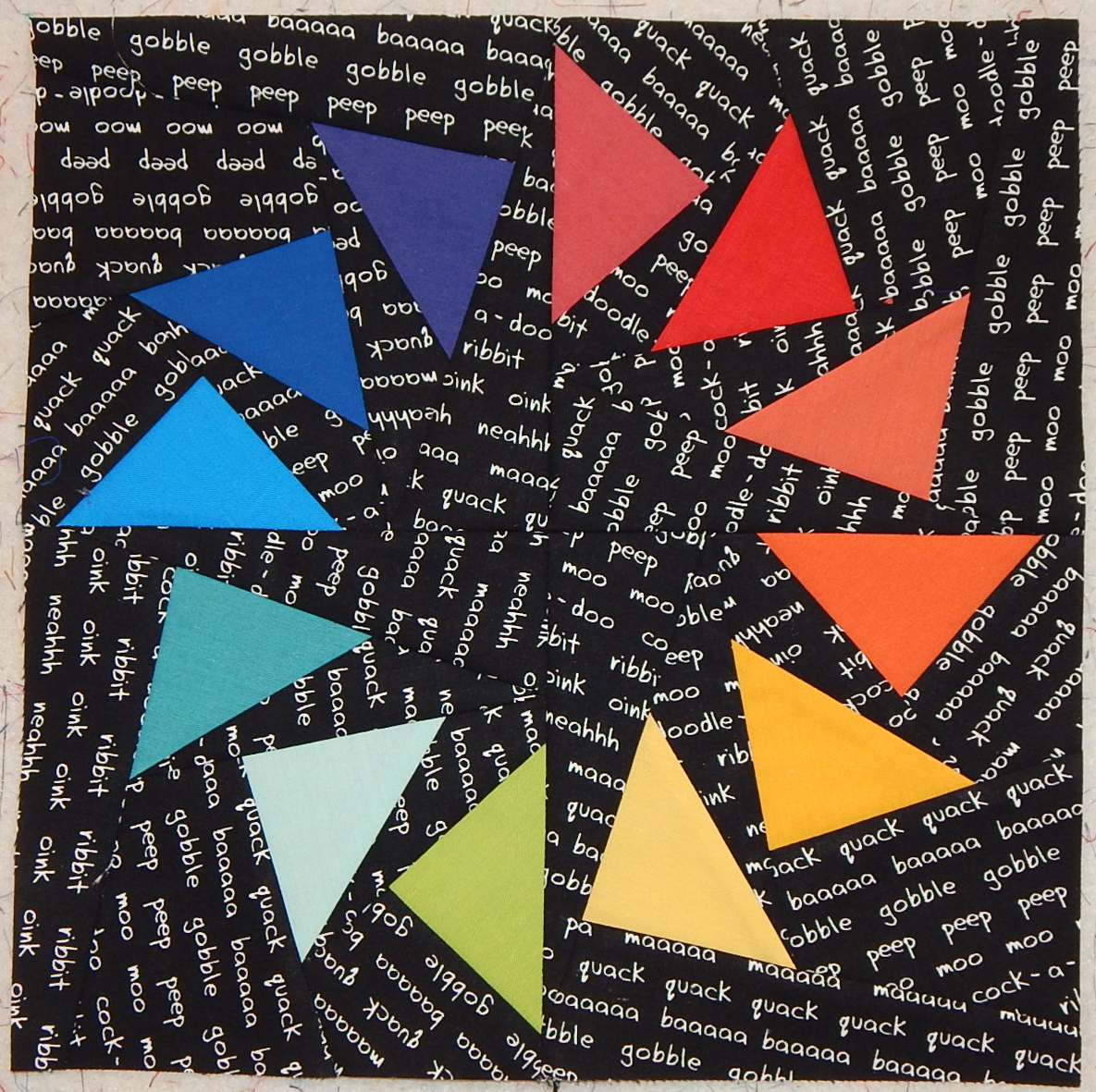
#2: Barnyard Whirl was cut freehand.  The black fabric is printed with animal sounds.  (Why do we teach little children to make animal sounds, anyway?  Oops, a digression!)Modern quilt block

#3: We Love Clams will have a thread-sketched cartoon clam (presumably looking worried about all that love) as a focal point when I quilt it.Modern Clamshell Quilt

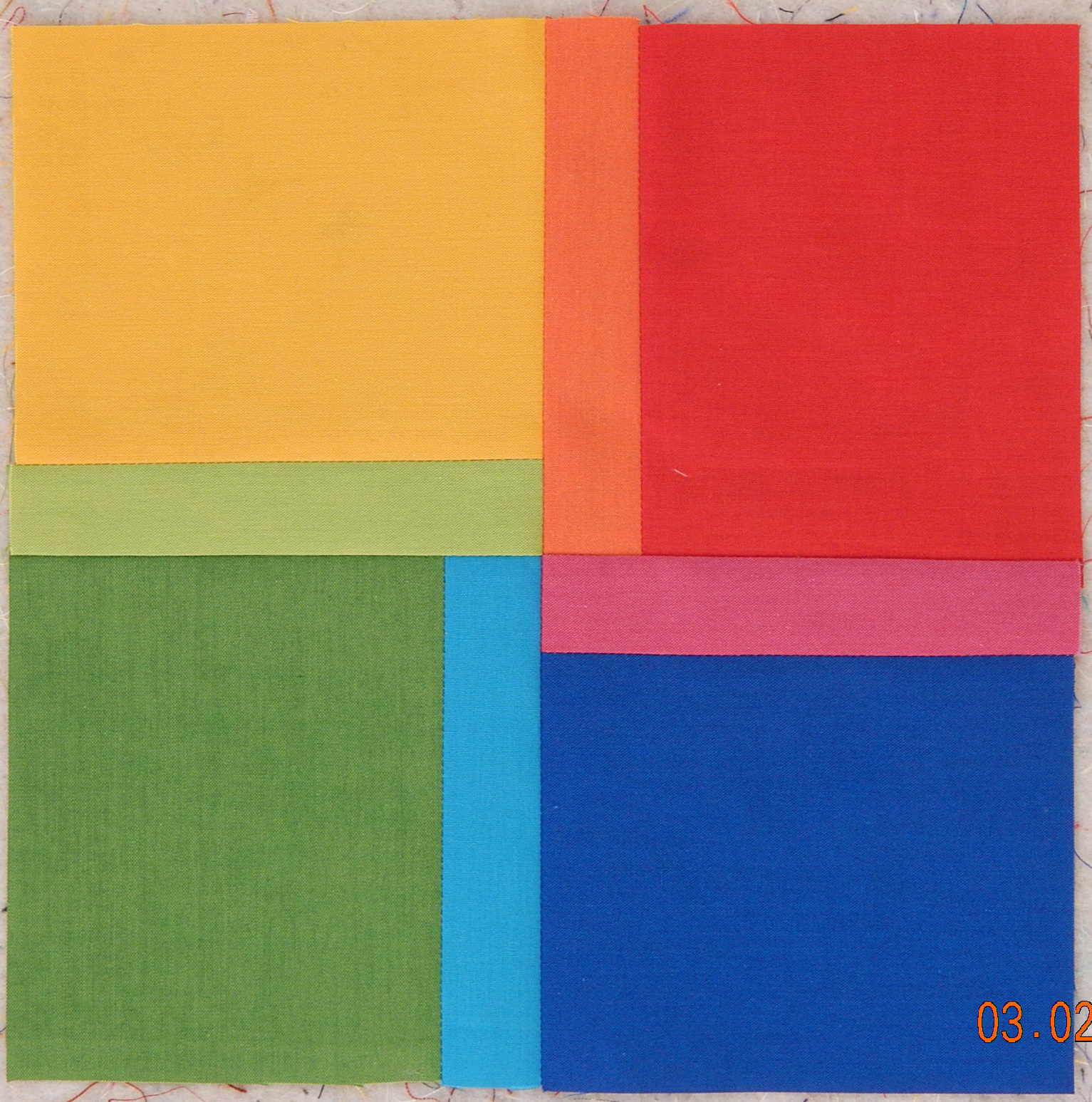
#4: Untitled (feel free to suggest a title) again with the animal-sounds black fabric.Modern QuiltAnd that’s it!  Yes, I made 4 quilt tops!  Please help me choose one.


The Modern Sampler Continues

These next two blocks were made from inspirations I found on Pinterest (yes, I love Pinterest!)  The first I simply copied because I loved the colors and their arrangement in the original artwork by Richard Paul Lohse.

Modern Quilt Block

Quilt block based on the work of artist Richard Paul Lohse

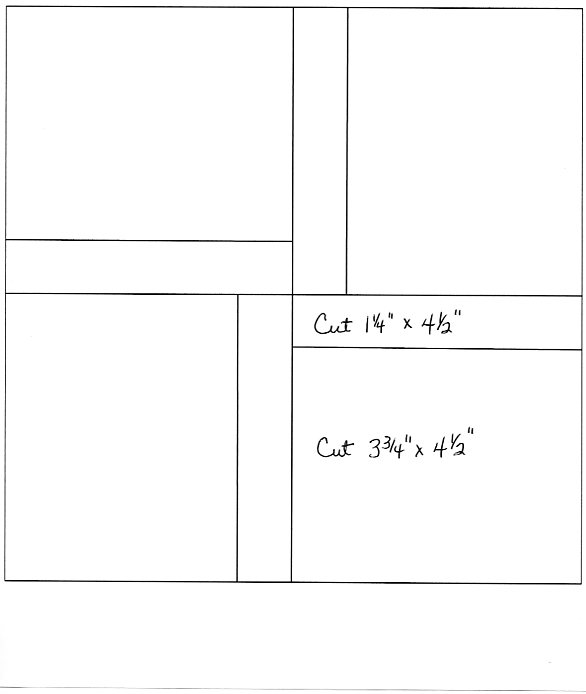
Here’s a drawing of how I constructed this block, with measurements, if you want to copy him, too.  There are 4 units, each 4″ finished (4-1/2 inches for each unit before joining) so that the entire block is 8″ finished.  I’ve marked the size to cut each piece on one of the 4 units, assuming you can take it from there 🙂

modern quilt block

Layout for block based on art of Richard Paul Lohse

If you look up the artist Richard Paul Lohse, you’ll see that a lot of his designs would make terrific blocks or whole quilts.  Great sense of color!

The second block was made from a tutorial I found at a website called Piece By Number and you can find the free pattern on her site here.

modern paper pieced block

Circle of Geese block made from a pattern at PieceByNumber

This block was easier than it looks thanks to paper piecing.  I enjoyed making it, though I feel no need to make another right away!

I think these two blocks have a lot of ZIP for the relatively little amount of effort they required.  The Lohse block depends very much on choice of color, so be sure to lay out the fabrics and look at them a while before cutting.  Have fun!

2015 Donation Quilt #1

A couple of my quilty friends try to make a quilt a month for various charities, so I thought I’d try that this year.  The group with which I make donation quilts sends them to a Ronald McDonald House to be given to sick children.  The House wants all quilts to be 40″ x 40″, which doesn’t seem too big to do one a month.  Here goes….

For January I took some of my orphan blocks and related fabrics and made this quilt.  The blocks also happen to be on my UFO list for 2015, so there’s TWO projects accomplished at once 🙂

Donation quilt

February finish and January donation quilt

The blocks finish 12″ square, which means that with a 2″ border the quilt comes out 40″ x 40″ as planned. The 9-patch blocks were made using the stack and shuffle method I learned years ago from Karla Alexander’s books.  It’s easy and fun.  To end up with blocks this size, I started with 15″ x 15″ squares of fabric (since they’re cut wonky on purpose it takes a bigger starting square than you might think).

The center block has little inset strips using a technique I modified from one of Judy Niemeyer’s ideas.  To make a quarter inch inset that doesn’t “wobble”, do this:

block tutorial

Block pieces, including yellow insert

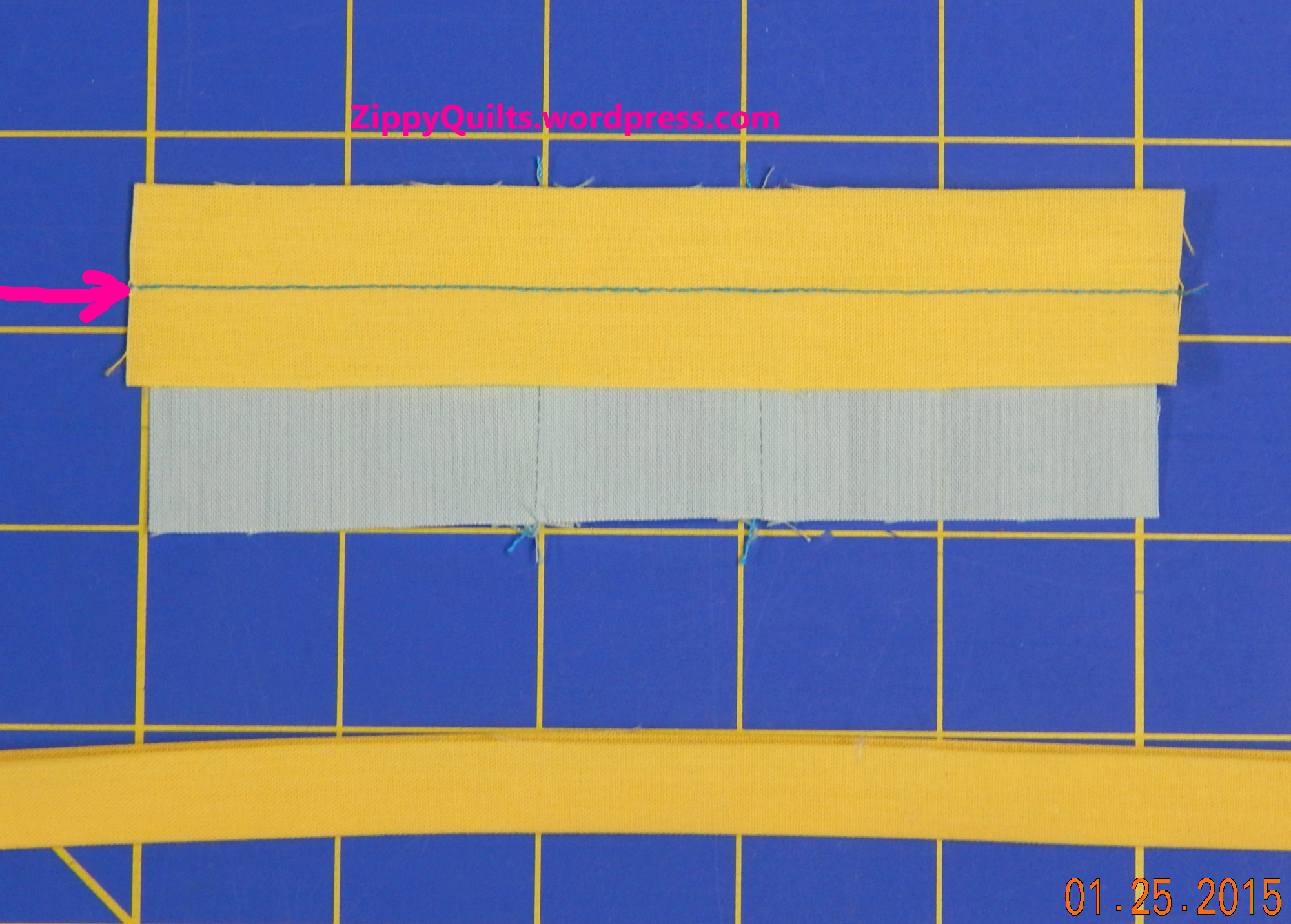
Cut a 1″ strip of fabric and lay one edge along the raw edge of the piece where you want a narrow inset. Stitch through both the strip and the quilt piece 1/2″ away from the edge, either by using the 1/2″ mark on your machine’s throat plate or by marking the center of the strip.

Quilt tutorial

The center pieces of the block have been jointed and the insert laid along the side

Fold and press along the seam-line so that you now have 3 raw edges, all lined up.

quilt tutorial

Strips have been added to all sides of the center pieces and pressed along the seam

I don’t usually trim away the extra fabric because I like the stability, but it DOES make for some weighty intersections if you choose not to trim away the bottom 1 or 2 layers.  Then assemble the block as you normally would, using 1/4″ seams.  The strip you added will show up as a 1/4″ inset.

Let me know if you try either of these blocks.  I thought they were fun!


Tessellations! By Jean Larson

As promised, my friend Jean Larson has written a tutorial on tessellation quilts.  I hope you enjoy it as much as I did!  –MJP

Tessellating designs make me happy.  Tweaking those designs is even more fun.   I want to share the joy of starting with a very, very simple design and watching it blossom.  My inspiration comes from this web site:  http://gwydir.demon.co.uk/jo/tess/

Start with a simple gridded block and create a light/dark design.  Here, I’ve started with a 3 x 3 grid.  Then re-color the same block with the lights and darks reversed

.The grid lines are only for design purposes, and each block can be constructed with a single square block with 2 corner triangles attached using any method you prefer.

Here are some design possibilities…Quilt_1A simple “cat head” quilt using only 2 colors.

Different looks can be achieved with variations in the color placement.

Blocks can be inverted and turned for even more quilt designs.

Just imagine all the possibilities with color in these!!!!!

It’s even more complex when you design with a 6×6 grid.  Here are the positive and negative versions of another block.

These blocks can be constructed using half-square triangles integrated with larger fabric pieces.  If these blocks were to finish at 6 inches by 6 inches.  The center column on each block would be a single 3.5 inch wide by 6.5 in long piece of fabric.  The side strips would include some half-square triangles.

A couple of the quilts that can be made:

Looks like spools, some gray, some white, all standing up.  Same quilt with alternate blocks turned a quarter turn yields a different  clearly recognizable tessellation.  Reminds me of tessellating doggie rawhide chews 😉

Now back to the spool quilt from above.  The “thread” areas have been colored in.  No blocks have been turned.

Jean spool 5This shows the power of color and value (lightness and darkness).   The colored part, being next to the gray and being closer in value to the gray, unites those parts of the block, and gives the illusion that we have all gray spools on a white background, some standing up, some lying down.

I hope these examples can be the seeds to sprout some design experimentation with tessellating shapes.

  1. Start with 2 square grids
  2. Create a positive design, and its negative design
  3. Alternate them in a quilt layout
  4. PLAY!
  5. And play more with color!

Happy Quilting (and Designing)!!   –Jean Larson


First Finish

Metro Hoops Quilt

Metro Hoops quilt made by Allison at Cluck, Cluck, Sew
Inspired by the beautiful Metro Hoops quilt Allison showed over at Cluck, Cluck, Sew, I mentioned the Quick Curve Ruler as something I wanted to try in a recent post.  Here’s a picture of her quilt so you can see what inspired me.

My clever son-in-law gave me the ruler for Christmas, and as soon as we got home I tried it out.  As always, I learned a lot. Certainly the Metro Hoops pattern is a nice modern alternative to the traditional wedding ring quilt.  What I wasn’t prepared for was the fudge factor required to make it work.

modern quilt block

My first Metro Hoops block

It made a really cute block, but then my inner perfectionist kicked in 😦   The block required a lot of “easing in” along the seams to make the points match up. *(You can skip to the reason why at the end of this post, if you like.)

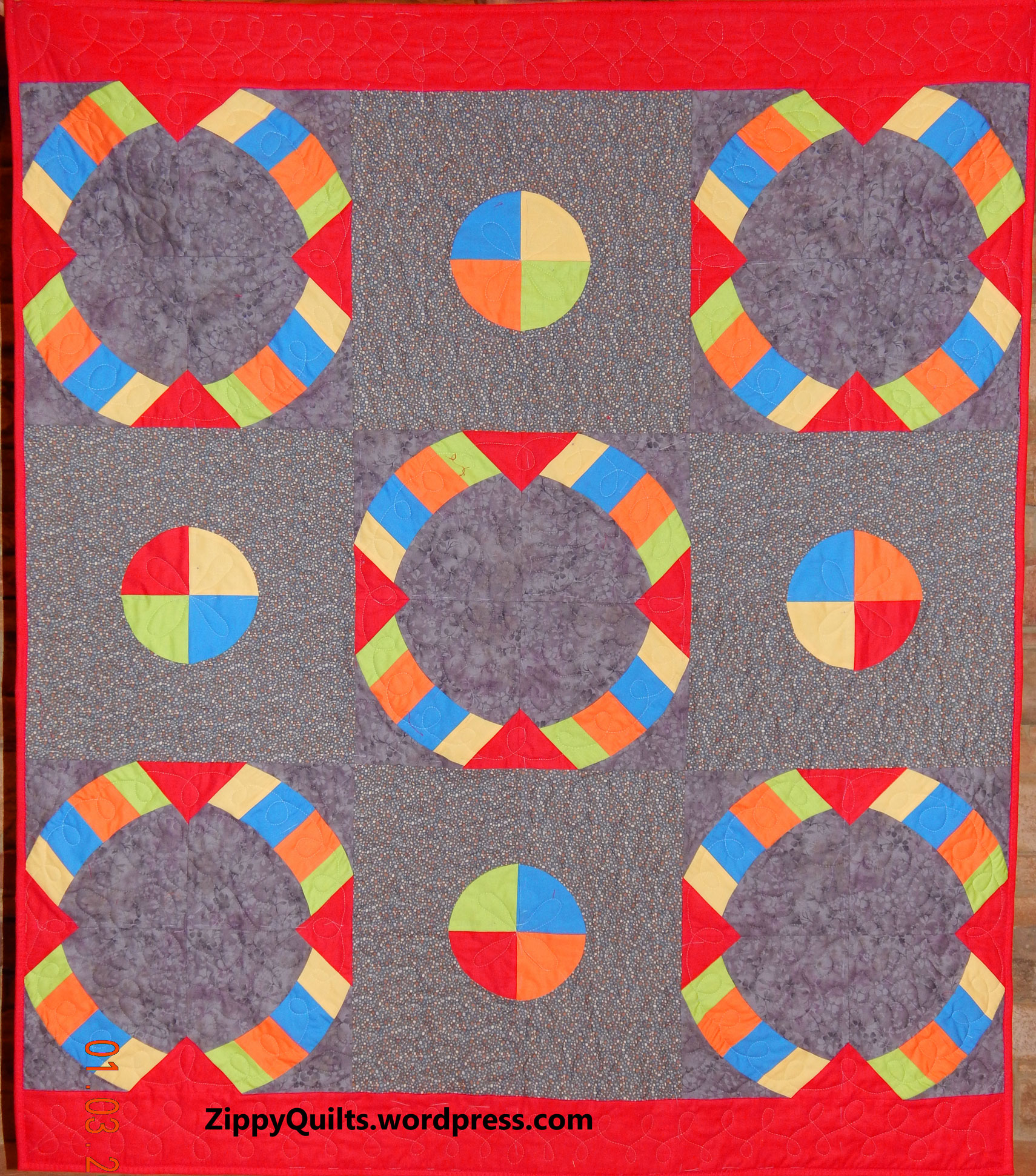
Luckily, I almost never cut out a new quilt completely before making a test block.  After making one block for this quilt, I decided 5 hoop blocks was my limit.  The blocks really are quicker and easier to make than they look, so I got the 5 done in a few hours. They are nice big blocks (finish 15″) so I had a good start on a baby quilt.

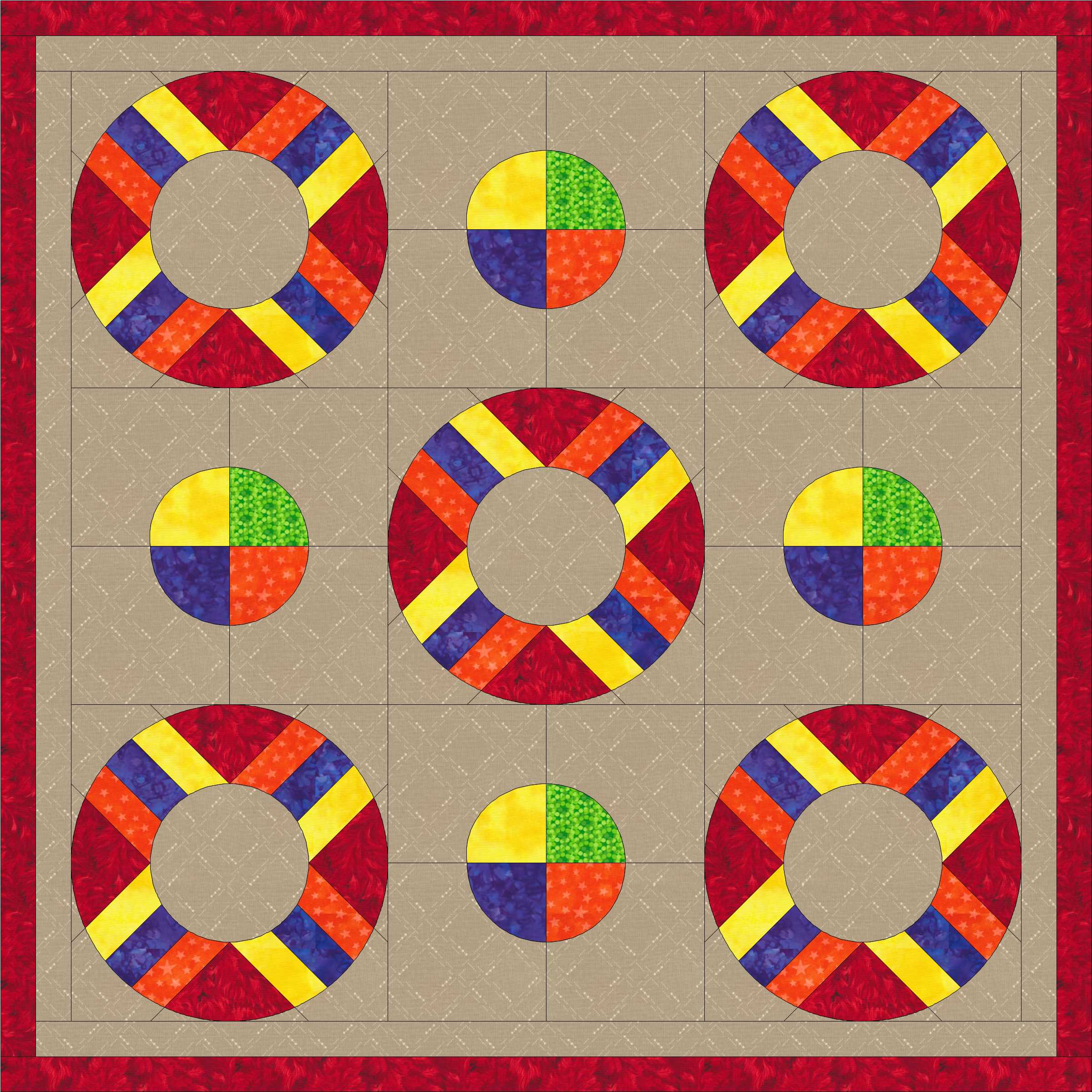
I drew an approximation of the block with my EQ7 program and came up with this layout:

My EQ7 layout for the Metro Hoops blocks

My EQ7 layout for the Metro Hoops blocks

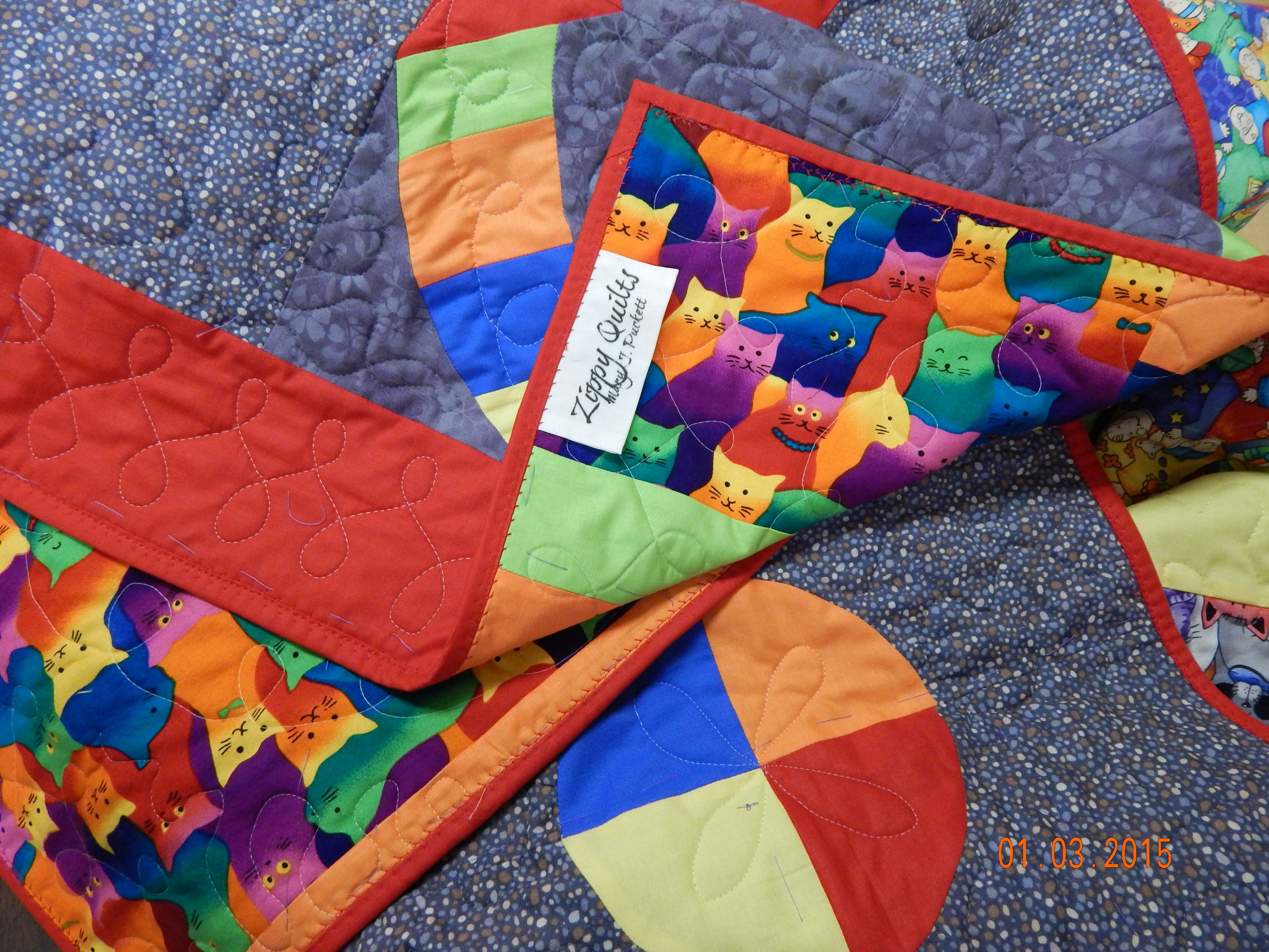
Another half day to make the alternate blocks, then a day to put it together, make a back, and quilt it–and voila!  The first finish of 2015!Metrol Hoops baby quilt

About the Quick Curve ruler:  the women who designed it have lots of cute quilt patterns on their site, so it’s worth checking out.

*BUT, if I make metro hoops again, I’ll modify the directions to make it more to my liking.  I think the basic issue here is that the single curve provided by this ruler is used for both the concave and convex curves in the quilt.  That means there is no seam allowance to make the curves match nicely.  The project is “saved” by the fact that the curve is less than a quarter circle, so it’s possible to fudge the sewing to make it go together without adding seam allowances.  It does work, but don’t think it’s going to fit the way pieces cut from most curved templates do.  If you decide to do it, be forewarned to relax and get rid of the inner perfectionist!

Quick Curve Ruler quilt

Happy new year!