Layer Cake Quilt

I bought a terrific layer cake was bought a couple of years ago and it has been “waiting”, along with its solid coordinates, for inspiration to strike.

quilting storage

Future projects are stored in boxes…oops, sometimes for years! (Found a nice set of these at Costco.)

Then the other day I decided I wanted to insert strips of the coordinating colors into the squares. As you probably know, a layer cake is a stack of 10″ x 10″ squares. That means fat quarters (18″ x 22″) of solids will work well for insert strips.

I started by sorting the layer cake squares into stacks with the solids I wanted to use with them.

layer cake quilt

Layer Cake and Coordinates

Then I cut strips of various widths from the solids.The strips varied from 1″ x 18″ to 2″ x 18″, in 1/4″ increments. I cut a variety of widths from each solid color.

insert strips into quilt blocks

Strips ranging from 1″ to 2″ wide in 1/4″ increments

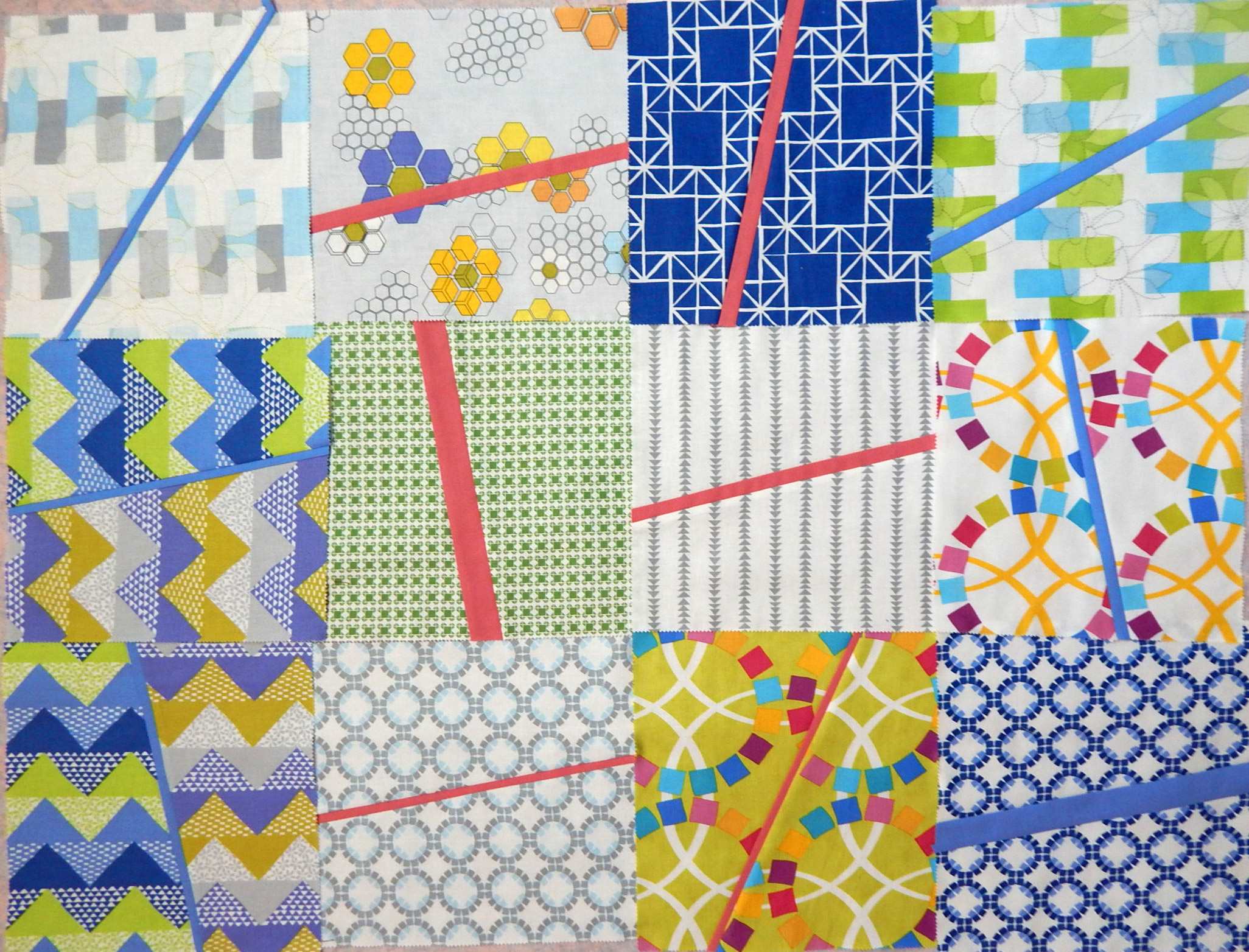
I had NO idea what I was going to do with these blocks once I got them modified; I just liked cutting them up and inserting strips–it takes very little to entertain some of us 😉 Then I remembered John Cage’s “prepared piano”.   So I called these “prepared fabrics”.

I did the inserts in several ways, still working on this just for fun:

When I looked at my “prepared fabrics” together, it was apparent I wasn’t going to just sew them together along the edges (for several reasons)!Retreat18
So the next step was to go to EQ (Electric Quilt, a computer program for quilt design) and make some designs:

Quilt from layer cake

Option #1. I’ve always loved concentric blocks, and alternating them like this produces a nice design easily.

modern quilt design

Option #2. Concentric blocks off-center are even better!

layer cake quilt design

Option #3. Flying geese are always a lively design element, and I just bought a special ruler for trimming!

modern quilt design

Option #4: I haven’t done anything with gentle curves for a while. These look like flags to me.

What do you think?  Anybody have a strong preference for one of these designs?  Whatever I do, I think it will be fun to see how the inserted strips turn out in the final design 🙂


Only as Good as Your Last Quilt?

There’s a cynical phrase, common in professional sports, that is used often in other arenas as well: You’re only as good as your last game. It’s a commentary on public opinion. Unfortunately, there’s a corollary in our everyday judgments of ourselves.

Michael Miller Challenge 2013

This little quilt, “Packet of Posy Seeds”, did NOT win anything.

One of the modern guilds I belong to had an interesting discussion last meeting about which quilts are selected for QuiltCon, and why.  We pretty much all agreed that the show is used to further the MQG’s own definition of modern quilting rather than to reveal the depth and breadth of the modern quilt movement.

modern quilt

This little quilt was published, along with an article I wrote

So, am I a good quilter because my quilt was juried into an AQS show? Or a poor quilter because SEVERAL quilts were rejected for a QuiltCon show? A good quilter because I’ve designed quilts that were published?  Or a bad quilter because every magazine doesn’t love every one of my proposals?  There’s a temptation to feel great when a quilt wins a prize and to feel a bit down when one is rejected.  But does that make sense?

modern quilt

Happy Squares, designed and made by me. I love it, but nobody wants to publish the pattern.

Of course there are some “competitive quilters”, but most of us quilt because we enjoy it. My quilts are made to please myself, not to please other people.  Even when I make a quilt for a challenge or show, I make it the way I want it, and I expect that is true for most people.  I doubt that quilting is a road to fame and fortune for most of us, and that’s fine.

Modern Quilts Unlimited magazine

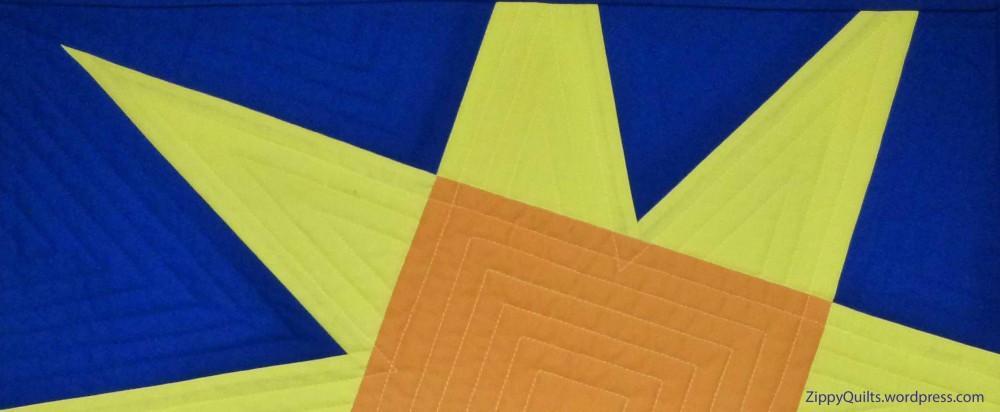
Zippy Star quilt for Modern Quilts Unlimited. I won a contest with this design.

So, if QuiltCon didn’t accept my quilt, it is NOT a personal judgment about me, it is a programmatic judgment about where the MQG folks want the definition of modern quilting to go. And if some of my quilts are published or win prizes, that’s dandy, but I still made them to suit myself.

improvisationally pieced quilt

“In Fairyland” has been in 2 shows but won no prizes.

So much of life involves following other people’s rules, sometimes for good reason and sometimes not.  Although I’m a serious quilter, I want to do it by my own rules.  I’ll still submit to shows because I like to see my quilts displayed.  But really, the quilt is an end in itself.

Spring Sun, a design by me, using blocks paper pieced from a totally different Judy Niemeyer pattern!

I designed Spring Sun using blocks paper pieced from a totally different Judy Niemeyer pattern. It was juried into an AQS show.

My friend Melanie has written a couple of posts on why we quilt.  You might enjoy them:

Make Good Art

Saturation Point

My Modern Sampler: Using Linen in Quilts

After finishing the blocks for my modern sampler, I ordered several shades of Essex linen/cotton blend to consider for the background. I know I said I’d never use linen again after the last struggle, but I’ve learned several things since. So, if you’re thinking of using linen in your quilts for its nice texture, read my tips at the end of this post.

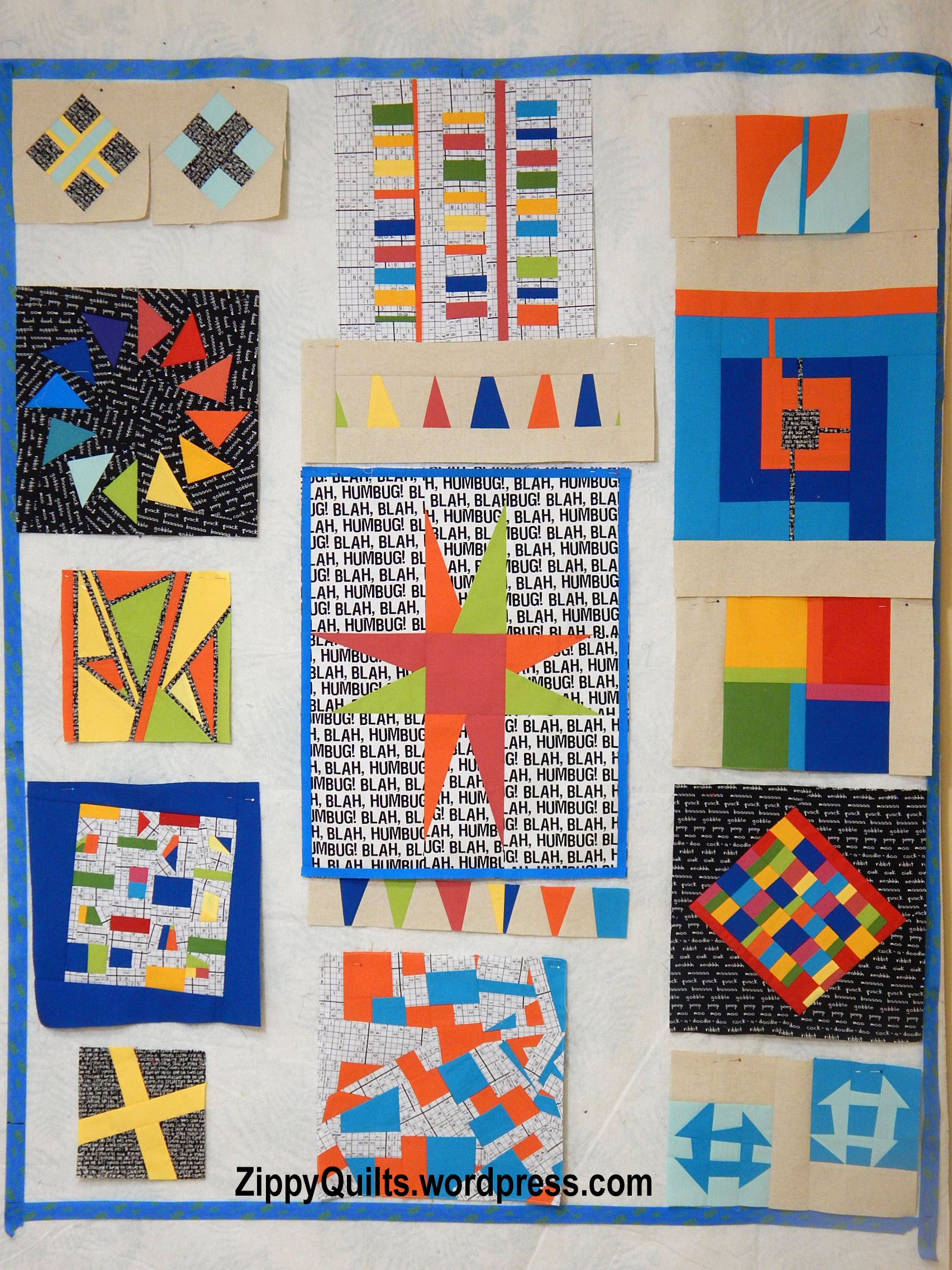
Here I’m trying various layouts on two different potential background fabrics.  I hung the ironed fabric and pinned the blocks to it, trying out various layouts and different colors of background fabric.

essex linen

Here is the Pewter background

modern sampler

Here is the Natural background, with a different attempt at layout

I decided I liked the natural background better than they gray.  Then I took it all down and made a rectangle on my design “wall”, outlining the approximate finished size with blue painter’s tape.

modern sampler

Here is the layout I decided to use, with some of the sashing in place

And here are my thoughts on using linen in quilts:
–The linen I used the first time was “real”, 100% linen. Remember that from your childhood, when summer clothes were supposed to be linen? Think wrinkles! And avoid 100% linen for your quilts
–The “linen” of the Essex brand actually is a linen/cotton blend, so it has a nice texture but is less wrinkle-prone and tighter woven than the linen I used previously.
–Pre-wash the linen blend, even if you don’t pre-wash anything else. Wash in warm water and dry on warm so it will get its shrinking done and be more dense and stable.
–Before you pre-wash, serge or zig-zag the raw edges together to prevent fraying! This worked great and “wasted” only about 1/4″ on each raw edge, much less than would have frayed. And there was no mess of threads in the washing machine.

How have you done with using fabrics other than quilting cotton in quilts?


Projects 2013–Part I

For some time I’ve been meaning to add to my blog with a gallery of projects for each of the past several years.  I’ve been held up in part by the variable quality of my photography over the years, but I’ve decided to just start anyway.  Here are some projects from 2013.

I entered several national contests in 2013, the year I also started this blog.  Here is the quilt I made for the Quilt Alliance TWENTY challenge and chose as the header for my blog:

Rising star art quilt

Rising Star, made for the Quilt Alliance TWENTY contest in 2013

I made this quilt for the Michael Miller challenge in 2013:

Michael Miller Challenge 2013

Packet of Posey Seeds

And I made this little quilt for the Pantone Challenge:

Applique quilt

Radiating Orchid mini-quilt for the Radiant Orchid Challenge

I attended some wonderful classes with Laura Wasilowski in 2013, and made this little art quilt:

applique art quilt

Leaf, made in class with Laura Wasilowski

I did some “crafty” things in 2013, including chambray shirts decorated with orphan blocks and matching T shirts for a special baby and his special Dad:

Here are a set of placemats and two table runners from 2013:quilted placemats

leaf runner

table runner

Table runner made from a strip of leftovers

Also in 2013, I made an apron for a special friend and a caddy for carrying my iron to classes and retreats:

2013 was also a good year to make pillows for friends and to use up orphan blocks:

Well!  That’s it for special projects from 2013.  The actual quilts from 2013 are up next–more to come!

Lines

I’ve been kind of stuck on lines lately, since doing the article on narrow inserts (i.e., lines) for Modern Quilts Unlimited.  As a result, I took a series of pictures of lines to explore their functions.

Lines can define forms and set boundaries:

Lines can make patterns, and those patterns can be distorted for more interest:

Lines can link people, patterns, or shapes, both literally and as design elements:

Guy lines from the poles keep them stable, and the poles carry lines for power and telephone service in this rural area

Guy lines from the poles keep them stable, and the poles carry lines for power and telephone service in this rural area

And too many lines (or enough lines) can make a tangle!

All of them make interesting patterns.  I can feel a new quilt design on the way 🙂

Crunchy Numbers

The WordPress people send me two statistical reports a year regarding my blog, and of course I can look at statistics on my administrative page at any time. I don’t stress it or check very often, so I was quite surprised when the recent report from WordPress said people from 61 different countries viewed my blog in 2015!

Most of the countries were predictable: the U.S., Canada, U.K., Australia, and New Zealand. But there were views from every continent except Antarctica! The place I got the biggest kick out of was Iceland 🙂

This improvised log cabin block, which was made into a pillow, appears to have been the most viewed picture on the site.

improvised log cabin block

improvised log cabin block

Jo Glover, big stitch quilting

Jo Glover

And my most popular post was about Jo Glover, who first developed Big Stitch quilting but doesn’t always get enough credit now that everybody does it. You can find that post HERE if you missed it.

Another popular topic was my ongoing modern sampler quilt, and there’ll be much more about that coming up soon.  A few of those blocks are shown below.

The stats show my readership growing steadily over the 2-1/2 years I’ve been blogging. The growth is slow, but I’m blogging for fun (and I’ve kept my day job!) so that’s just fine. I’ve made some new friends, which is even better.

As always, I’m amazed by the power of the internet. I’ll skip the chance to philosophize about that and just wish anyone who reads this a very happy 2016!

Kaleidoscope Design and More

The November UFO project was to design a quilt to use these beautiful Jane Sassaman fabrics. Here’s my “final” decision on the layout. (“Final” in quotes because It isn’t over til it’s over).

My notebook wasn't big enough for the whole layout, but you get the idea!

My notebook wasn’t big enough for the whole layout, but you get the idea!

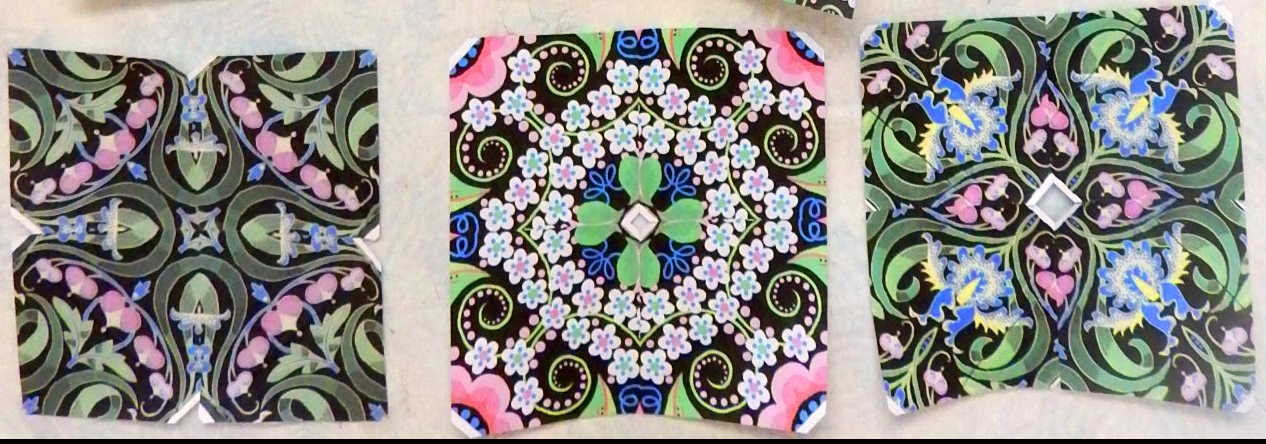
You can see paper mock-ups of my blocks showing the fabric HERE, but here are a couple of examples.  Of course, the one with 4 wedges would have 6 if this were the real blocks instead of a paper mock-up.

I think I have enough fabric to make 4 central patches with 6 wedges each, though I’ll check before I cut (one of my husband’s favorites is, “measure twice, cut once”). Then I’ll fit in as many of the 4-patch kaleidoscopes as seems reasonable while leaving adequate negative space.

The Back-up Plan (must have one!) is all 4-patch kaleidoscopes if it turns out I don’t have enough fabric for both the 6-wedge and the 4-patch designs.  That would be fine, too, though I like the variety of sizes in the design I’ve chosen.  (Will I like it as much when I’m trying to sash those varied shapes and sizes?)

I’m thinking I’ll use soft green fabric for the background; this seems to want to be a green quilt with pink and blue accents.  The background probably will be a solid fabric, since these blocks have a lot going on.

I’ve made two more projects this month, but they aren’t quilts.  One is a crib sheet from this fun arrow fabric by Maureen Cracknell.  The other is a changing pad cover in this “Indian Summer” fabric by Sarah Watson.

There are several places on the internet to get free patterns for crib sheets and changing pad covers, and they were easy to make.

And now, ON TO THE CHRISTMAS SEWING!!!

November’s UFO

As you probably know, I’m playing along with Aunt Marti’s UFO Challenge for 2015. This month’s UFO is a group of gorgeous Jane Sassaman fabrics I’ve had for several years. I want to make a queen sized quilt, but I’ve been debating the design for a long time, since I want to make the most of these fabrics.

Need to design a quilt for this wonderful fabric

Need to design a quilt for this wonderful fabric

Luckily, a quilter who is a better designer than I came to visit this fall, and she helped me look at ways to make kaleidoscope blocks from these fabrics.  So November’s challenge is to come up with a design for the quilt.  I’m not even requiring myself to CUT any fabric, just decide on a design.Sassaman book

Jane Sassaman’s book suggests making paper copies of the fabrics to cut up in order to try designs.  I scanned the fabrics to my printer and made many copies, then cut them up to make either 4-part or 6-part kaleidoscope blocks.  Of course, that limits my trials to typing paper size pieces.Sassaman-papers

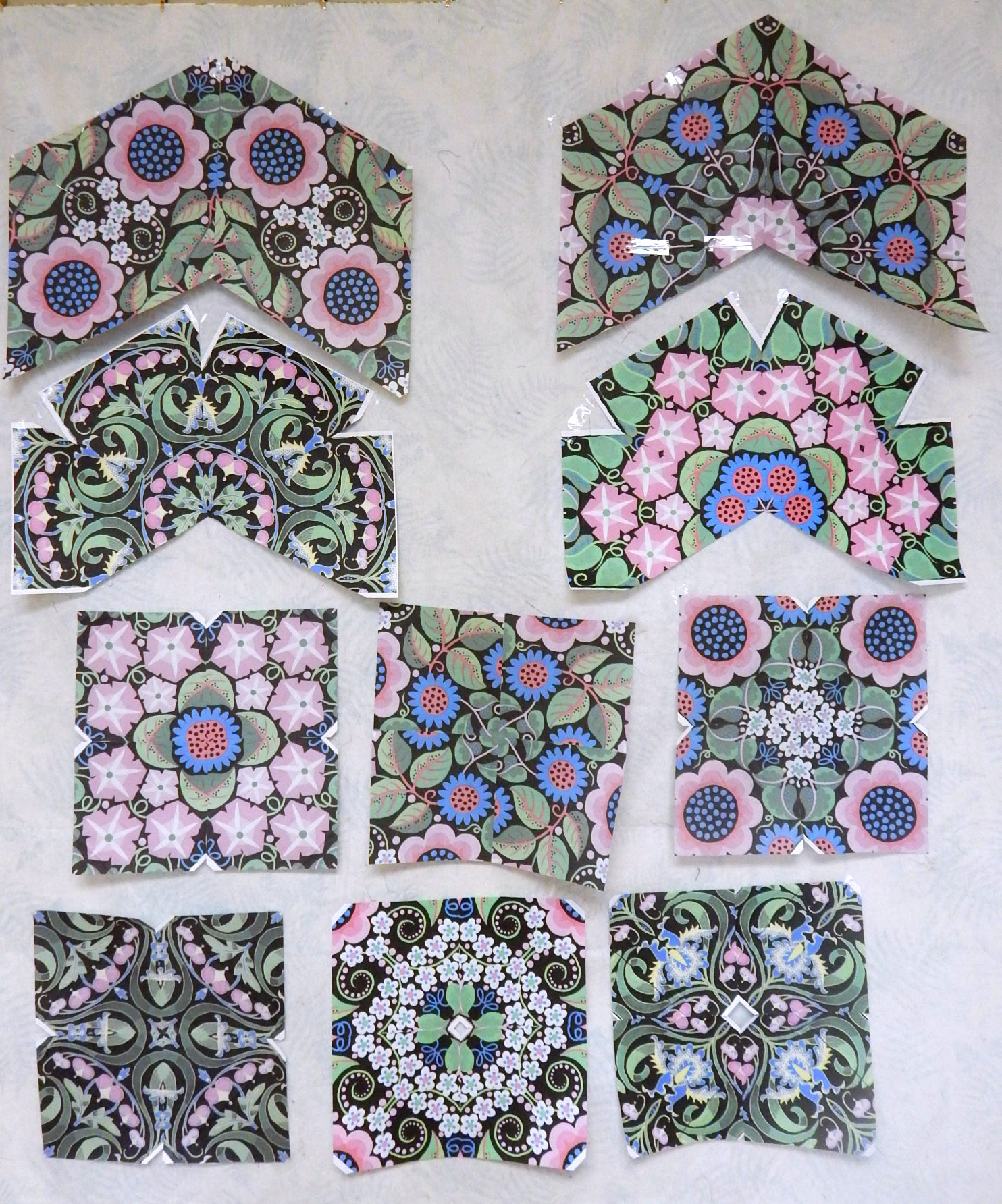
I printed at low resolution to save ink and still used up my color cartridge!  Here are a few of the trial blocks cut from paper and taped together:

Sassaman-10

Here are some blocks made from 4 squares

And here are some partial blocks made from 60 degree triangles:

Finally, here are all my trial blocks made of paper so far:Sassaman-group

Any suggestions for making the most of these prints, either with or without kaleidoscope blocks?

Artsy Table Runner

YP1I’ve been looking at lots of beautiful pictures of art quilts. Also, the monthly challenge for the Modern Quilt Guild of Franklin (NC) was to make something including prairie points.

For years I’ve had Susan K. Cleveland’s Prairie Pointer, intending to make something with prairie points “any day now”. (Raise your hand if you DON’T know how THAT goes!)Susan KThe stars finally aligned, and here is my first crack at a table runner combining all of the above.

As expected, Susan’s Prairie Pointer tool worked beautifully. I’m a big fan of her techniques, and teach some of them in my classes.  The starting squares for the prairie points ranged from 1-1/2″ to 2-1/2″ in size, so they were all pretty small.

Prairie Points

Prairie Points

I like this runner pretty well, but I just KNOW I could do better! So here goes with another idea I’ve meant to try for some time: working in a series. I’ll keep you posted 🙂

Narrow Accents!

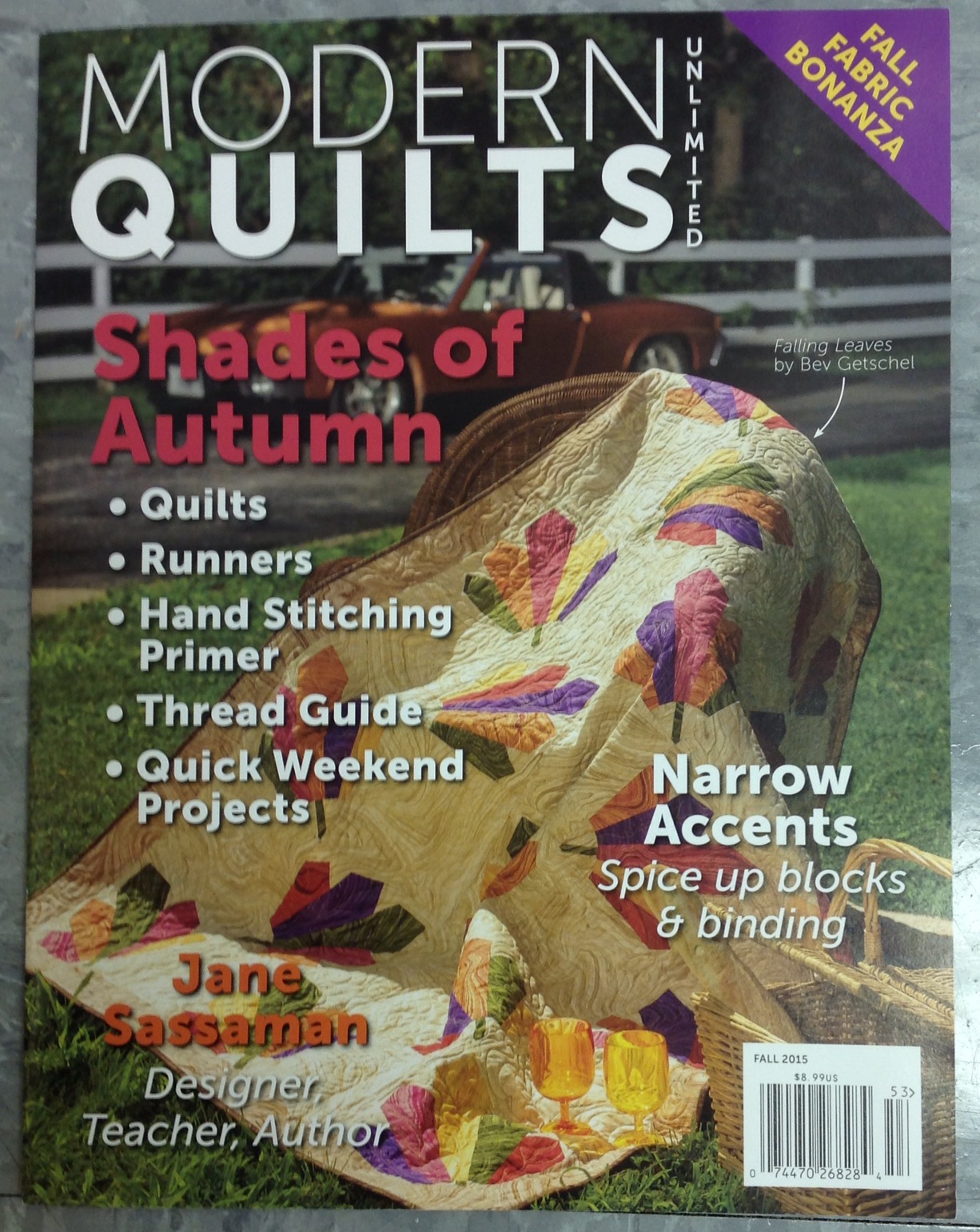
Modern Quilts Unlimited just published my article on how to add narrow accents to your projects.  It’s a very easy method for sewing crisp, even accent strips from 1/8″ to 3/4″ wide.

Modern Quilts Unlimited magazine

Notice the Narrow Accents article featured on the cover, along with the beautiful quilt by Bev Getschel

There are so many uses for narrow accents!  Here are a few of mine:

narrow accents, Modern Quilts Unlimited magazine

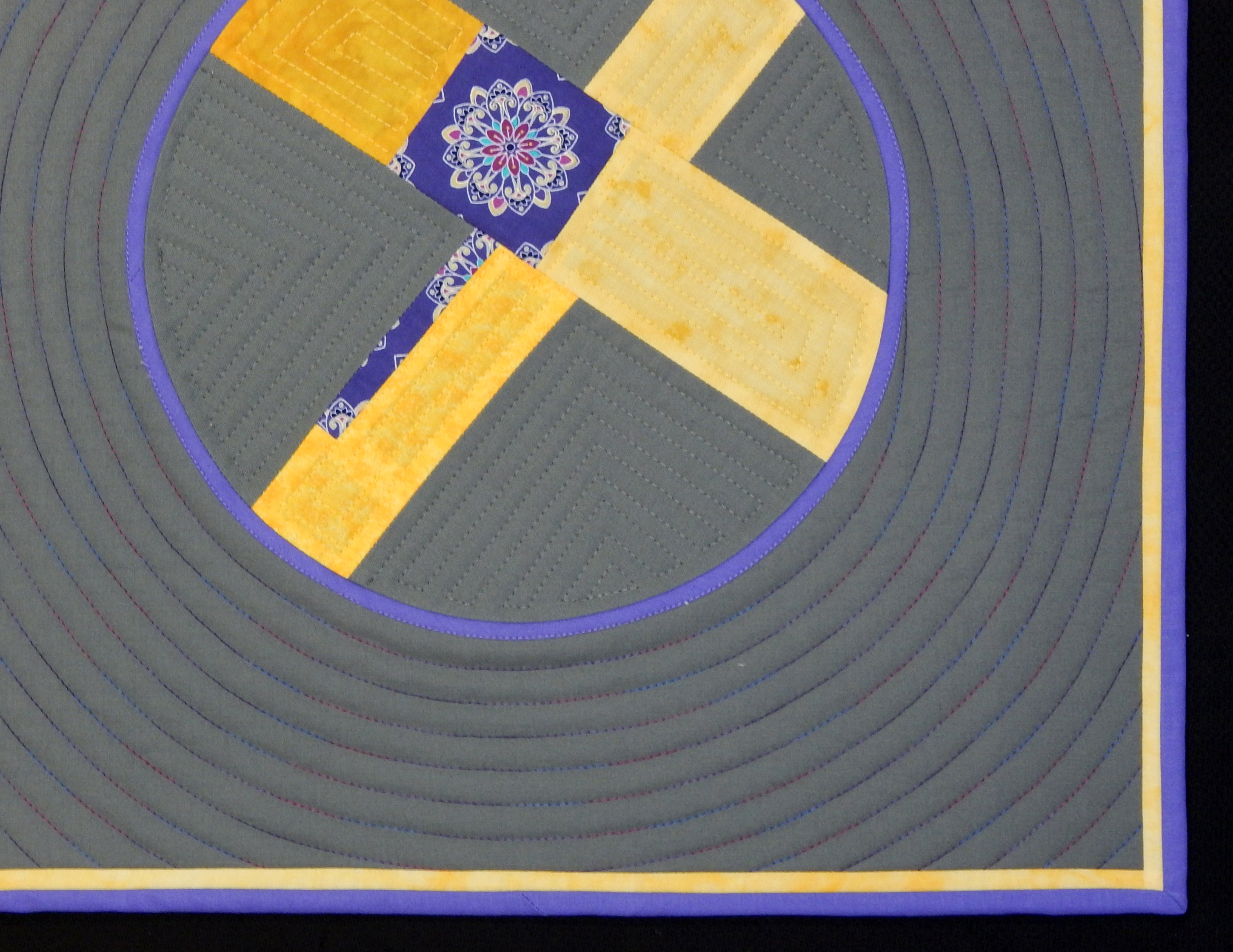
This is a corner of the piece I made to illustrate the MQU article

These blocks from my modern sampler all include narrow strips:

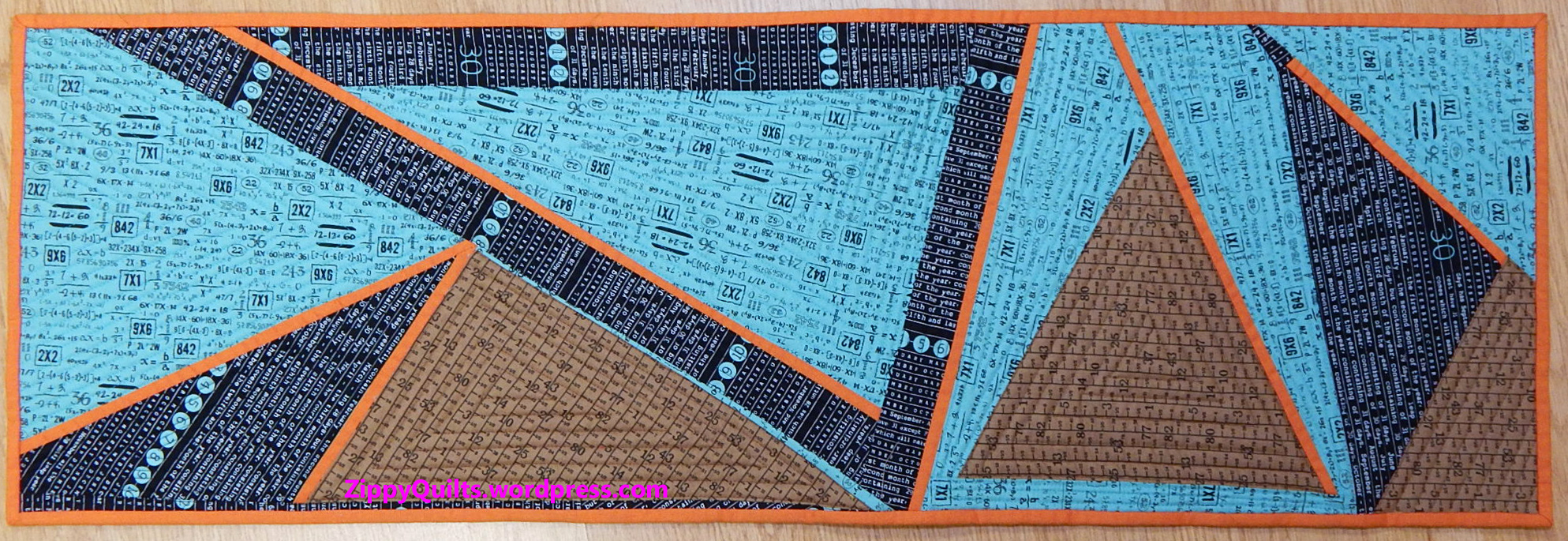
The samples I made for my improvised table runner class all include narrow strips, as well.  Here is one of them:

modern table runner

Here is one of the samples for my improvised table runner class

modern quilt design

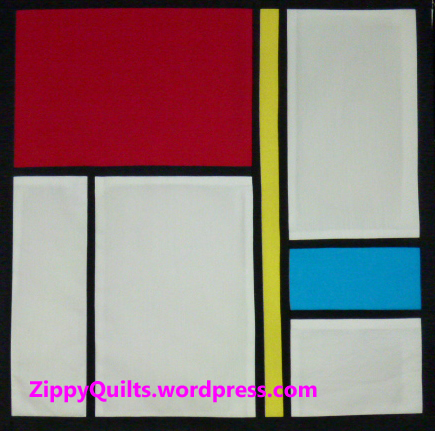
Here’s a Mondrian-style block I made several years ago with narrow inserts

There are options too numerous to mention!  Go get the magazine and make some accent strips, then please send me pictures of your creations.