Little Pincushions

A friend and I went to a new class last week to learn to make little pincushions. Of course, I’ve made pincushions before, as I think most quilters have, We went to the class because we are interested in having the presenter come to our guild.
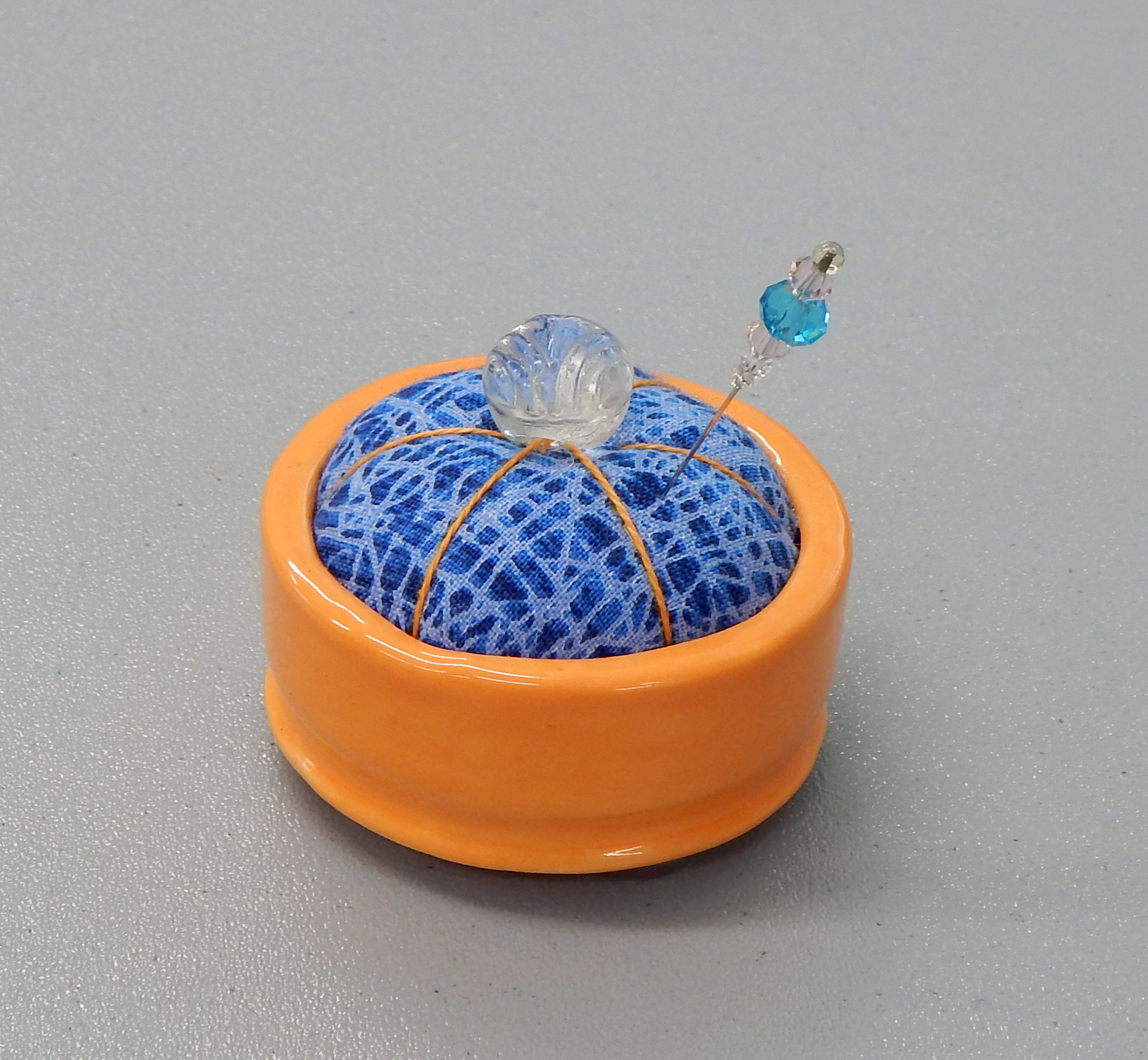
This is the pincushion I made in class

The class was held at Sew Much Fun in Lowell, near Charlotte, NC. My friend had told me it was a wonderful shop, and indeed it was.

Lesley Storts was the teacher. I’ve known of her for some time, but she used to be in Ohio and I only recently learned she had moved to North Carolina.

Lesley Storts

It looks like Lesley’s interest started with vintage glass and then she and her daughter got to making little pincushions in the vessels she collected.

Some of Lesley’s pincushions

Lesley did a great job of teaching to students with variable levels of experience. The class included someone who literally needed assistance threading a needle and others who had been sewing for years. Best of all, Lesley’s pincushion technique is totally different from mine, so I learned a lot!

And Lesley is really into this pincushion thing. In addition to her vintage vessels she has a potter make little bases especially for her pincushions. We enjoyed seeing her collection.
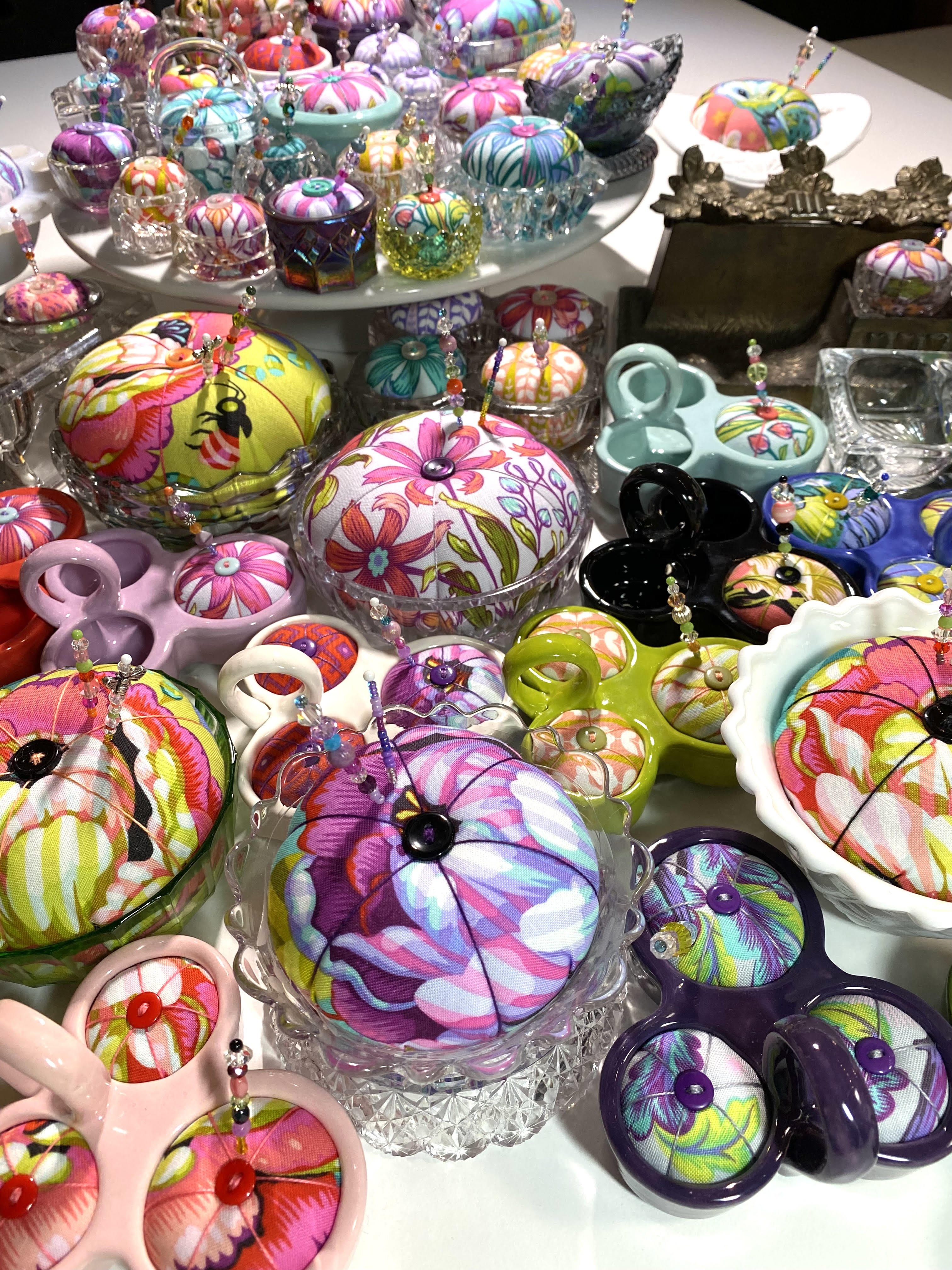
OK, Lesley is REALLY into little pincushions!

You can go to Lesley’s blog and see a number of YouTubes of her techniques. Or, if you live near Charlotte, go take a class with her. My friend and I both enjoyed it!


A Little House Quilt

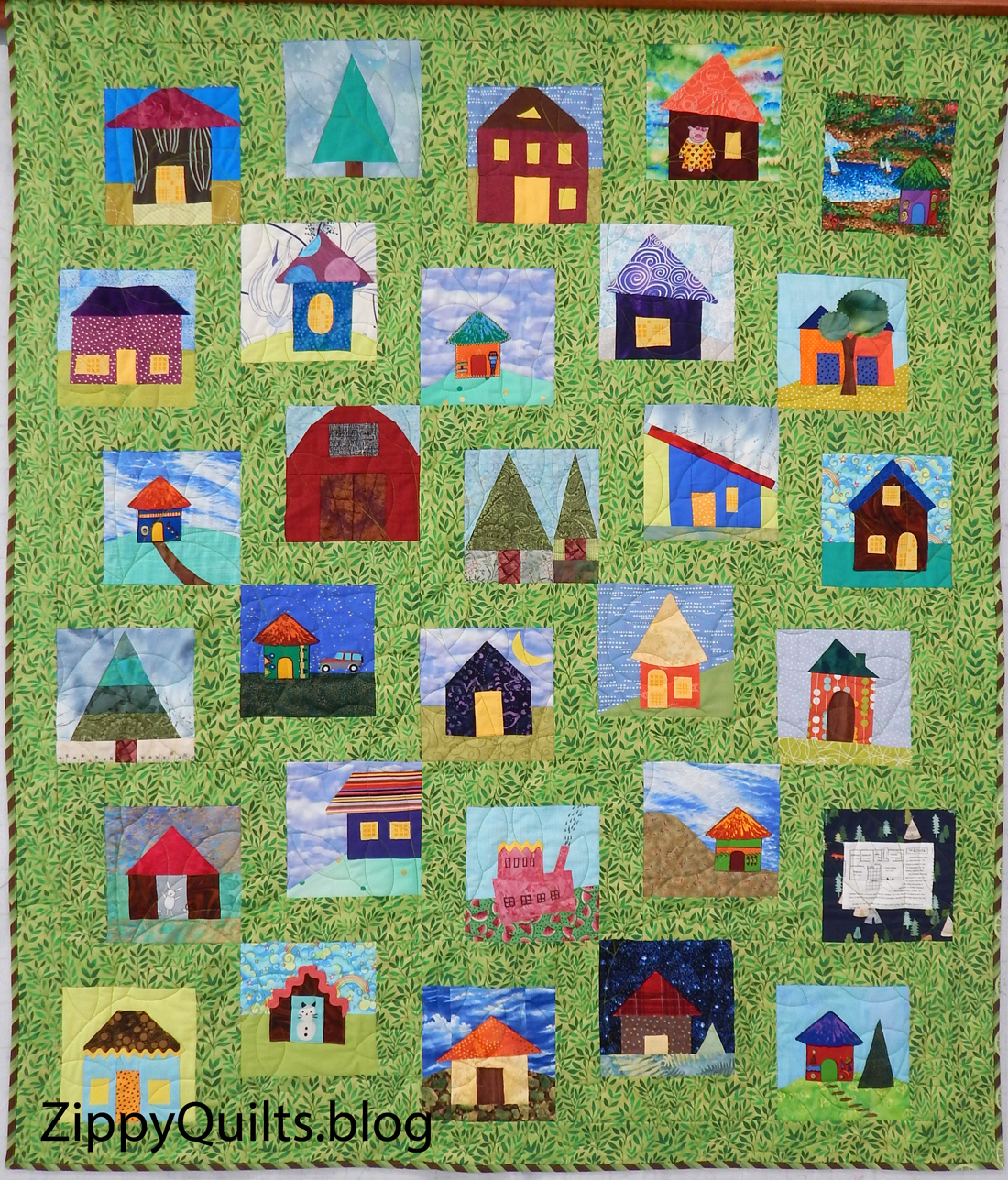
One of my guilds provides little wall quilts, featuring houses, to Habitat for Humanity. They give one of these quilts to each new homeowner, and have asked us to provide a few more.

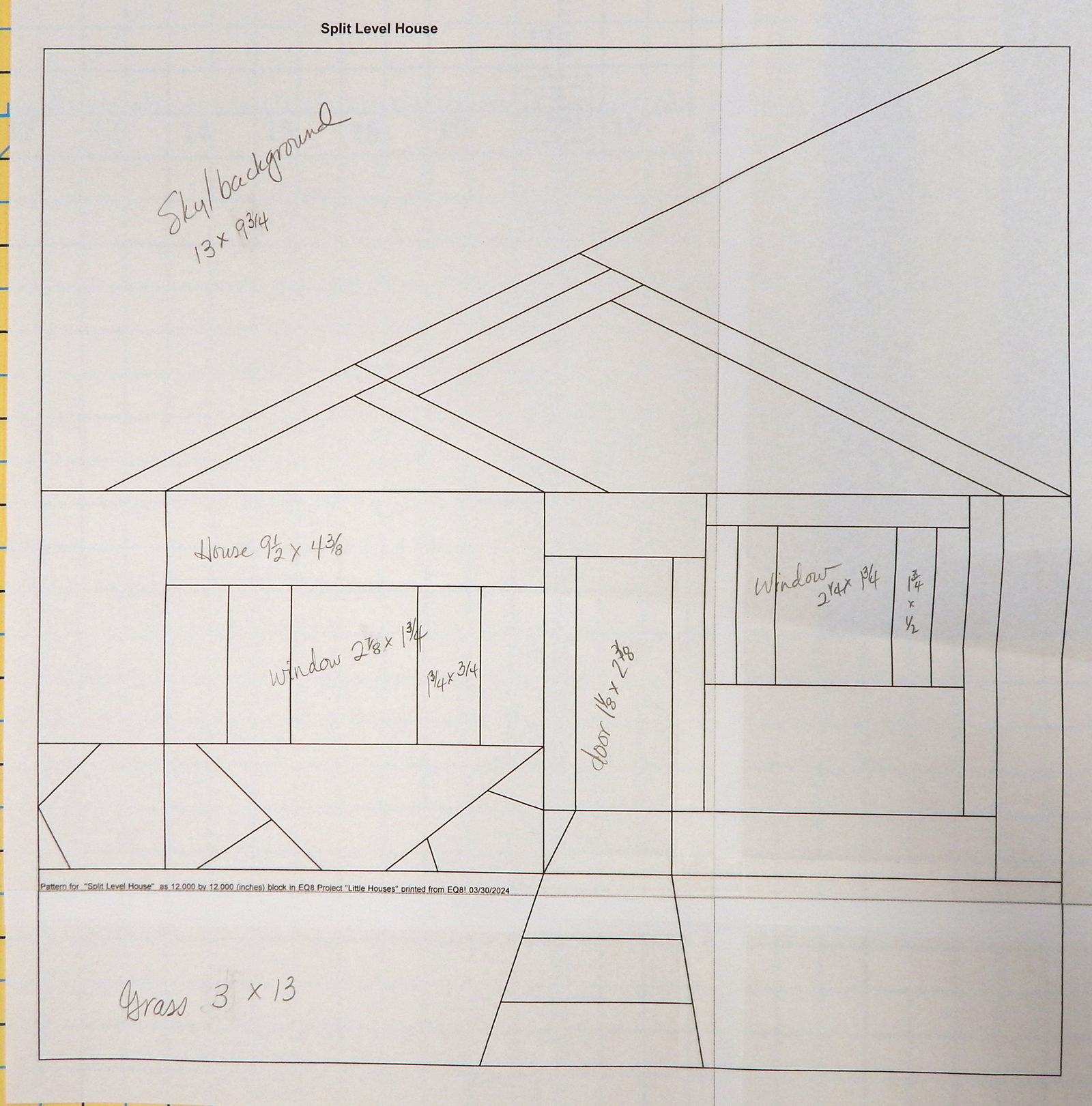
To make this one, I used a pre-drawn block from EQ8 and printed a line drawing of it at 12″ x 12″. Then all I had to do was measure the components and make the fusible applique quilt. This is the block as it was shown in EQ8:

Block design taken directly from EQ8

And here is the line drawing I printed from the program (along with my notes!):

EQ8 drew this as if I were going to piece it. There was the option to print sections for paper piecing as well.

Finally, here is the finished house. It is all fused applique.

I use wool felt as the “batting” for wall quilts now, having learned from one of the many books I read that it is more stable for that purpose. It does, indeed, produce a nice firm quilt and this small one won’t sag even though it is to be hung with two loops at the top instead of a sleeve and rod.

I did a little decorative quilting and zig-zagging along the edges of some of the pieces, but this won’t be washed so I didn’t worry too much about it.

The redbird on the roof is a button! I collect them for things such as this 😀  As is often the case with decorative buttons, this one has a shank, so I poked a hole in the quilt and pushed the shank through so the button would lie flat. The back is secured with a pin.

Finally, after debating about what to do, I zig-zagged the edge to finish the quilt. I hope it will enhance someone’s new home.

Some Fun Bags

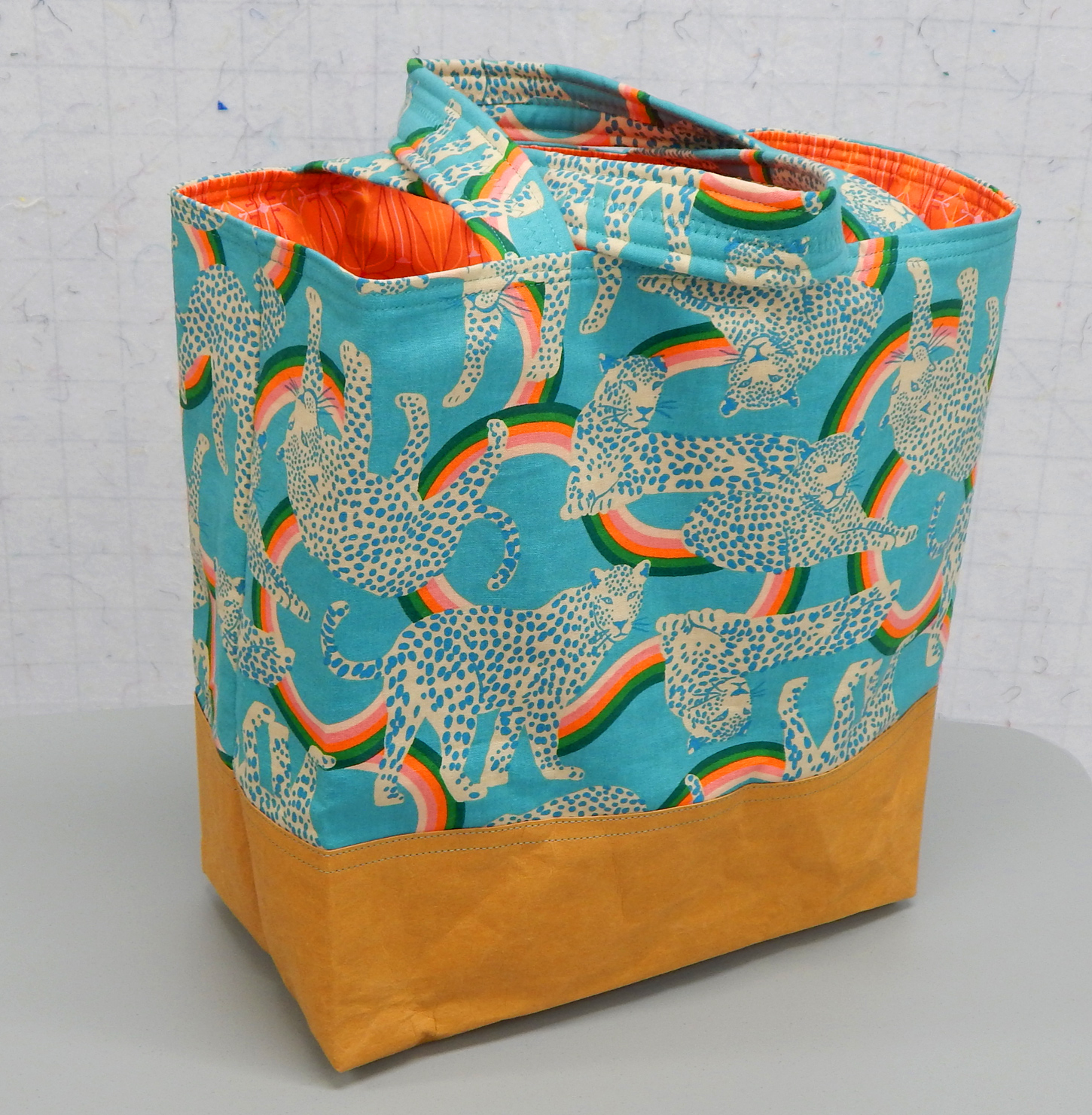
I’ve been eyeing this canvas fabric ever since Studio Stitch got it in, and finally I bought it and made some bags.

First up was a tote bag from a free pattern I’ve used many times. You can find it here, on the Bijou Lovely site, still available for free. The instructions are clear and well illustrated. I added a Kraft-Tex bottom panel, which is a little more complicated, but it won’t be any trouble if you’ve worked with Kraft-Tex before.

There was a little fabric left, so I made a BIG pyramid bag using another free tutorial, available here. This is another one I’ve made many times, but usually as smaller bags to hold jewelry or the like. This one is about 13″ high and I’m going to use it as gift wrap. (I avoid disposable gift wrap, but that’s a story for another day.)

I can recommend both of these patterns if you are in the mood to make bags. I did use my serger to finish the interior seams on the pyramid bag, but that’s the only “unusual” piece of equipment. I’m pretty sure you could just zigzag those seams anyway!

Tamarack Center, West Virginia

We recently travelled to West Virginia on vacation, and I thought I would share some of the quilts displayed at Tamarack Marketplace, the state craft shop and travel center near Beckley.

Of course I was interested in the quilts displayed there. Here are a few pictures to give you the idea.

This is a large quilt, along with some hand-crafted tables in the foreground

I had to get between two sculptures, impinging on the sides here, to get a photo of this large quilt

This is one block of a quilt that was quilted by hand and had a 3-dimensional flower superimposed on a star in each block. It looked like a lot of work!

Most of the quilts were traditional in design. You can see a display of lamps in the background.

This quilt was especially well made, and was hand quilted. The price was $3000.

This lively quilt of Hawaiian themed fabrics was the closest I saw to a modern quilt at Tamarack

Of course there were many other arts and crafts, not just quilts. If you’re travelling through West Virginia on the toll portion of I-64, in the southern part of the state, the Tamarack center is worth a stop. Here’s the website so you can see for yourself.


Hello, Holly!

Holly Alloway’s work first came to my attention when Studio Stitch featured this quilt as the 2022-2023 Block of the Month (BOM).

Quilt (c) Holly Alloway, designed and made by her

You can see why I took notice! Holly recently agreed to talk with me and show me some of her quilts.

Holly designed this BOM several years ago using Deb Tucker’s rulers and techniques. Quilt design (c) Holly Alloway

Like many of us, Holly has been sewing all her life, though she started making quilts “only” about 40 years ago. She has lived various places around the country and has found both guilds and classes useful in her development as a quilter.

Another BOM using Deb Tucker rulers. Quilt design (c) Holly Alloway

Holly has a particular affinity for specialty rulers and a significant talent for designing with them.

This crate contains part of Holly’s collection of specialty rulers

She loves Deb Tucker’s rulers and has done several previous BOM designs using them.

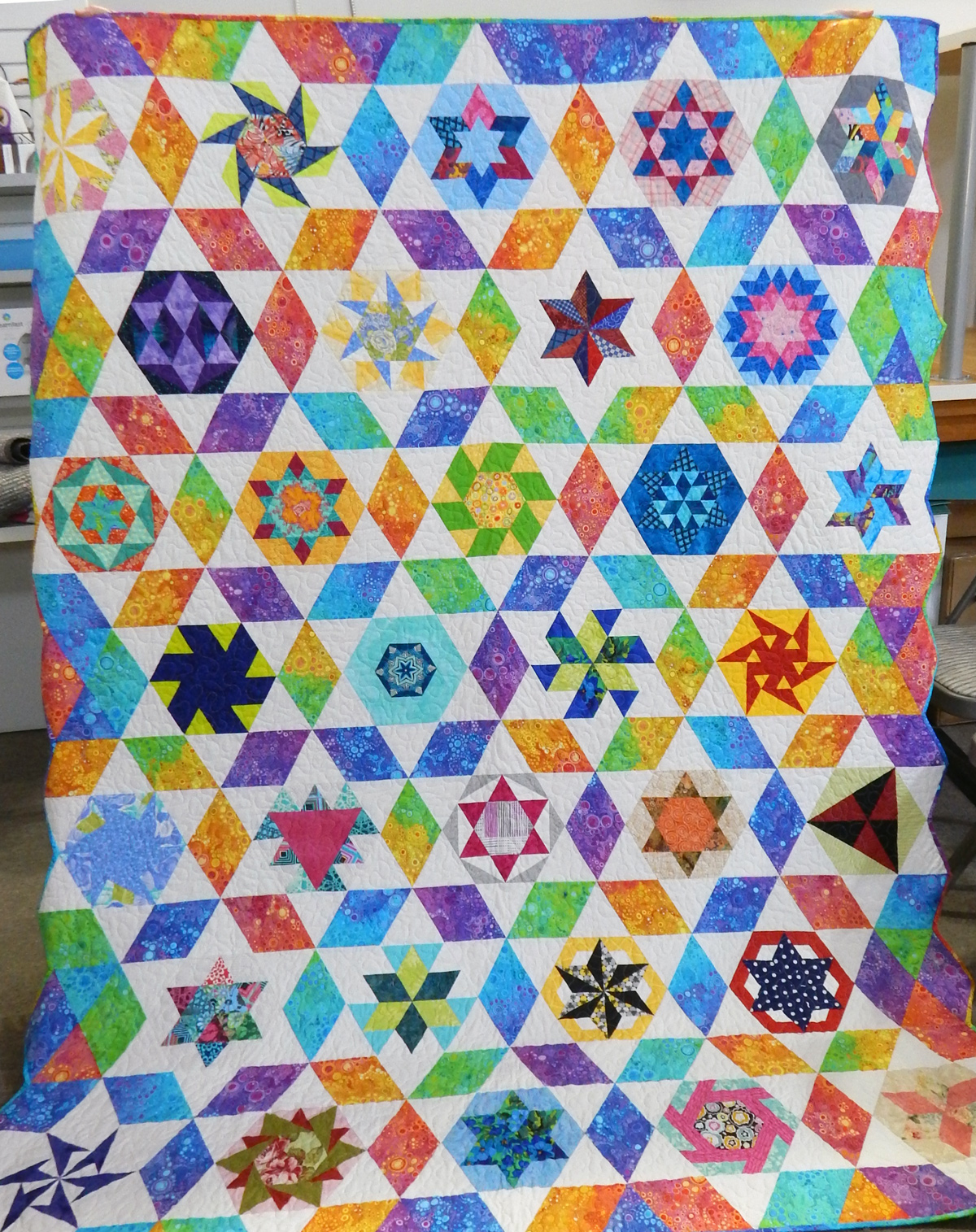
When I asked how she came to design the elaborate quilt shown at the top of this post, Holly said, “Well, Jaybird Quilts came out with those rulers.” She had already designed some modifications of English Paper Pieced (EPP) quilts so she could machine piece them.

Using the Jaybird Quilts rulers, Holly set about making many more EPP designs by machine.

Eventually she had re-designed enough EPP blocks for three quilts! The first is at the top of this post; here are two more.

And that’s not all! Holly is also a fan of strip piecing. I especially enjoyed seeing these two quilts.

And here’s the most unique thing: I originally asked to interview Holly because of her UFO management strategy. She allows herself only as many ongoing projects as she has years of life left! She has asked her family to give her a set of papier mache numbers each year representing how many projects she’s allowed to have!
I won’t tell you how many that is right now–I didn’t ask and she didn’t tell 😀  She does admit to being “over budget” presently due to several projects she has going. I just love this idea! We all need to get realistic with our quilting plans.

This bag is a current UFO for Holly.

Holly has made many more beautiful quilts than I could include here. I’m sorry to say she doesn’t publish her patterns, but we have enjoyed having her daughter teach some of her blocks in the BOM program at Studio Stitch.

Please note that all original blocks or quilts in this post are (c) Holly Alloway, various years.


Two More Orphan Block Quilts

As I probably have mentioned, I have over 100 orphan blocks. Some are from swaps, some from blocks I made to learn something, some just extras from quilts I’ve made.

Yes, that bin is full of smaller orphan blocks, with the big orphans stacked on top!

I have made numerous quilts in the past to use some of them up. Here are a few just for review.

Aha! Orphan blocks can be cut up to make new blocks, as I did with my Giant Circles quilt, here

I’ve used orphan blocks to make greeting cards, here

orphan block on bag

This is a great use for orphan blocks. Just attach to a bag, and you have a handmade gift!

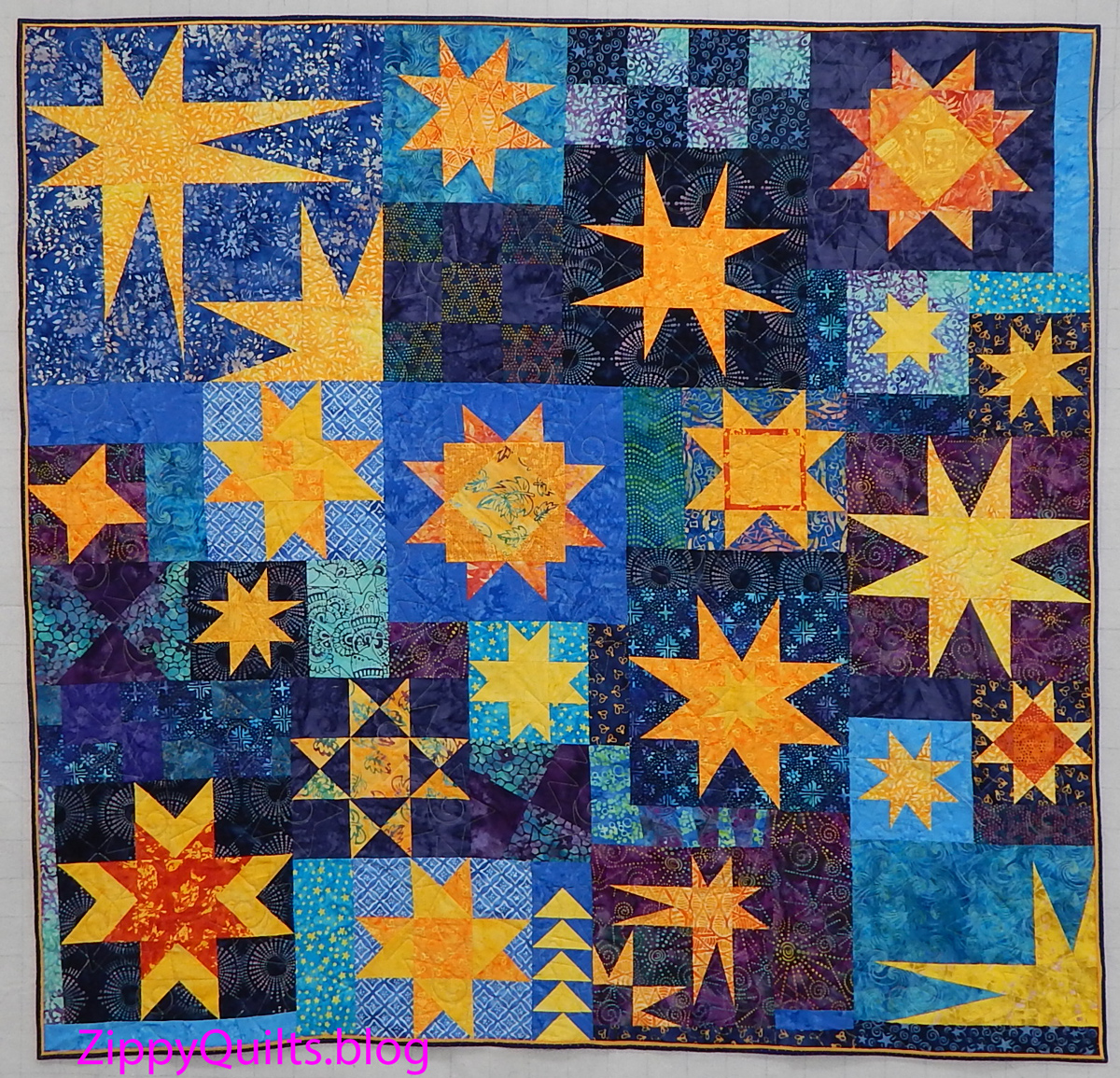
Splendid Stars, 51″ x 53″, was made from orphan blocks left from numerous projects

And of course I’ve attached orphan blocks to shirts.

quilt block on a shirt

Here’s another orphan block on a shirt

Recently I was browsing patterns and noticed that the folks at Maple Island Quilts had used one of their patterns to set some orphan blocks, so of course I ordered the pattern.

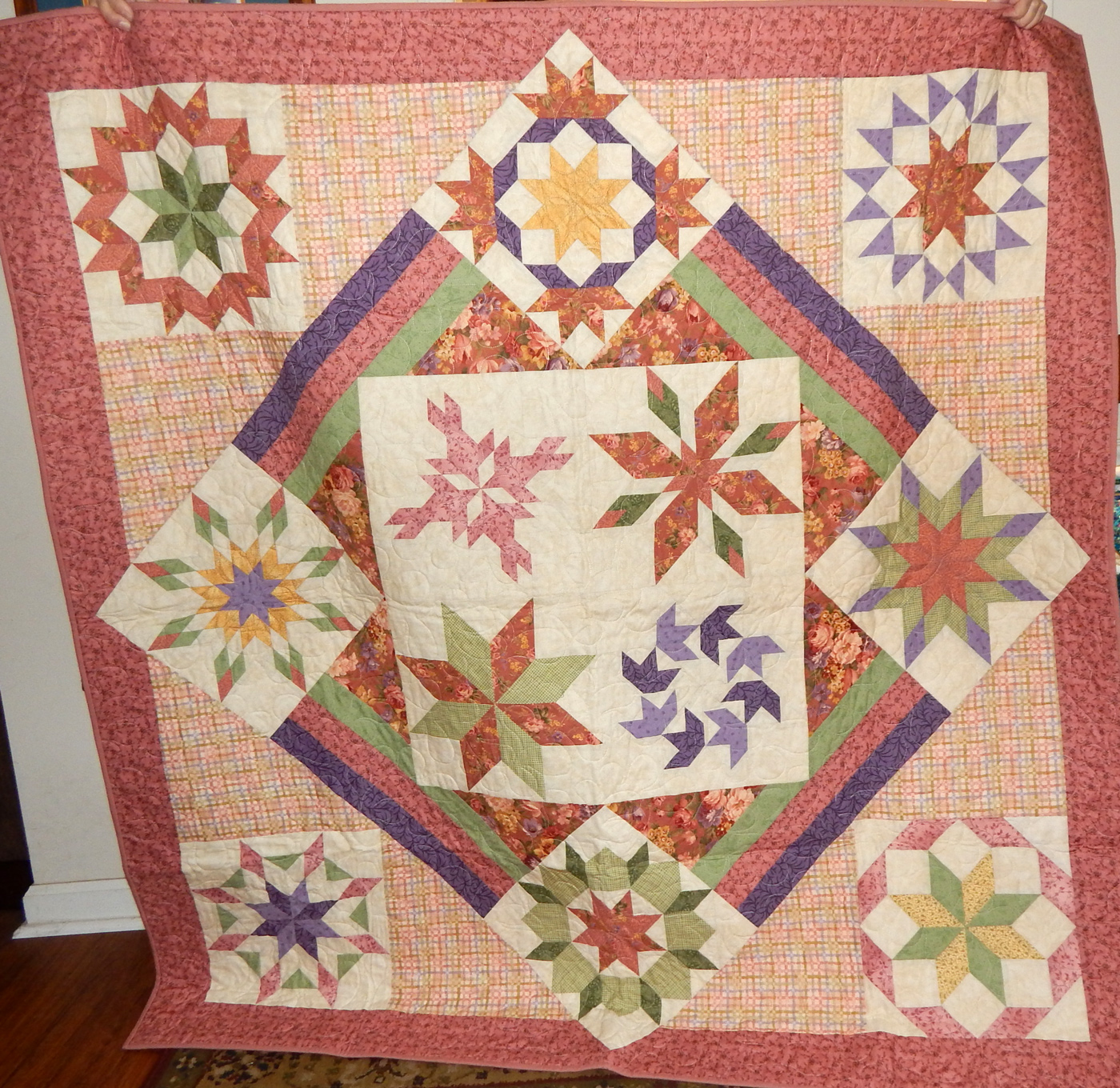
I have made two quilts. Here’s the first, which I considered the less successful of the two.

Quilt made using orphan blocks and the BQ5 pattern from Maple Island Quilts.

I thought the points coming together would make the design cohesive, but the blocks were just too dissimilar. And yes, there is a “mistake” block that I decided to leave “as is” when including it in the quilt 😀

Oops. But this is not the time to re-make this block!

The second quilt was made with the other design offered in the pattern, and I believe the blocks are more homogeneous as well.

Finished quilt 54″ x 68″, made from BQ5 pattern

Perhaps Elvis helped this quilt be more successful.

But the favorite block is this one. It’s a print from many years ago. I used the fabric to make a quilt for a friend who is a child psychologist.

What do you do with orphan blocks? How many do you have?

And just in case you have a LOT, the BQ5 pattern is available here. It is well written and I do recommend Maple Island Quilt patterns because I’ve never had any trouble following their directions! Several other patterns in the line would work for orphan blocks, too.

Leaf Pounding Party

I learned about “leaf pounding” to make prints on fabric in a workshop years ago. I never did much with it, but I did finally hand quilt one piece.

And this next one is even bound!

This gave me the idea that I could have some co-workers over and we could all pound leaves. So here we go…

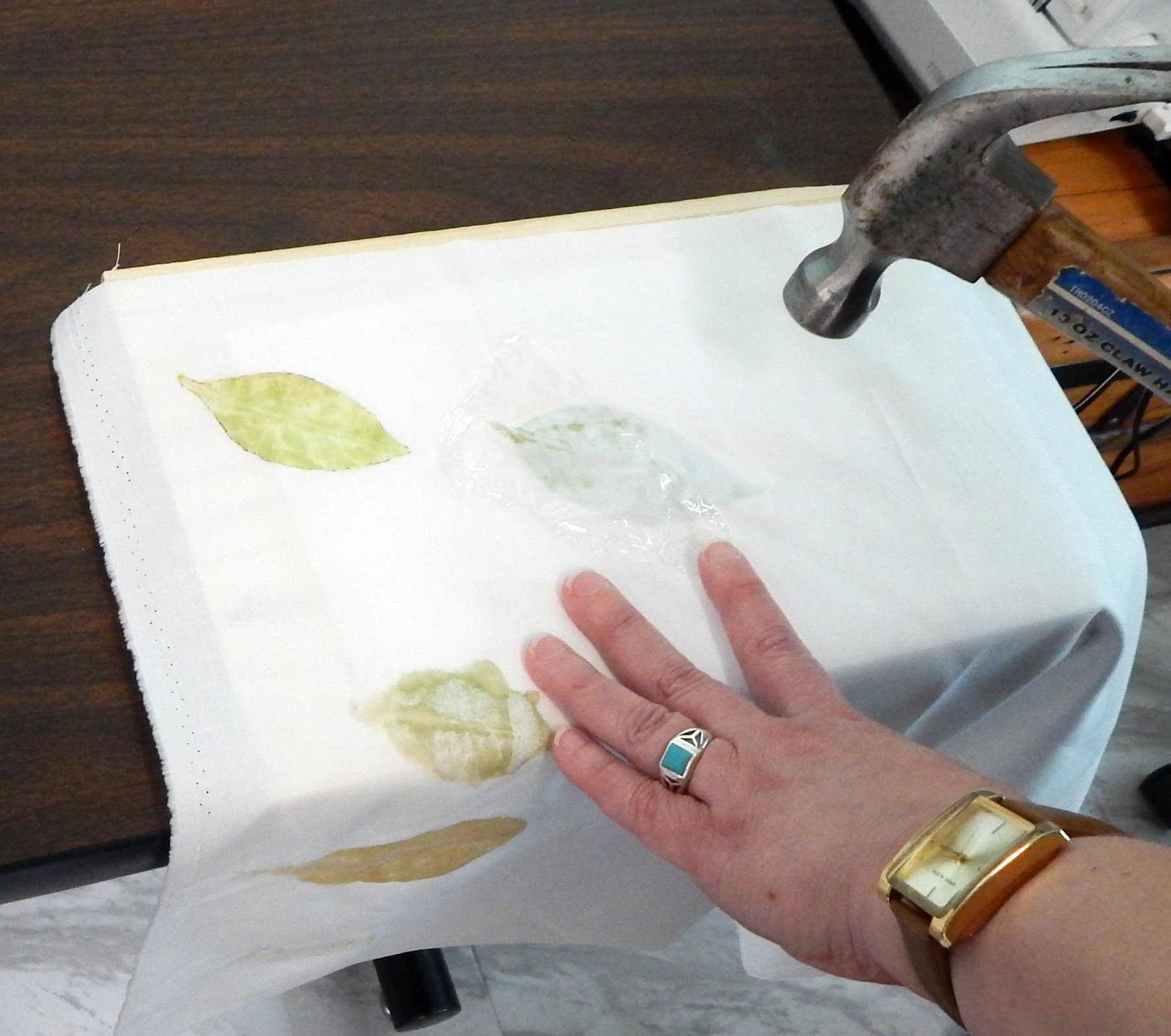
Everybody brought a variety of leaves

We arranged them on PFD (prepared for dye) fabric

Then taped them to the back of the fabric and pounded the front side

Results varied!

The Japanese Maple leaves came out very well

And, especially toward the end, it was sometimes more fun to make a secondary pattern with hammer marks than to pound the whole thing

Finally we had cookies…and a veggie tray?!?

Have you tried leaf pounding? There are, of course, multiple youtube videos on how to do it. What worked for you?

P.S. – I am making a quilt for the December/January issue of Quick + Easy Quilts using these beautiful fabrics from Robert Kaufman.

So watch for that issue to come out with my quilt in two colorways–this red/green/gold plus a blue/white/silver version!

Classes With David Owen Hastings

I read something about David Owen Hastings, a graphic designer who also quilts, and wanted to take a class with him. Luckily within a few months I saw that Mancuso Show Management was having him teach over Zoom as part of their Quiltfest Virtual Schoolhouse, and I quickly signed up.

I should mention that I didn’t just randomly find the Mancuso organization; I was familiar with Quiltfest from when we lived in Eastern Pennsylvania. They’ve produced top-notch quilt shows, so I trusted them enough to try their (sort of pricey) Zoom classes.

The classes did not disappoint. Communication with the Manucso organization was seamless from registration right through the classes. (Like most folks I’ve had some Zoom experience in the past few years, which helped.) Classes started on time and, surprisingly, there were no technical difficulties! Woo!

The first class I took was Indi-Go Modern, which focused on designs in blue and white. I had planned to use my indigo-dyed fabric from a class with Debbie Maddy, but my motifs were too big for the designs David was using. I enjoyed the exercise of designing with two colors and plan to continue the exploration. Here’s my design so far, obviously unfinished:

David’s comment was, “Wow! Really minimal!” or something similar…

The nice surprise at the end of this class was that David talked about how to work out the quilting design for a piece. He even suggested possible quilting designs for some of the student works. I’ve never had a teacher take the design process that far and it was quite helpful.

The second class I took was sewn paper collage, and it was fun, too. In fact, it was far easier to have immediate success. I pasted each collage onto a blank greeting card and put them away for when someone needs a unique card.

My husband’s comment when he saw them was something like, “That would be nice if you’d trim the threads!”

And after the class I decided to weave some of my remaining paper into a collage, so here it is, too.

I recommend classes with David Owen Hastings, as his approach is different and therefore extra useful. He managed to be encouraging to everyone.

I also recommend the Mancuso Schoolhouse platform. Yes, the classes were a little expensive, but still far less than if I’d had to travel for them, and the platform worked well.


2023 In Quilts

I’ve finished 32 quilts so far this year, and 8 additional non-quilt sewing projects. The good news is that I’m not going to show you all of that here. Rather, here are my 10 favorites in no particular order.

Dynamic Dresdens, made in class with Susan Cleveland

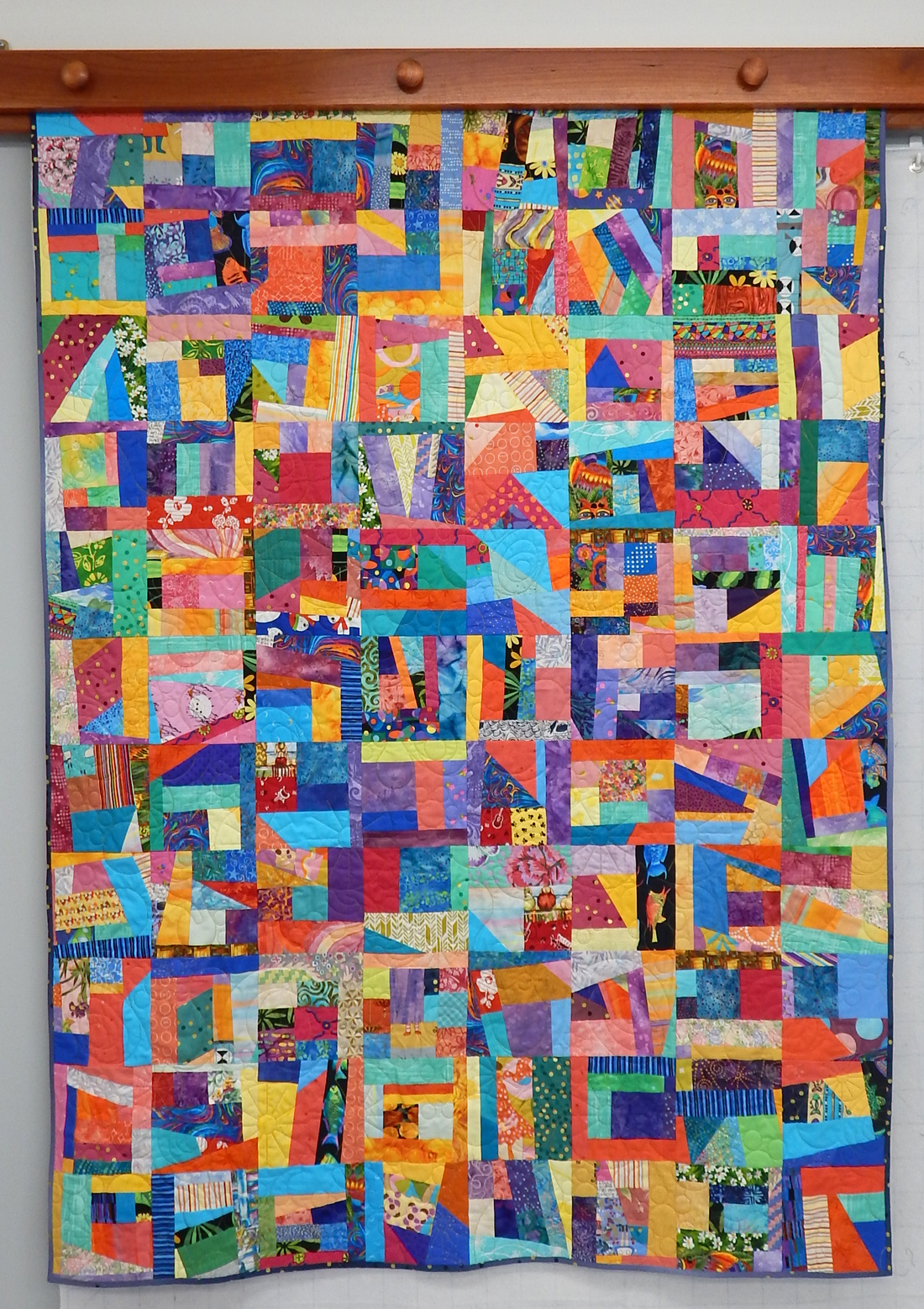
Bright Scraps, one of many scrap quilts made this year. And no, the scrap pile has NOT diminished!

It Takes A Village to Can Watermelon, started during the pandemic and finished this year. If only the pandemic were finished, too!

Wild Geese, from a pattern by Beyond the Reef

Arkansas Crossroads, a traditional pattern made from scraps 

Superfans, made from many scraps. Inspired by several quilts I saw on Pinterest, but no pattern

A Girl’s Best Friend–another scrap quilt!

I liked this pattern by Brigitte Heitland of Zen Chic so much that I made it twice

“Susan’s Head Explodes”, 12″ x 12″, a tribute to Susan Cleveland, made for the SAQA auction

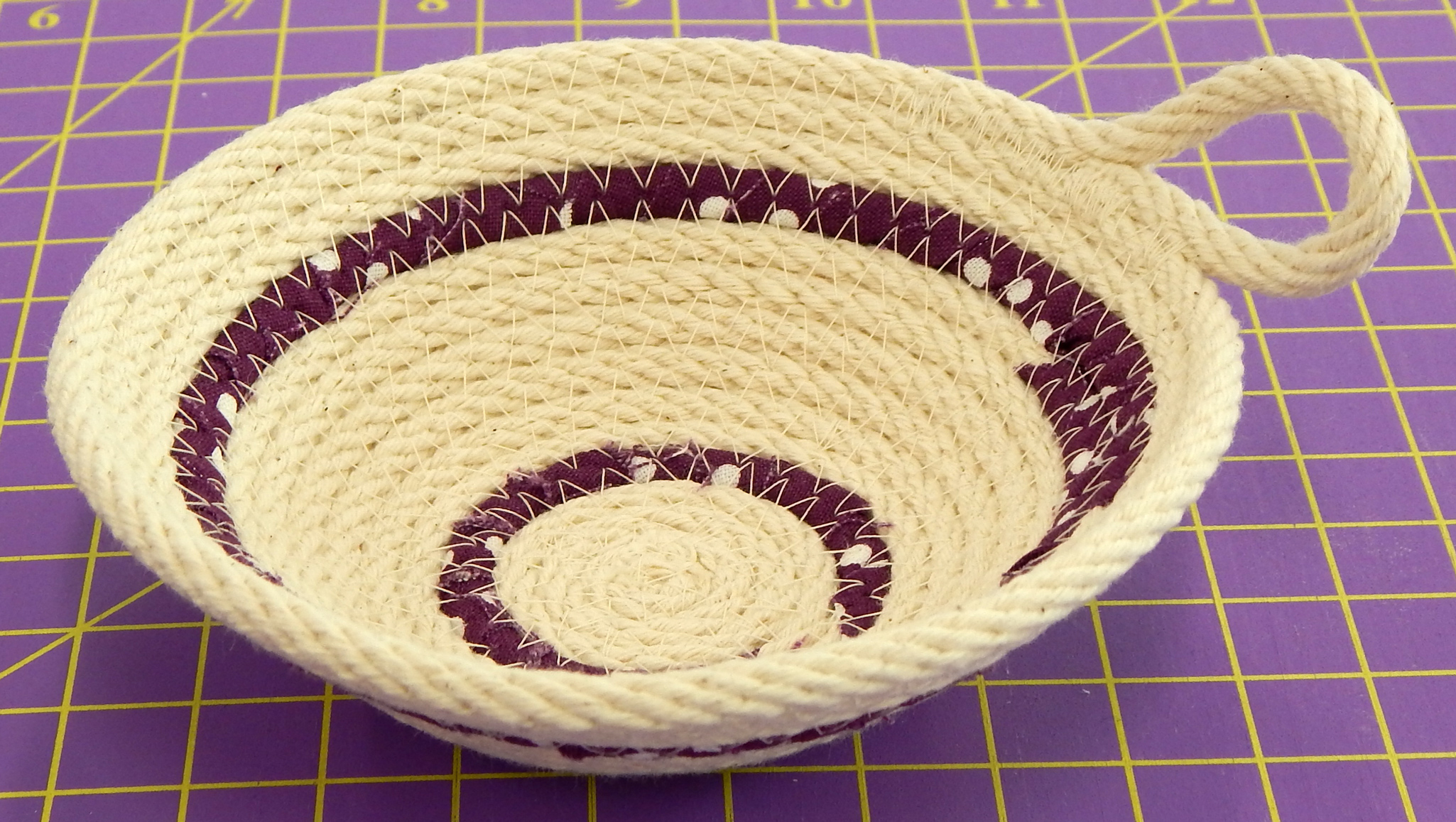
My first bowl made with The Mountain Thread Company cord

What’s your favorite?

Holiday Crafts Coming Soon!

Now that Halloween is over, I will be teaching three Christmas crafts.

But first, C&T reached out to offer a discount to my readers who want to take the Handmade Holiday Bazaar class online. It caught my interest because one of the presenters is Laura Wasilowski, and I’ve very much enjoyed her classes in the past. Also, I recently took another class on C&T’s Creative Spark platform and was pleased with it.

So I accepted the discount code for you, but declined the commission for me since I don’t want to “monetize” my blog. Here’s a link to the info on the class, which will also apply your discount: Handmade Holiday Bazaar.

NOTE: When you click on the link, you will see the regular price, but the coupon is at the top of the page, and when you click through to buy the class the discount will be shown before checkout.

And now on to the classes I’m teaching locally!  You can get the schedule for these and other classes on the Studio Stitch website, here.

Christmas Cactus Block

I made a pillow from a single block, but if you don’t need any more pillows you could make multiple blocks for a quilt–I think it would be beautiful! The class will be held November 10.

Pincushion

This is a quick-and-easy (and inexpensive) class for something that would make a great gift for quilty friends.

Pincushion made in a vintage cup with saucer

This class will be on December 1.

Christmas Tree Napkins

This is another fun (and inexpensive) class. We use these napkins every Christmas, and they would make a great hostess gift as well.

The class is December 8.

Let the crafting and sewing fun begin for whatever holidays you celebrate!