Connie Brown, A North Carolina Quilter

Connie Brown quilter

Connie Brown 

Connie Brown and I met at the Modern Quilt Guild of Asheville.  She has been juried into membership in the Southern Highland Craft Guild, a prestigious organization promoting fine Southern Appalachian crafts.  I thought you would enjoy meeting her.

Give us the quick tour of your quilting career.  How did you get started?

My husband, son, and I moved to Asheville in 1989.  I knew no one in the area, so I signed up for a quilting class at Asheville-Biltmore Technical College.  The instructor, Mary Field, was the best.  Along with quilting basics, she taught me many sewing skills and shared her knowledge and love of antique quilts and quilt history.  By the end of the class she had encouraged me to join the Asheville Quilt Guild and a weekly bee. The first few meetings I attended featured presentations by quilt historians.  I really enjoyed quilt history, so I started studying antique quilts.

When/how did you decide to “go pro” by studying quilt history and appraisal, judging shows, and joining the Southern Highland Craft Guild (SHCG)?

Connie Brown, hand quilting

Connie demonstrates quilting at a Southern Highland Craft Guild event

After a few years of making quilts and entering them in both local and national shows, I put a couple in a gallery exhibit.  To my surprise, one sold and visitors were interested in my other quilts.  I knew about the SHCG, with its shops, marketing, and educational opportunities.  After selling that quilt in the art gallery, I decided to apply for membership and was juried in during 2000.  I have my quilts in their shops and participate in several of their events, including Fiber Day and Heritage Day (where I share my beekeeping), as well as others.

When people started calling me about the value of antique quilts, or what value to place on a quilt they were entering in a show, I saw a need for a local certified quilt appraiser.  I put my years of studying quilt history and my knowledge of local quilt sales to use and focused on becoming a certified quilt appraiser.  In 2009, I was certified by the AQS (American Quilters Society) as an Appraiser of Quilted Textiles.

What is your favorite of the quilts you have made?

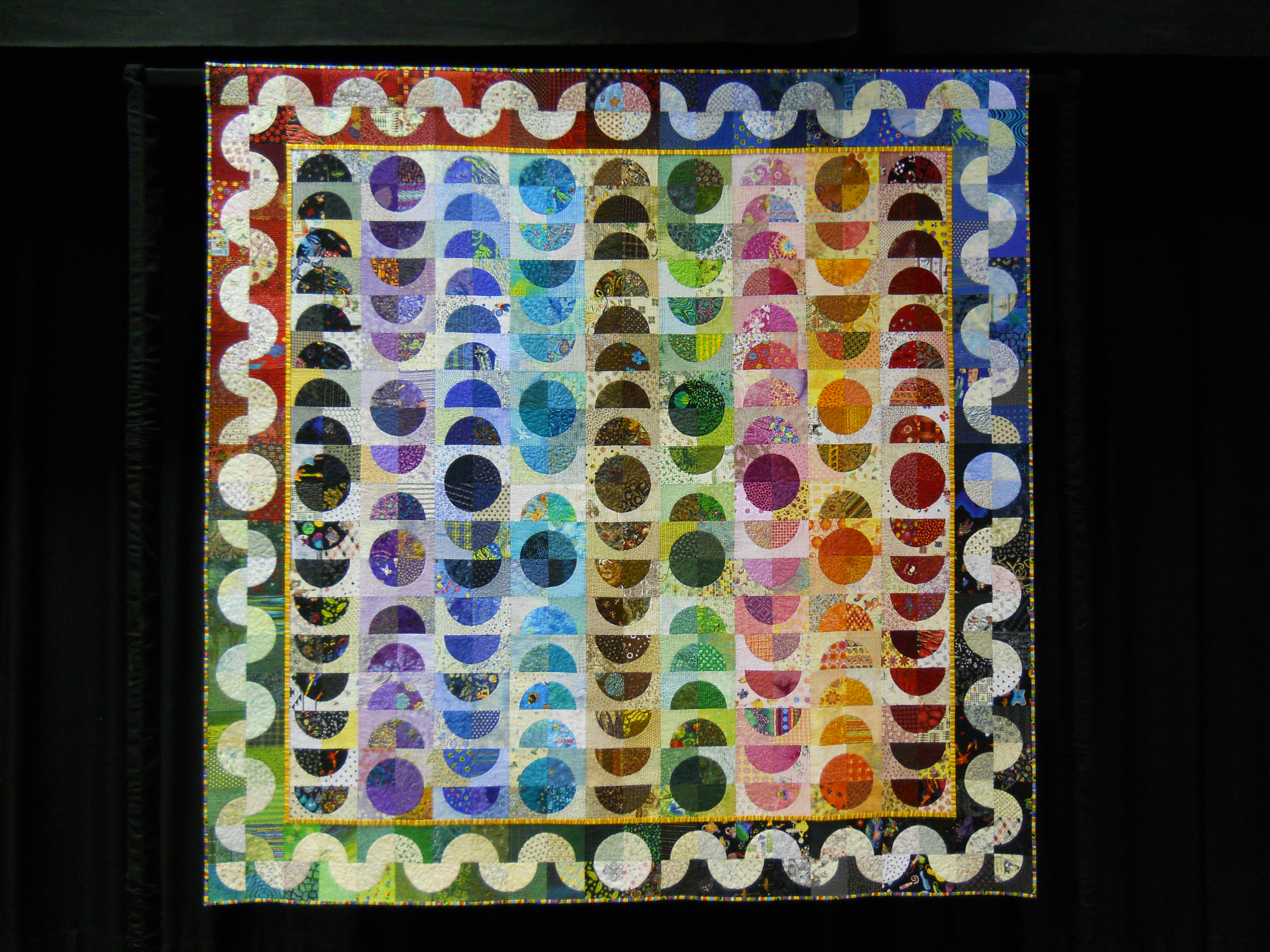
I love making circles and Drunkard’s Path units!  My 3 favorite quilts so far are:
Connie Brown quilter

Color Cascade

“Color Cascade aka Prints Charming”  includes more than 500 scraps.  The pattern for this quilt is in the September 2012 issue of American Quilter Magazine.  This is machine pieced and machine quilted.

Connie Brown quilt“V-Spot Target Attack” is also made entirely by machine.

Finally, “Tiffilippa” was inspired by a Tiffany lampshade.  I couldn’t throw away the trimmed off “waste”, so I used it as a border.

How much time do you spend quilting?  How do you have time to quilt, participate in guilds, keep bees, substitute teach, and still eat and sleep?

Every day I do something quilt related, whether it’s making quilts, studying, visiting an exhibit, or writing appraisals.  I always carry something to work on in my down time when I substitute teach.

How far do you travel with your quilt activities?  And what do you have coming up?

I’ll be at the Folk Art Center (on the Blue Ridge Parkway near Asheville) for National Quilting Day (March 19, 2016).  I’ll be hosting a quilt sharing day with an exhibition of 4 or 5 antique quilts, and people are invited to bring older quilts they have questions about.  I won’t be doing appraisals that day, but it’s a free event and a good opportunity for people who may have quilts they wonder about.  It can help them decide whether the quilt needs a formal appraisal.

This year I will be offering appraisals at the AQS shows in Paducah and Chattanooga as well as in Mt. Pleasant, South Carolina during the Cobblestone Quilt Show.  My fees for written appraisals are $75 per quilt, but during these events the charge is $50 per quilt. Each appraisal takes a minimum of 2 hours, including meeting with the client, travel, research and preparation, and typing the report.

To see more of Connie’s quilts, visit her webpage at southernhighlandguild.org/conniebrown

You may email Connie at mail2thebrowns@juno.com

My Modern Sampler, Blocks 9 and 10

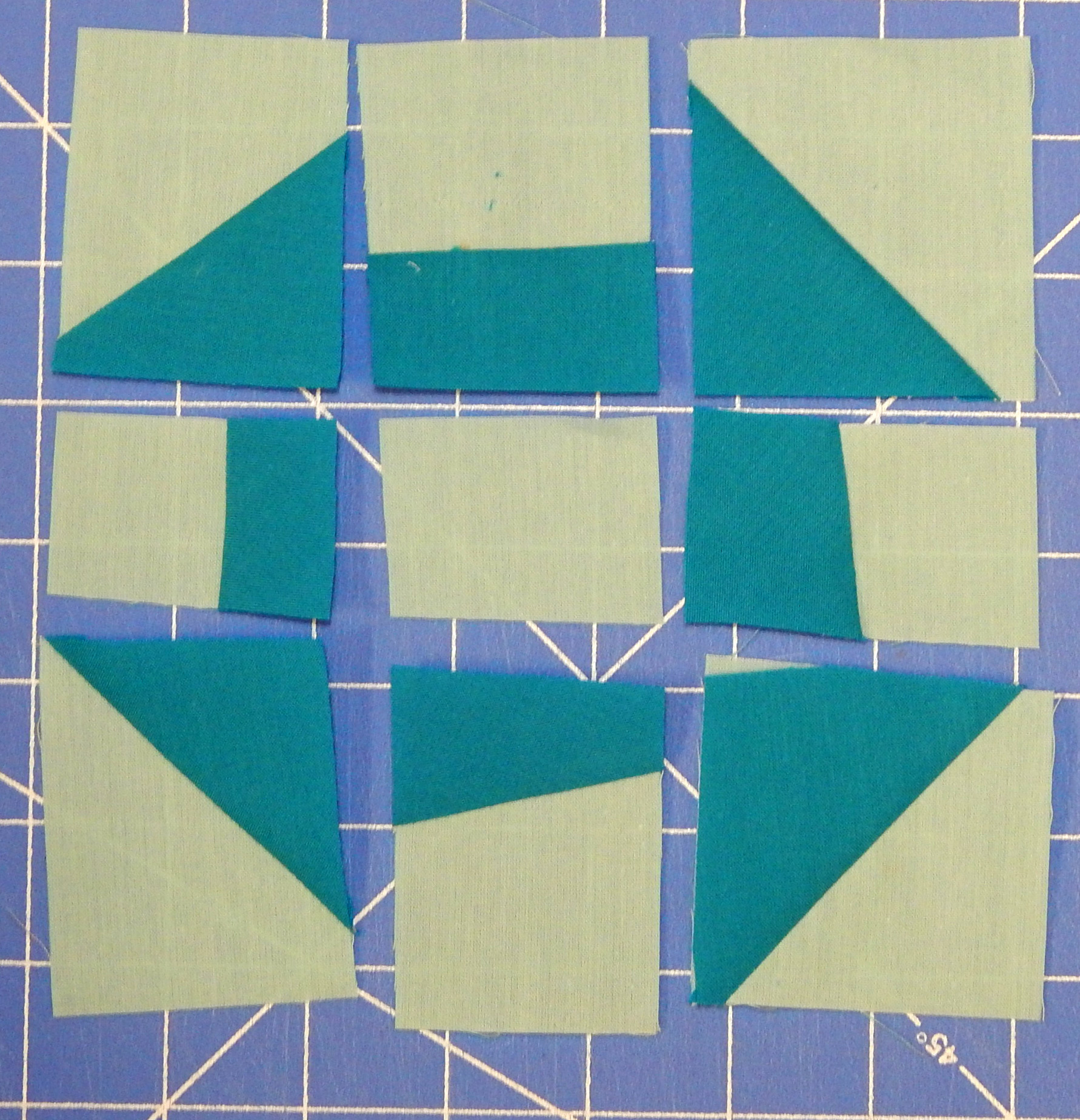
Channeling Gwen Marston, I made a couple of “liberated” quilt blocks for the sampler.  This means they were cut without a ruler and the pieces are deliberately “wonky”.

modern sampler, modern quilt block

Liberated Hole in the Barn Door blocks finish about 5″ square

Some current authors are making a big deal of cutting without a ruler, but Gwen Marston has been doing it for years.

I DID use a ruler to make the original background square.  Here are the steps:

modern quilt block

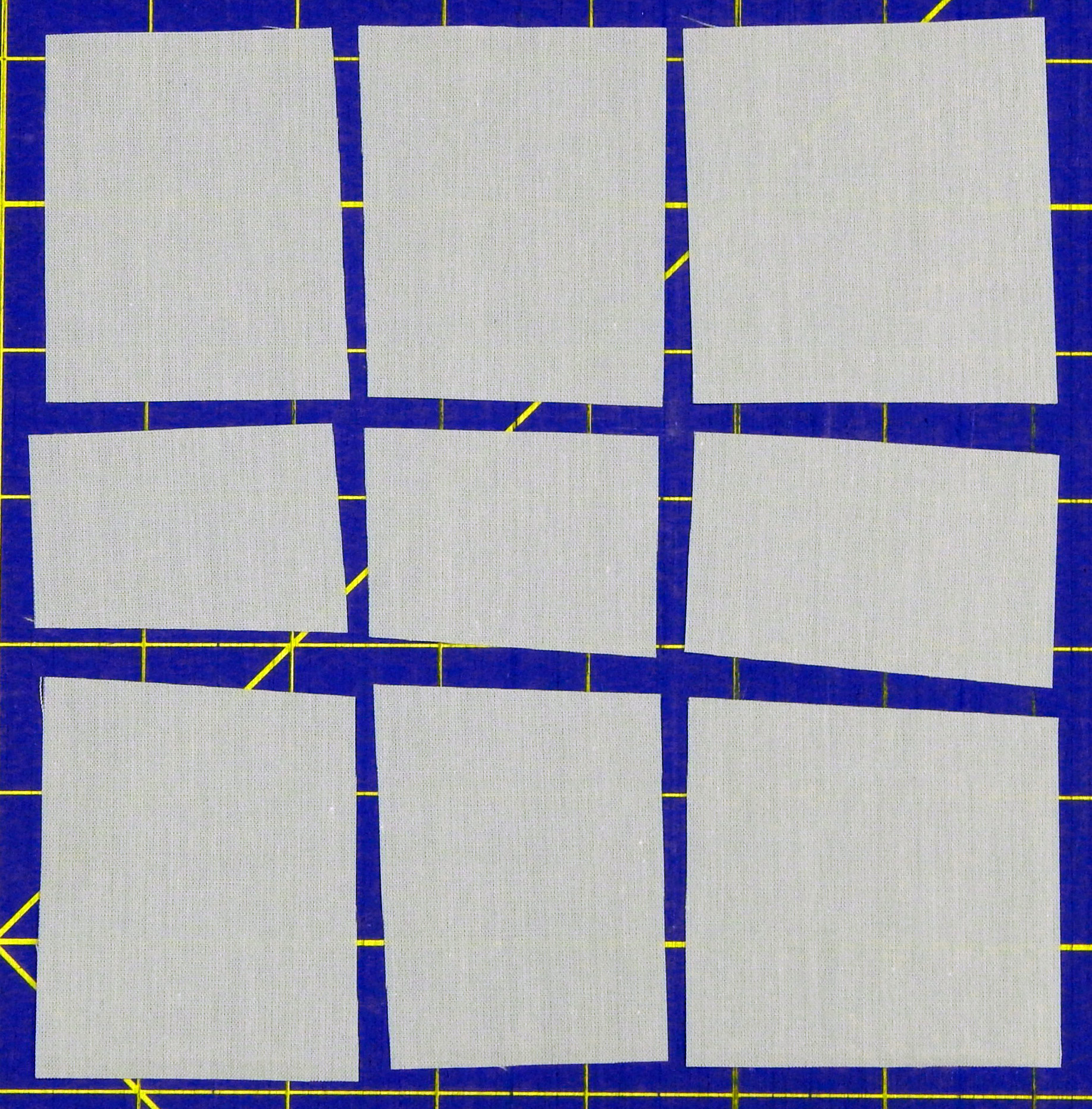
I cut the big square using a ruler, the subdivided it into a 9-patch freehand

modern sampler quilt

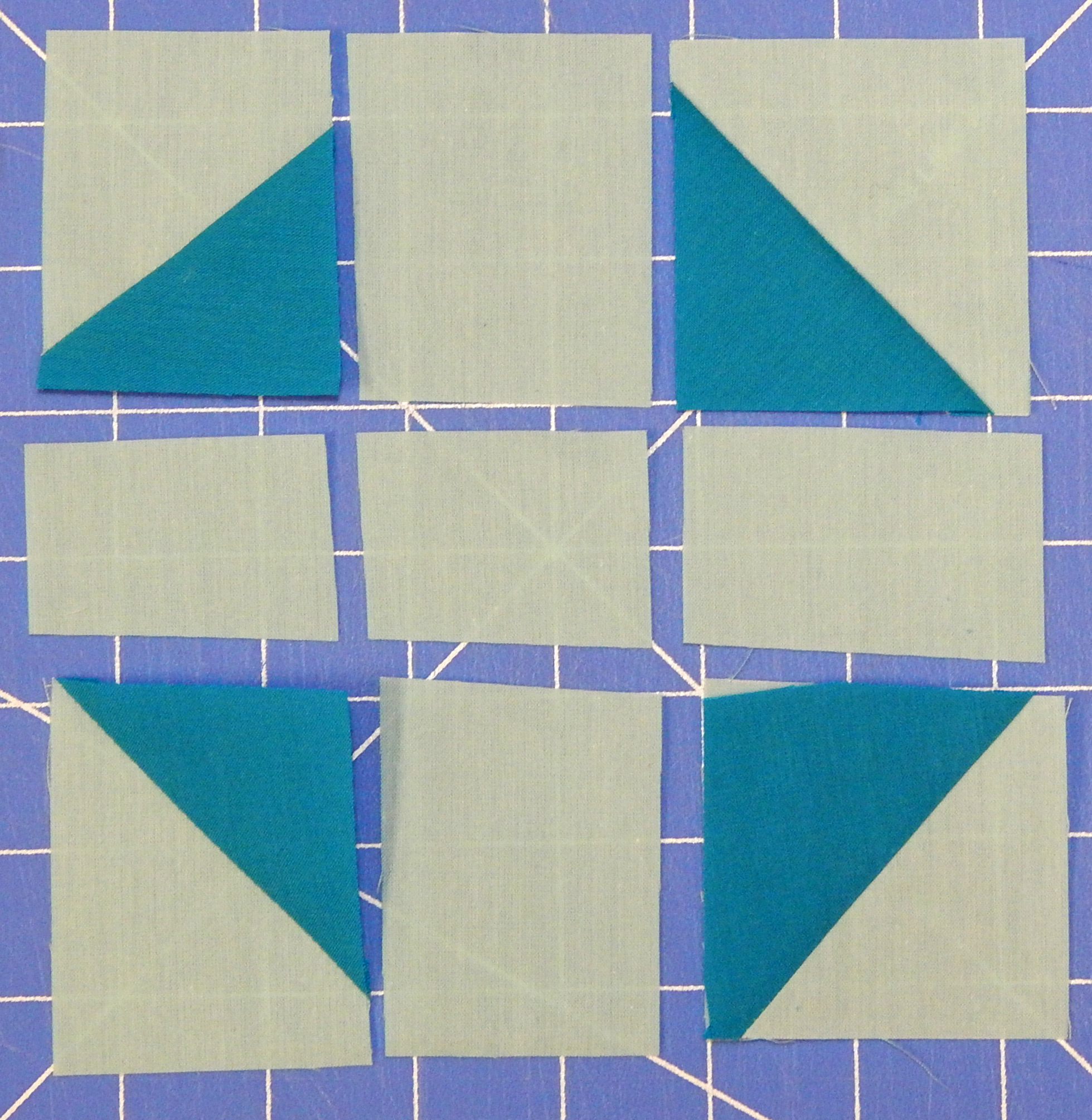
Corners done, time for the sides

modern sampler

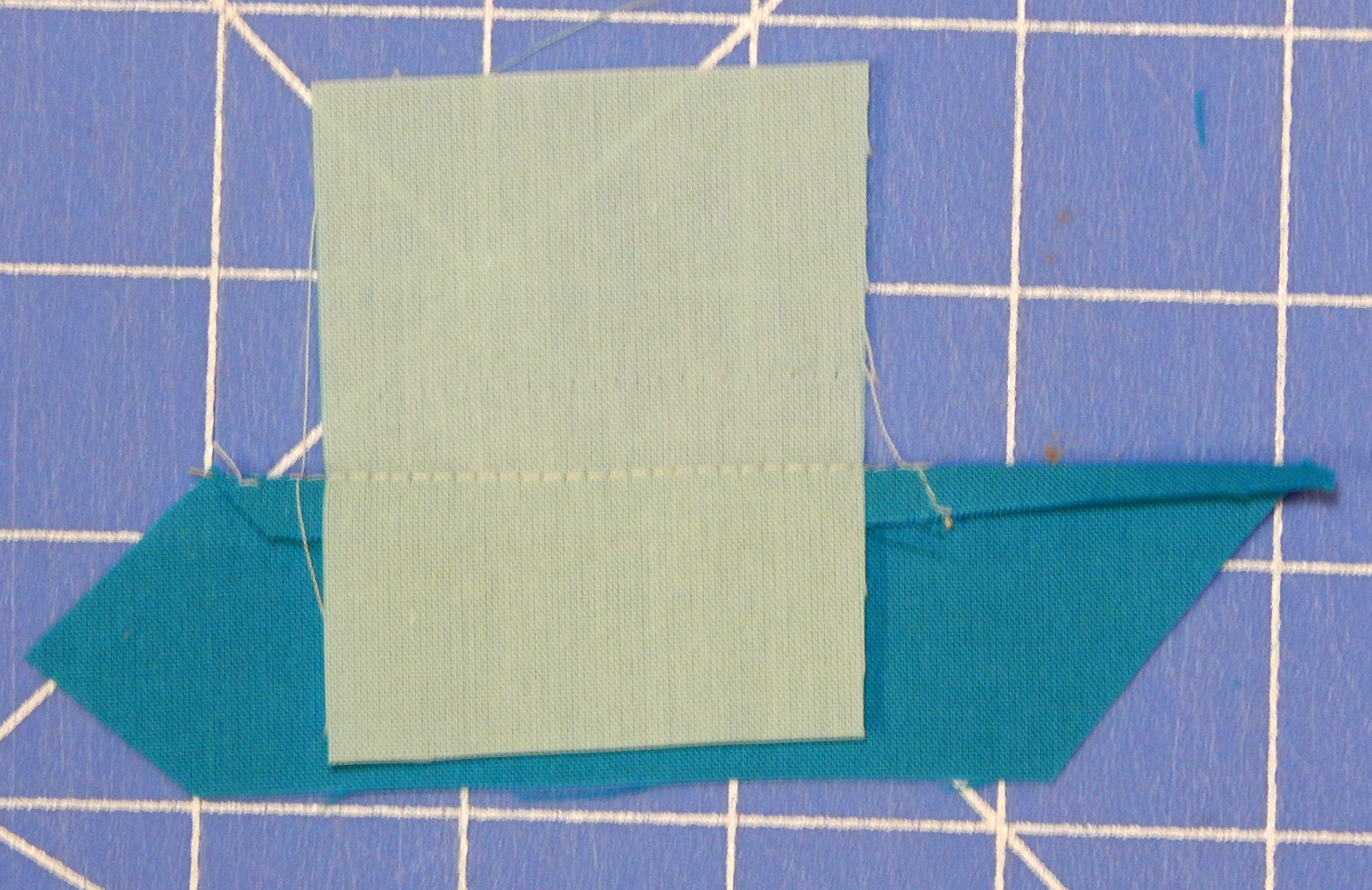
Sides done using method similar to the corners: pin, check, then sew and trim

modern sampler

Ready to be sewn together!

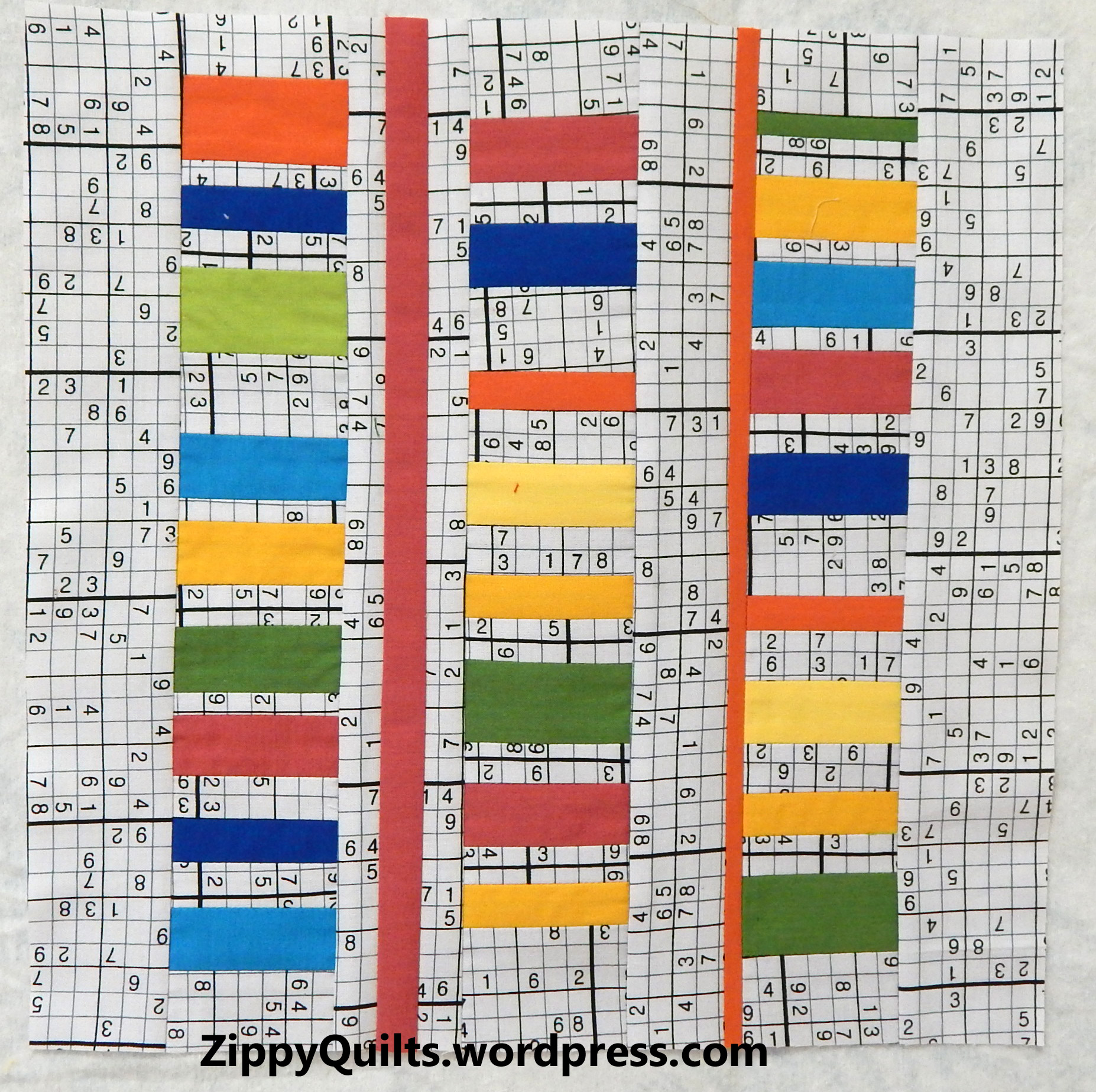
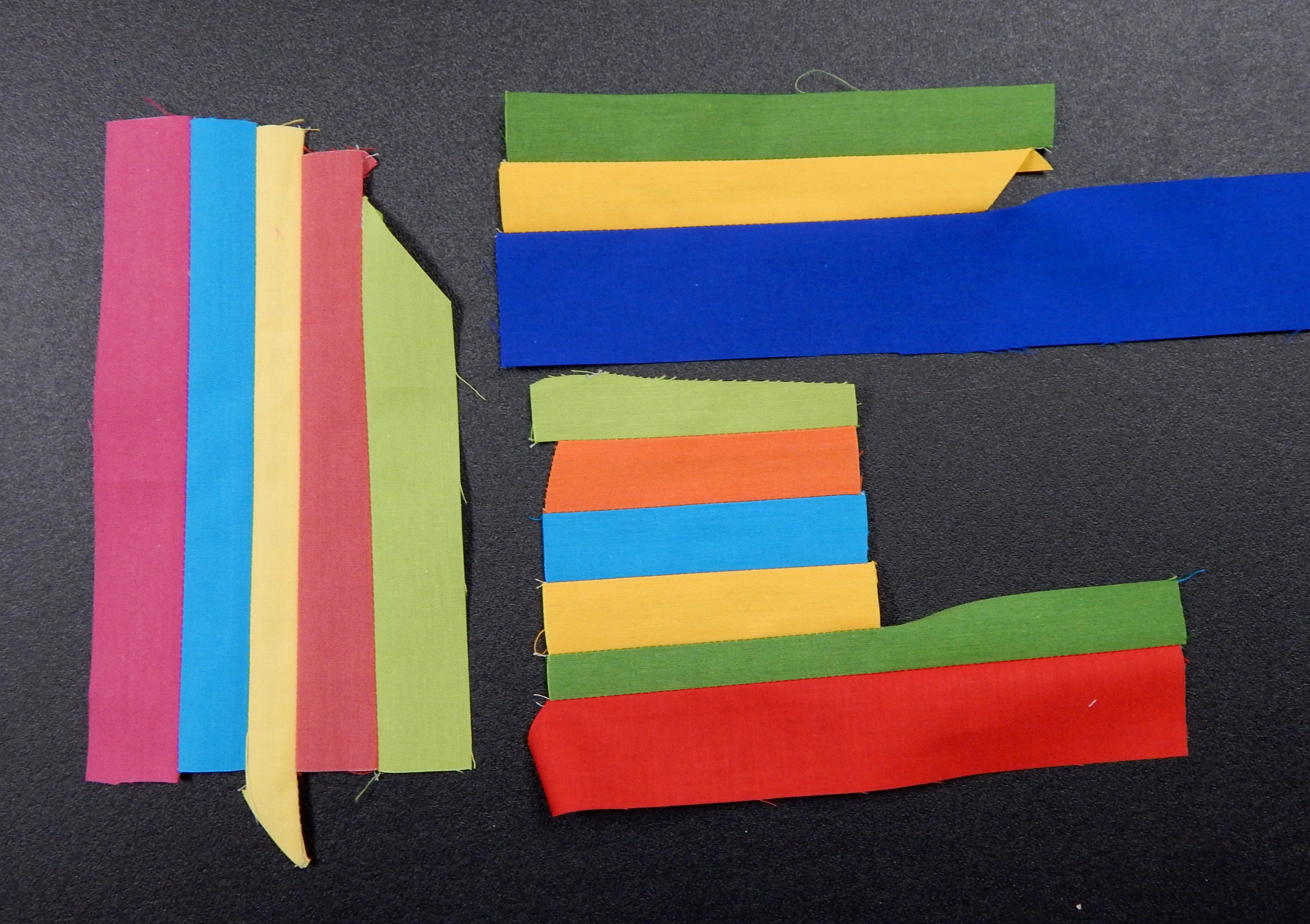
For Block 10, I cut my scraps into strips.and lined them up.

modern quilt block

Scraps cut into strips and pieced with black and white background

The widths of the colored strips and the white strips between them are semi-random. The sashing between the columns finishes 2″, and the block finishes 12″ square.

A few more blocks and then I’ll have to decide how to set them!  Here are the previous posts about My Modern Sampler:

Block 8

Painter’s Tape Block

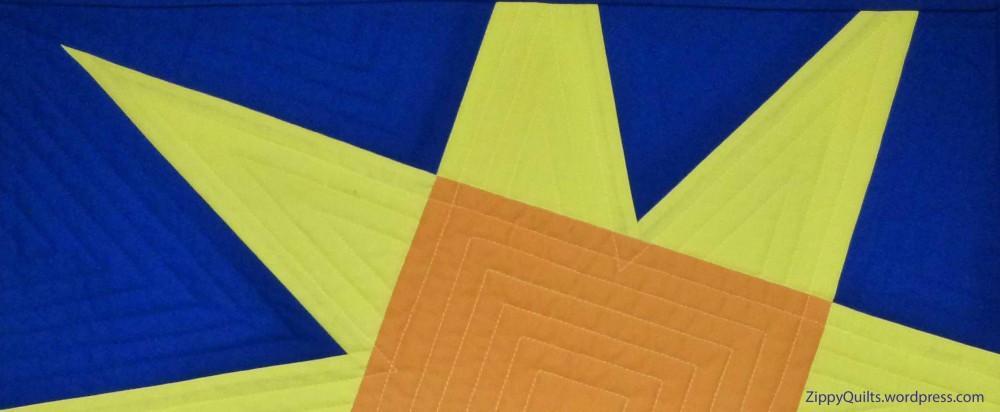
Humbug Star

Improv Block I

Pretty Blocks

My Own Modern Sampler–It May Take a Year!

My Modern Sampler, Block 8

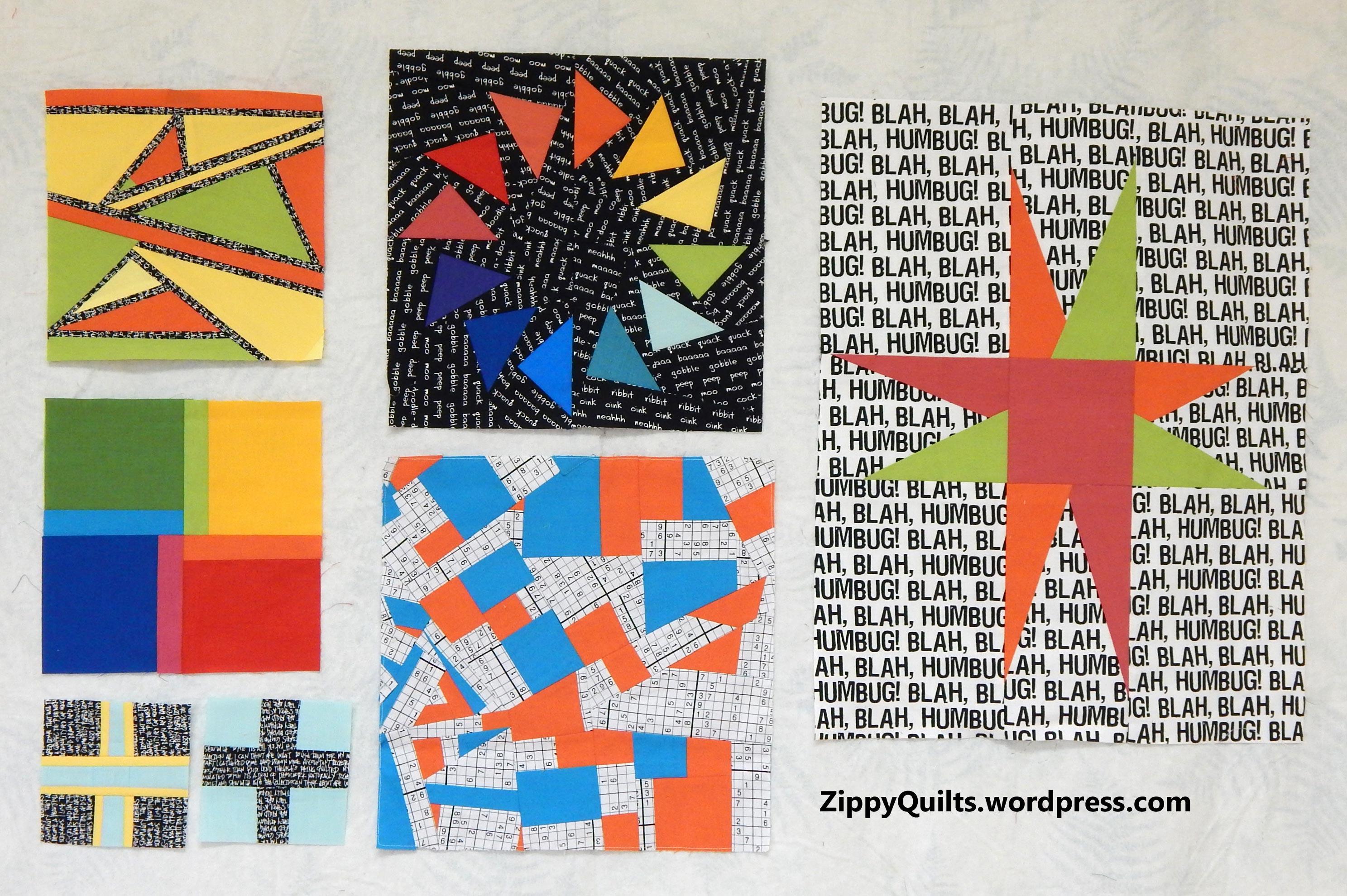
Here’s a picture of the blocks made to date for my modern sampler. Links to the posts about each one are at the bottom of this post.  Some are designed by me, some not.

modern sampler

These are the sampler blocks I’ve made so far

It’s time to look at all the blocks together and think about what this quilt needs next.

  • So far I’ve made 7 blocks; it needs 7 or 8 more.
  • The blocks will fit together in multiples of 3″, with some solid strips to fill in spaces. The blocks are generally “busy”, so I think those solid strips will be important.
  • There are a variety of colors and a lot of white and bright.  I like the bright, but I want some more black backgrounds.
  • All of the blocks except one have some text fabric.  I need to either save the one block with no text for another purpose or make 2 more without text.  I can use some text fabric as background strips.
  • That orange and turquoise block with all the random trapezoids doesn’t fit with the others, so I either need to make more like it or modify it in some way.  I may cut it up and re-make it altogether.  Suggestions?

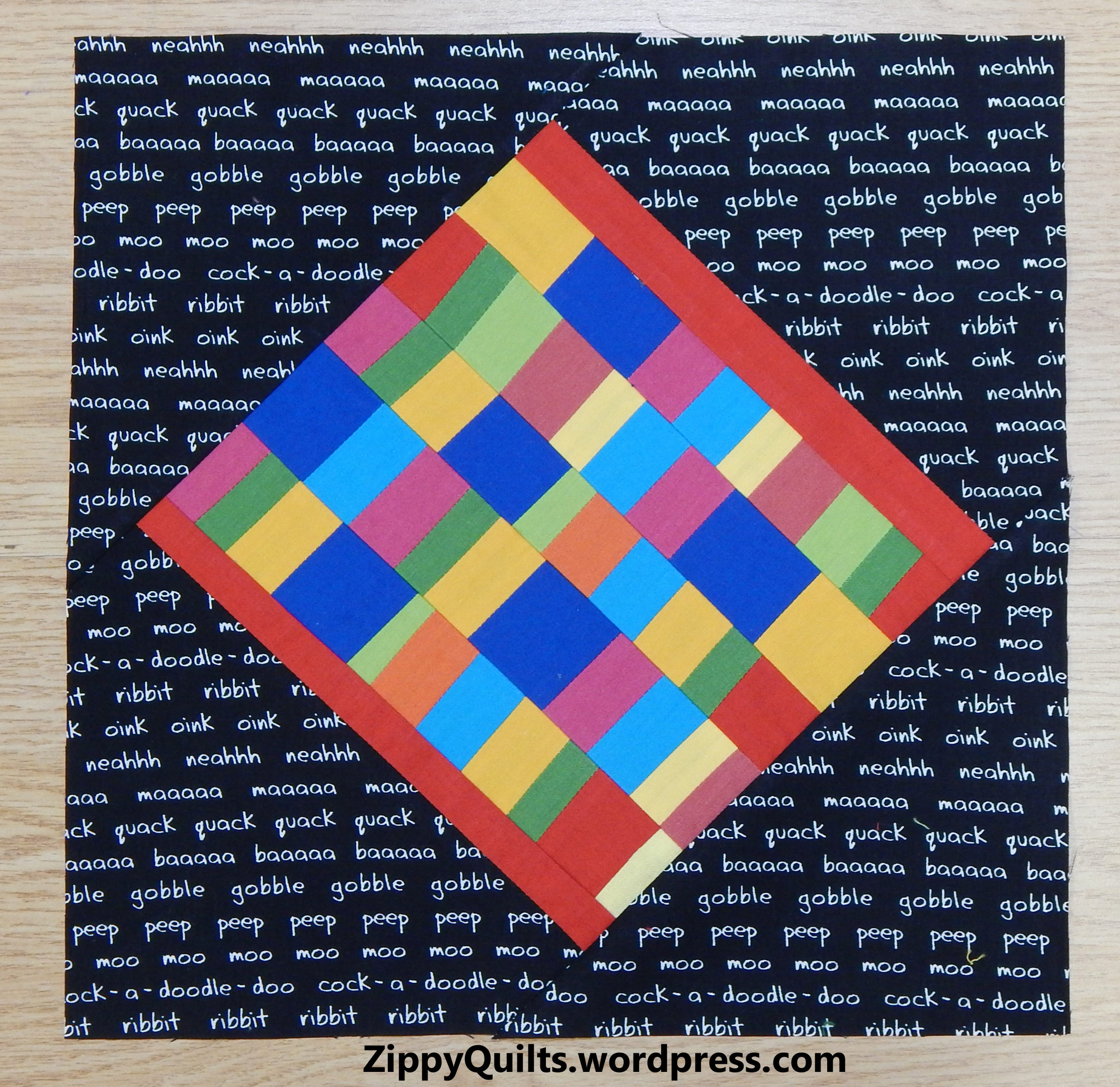
Meanwhile, here’s one new block to add to the sampler.

modern scrap block

The Modern Scrap Block will finish 12 inches square

And here are the steps for making it.  I just sewed together my scraps and then framed them with triangles.

modern scrap quilt

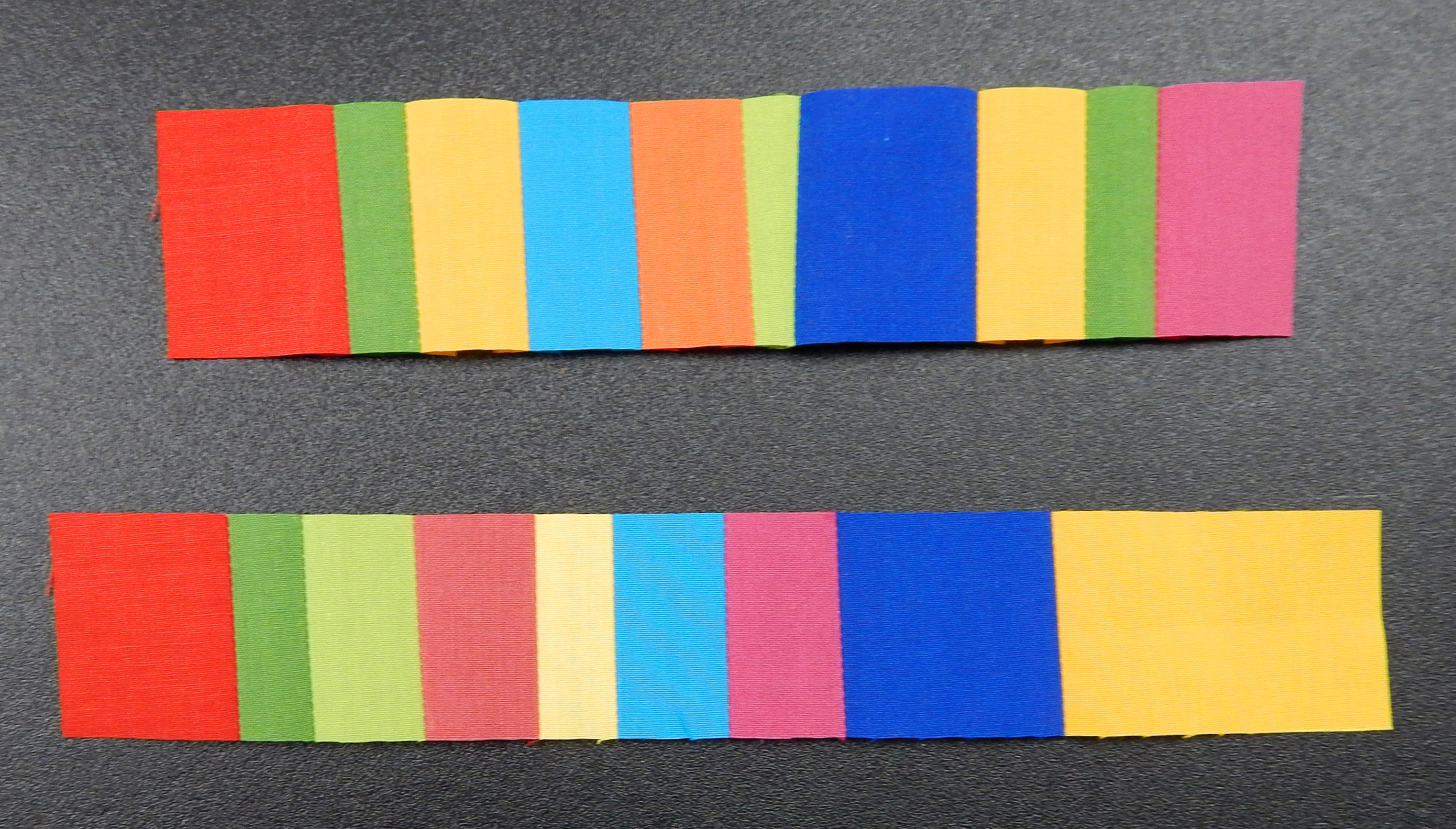
I made sets of strips left from other blocks.

These strips varied in width, and some were uneven widths.

modern scrappy block

Strips of tiny blocks cut from the strip sets.

I joined the strips of little blocks (which varied in width from 1 inch to 1-1/2 inches) and then added black triangles.  The center “square” is NOT square–it is improvised without much measuring!

There, now I have another one with a black background! Here are the links to the other quilt blocks in my sampler:

Painter’s Tape Block

Humbug Star

Improv Block I

Pretty Blocks

My Own Modern Sampler–It May Take a Year!

Modern Sampler: Painter’s Tape Block

For the next block in my modern sampler, I used an improvisational technique that first occurred to me several years ago: I outline the size I want my final piece to be with painter’s tape and then fill it with whatever shape I’ve decided to use.

My first exploration of this technique was a T shirt quilt.  The motifs from the shirts were many different sizes but could all be cut as rectangles or squares.  I outlined a rectangle about 55″ x 68″ on one of my carpets and stated filling it with shirt pieces.  I selected a modern fabric to fill in the holes, and here it is:

Improvised T Shirt Quilt

Improvised T shirt quilt

The shirts were all cut into rectangles and squares, and the fill-ins therefore were rectangles and squares as well.  I’m not saying this is easy, but it sure was more fun than just making a bunch of blocks the same size and lining them up.

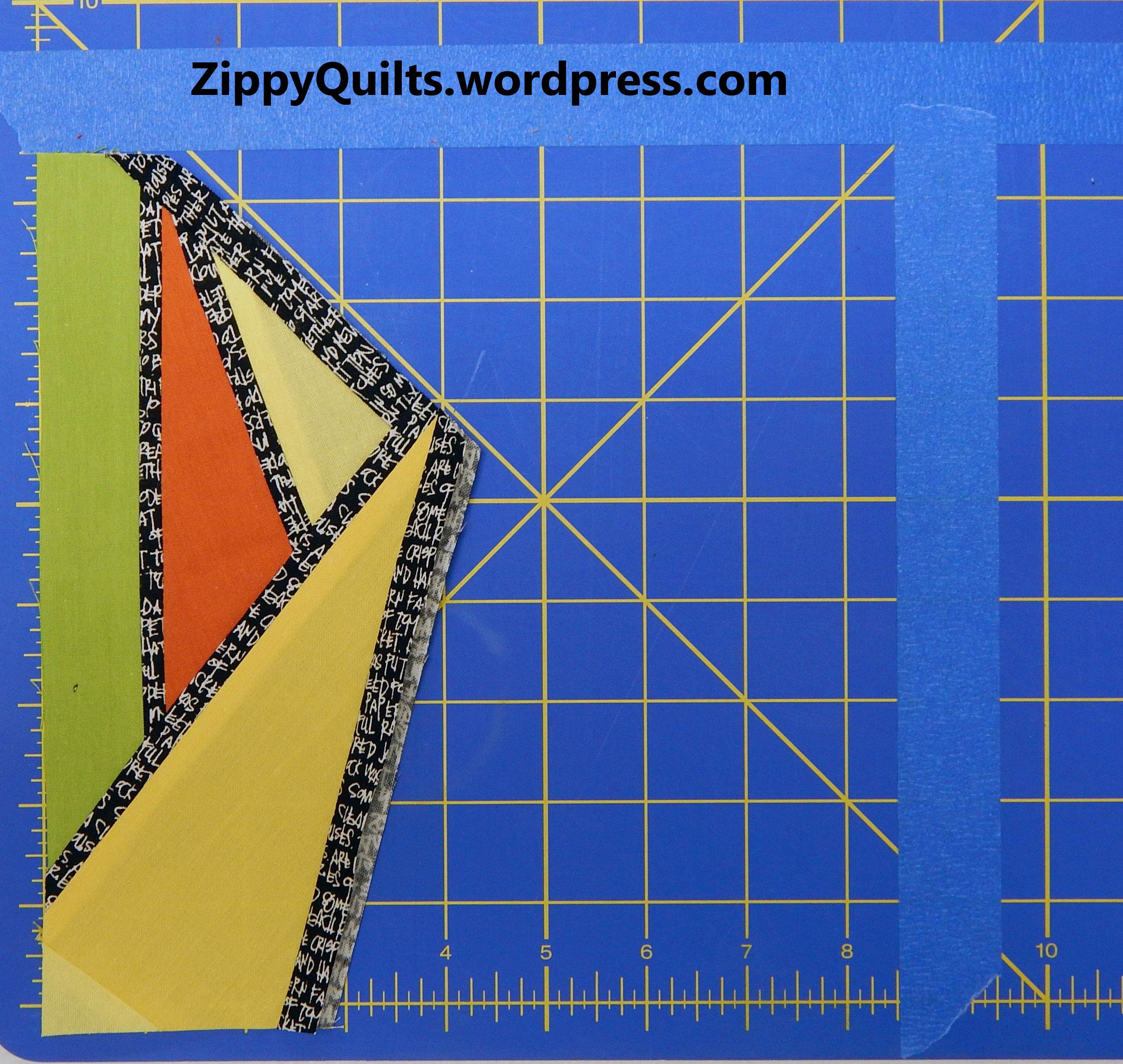
So for the next Modern Sampler Block, I outlined an 8-1/2″ square on my cutting mat and started filling it with triangles.

Improvised quilt block

Starting a square that will finish 8″

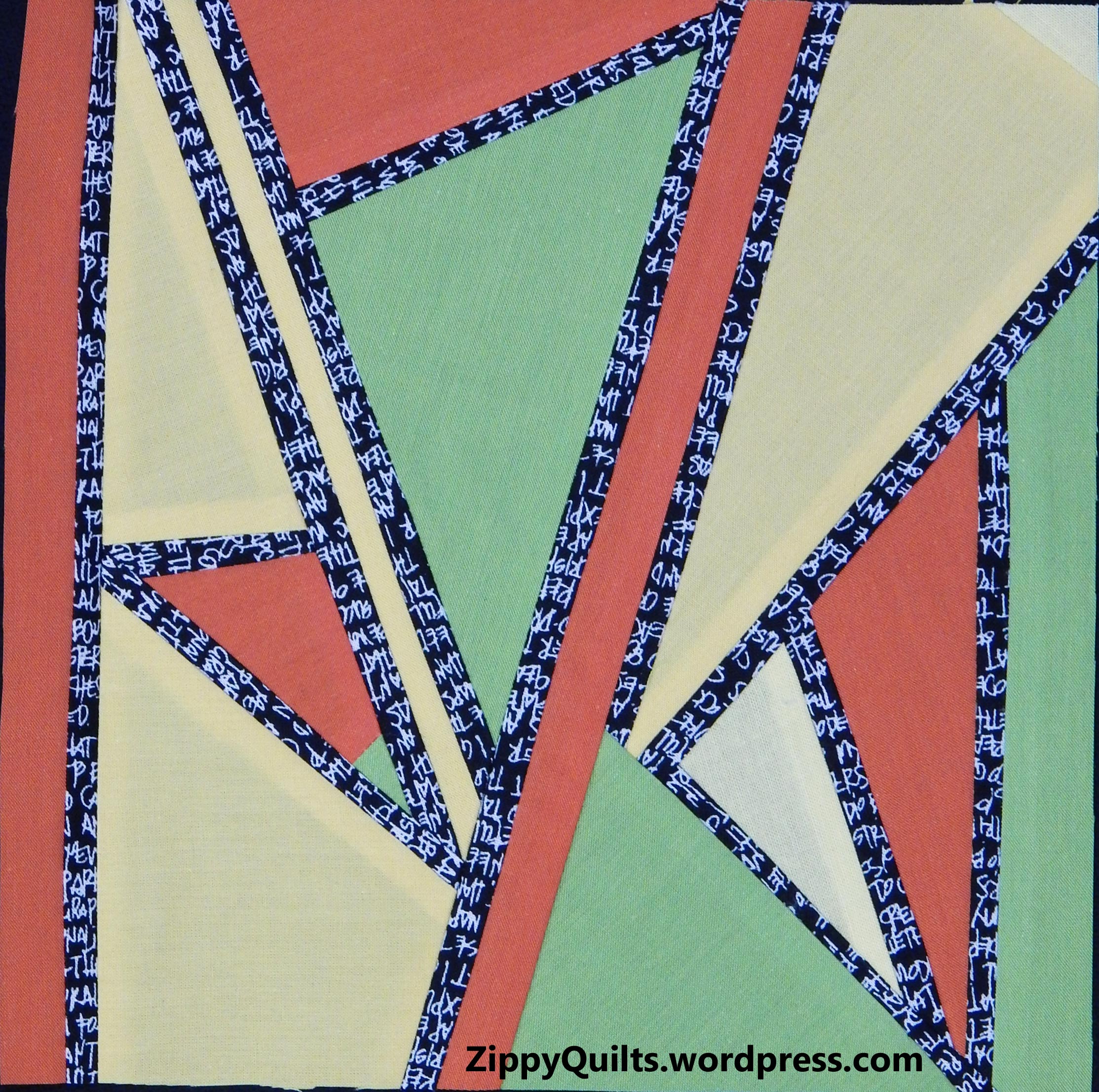
I added 1/4″ strips between the triangles to give the whole thing definition.  Then I just kept addiing triangles (that I cut randomly) until it was done.

Improvisational quilting

Improvised triangles block

No chance of a pattern for this one.  To make it, just cut a triangle you want to start with and then keep adding on.  I have a couple of deliberate exceptions to my “rules” so that the eye doesn’t just keep saying “yes”, it has to stop occasionally and say, “hey, wait!” The only trick is to keep finishing with a straight edge so you can easily add on the next section.

Try this technique! I hope you enjoy it!

Here are the previous posts in my Modern Sampler series:

Humbug Star

Improv Block I

Pretty Blocks–better look at this one!

My Own Modern Sampler–It May Take a Year!


Slabs in 4 Colors

One of my quilt groups is swapping slabs, those blocks made up of scraps all in a single color range.  (The name was given to this block style by Cheryl Arkison, who blogs at Dining Room Empire, if you want to check her out.)  We all have MORE than enough scraps in all possible colors, so each of us requested slabs of a specific color.

It turns out these are addictive!  Usually we make only 2 blocks for each recipient, but I got a little carried away….and this is only half the blocks I’ve made so far.

Improvised quilt blocks

Just a few of the slabs 

Aren’t they pretty?  And such fun!  So fair warning to my quilt group friends:  I HAVE the scraps and I know what to do with them!  You will be getting lots of blocks this time!  Which should give the option of taking a break to those of you who have weddings to plan, etc.

If you think I’m kidding about making extra, just look at the scrap bin. Something must be done!Scrap-Basket

What are you doing with your scraps these days?

6 Orphan Blocks, 1 Donation Quilt

I’ve probably mentioned that one of the ways I’m motivating myself to get rid of the excess in the studio is by joining Marti’s UFO finish of the month over at 52 Quilts.  As part of my ongoing effort to “clean it up, move it out” I’m making a series of donation quilts out of my orphan blocks.

pieced quilt blocks

Orphan blocks from a recent project

I had these 6 blocks that I liked, so I looked for fabric to go with them. The bright turquoise went well, but I had enough to join them only, not to frame them.  Searching for something to make it wider, I found a piece of black/white chevron fabric and decided it needed to be used, and FAST.chevron fabric

My daughter recently point out, “When you find chevrons on your mouthwash bottle, they’re on the way out!” 😀

Finally, I had some colorful Michael Miller dots that seemed to fit in:Michael Miller dots

And WOW!  A very “lively” improvised quilt.Donation quilt

I’m going to practice free motion quilting it on my new Bernina, and it will be the August UFO finish of the month.  Then off to Ronald McDonald House it goes.


10 Donation Quilts!

stack of quilts

Ronald McDonald Quilts

I have a little group of quilty friends that I retreat with at least twice a year.  We all make quilts for Ronald McDonald House of Cincinnati.  This last time, just 3 of us finished a total of 10 quilts!  Here are some of them.

R McD House of Cincinnati wants all quilts 40″ x 40″ so, as I’ve mentioned before, these are a good opportunity for a lot of experimentation:

  • Try new designs to see if you like them
  • Make orphan blocks into quilts
  • Try new color schemes

    pieced quilt

    Donation Quilt, 40″ x 40″

  • Use up fabric left from other projects
  • Use your scraps to make an improvised quilt top
  • Use up charm packs (yes, we’ve all bought a few extra!)
  • Make a simple quilt as a rest from challenging projects
  • Quilt the tops yourself for practice
  • Try out binding entirely by machine–makes the quilt more durable
  • Anyway, enjoy this little quilt show!  And check with your local Ronald McDonald House if you’re interested in donating quilts to them.
  • pieced quilt

    Quilt with teddy bears

    quilt back

    Pieced back

    Ronald-6

    Charm Squares

    ronald-3

    Leftovers

    Girlie Colors

    Girlie Colors

    More Charm Squares

    More Charm Squares–this one more of an I Spy design

    More leftovers--can you tell some group members have grandsons?

    More leftovers–can you tell some group members have grandsons?

    Boy Scout theme--there were 2 of these!

    Boy Scout theme–there were 2 of these–and look at the quilting, 1/2″ apart!

    My improv 9 patch

    My improv 9 patch

    Orphan blocks with improv sashing

    Orphan blocks with improv sashing


Quilt Alliance Challenge

After thinking I would use Sunbonnet Sue as my inspiration,

Fabric scraps

Scraps!

I did a total about-face and chose a scrap quilt instead.  I LOVE scrap quilts, and since I certainly HAVE a lot of scraps, it all works out 🙂

Here’s the process for this year’s Quilt Alliance donation quilt.  I wanted to use tiny scraps and have one tiny star.  I used Electric Quilt (EQ7) to print a foundation pattern for a star that finishes about 3″ square.  The first one I made, using the brand of fabric we’ve all

depended on for solids, was just a little off.  Turns out the “beefy” thick texture of that fabric doesn’t lend itself well to tiny, tiny points (the center square here is 1/2″ x 1/2″).  So I re-generated the foundation pattern and, as often happens, decided on a little design change at the same time.  Then I made the star using Moda Bella black, which is a lighter weight cloth that folded more crisply in such a small space.

For the rest of the quilt I pulled out my zippy-colored Michael Miller cotton couture scraps and just sewed them together as I took them out of the box.  Eventually I had to cut a few more “scraps” to finish the top.  There were so very MANY seams that I was glad of the lighter weight of this cloth, almost like voile.  It took many days to do this, quite a bit longer than I had expected for a 16″ x 16″ quilt!  The smallest pieces finish about 1/4″ squares or triangles!

scrap quilt

Quilt Alliance Challenge 2014

So here it is!  I would love to count the pieces, but I don’t think I have the energy left to do it!  Besides, who wants to know a thing like that? 😉

Fairyland to Vermont

I’ve just submitted my improvisational quilt “In Fairyland” to the Vermont Quilt Festival, and of course I’m hoping it gets in!

improvisationally pieced quilt

In Fairyland

I made the blocks at the top just for fun when I got an EQ add-on called “Town & Country Patchwork” by Cori Derksen & Myra Harder (who have generously agreed to my use of their designs in this quilt for the show).  The blocks are paper pieced and I made them in fantasy colors because those were the scraps I had on the day I decided to make them. Then the blocks sat around for quite a while 😉  Sound familiar?

Eventually I decided I needed to use up some of my MANY scraps.  At least the scraps are cut into strips of standard widths, so when I get a notion to use them, they’re ready to go.  So I just made rows of scraps, putting the sky-type ones at the top.  Below the houses, I arranged the thinner rows in the “distance”.  Finally, I found one of the flower fairies and put her in near the bottom.improv pieced quilt

My friend Joyce quilted the whole thing on her long arm, using a pattern of leaves at my request.quilting on improv quilt

I’m happy to say I’ll be going to the Vermont Quilt Festival this year–something I’ve wanted to do for a long time.  I’m hopeful that “In Fairyland” will be included so I can view my own quilt there!  Anybody else going?

Do You Need to De-stash?

Most of us build our stashes like a king hoarding treasure.  Look!  I have a whole drawer

pile of fabric

Stash overrun

(shelf, bathtub) of blue fabric!!  And here’s a sale on solids so I can have a whole shelf of those!!!  If you’ve been quilting long, you KNOW what I mean!

Unfortunately, stash can be like so many other possessions:

When you buy something, you may own it, but FOR SURE IT OWNS YOU.

And mind you, this stash habit is not unique to quilters!  I know people who have LOTS of wood, stamps, antiques, beads, beanie babies (true story), candlesticks, tools, marbles, books, you name it.  Some of these people ALSO have lots of fabric 🙂

But you may have too much fabric if—

  • You have to move a pile of it to make room to start a project
  • You have to find places for some of it outside your studio (in the guest room bathtub, in the tip-top kitchen cabinets, on shelves in the garage…)
  • You have more yards of fabric than you have days of remaining life expectancy
  • And (most important), you have decided that you MUST put a moratorium on fabric purchases (oh, woe!)

SO:  What to do?

Here are a few ways to deal with a big stash (and my friends and I have used them all):

  • Trade with friends.  For example, you bring a big stack of fabric you MIGHT be able
    onesie and t shirt with iron-on ties

    Make iron-on ties for t shirts and onesies from your stash

    to part with to your next quilting bee (retreat, guild meeting, whatever) to swap for things other people bring.

  • Make donation quilts.
  • Make pillowcases to give with your donation quilts
  • Make pillowcases to donate to the One Million Pillowcase Challenge
  • Make quilts or pillowcases for every family member you’re still speaking to (EXCEPT for the one who put the last quilt outside in the dog house to keep the dog warm!)
  • Apron

    Apron, though not the one I’ve linked to

    Make blocks and use them in the orphan block projects I blogged about recently here

  • Make gift bags in ALL sizes!  Yes!  No more wrapping paper!
  • Make tote bags for your friends and for yourself—no more plastic grocery bags to get rid of!
  • Make pot holders (use Insulbright)
  • Instructions HERE for making an iron caddy (for when you need to transport a warm iron home from a workshop)
  • Instructions HERE for making an easy one-yard apron (think hostess gift!)

    table runner

    Table runner made from a strip of leftovers

  • Make placemats and table runners as hostess gifts (lots of commercial patterns and free instructions available on the internet)
  • Keep reading this blog–more ideas coming up!
  • You can even donate fabric to organizations that make pillows for chemotherapy patients, Quilts of Valor, etc, etc

There are MANY more fine possibilities!  Please leave your suggestions in the comments for others to enjoy!

Happy quilting!