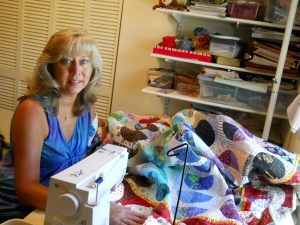
More Inspiration

I bought two of Gwen Marston’s books some time ago…

and have been channeling her in my designs for over a year (you can click on the pictures below to see their captions):

Recently I saw that the (relatively) new iQuilt platform had two video classes taught by Gwen Marston.  The class I chose was quite short–a little over 2 hours–and I decided to watch the class over a weekend and make several little quilts using her techniques.

I’d already made a refrigerator quilt in Gwen’s style for an upcoming guild challenge,

art quilt, gwen marston

Refrigerator quilt inspired by Gwen Marston. Bev Manus came up with the idea for refrigerator quilts.

so I decided to make the new quilts 12″ x 12″ as well.  This is a great size for trying new things because there isn’t too much commitment of time or materials.

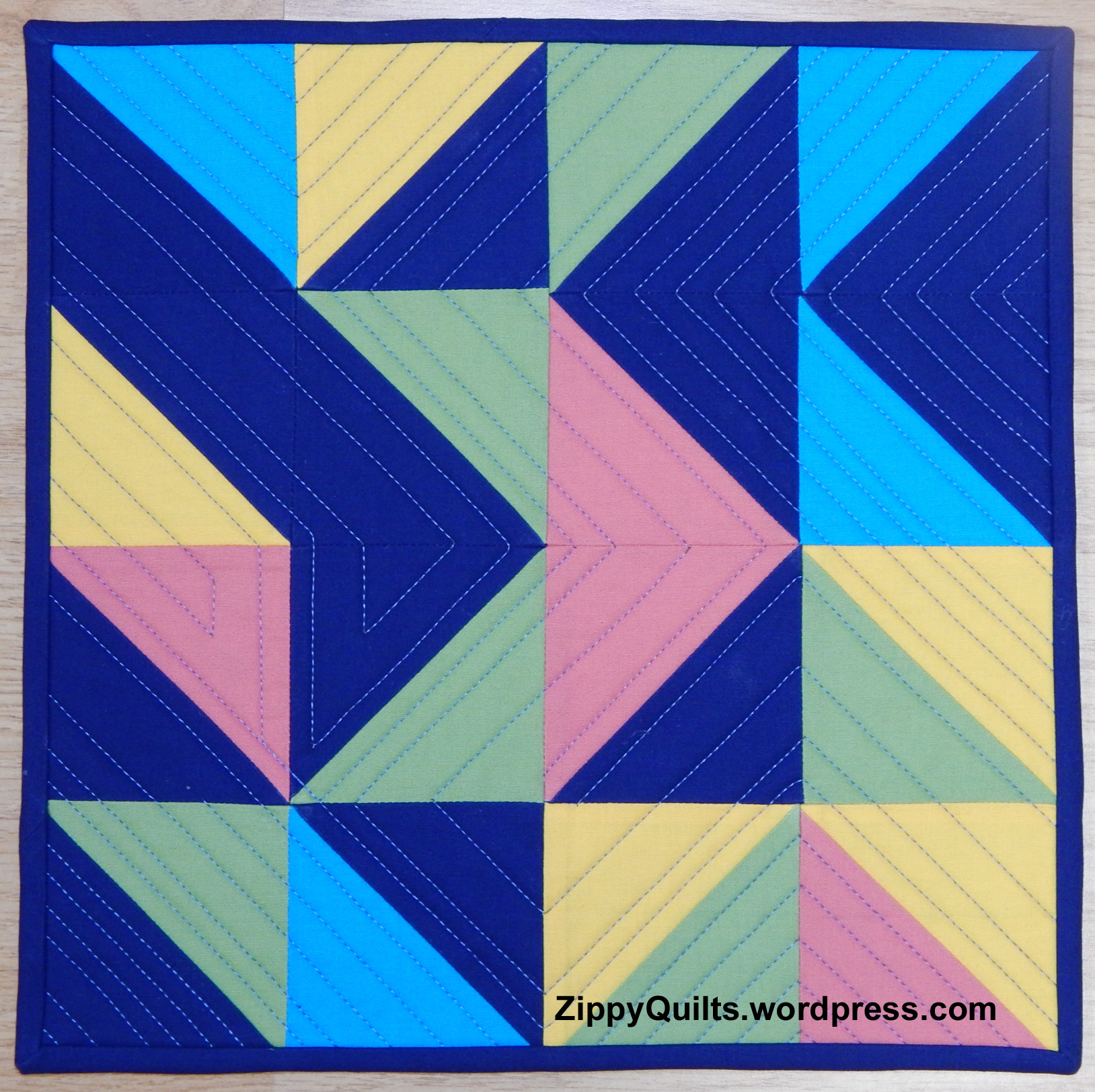
The first quilt was composed of half square triangle blocks, so I was able to try out the (fairly expensive) Loc Bloc ruler I recently bought to make trimming these blocks to size easier.  The ruler worked great with just a little practice, and I got to practice my machine quilting on the finished quilt.

refrigerator quilt

Quilt Front

Gwen’s instruction was to pair the triangles up into squares just as you picked them up, with the caveat that the pairs should have contrast between the fabrics.  Then the squares were to be sewn together into rows just as they were picked up.  She did allow that it would be OK to lay the rows out and look at them before sewing them together, but advised against spending a lot of time fussing over the exact layout.

Refrigerator Quilt

Quilt Back

I was pleased with this result.  The class doesn’t really cover anything that isn’t in her books, but I was happier watching a little and sewing a little than I am to just sit down and read a book.  I made a couple of other quilts, too, and I’ll show them next week.


Refrigerator Quilt

A very artistic quilter in one of my guilds is making a series of “refrigerator quilts” as a challenge to herself. They are 12” x 12” and intended to be displayed on her refrigerator for one week, until she finishes the next one!
The guild took her idea as the challenge for May, so I’ve been making a little refrigerator quilt myself. I took my inspiration from Gwen Marston (again) and made a bunch of little freeform stars.

art quilt, gwen marston

Refrigerator quilt inspired by Gwen Marston. Bev Manus came up with the idea for refrigerator quilts.

The best part is that, because it is small, it was made almost entirely from scraps. I had enough scraps to make all the stars different yellows and all the backgrounds different blues.
The back is a piece of fabric I dyed in a class many years ago.

hand dyed fabric

Quilt back. This was dyed with Setacolor dyes

And I used it to practice my circular quilting.
Done!

Quilt Alliance Contest

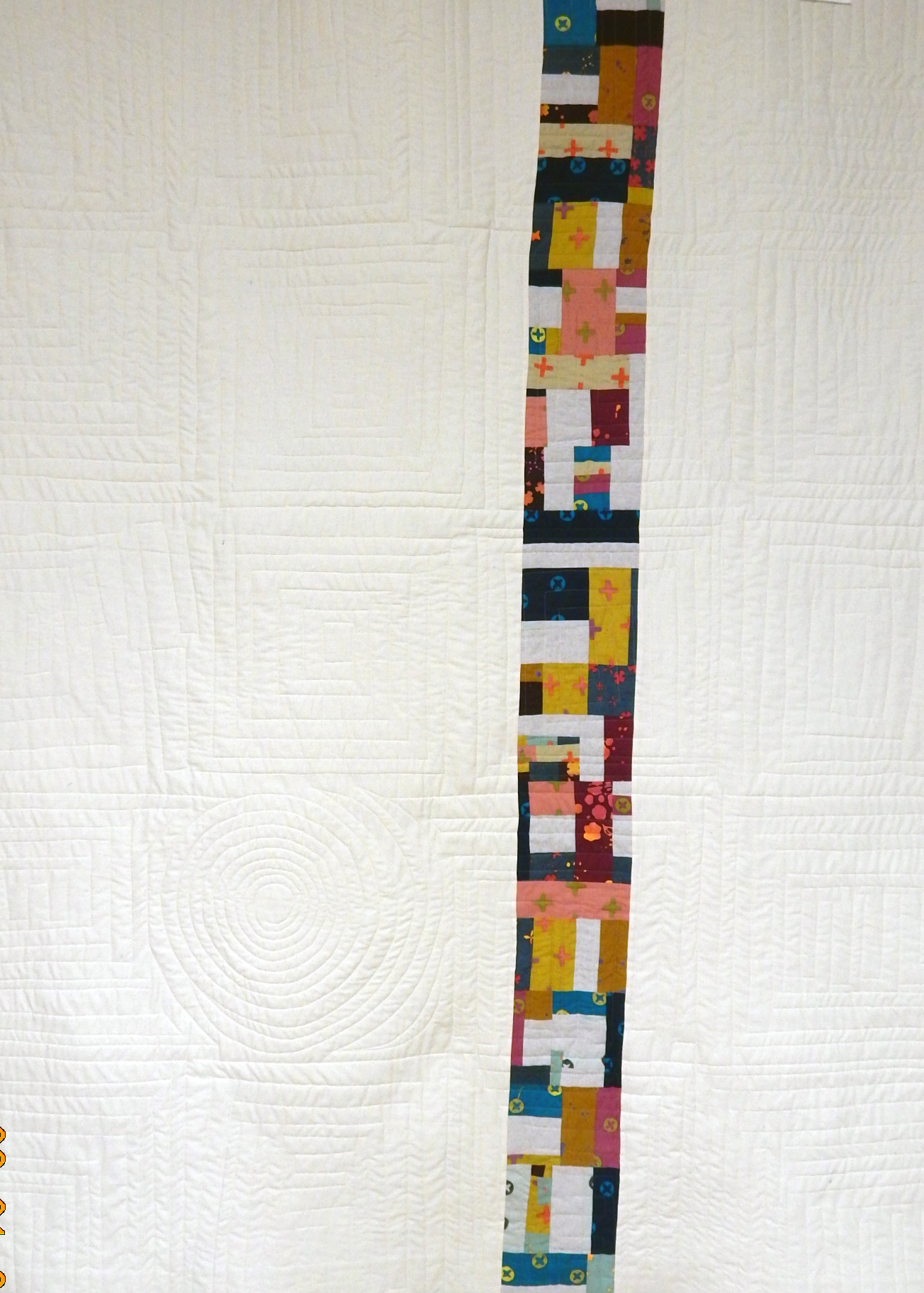
Here’s my entry for the 2016 Quilt Alliance contest, “Playing Favorites “. The design is inspired by Gwen Marston’s work, and the piece is titled “Gwen Visits the Farm”. The black fabric has animal sounds printed on it: “peep” etc.

improvisational quilt

“Gwen Visits the Farm”

The “Playing Favorites” theme of the 2016 Quilt Alliance contest is intended to capture a picture of quilting in 2016 by asking contestants to make quilts using their favorite techniques.  I love improvisational quilting, and Gwen Marston was doing it long before anyone thought of the “modern” quilt movement!

In addition to making the quilt in Gwen Marston’s improvisational style, I quilted it using decorative stitches.  I’ve used several of the decorative stitches on my machine for quilting for a long time now.  However, I recently took a Craftsy class in which Jackie Gehring suggested using even more of the decorative stitches.  I think the stitching reflects the state of the art of quilting in 2016, as well.machine quilting

I’ve been thinking for YEARS of doing a series of quilts in the styles of my favorite quilt designers, so this is the first in that series. Please stay tuned!

Connie Brown, A North Carolina Quilter

Connie Brown quilter

Connie Brown 

Connie Brown and I met at the Modern Quilt Guild of Asheville.  She has been juried into membership in the Southern Highland Craft Guild, a prestigious organization promoting fine Southern Appalachian crafts.  I thought you would enjoy meeting her.

Give us the quick tour of your quilting career.  How did you get started?

My husband, son, and I moved to Asheville in 1989.  I knew no one in the area, so I signed up for a quilting class at Asheville-Biltmore Technical College.  The instructor, Mary Field, was the best.  Along with quilting basics, she taught me many sewing skills and shared her knowledge and love of antique quilts and quilt history.  By the end of the class she had encouraged me to join the Asheville Quilt Guild and a weekly bee. The first few meetings I attended featured presentations by quilt historians.  I really enjoyed quilt history, so I started studying antique quilts.

When/how did you decide to “go pro” by studying quilt history and appraisal, judging shows, and joining the Southern Highland Craft Guild (SHCG)?
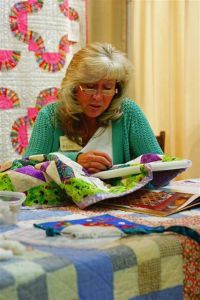
Connie Brown, hand quilting

Connie demonstrates quilting at a Southern Highland Craft Guild event

After a few years of making quilts and entering them in both local and national shows, I put a couple in a gallery exhibit.  To my surprise, one sold and visitors were interested in my other quilts.  I knew about the SHCG, with its shops, marketing, and educational opportunities.  After selling that quilt in the art gallery, I decided to apply for membership and was juried in during 2000.  I have my quilts in their shops and participate in several of their events, including Fiber Day and Heritage Day (where I share my beekeeping), as well as others.

When people started calling me about the value of antique quilts, or what value to place on a quilt they were entering in a show, I saw a need for a local certified quilt appraiser.  I put my years of studying quilt history and my knowledge of local quilt sales to use and focused on becoming a certified quilt appraiser.  In 2009, I was certified by the AQS (American Quilters Society) as an Appraiser of Quilted Textiles.

What is your favorite of the quilts you have made?

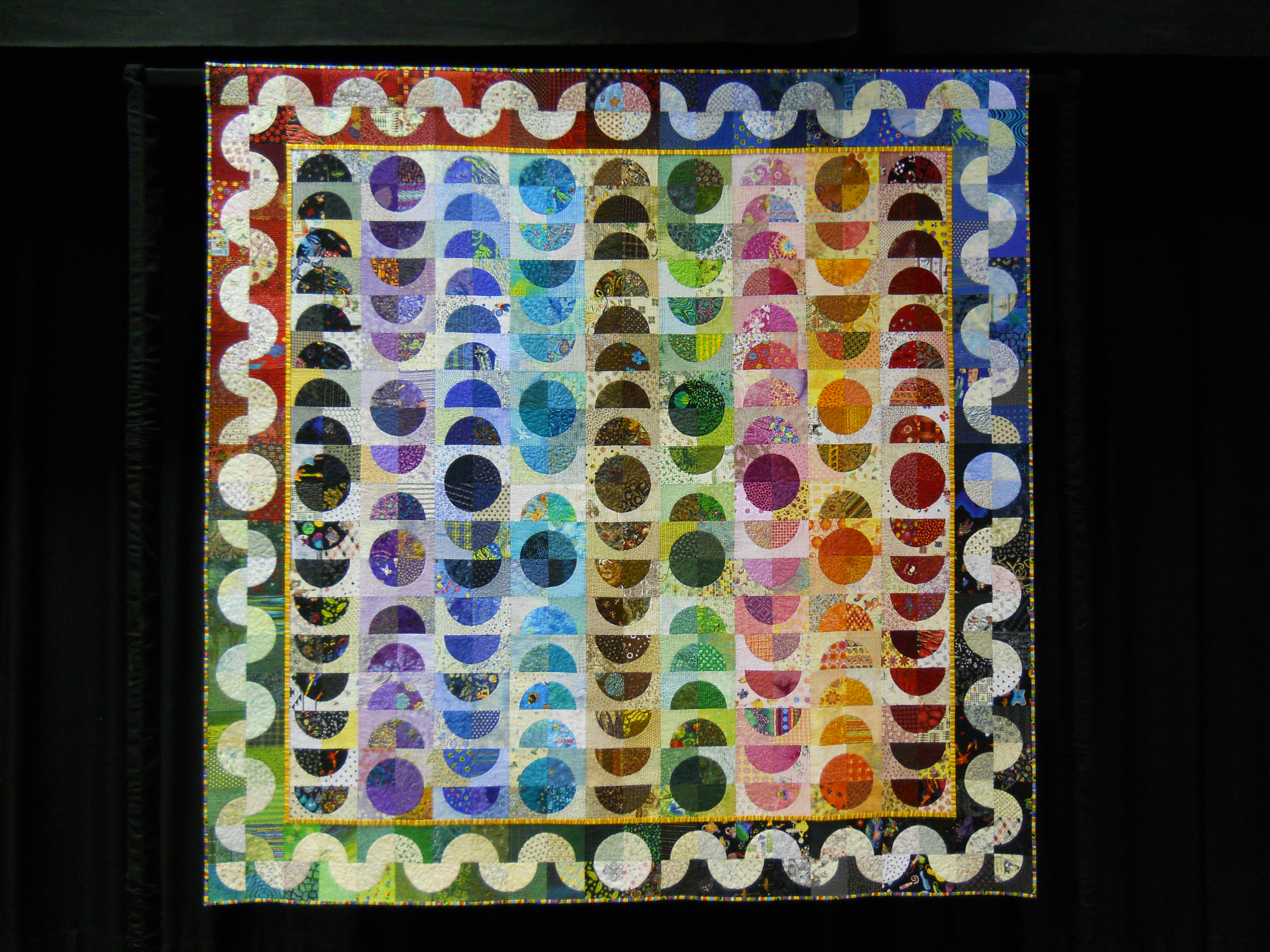
I love making circles and Drunkard’s Path units!  My 3 favorite quilts so far are:
Connie Brown quilter

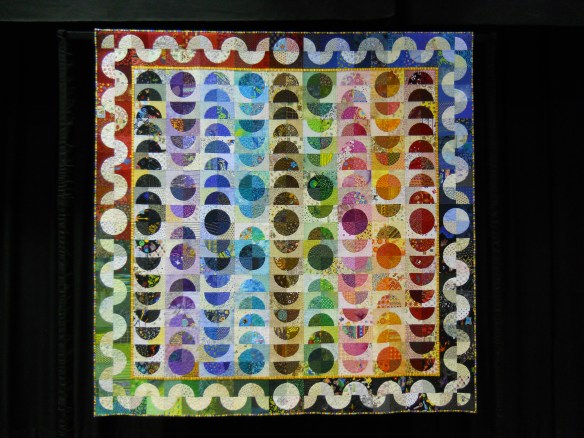
Color Cascade

“Color Cascade aka Prints Charming”  includes more than 500 scraps.  The pattern for this quilt is in the September 2012 issue of American Quilter Magazine.  This is machine pieced and machine quilted.

Connie Brown quilt“V-Spot Target Attack” is also made entirely by machine.

Finally, “Tiffilippa” was inspired by a Tiffany lampshade.  I couldn’t throw away the trimmed off “waste”, so I used it as a border.

How much time do you spend quilting?  How do you have time to quilt, participate in guilds, keep bees, substitute teach, and still eat and sleep?

Every day I do something quilt related, whether it’s making quilts, studying, visiting an exhibit, or writing appraisals.  I always carry something to work on in my down time when I substitute teach.

How far do you travel with your quilt activities?  And what do you have coming up?

I’ll be at the Folk Art Center (on the Blue Ridge Parkway near Asheville) for National Quilting Day (March 19, 2016).  I’ll be hosting a quilt sharing day with an exhibition of 4 or 5 antique quilts, and people are invited to bring older quilts they have questions about.  I won’t be doing appraisals that day, but it’s a free event and a good opportunity for people who may have quilts they wonder about.  It can help them decide whether the quilt needs a formal appraisal.

This year I will be offering appraisals at the AQS shows in Paducah and Chattanooga as well as in Mt. Pleasant, South Carolina during the Cobblestone Quilt Show.  My fees for written appraisals are $75 per quilt, but during these events the charge is $50 per quilt. Each appraisal takes a minimum of 2 hours, including meeting with the client, travel, research and preparation, and typing the report.

To see more of Connie’s quilts, visit her webpage at southernhighlandguild.org/conniebrown

You may email Connie at mail2thebrowns@juno.com
2015 Finishes: Part I


Ronald McDonald House is the chosen recipient of donation quilts from one of my groups, and EACH of us made 12 quilts for that cause this year.  I finished the last 2 this month (yes, a LITTLE behind!).

These are a good illustration of why a dark border is a good idea to make a quilt feel “finished”.  I’ll try to remember that next year!

And here are the other 10 donation quilt finishes for the year.  I love how different they are! I got to try lots of new things 🙂

More finishes coming soon!

Sandi Suggs: Finding Her Way to Modern

Sandi’s work was featured in a special display at AQS-Chattanooga, and I was lucky enough to get to interview her. I took some pictures, and if you want to see more of her work, check the links at the bottom of this post.

modern quilt, Sandi Suggs

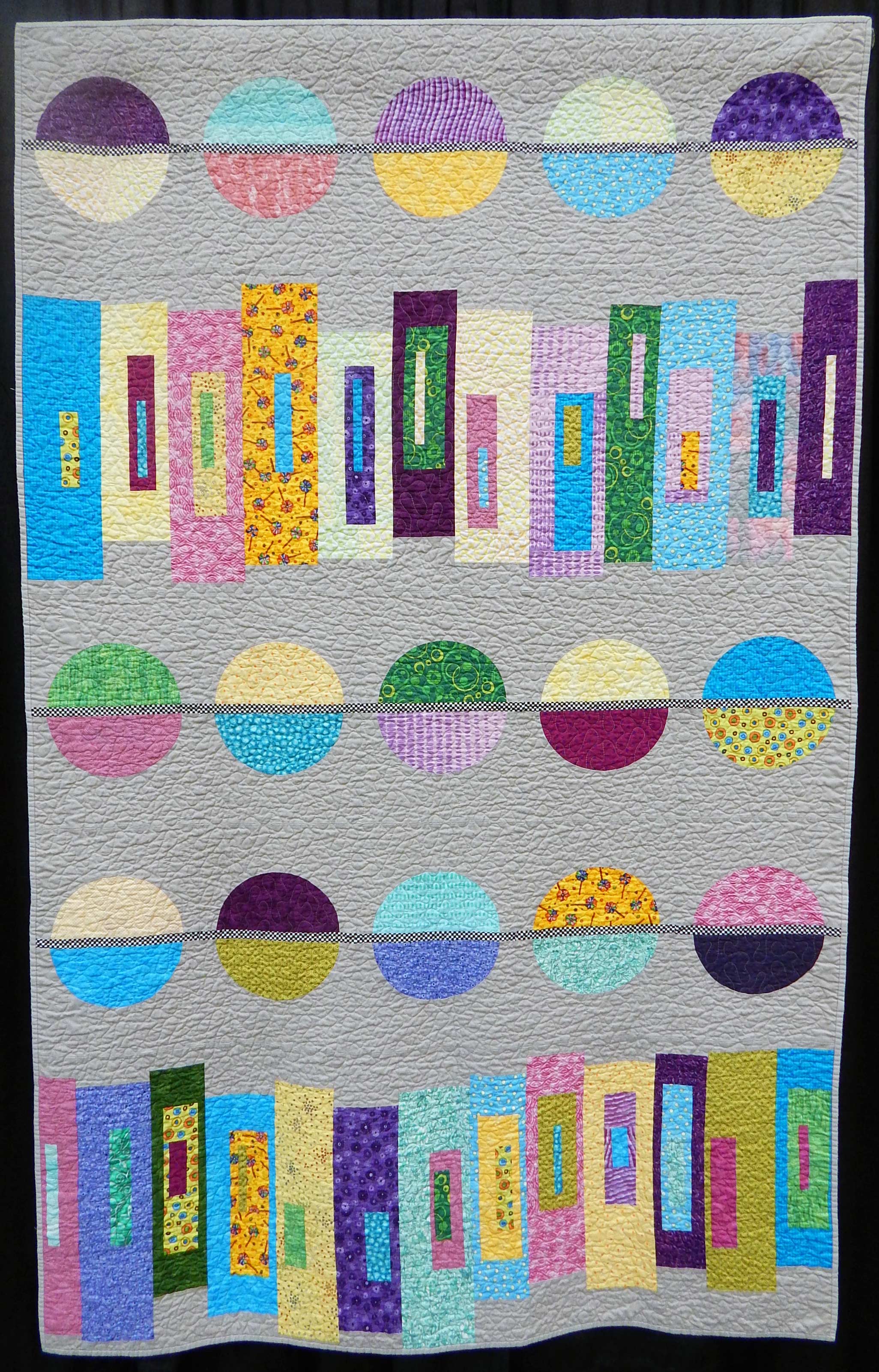
Sandi designed this nontraditional arrangement of split 9-patch blocks

While I was waiting to interview Sandi, I heard her tell someone, “Any time I make a quilt, I do it to learn something.” My sentiments exactly!

modern quilt, Sandi Suggs

Sandi made this quilt from a pattern, adding modern colors to the design

Sandi started quilting over 25 years ago, using cereal box templates because rotary cutters weren’t yet used for quilting. She still uses templates when appropriate, but a lot of things have changed!  For one thing, she now uses freezer paper when she needs templates so she can cut several layers of fabric at once.

Quilt as You Go quilt

Sandi designed and made this quilt using her own quilt-as-you-go technique

Sandi teaches several classes, including her own version of Quilt As You Go. (I’m going to keep an eye on her website because I’d like to take that class if she teaches it anywhere near me 🙂 )

The AQS exhibit included both quilts Sandi designed herself and quilts she has made from designs by others.  This was a round robin quilt; Sandi made the final arrangement of sections and did the quilting:

modern quilt

Round Robin quilt by Sandi Suggs and friends.  Look at Sandi’s quilting!

A couple of hints from Sandi: she likes to use the multi-stitch zigzag (stitch #4 on Bernina machines) in her quilting.  She starches all her fabrics before cutting to make them smoother and less likely to fray.  She says starching also equalizes the weight of the various fabrics.  She likes to wash her quilts after they are finished to achieve a crinkly look that emphasizes the quilting.

Sandi Suggs modern quilt

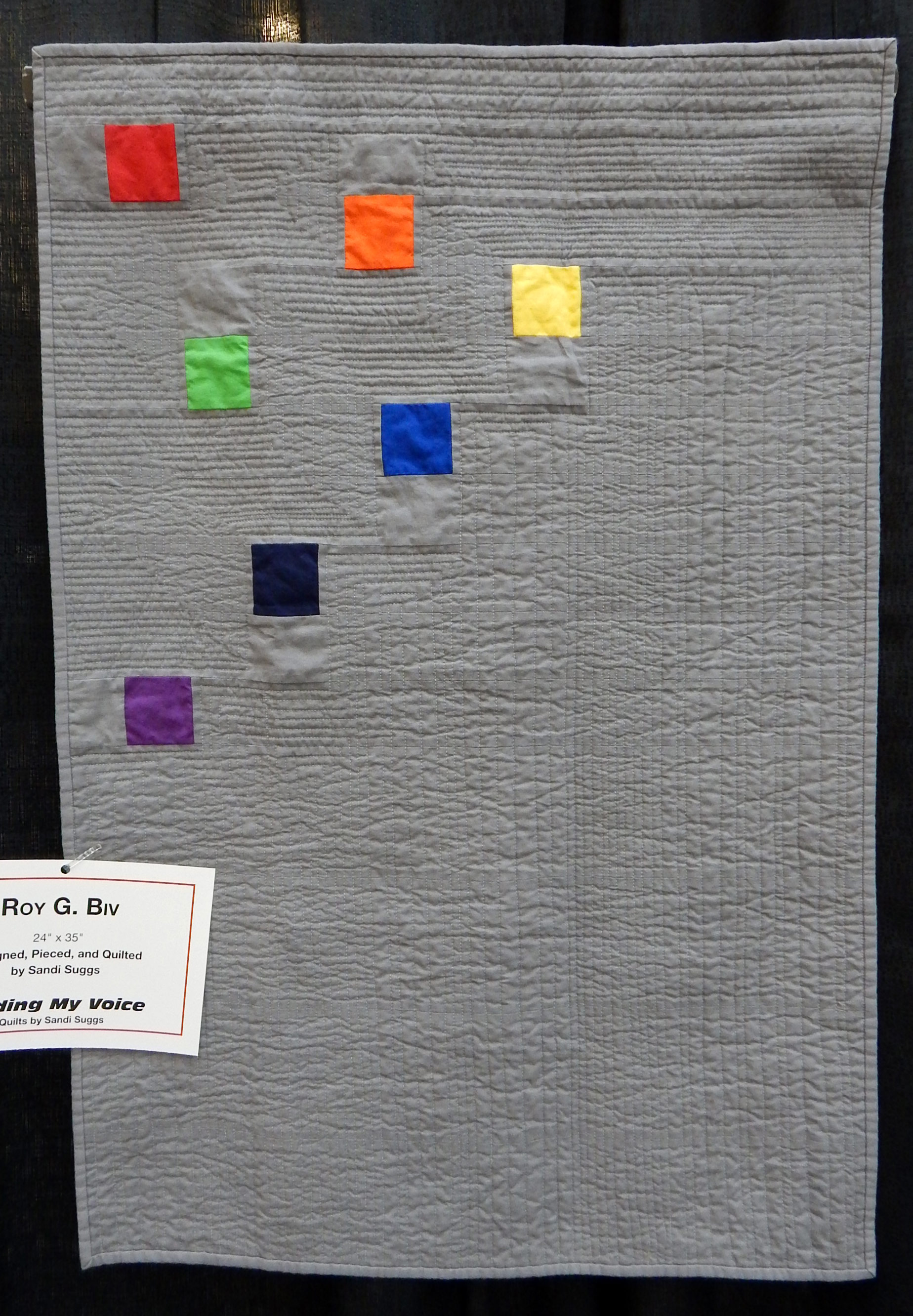
Sandi does her own quilting on her home machine. This quilt is called “Roy G. Biv”

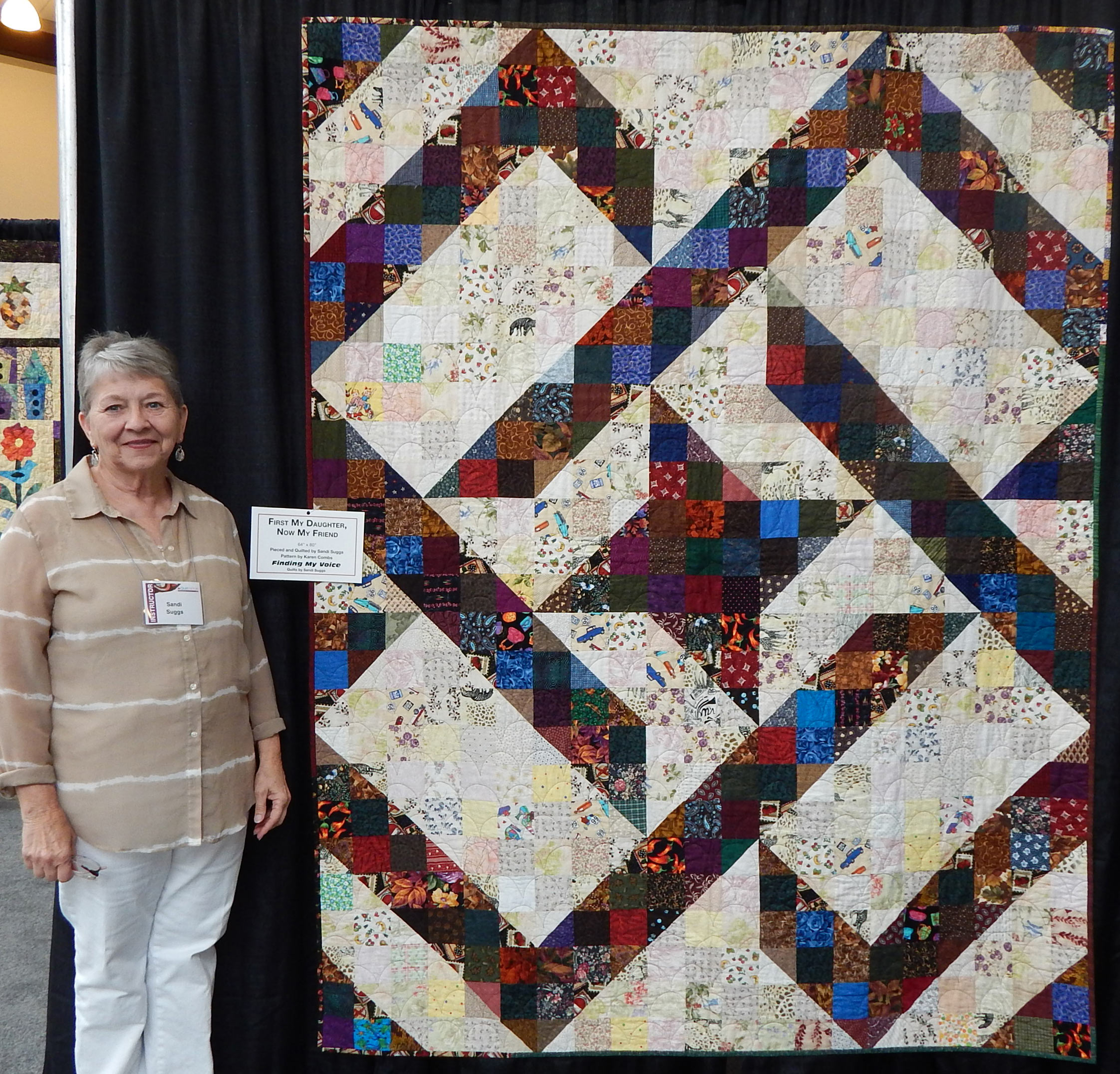
Sandi also has her own way to successfully select fabrics for a mystery quilt!  I’ve only done one mystery quilt and was unhappy with the result, so I asked her about it.  She showed the quilt below, designed by Weeks Ringle and Bill Kerr as a mystery quilt, and told me how she selected her fabrics.

Sandy Suggs

Mystery quilt designed by Weeks Ringle and Bill Kerr demonstrates Sandi’s successful fabric selection

Sandi looked at the fabric requirements for the quilt and figured the largest fabric requirement was for the background.  Once she had chosen gray for the background, she decided she would need bright fabrics to contrast with it.  I think her decisions were very successful!

You can find Sandi’s blog at: www.FrogPondStudio.blogspot.com

She has many more pictures of her quilts there, including these five posts that show all her quilts from the AQS exhibit:

Finding My Voice

Finding My Voice, Two

Finding My Voice, Three

Finding My Voice, Four

Finding My Voice, Final


Happy Squares

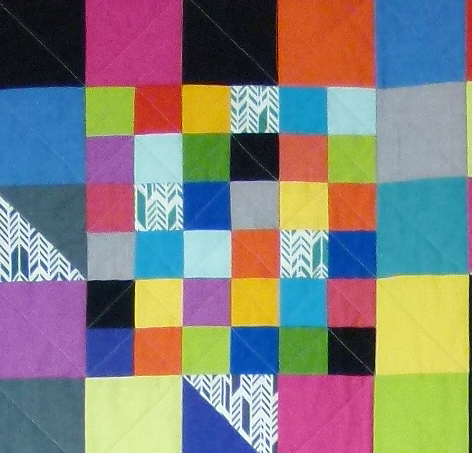
This quilt was what I designed when I got bundles of two of my favorite collections a while back: Alissa Haight Carlton’s Modern Solids (sadly, they seem to be no longer available) and Allison Glass’s feather-like prints.
modern quilt

Happy Squares

I started with 9-patch blocks composed of 3 inch (finished) squares.  Of course I couldn’t stand to make all the blocks alike. I made some half-square triangle patches to add to the 9-patch blocks. Then I made some big 4-patch blocks from 4-1/2 inch (finished) squares so that they finished the same size as the 9-patch blocks.modern patchwork Finally, I made some 36-patch blocks from 1-1/2 inch (finished) squares to finish the same size as all the other blocks.Happy-36-patch

When it came to laying the blocks out, I separated some of the 9-patch blocks to fit the 4-patch and 36-patch blocks in at interesting places.  Finally, I inserted a 1/4″ strip before adding the last row of squares on each side to make a sort of border.modern quiltI did the quilting freehand on my home machine.  This means I did not mark the diagonals but sewed “sort of” straight from corner to corner in the squares.  I like the less-rigid feel of this technique, but it’s a good example of why it may be unwise to enter modern quilts in traditional quilt shows.  Here again, if I wanted machine-like accuracy I could hire someone to do this on a longarm or even have a machine-generated pantograph design.  In fact, I like both those techniques for some things, but I didn’t want my “happy” quilt to be too-precisely quilted.

This is bright and cheerful, so I’m calling it “Happy Squares”.  What have you been up to?

3 Little Soapboxes

Here are 3 topics on which I just couldn’t hold back:

1. Competitive quilter?!?! I don’t think so!  I took a great class with a noted quilter about two years ago and was stunned when she referred to herself as a “competitive quilter”.  I’ve always thought of quilting as the ultimate cooperative endeavor, with women working together in quilting bees and quilt guilds, sharing both their work and their lives. It was discouraging to hear that many quilters find out who the judge will be at a major show and then make a quilt specifically to please that judge.  I do understand that many people make all or part of their income from quilting, and that big wins can bring in both fame and fortune.  I’m still shocked that some people quilt for other people rather than for their own artistic expression.  Just call me grumpy.

free motion quilting

Some practice quilting–love that shiny thread!

2. I don’t want to become a machine. I’ve written before about what works and doesn’t work for me in terms of learning to quilt on my domestic sewing machine.  It finally occurred to me when I was working to get all my loops exactly the same that a pantograph (all-over) design on a longarm machine could do exactly the same thing with a fraction of the effort. HUH.

So, from now on I’m going to limit my efforts on the domestic machine to small items that are easier to do than to send out, and to quilts that really require custom quilting for some reason.  And I’m going to quit trying to “perfect” my loops, stitches, etc.

I figure I could have every quilt I’ll make for the rest of my life quilted for what it would cost me in time and money to buy, house, and learn to use a longarm machine.

I recently met a woman who says she will have her longarm paid for after 40 quilts. But she was accounting for only the cost of the machine, not her time in learning to use it, her time doing the quilting, or the cost of finding a place to set it up.  Seems to work for her and for many others, but I think it’s not for me.  I’ll hire one of them to do my longarm work!

free motion quilting

More practice quilting, more shiny thread

3. Chutzpah and modern quilting.  I’m not big on a definition of modern quilting. “I know it when I see it” works for me.  But in looking at many blogs and websites, it appears to me that it’s modern quilting if you say it is.  I’ve seen very traditional designs done in modern fabric and called “modern”. So I  if I use traditional fabric but with asymmetric design or lots of negative space or one of those other “hallmarks” of modern quilting, that would be a modern quilt, too!  Looks to me like modern quilting is a lot like all other art: 80% chutzpah.  Fine by me. Don’t tell me my design isn’t modern and I won’t tell you that yours isn’t either.  We get to define ourselves.  Enough said.

Have a good week!

One final sample...

One final sample…not perfect and not meant to be since I’m not a machine

One Quilt, Two Lessons

Check out these fabrics!

Fat quarter bundle

Alison Glass Handprint fabric and neutral linen

A friend gave me the FQ (fat quarter) bundle of lovely Alison Glass handprint fabric and I combined it with a neutral linen fabric I’d been saving for something special. I started with Karla Alexander’s instructions for a quilt, but (as my friends all know) I never really follow instructions so it diverged…improvised modern quilt blocks

The blocks were lots of fun to make.  I followed the instructions for a while, then started cutting the blocks up and inserting strips.  Then decided NOT to trim all the blocks to one size.  I adjusted the sizes of the linen sashing so that all the rows came out the same length, and made the rows of different heights to allow for the different block sizes.

And I slashed the sashing and inserted some strips in that, too.

When I had the top all made, I basted it with spray basting as usual.  BUT I didn’t have enough of the first can.  Then the SECOND can was a different brand and almost empty as well!

Determined to get the doggone thing basted, I resorted to some spray-on stuff that was supposed to bond the fabric to the batting when I ironed it.  This last stuff left SPOTS on the handprint fabric, which is light weight (almost like voile).  YIKES!

Lesson 1:  Be patient until you can get to the store for a can of basting spray.

Finally (after buying basting spray) it was basted and I started quilting.  Enter Lesson 2: this linen is a loose weave of large fibers and doesn’t play well with a tight weave of small fibers. YIKES AGAIN!  No matter how I changed the pressure on the quilting foot or otherwise fiddled with it, the quilting distorted the top and the backing.

improvised modern quilt

The finished quilt

Now it’s finished and I like it.  I appreciate the texture of the linen, but I’m not sure I’ll use it again.  I took this to my last modern guild meeting and people were positive about it, but one of the more experience sewists told me linen is usually stretchy, so at least it’s not just me!

improvisational quilting

Here’s the quilt back–that column was straight when I started!

Well, I try to learn something new every day, so I’m calling this a SUCCESS! 😉


Year End Review

For better or worse, I published goals at the beginning of the year, so here’s the review of my progress:
I met all the goals! (Does that mean I didn’t set them high enough?) I retreated with my buddies THREE times instead of just two! I attended 3 big national shows as well as 2 local ones (all were excellent). I took a couple of fun and useful classes, one of which I still need to write up here so you’ll know about it. I submitted several quilts to shows/contests and 3 were accepted. The one I donated to the Quilt Alliance even won something, and sold for $300 to benefit the Quilt Alliance!  And I had lots of fun, which was really the point of it all.

Here are pictures of a few of my projects from the second half of the year. The pix of projects from the first half of the year are in this post.

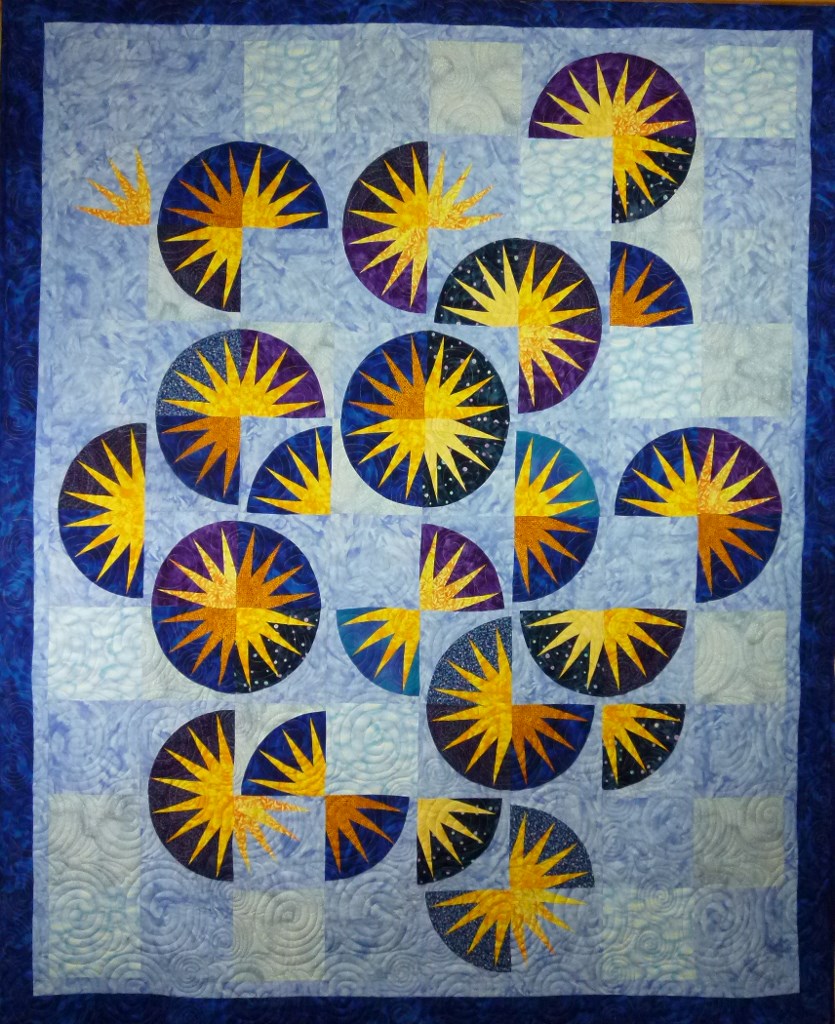
Spring Sun, a design by me, using blocks paper pieced from a totally different Judy Niemeyer pattern!

Spring Sun, a design by me, using blocks paper pieced from a totally different Judy Niemeyer pattern!  It took about 2 years, but it’s now DONE.

quilt photo

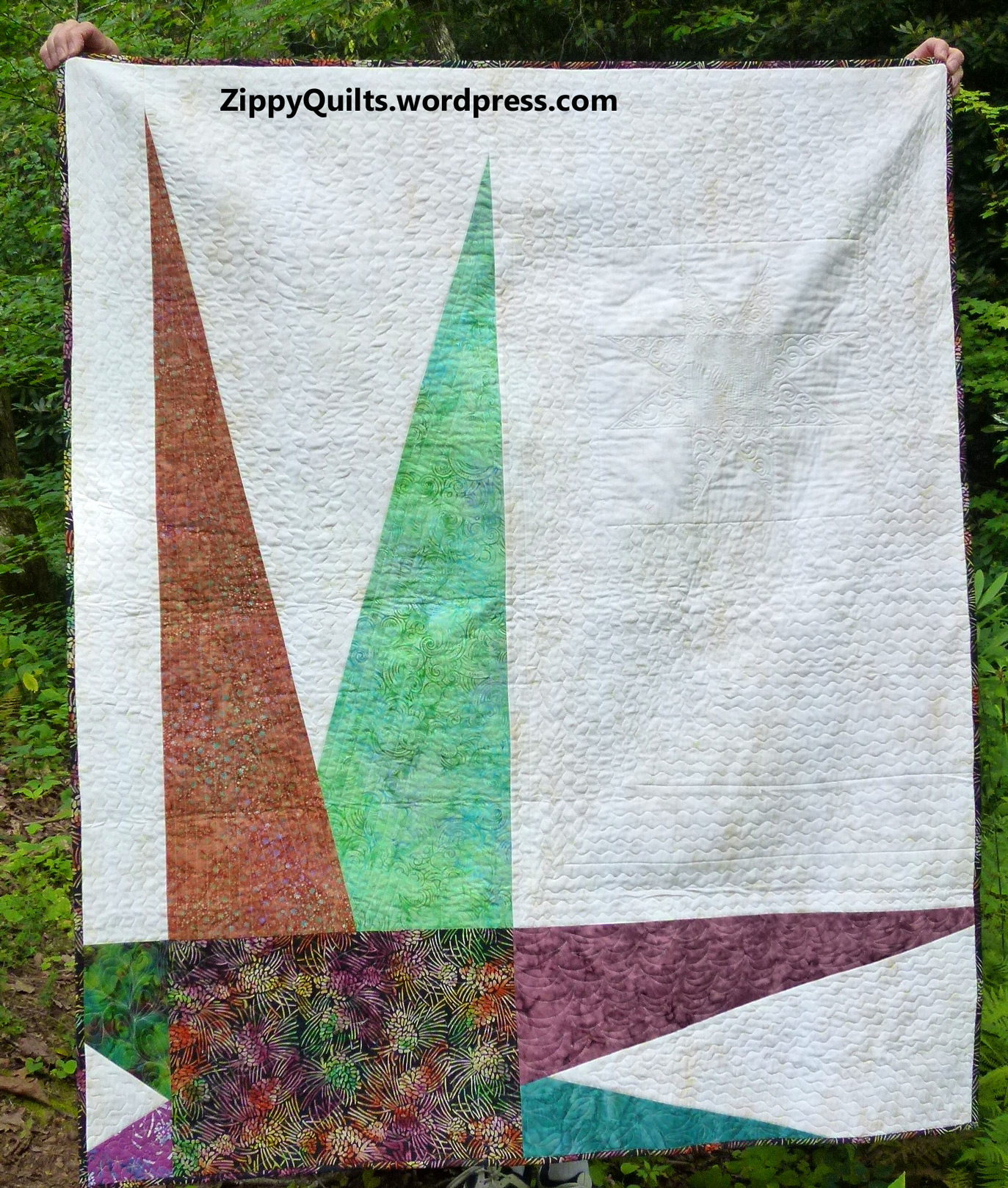
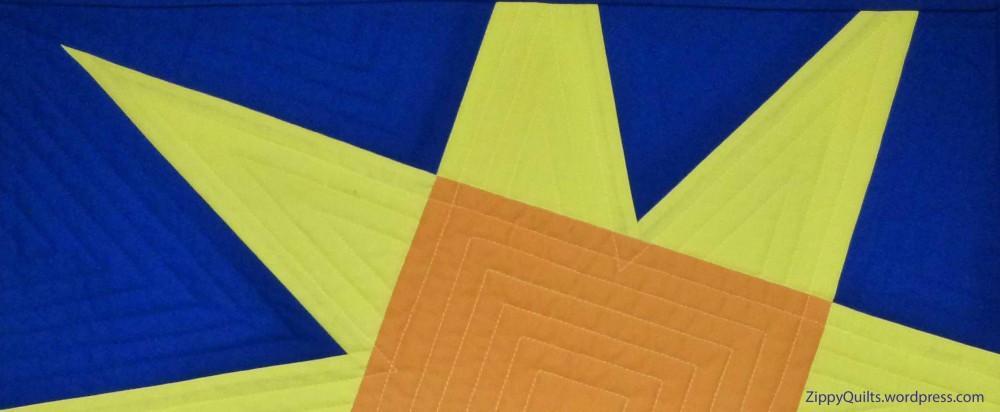
Zippy Star Quilt and Pillow as shown in Modern Quilts Unlimited, Summer 2014

Michael Miller challenge quilt

Packet of Posy Seeds, done for the Michael Miller spring challenge

modern quilt

Zippy Star I, which sold at the Asheville Quilt Show in September.  This was my “practice piece” for the MQU quilt shown above.

Improvisational quilt

Donation quilt for Ronald McDonald House.  I’m going to work more on using up orphan blocks next year.

And, despite the risk, here’s what I plan for the coming year:

1.  I’ll retreat with my buddies at least twice, probably 3 times again!

2.  I’ll attend one big national quilt show, maybe two.  I’ll attend at least one local show.

3.  I will limit much more strictly the shows and challenges I enter.  It takes too much time and effort that could be spent on making what I want to make 🙂

4.  I’ll continue to make donation quilts, including one for the Quilt Alliance.  Please consider making one for the Quilt Alliance yourself.  You can read about their mission here.  Click on “2015 Quilt Contest” to learn about this year’s challenge.

5.  I’ll continue my blog, and I think I’ll put up instructions for a few easy donation quilts just in case somebody is looking for ideas.

What’s coming up for you?