The Top 10 Reasons Some Quilters Choose to Exercise

This IS a blog about quilting, but it IS January, so here goes…Quilt-1

10. Strength training means you can carry more bolts during sales.  In fact, a good sale COUNTS as your weight lifting for the day!

9. Pilates improves core strength, so you can stand over a cutting table for hours.

8. The safety pins used to fasten your race number to your shirt are the perfect size to use for basting (true story!)Quilt-3

7. Stretching makes you flexible!  Streeeeeeetch to reach the ironing board from your sewing machine, etc.

6. Stamina! Make at least 5 quilts in a single retreat!

5. Save money by wearing the same size clothes every year–and spend that money on fabric!Exer-1

4. Agility training helps you slither through crowds to see the demonstration or grab the notions when they go on sale.

3. Yoga improves concentration, allowing you to focus on quilting when those pesky kids whine for supper 😉

2. Burn more calories. We all know we MUST have chocolateClip Art Illustration of a Chocolate Valentine Heart with Truffl to quilt, and exercise burns any leftover calories!

1. If you race walk, you get to really WIGGLE YOUR HIPS—good no matter what your gender, age, or lifestyle!

NEXT WEEK–my latest project to use stash–this time I used fat quarters.

5 Silly Things I Won’t Do Again Next Year…

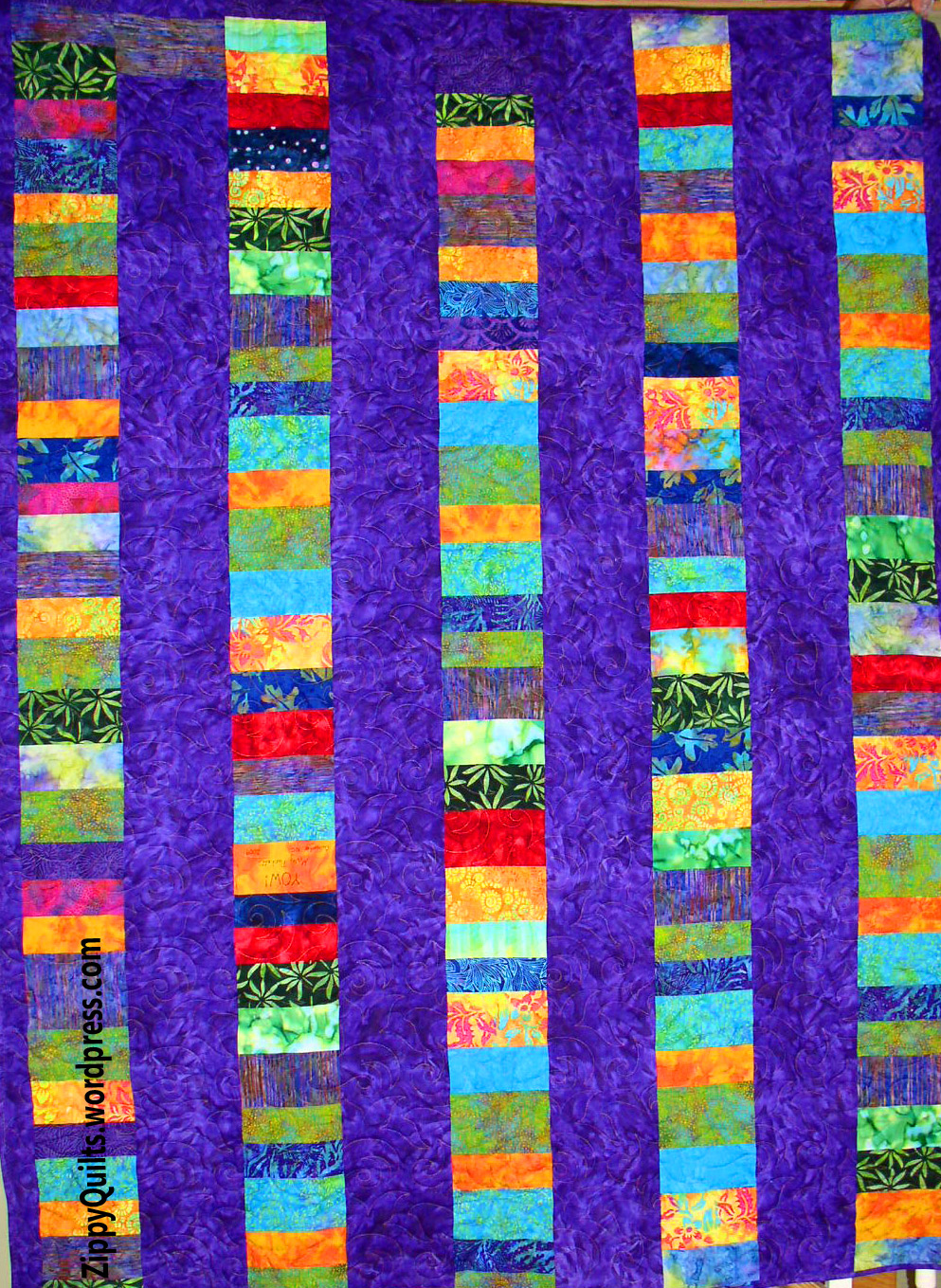
batik quilt back

This is the back of one of my bright batik quilts–it was fun!

‘Tis the season to make resolutions, and I’m not big on those, but there are a few things I don’t plan to repeat. And to go with the list, a few of my quilts.

1.  I won’t put a cup of hot coffee on my cutting mat.  Turns out that little sucker is VERY heat sensitive and warps locally just from having a cup of coffee on it for a few minutes!  Of course I knew not to leave it in a hot car, but I really didn’t think the bottom of a coffee cup got that hot.

2.  I won’t drink red wine while free-motion quilting (FMQ).  Yes, wine does help with FMQ, but white would be easier to get out of fabric 😉

3.  I won’t “wait until later” when I see a really

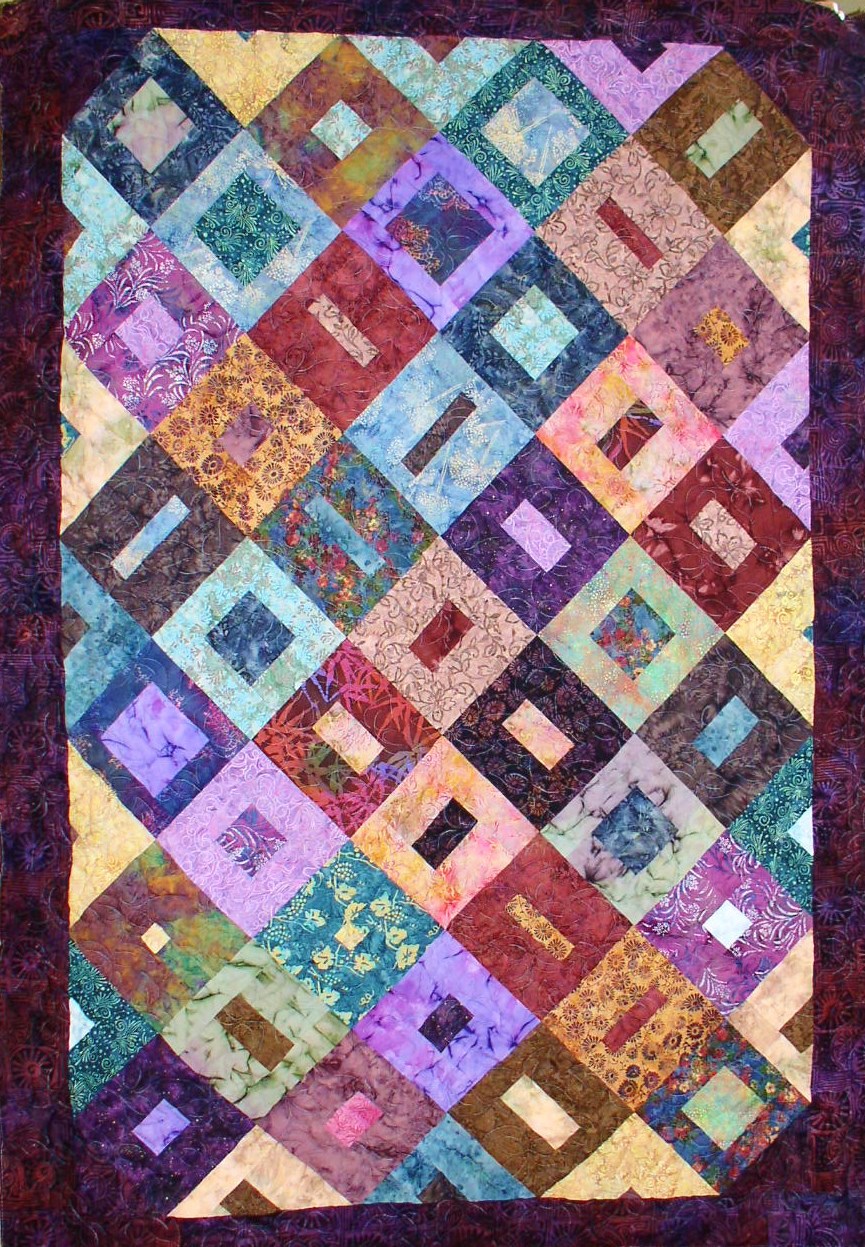
batik quilt

Another batik quilt! I love batiks and straightforward designs.

terrific fabric I “need”.  It can be WAY too difficult to find it again, let alone to find the coordinates to go with it.

4.  I won’t assume a marker will come out of my fabric just because the manufacturer says it will.  The manufacturer also said to “test on an inconspicuous area” before using, and that WOULD have been a good idea!

5.  I won’t set the piecing foot from my machine in a box of binding clips when I need a safe place for it “just for a few minutes” while I use another foot!  That foot walked off with the binding clips and was lost for 2 weeks.

And of course, there are a few things I will plan to repeat:

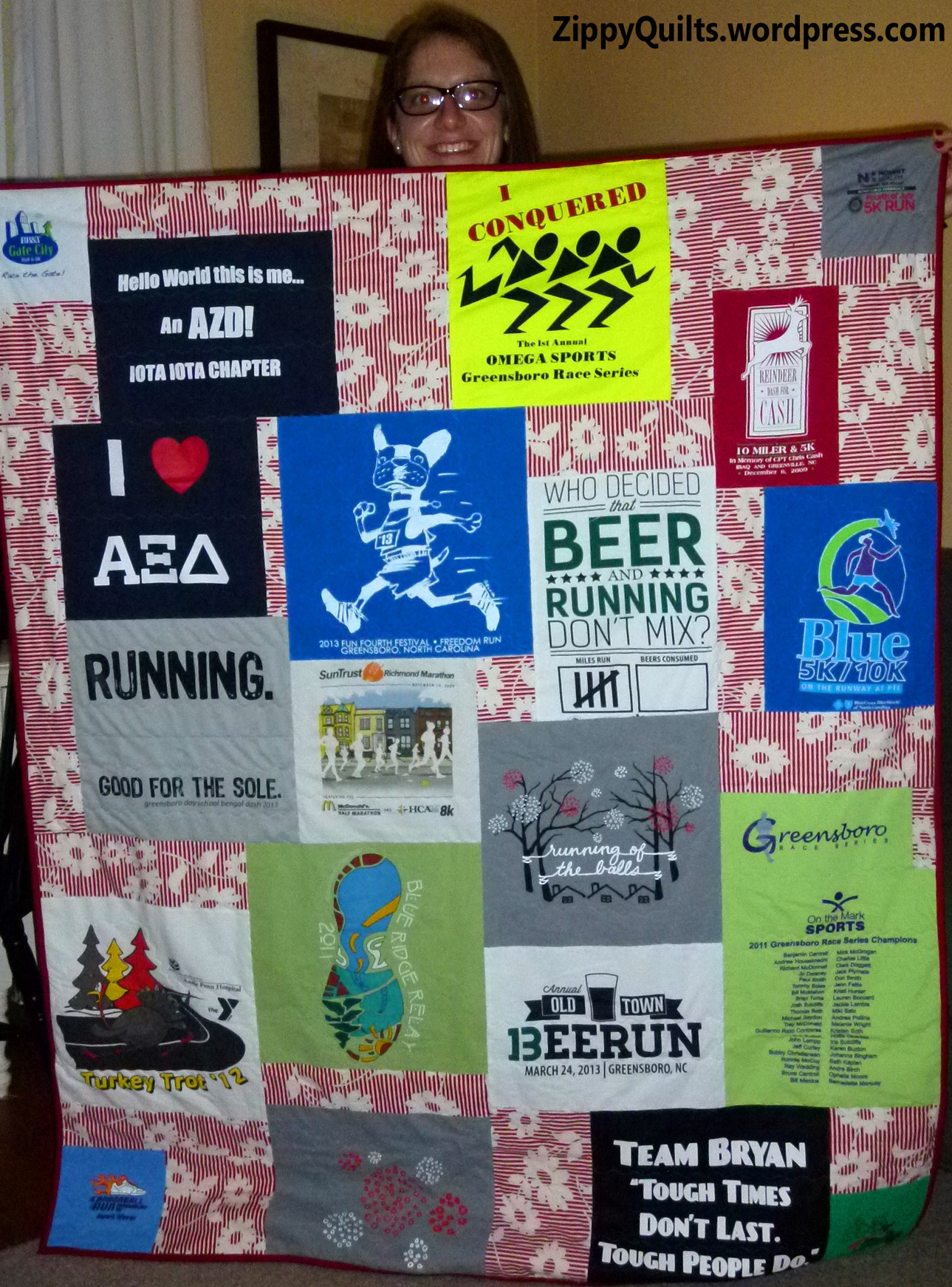
T shirt quilt

A T shirt quilt for a friend

1.  I’m going on retreat with my best quilty friends.  At least twice next year.

2.  I’m going to at least one big national quilt show.

3.  I’m going to submit at least four of my quilts to shows or contests.

4.  I’m going to take at least one workshop to learn a new technique or get some new ideas.

5.  I’m going to have lots of fun.  I hope you are too!  Happy new year!

baby quilt

A very important baby quilt!

Do You Need to De-stash?

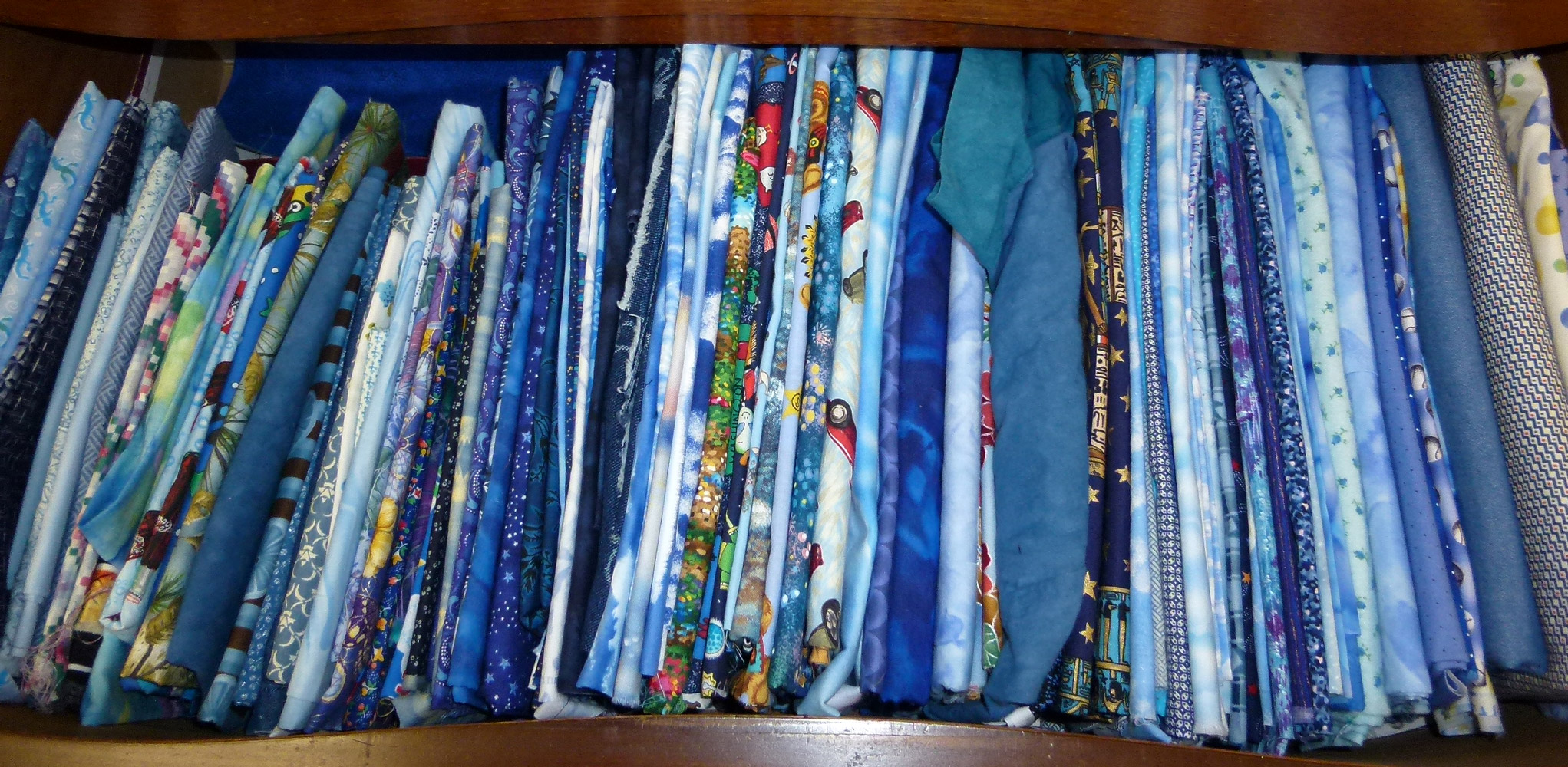
Most of us build our stashes like a king hoarding treasure.  Look!  I have a whole drawer

pile of fabric

Stash overrun

(shelf, bathtub) of blue fabric!!  And here’s a sale on solids so I can have a whole shelf of those!!!  If you’ve been quilting long, you KNOW what I mean!

Unfortunately, stash can be like so many other possessions:

When you buy something, you may own it, but FOR SURE IT OWNS YOU.

And mind you, this stash habit is not unique to quilters!  I know people who have LOTS of wood, stamps, antiques, beads, beanie babies (true story), candlesticks, tools, marbles, books, you name it.  Some of these people ALSO have lots of fabric 🙂

But you may have too much fabric if—

  • You have to move a pile of it to make room to start a project
  • You have to find places for some of it outside your studio (in the guest room bathtub, in the tip-top kitchen cabinets, on shelves in the garage…)
  • You have more yards of fabric than you have days of remaining life expectancy
  • And (most important), you have decided that you MUST put a moratorium on fabric purchases (oh, woe!)

SO:  What to do?

Here are a few ways to deal with a big stash (and my friends and I have used them all):

  • Trade with friends.  For example, you bring a big stack of fabric you MIGHT be able
    onesie and t shirt with iron-on ties

    Make iron-on ties for t shirts and onesies from your stash

    to part with to your next quilting bee (retreat, guild meeting, whatever) to swap for things other people bring.

  • Make donation quilts.
  • Make pillowcases to give with your donation quilts
  • Make pillowcases to donate to the One Million Pillowcase Challenge
  • Make quilts or pillowcases for every family member you’re still speaking to (EXCEPT for the one who put the last quilt outside in the dog house to keep the dog warm!)
  • Apron

    Apron, though not the one I’ve linked to

    Make blocks and use them in the orphan block projects I blogged about recently here

  • Make gift bags in ALL sizes!  Yes!  No more wrapping paper!
  • Make tote bags for your friends and for yourself—no more plastic grocery bags to get rid of!
  • Make pot holders (use Insulbright)
  • Instructions HERE for making an iron caddy (for when you need to transport a warm iron home from a workshop)
  • Instructions HERE for making an easy one-yard apron (think hostess gift!)

    table runner

    Table runner made from a strip of leftovers

  • Make placemats and table runners as hostess gifts (lots of commercial patterns and free instructions available on the internet)
  • Keep reading this blog–more ideas coming up!
  • You can even donate fabric to organizations that make pillows for chemotherapy patients, Quilts of Valor, etc, etc

There are MANY more fine possibilities!  Please leave your suggestions in the comments for others to enjoy!

Happy quilting!

10 Reasons to Have a Good Stash

Fabrics in storage cabinet

Inside one storage cabinet–lots of stash!

We often read that a quilter’s stash of fabric has expanded past the bounds of the studio, taking over kitchen cabinets, the linen closet, and even bins in the garage.  (We ALREADY KNEW stash was stored under the beds.)  Next week I’m going to discuss the possible need to get rid of some stash, but for now I’m listing 10 good reasons to have plenty of available fabric.

  1. Stash saves trips to the store.  Often you need “just a little” fabric to finish a project.  Pulling from your stash rather than making a trip to the store saves both time and money.
  2. Binding:  If you live at a distance from shopping, stash may be a necessity.  I live an hour from the nearest quilt shop and depend on my stash to provide binding fabric for most of my quilts.

    fabric stash

    The solids drawer; one of the batik drawers

  3. Comfort quilts:  Many guilds ask each member to make a single block for a “comfort quilt” to be given to a sick guild member.  If you can pull from stash for this, you can get it done quickly and turned in on time.

    Drawers, fabric

    Fabric in storage drawers

  4. Audition options:  You may decide to add sashing or borders to a set of blocks, and having several fabric options available allows you to lay the blocks out and “try” various fabrics, then get started at once when you find the right one.

    nickel squares in bins

    5 inch squares–two bins!

  5. Instant gratification:  If you have adequate stash, you can start IMMEDIATELY on the wonderful quilt in the magazine that came today!  I’ve done this more than once, pulling all I need for a project from my stash, and it’s VERY satisfying!
  6. Last minute projects:  Who hasn’t been faced with a baby shower, housewarming, or other occasion with little time to make the appropriate gift?  Having the fabric you need on hand can give you a good head start.
  7. Thrift:  By purchasing fabric when it’s on sale and keeping it on hand, you can minimize the amount of full-priced fabric needed for a project.

    Blue fabric

    The blue drawer! But not even close to all the blue fabric…

  8. Try-outs:  Stash can be used to test a block pattern before deciding whether to buy fabric for a whole quilt.
  9. Backing:  Stash can be used to piece the back for a quilt, incorporating scraps or extra blocks from the front.  This provides more visual interest than one large piece of backing fabric.

    Closet fabric storage

    And a closet full of projects, and fabric, and…

  10. Usefulness and beauty:  “Have nothing in your house that you do not know to be useful, or believe to be beautiful.”  ― William Morris     We have lots of stash because fabric is beautiful as well as useful.

Auction!

Remember that quilt I made to donate to the Alliance for American Quilts “TWENTY” contest?  If not, you can see a section of it as the header for my blog, and you can read about it here.Rising Star for Web

In any case, the time has come!  The TWENTY entries have travelled to shows around the country and are now up for auction on eBay.  The group that includes my quilt will be auctioned starting at 9:00 EST (U.S.) tomorrow night.

I’ve been happy to learn about the Quilt Alliance over the past few months.  I originally donated a quilt because I liked the idea of the TWENTY challenge and I’m always donating quilts to various causes—who isn’t?  However, I’ve since learned that the Alliance has several missions I’m especially happy to support:

  • They promote awareness of quilting as a grassroots American art form
  • They document quilts so their stories aren’t lost, and encourage all quilters to document their work
  • They make their information available to the public through various forums, including an association with The University of Texas at Austin (where I went to school)

The Quilt Alliance has numerous projects to further their goals, and their staff are some of the nicest people I’ve encountered.  They have a fun blog that presents quilts from various periods in history, and you can subscribe by e-mail so you get to see different quilts from their records.

Check out the Quilt Alliance website and then check out the Ebay auction.  You may become a Quilt Alliance fan, too!

Oh, yes, and bid on the quilts.  Most of them are by people a lot more famous than I am  😉  You might enjoy going to the Ebay site just to look at the quilts!

3 Great Holiday Hints

 Feel free to share this post with anyone who may want to give you a gift! 😉

Here are my Top 3 Gadgets of the moment.  You may need them, too!

  1. Oil pen.
    oil pen

    Oil pen

    This handy little oiler has a long, thin tip at one end and a pushbutton at the other, making it possible to dispense just one drop of machine oil in the tight recesses of your machine!  It comes with a secure screw-on cap so you can even carry it around in your pocket like a pen if you want to.  So far mine has never leaked when I’ve thrown it in my gadget bag for workshops and retreats.  My sweetie got mine on Amazon HERE, though there certainly there may be other sources.

  2. Mini vacuum attachments.
    miniature attachments

    Miniature attachments allow use of a standard vacuum cleaner to clean your machine

    My husband got these for me at a big box home and hardware store, but I’ve seen them at quilt shows, too.  The price varies wildly for what appears to be the same set of attachments, so I say shop around and pay less than $10.  These are especially useful for cleaning a serger because a serger gets so messy so fast, but I use them happily on my regular sewing machine, too.  Just attach the adapter to your regular vacuum cleaner and the little attachments clean those hard-to-reach areas of either machine.  I could still use an even smaller tip, but it’s a big improvement over using only a cleaning brush with no suction.

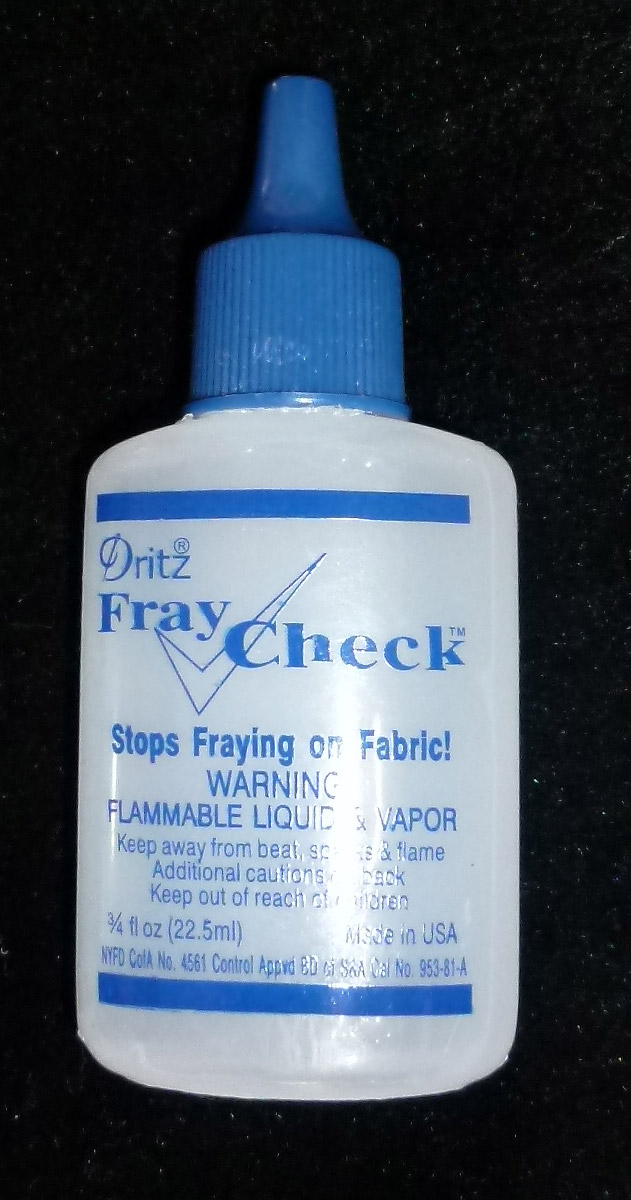
  3. Fray checkFray-Chek Well, it isn’t exactly a tool, but it has many uses this time of year 🙂   I apply it to ribbon ends so they won’t fray and outline my iron-on applique with it before I sew around the edge.  I don’t do a lot of iron-on applique on things that will be washed, but this makes me feel a little more secure when I do. And shown below IS the latest iron-on applique, which I’m showing just for fun.  I made the onesie tie with a tutorial from a blog called Crap I’ve Made. I love it!  Then I made a pattern from one of my husband’s ties and made a grownup-size T shirt for the Father of the child, so they can match!onesie and t shirt with iron-on ties

So:  go drop a few hints!

Orphan Blocks and Scraps

You can make a great quilt from nothing but leftovers–orphan blocks and scraps!  Of course there are a lot of ways to do this, but here’s an easy one to get you started on both using scraps and trying out improvisational quilting.

Orphan blocks:  Go through your collection and pick enough, or almost enough, blocks to go along one edge of the quilt.  Pick some with colors that go together and set the color range for your quilt based on these blocks.

Yin Yang quilt blocks

These are all in the same color range, and of course all the same design–a good start for an orphan block quilt!

The blocks can be a “header” for the quilt, or an insert somewhere inside the quilt, or they can go down one side.  Or across the top and down one side.  Or…well, you get the idea! There are lots of ways to use them.  But if you’re new to improvising your own designs, consider making a row of orphan blocks across the top.

Orphan block quilt

Here’s a design I’ve already made, but I can’t show the actual quilt because I’m entering it in a show

The blocks do not all need to be the same size.  Just add strips to them to make them all the same.  A lot of times you’ll have something like two 7″ blocks and three 8″ blocks.  You COULD add 1″ strips to the smaller ones on two sides, but that’s a little tedious.  Better to add 2″ strips on 2 sides of the 8″ blocks and 3″ strips on 2 sides of the 7″ blocks.

quilt block with border

Quilt block with larger border added on 2 sides

quilt block

quilt block with small border added on 2 sides

See, they’re modern blocks already–asymmetry!  Because of adding larger strips, you didn’t have to fool around with tiny pieces, and you get a full row with fewer blocks.  Win-win!

.

.

In the quilt above it was easy to add grass and sky to adjust the size of the blocks.

After getting the blocks arranged on your design board, go to your scrap bins.  Pick out all the scraps in colors that go with your orphan blocks.  Since I save my scraps as strips, I make a stack of each strip size in the colors I’ve chosen, and I’m ready to go.  If you don’t save your scraps as strips, you really should–it’s so handy!  However, you can also cut strips to get you started.

Yes, it’s perfectly acceptable (and fun!) to make an improv quilt from scraps of any size and shape, but it’s easier with strips.  So if this is your first time, cut strips!

Now join those strips into rows, and the rows into sections, and keep going until you have the size quilt you want.  You’ll probably want to square it up after you get the top pieced; a top made of pieces of different sizes rarely comes out even on all sides.

Here’s another idea, assuming I had several leftover leaf blocks:

orphan block and scrap quilt

Leaves and scraps, assuming I had 5 leftover leaf blocks

Now, go for it!
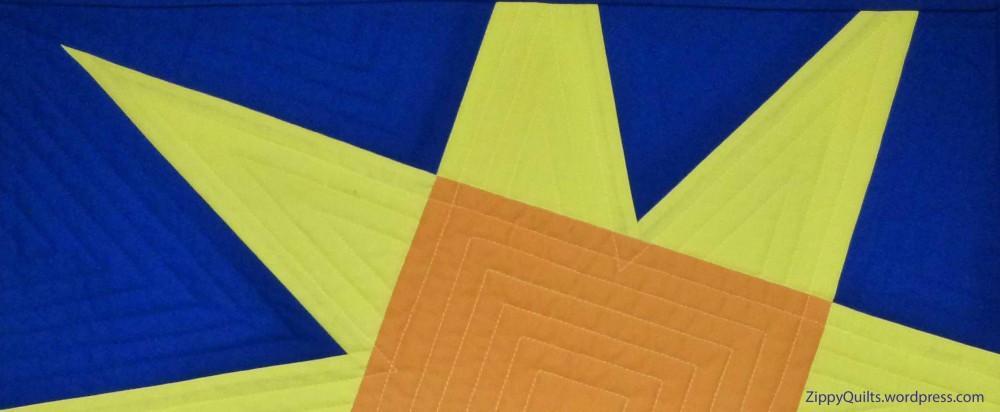
5 Great Uses for Orphan Blocks


Orphan blocks (i.e., those not intended for a particular quilt “home”) JUST INCREASE ON THEIR OWN in the dark places where you store your quilt bits…I learned that I have SEVERAL HUNDRED when I started taking pix for this post.

They come from lots of places:

*The sample blocks you made to try out a new pattern before cutting the fabric for the quilt

*The extra blocks you made so you’d have design choices in a quilt top

*The “found” blocks that just JUMPED ON YOU at a garage sale or thrift shop

*The single blocks you made at quilt classes but didn’t like well enough to duplicate for a whole quilt

*And the ones that JUST SHOWED UP and you have NO IDEA what they’re doing there

You get the idea—there are many sources of orphan blocks and many of us have quite a collection.

Therefore, I’m starting a little series of posts about what to do with them.  Here’s my list; I’ll write a separate “how-to” post on each use.  I know I’ll learn things along the way; hopefully my readers will, too!  So here we GO…
#5:  Decorate a tote bag.  You don’t even have to make the tote bag yourself!  These make great gifts.

#4:  Make a throw pillow.  Quilt it or not.  Use to spruce up your couch or as a housewarming gift.

#3:  Decorate a “work shirt”.  Great gift for quilty friends.

#2:  Make a table runner.  Keep on hand for hostess gifts, etc.  And a good build-up to my favorite:

#1:  Make a scrap quilt with an orphan-block focal point—MANY options with this one!

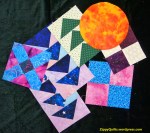
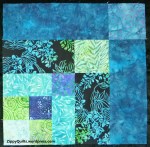
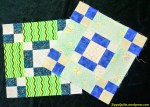
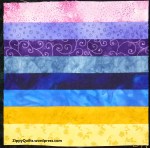
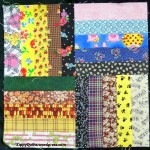
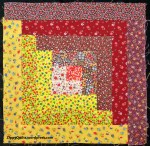
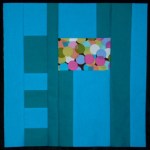
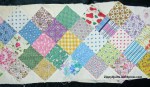
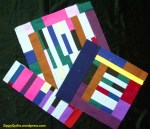
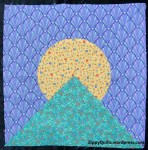
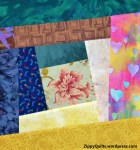
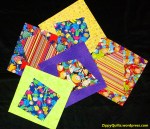
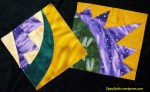
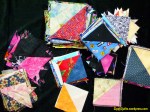
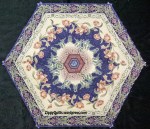
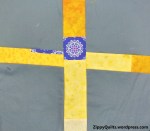
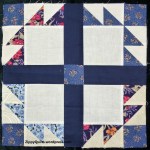
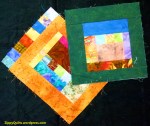
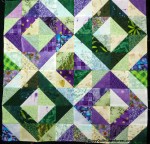
As you can see from the pix at the top and below, I have lots of orphan blocks to use!  I hope you’ll try out some of these ideas as I post instructions for them.