Your Inner Designer 6: Copy Somebody Good!

Truly original ideas in design are really, really rare  More often good designs are inspired by other good designs, and most designers start by copying other people.  There’s nothing wrong with that–just give credit!

Door with art glass window

Glass window, designer unknown

For example, here’s a door I admire in a friend’s house.  It got me thinking that it would be nice to make her a table runner with a design similar to the glass in the door, especially since the dining table is right by the door.  I may start out by copying the design, but my table runner won’t be an exact copy.  I want it to be obviously inspired by the door, but I probably couldn’t make an exact copy even if I wanted to.  And I’m not going to sell it as my own “original” design without reference to the door, either.

Here’s the first attempt:Craftsman inspired table runnerThat may be obviously inspired by the door, though in fact both are inspired by Frank Lloyd Wright and Craftsman styles of design. If you don’t know much about those styles of design, Google them.  There are many similar designs to be found, so I can make LOTS of designs of this style without copying any of them.  Here’s the second try:Craftsman style table runner
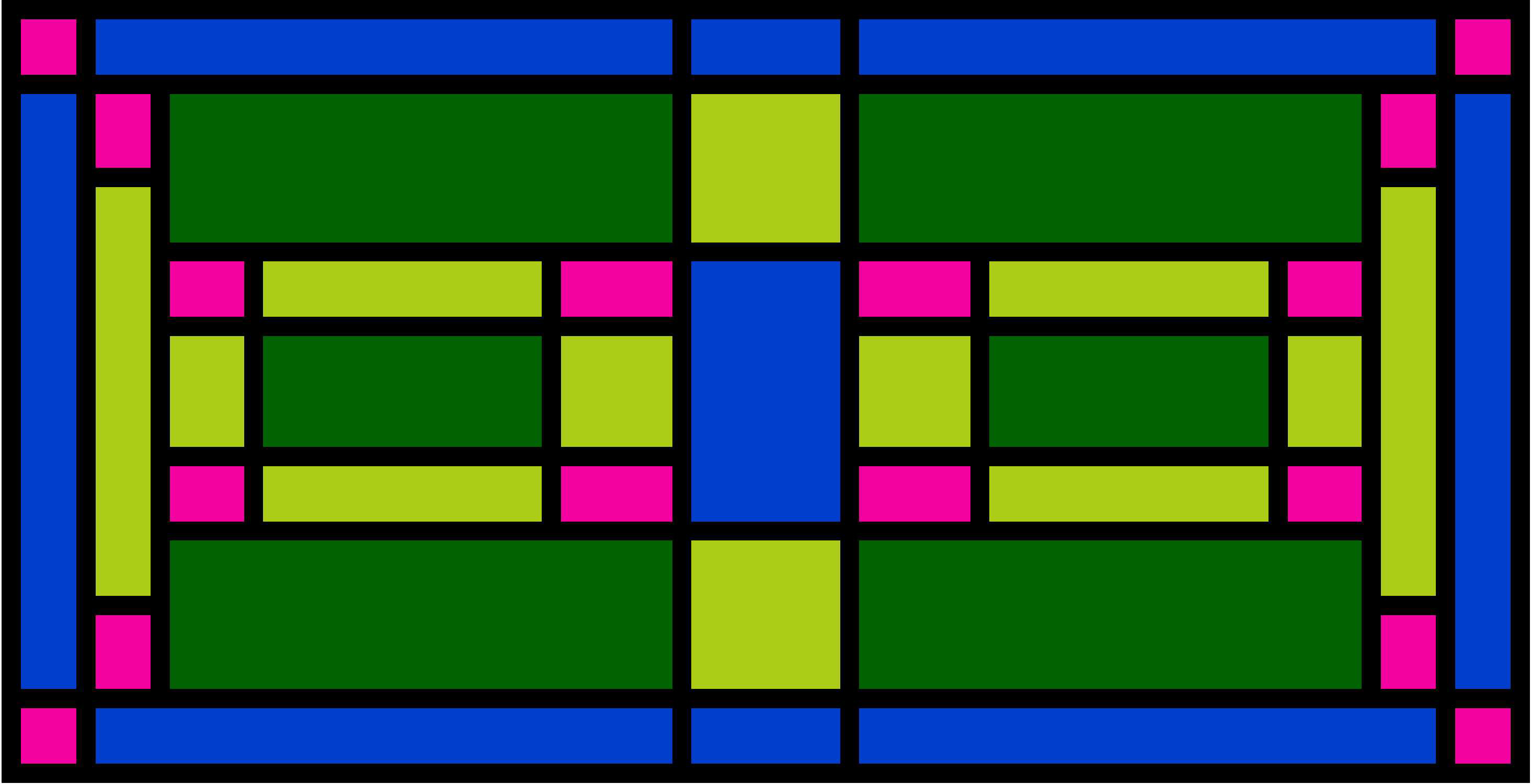
This one has a little more detail.  Another master of this style, popular in the early years of the 20th Century, was Charles Rennie Mackintosh.  William Morris textile and wallpaper designs were the same historical period, and you may have seen Moda’s extensive line of William Morris-inspired fabrics.

One last try:table runner
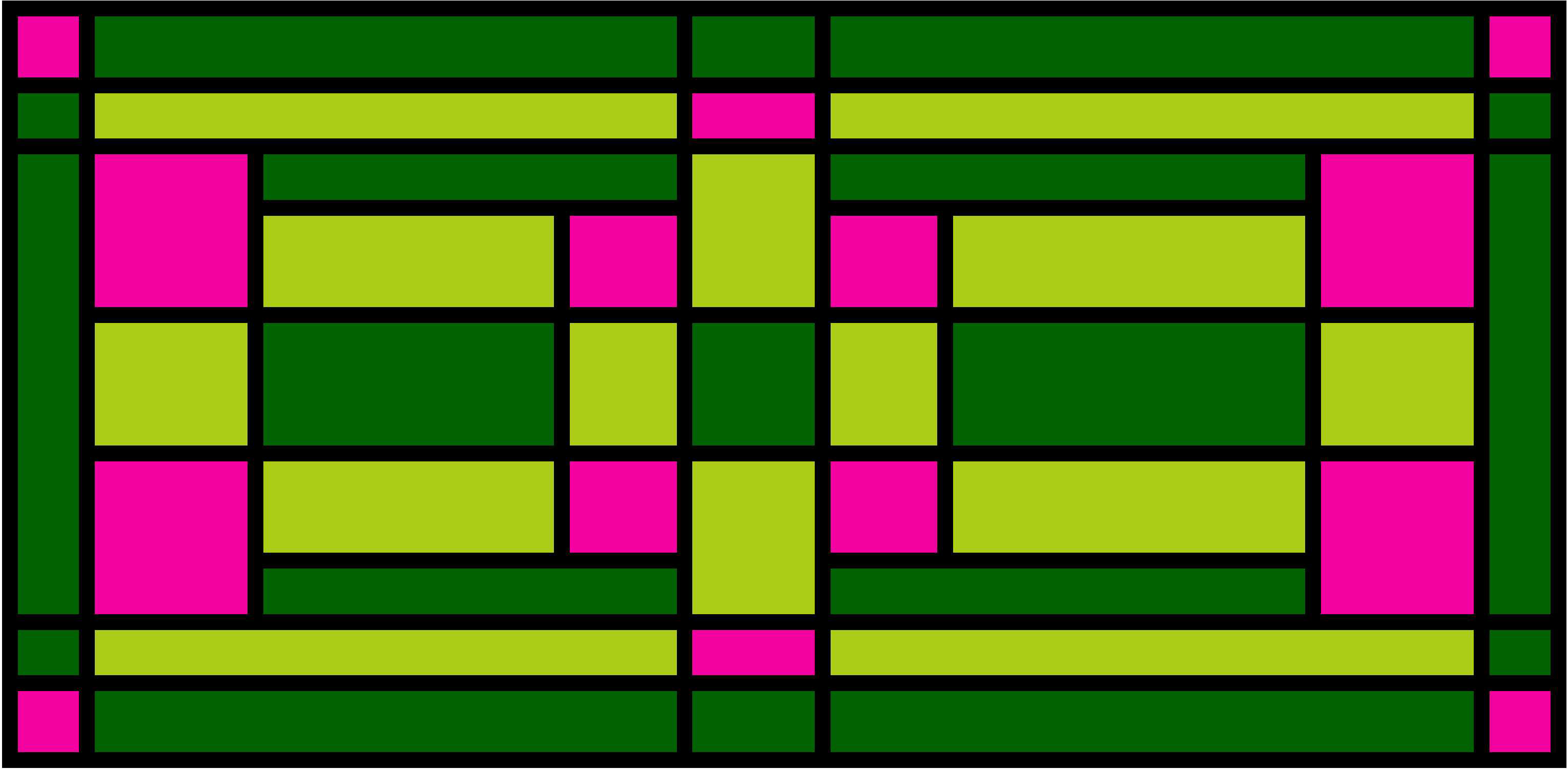
So go look at some books on the history of design (the history of advertising works too) and make some designs inspired by what you see.  It’s a good starting place when you think you don’t have any ideas, and you’ll eventually come up with something your really like.  Then it’s time to make a quilt!

Here are the first 5 posts in this series:

Your Inner Designer 5: A Program to Make Your Own Palette!

Quilt Design 4: Choosing Your Color Scheme

Your Inner Designer 3: New Blocks From Old

Your Inner Designer 2: Many Block Arrangements

Find Your Inner Designer, Part 1

Find Your Inner Designer – Part 1

Some of my readers have asked about how I design quilts, so I’ve decided to do a monthly series of posts to lead you to design your own original quilts. I know there are several courses and lectures out there on “principles” of modern quilt design, but this series is about a practical approach.  So here is Part 1: Start by tweaking a design you already like.

Start with a traditional-style pattern you want to make.  By traditional-style, I mean one with multiple similar blocks, probably arranged in a grid.  Here’s my example, which really is more of a modern design because the blocks are improvisationally cut, but it has the blocks in a grid

modern pieced quilt

I saw this quilt at the house where we have retreats

Now experiment, tweaking this pattern (or a similar one) 3 different ways:

1. Change the size of the blocks. A quilt made up of 20 blocks each 10″x 10″ will look quite different from a quilt of the same size made up of 80 blocks 5″ x 5″.

You can go up or down in size, but change the size of the blocks. If the math gives you trouble, either get help from a friend who LOVED algebra in high school, or use a computer program like Electric Quilt to re-draw the blocks in the size you want and give you instructions for cutting them. If you want to make the blocks very small, consider paper piecing: Just draw your paper base and you don’t need any math because the pieces you use to construct the block on the paper base aren’t cut exactly to size.

.
2. Change the size of just one (or a few) block(s):

modern quilt design

Substitute one large block for 4 of the small ones!

Either replace one block with 4 little blocks 1/4 the size of the usual, or replace 4 regular blocks with one big one. Either tweak makes the overall quilt design more interesting.

Pieced quilt

Substitute 4 little blocks for one large one–or for several large ones!

3. Add (or subtract) a little: Instead of making the usual grid of blocks, add a strip or a row of blocks to each row to make some of the grid offset. I like to put the insert at a different place in each row.

modern quilt design

Insets make the blocks move out of line in some places, adding interest

Another option is to remove the sashing and/or border(s) from a quilt, or to insert an extra border.

You don’t have to sew any of your designs unless you want to; just draw them out on graph paper (or your computer program), and color them if you like. The drawing counts as a design! And don’t worry that modifying somebody else’s design isn’t “original”. You have to start somewhere, just like the designer of your pattern did!

Now, go try some of this! I like to make baby quilts to try out new designs or techniques—not too much commitment in time and materials, but I learn a lot. And watch for the next post in this series; I’m going to do a design post the first Sunday of each month for a while.