I Love This Finish!

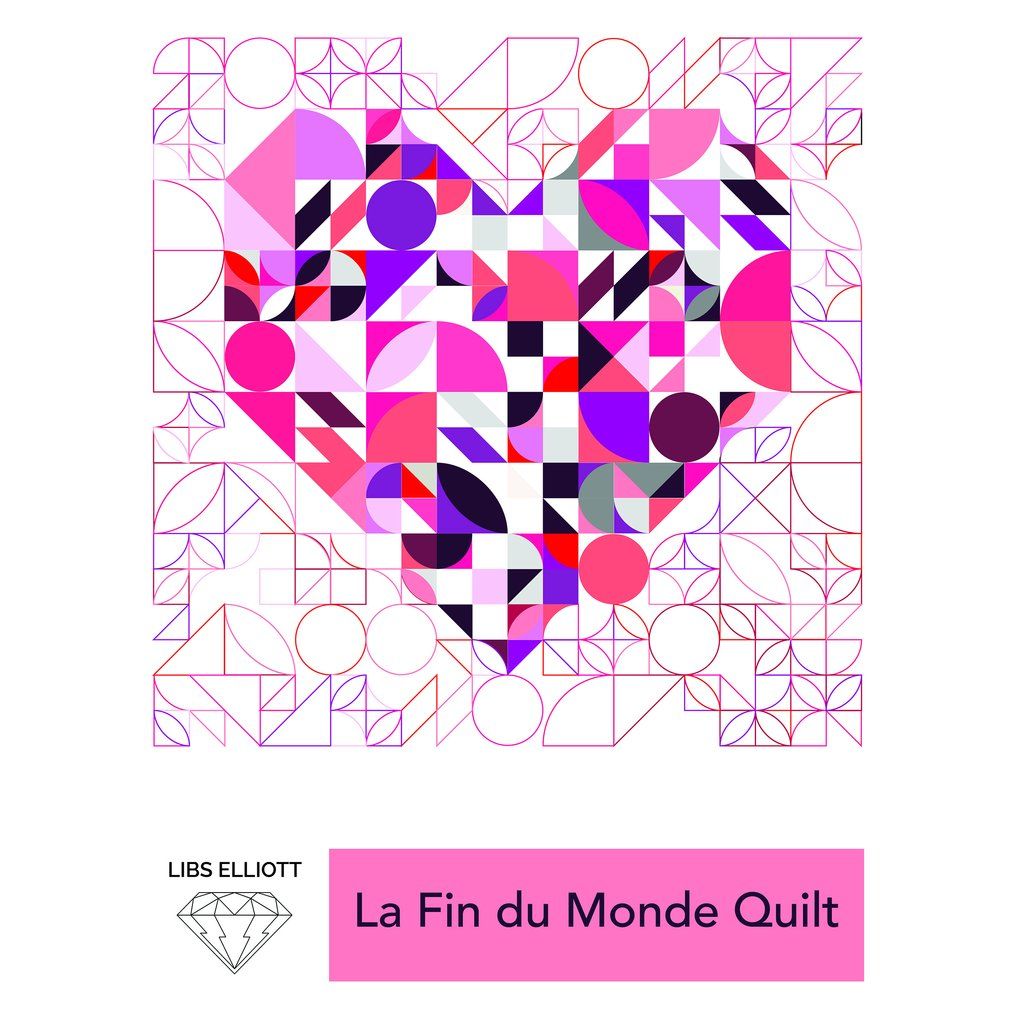
This pattern came from a shop I visited on vacation last year. Then there was the issue of templates, which I ended up ordering from the same shop where I’d bought the pattern. Of course I can make templates, but it’s so much easier to cut around an acrylic template than to draw around a home-made template and then cut with scissors.

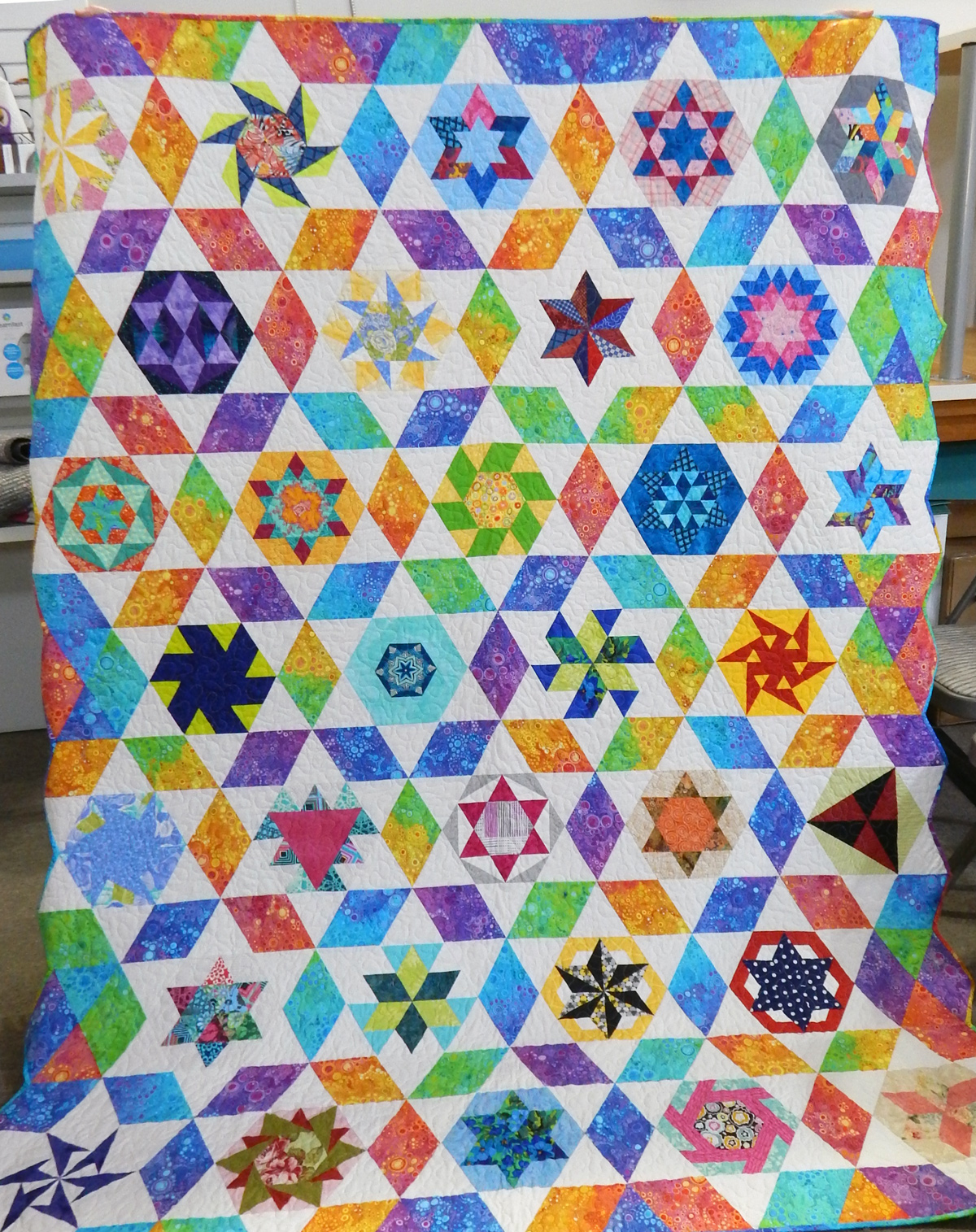
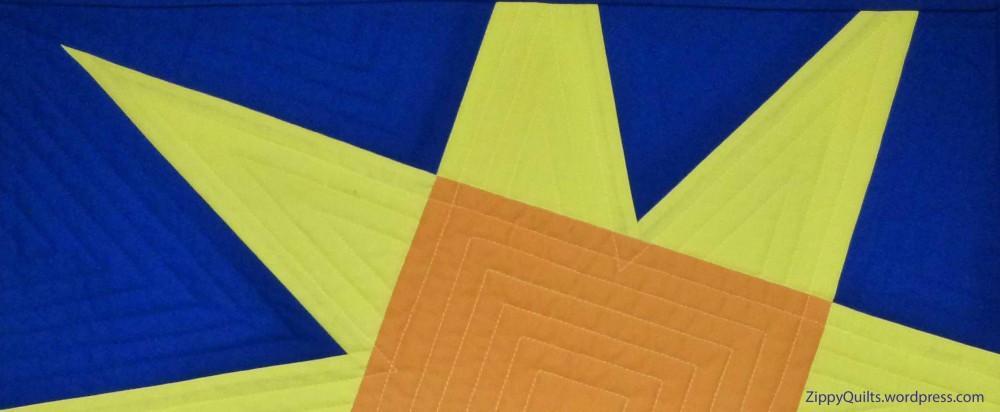
I got the small templates because that’s all that was available. Here’s a detailed picture in which you can see the lovely swirl quilting as well as that pointed lozenge that finishes at 2-1/4 inches long!

The quilt was exhausting to make, but I love it now that it’s done! There was the option to make the background pieced as well, but I passed 😀

Quilt Stats

Name: La Fin du Monde

Finished size: 40″ x 40″

Pattern: La Fin du Monde by Libs Elliott

Quilted by: Lewis Schafer


Two Finishes

It probably looks like I’ve been wandering around the country taking classes instead of making quilts, and of course that’s partly true. However, here are a couple of finishes.

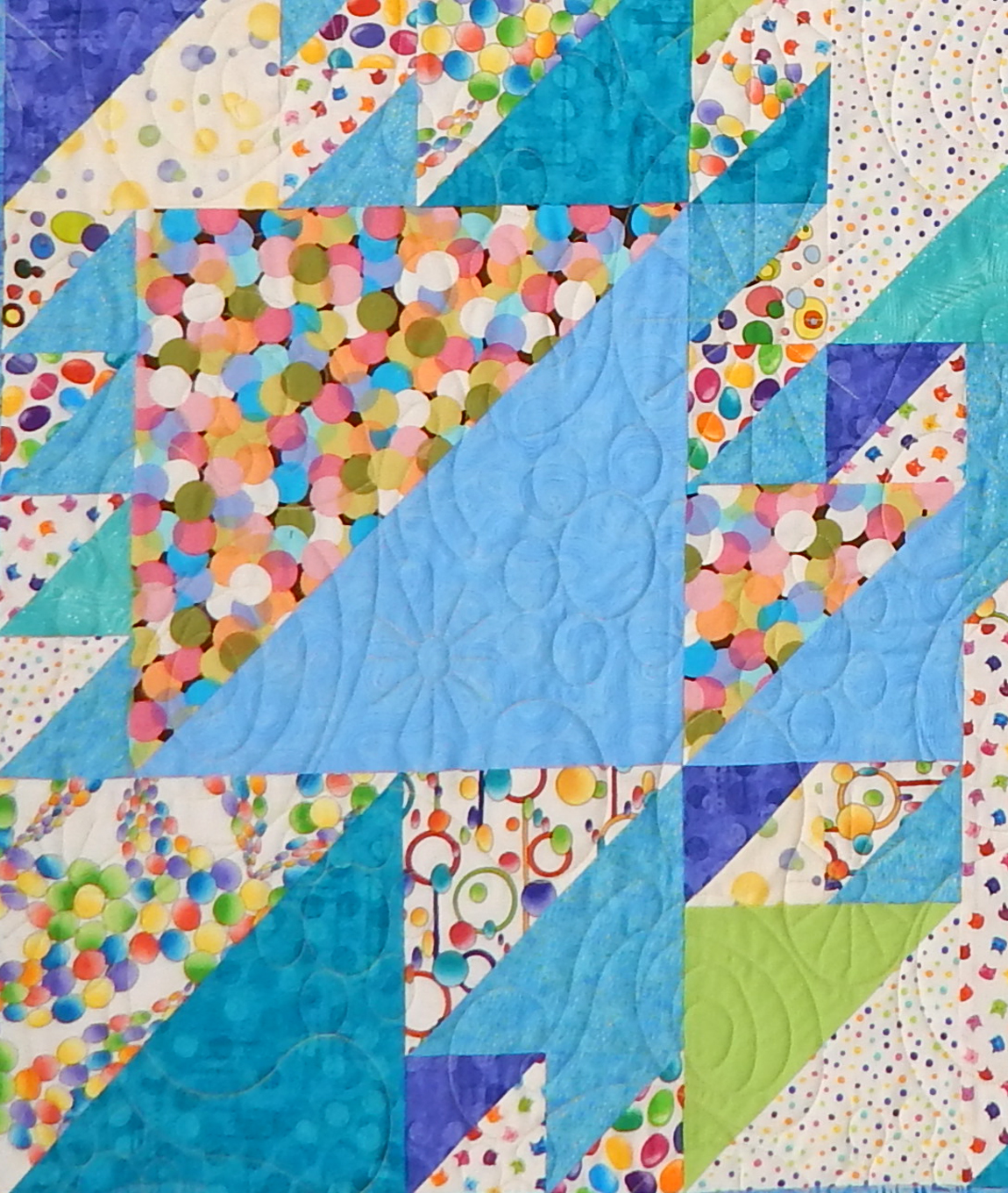
This first one was made because I love-love-love some of the Tim Holtz fabrics, so the blue-green one is featured here. Also, I really like the movement triangles give to a quilt top, so I chose this Jaybird Quilts pattern called ChopSticks. A few of the blocks are made with some Fossil Fern fabric I found; I thought I had given it all away, but I guess not! Anyway it fit right in and provided a bit of variety.

Quilt Stats

Name: Chopsticks

Finished size; 64″ x 74″

Pattern: ChopSticks by Jaybird Quilts

Quilted by: Linda Nichols

The second quilt was made to use up some of the many dotted fabrics in my stash! I have enjoyed collecting the dots, especially the ones that aren’t quite what you’d expect from a dotted fabric. There are jelly beans, cat heads, and more complex designs as well as the dots you might expect. There are even two-tone dots in the “solid” fabrics. It was fun.

And the back used up some orphan blocks!

Quilt Stats

Name: Triangles at Play

Finished size: 49″ x 61″

Pattern: Triangles at Play by Sarah Ruiz Quilts

Quilted by: Linda Nichols

Mid-Atlantic Quilt Festival 2024

I’m happy to say I was able to attend the Mid-Atlantic Quilt Festival (MAQF) in Virginia recently. I took two classes and will write more about them later. For now, here are some of the quilts I especially enjoyed.

There were many traditional quilts and art quilts, but of course my favorites were mostly modern. And BTW, I’m sure some of them came directly from QuiltCon.

Simply Luxury by Susan Bravereman

Holding Space by Sharon M Carrier

Modern Garden by Andrea Barrett

Orange Sherbet, by Sana R. Moulder, was made from a pattern.

I would have liked to know the name of the pattern! And look at this really fun quilting on the “orange slice”:

Detail of Orange Sherbet by Sana R. Moulder

House of the Incas by Jen Sorenson

Grody to the Max! by Candi Lennox

Sliced by Amy Kerkemeyer

Taking Notes by Debbie Grifka was part of a special art quilt exhibit with a botany theme

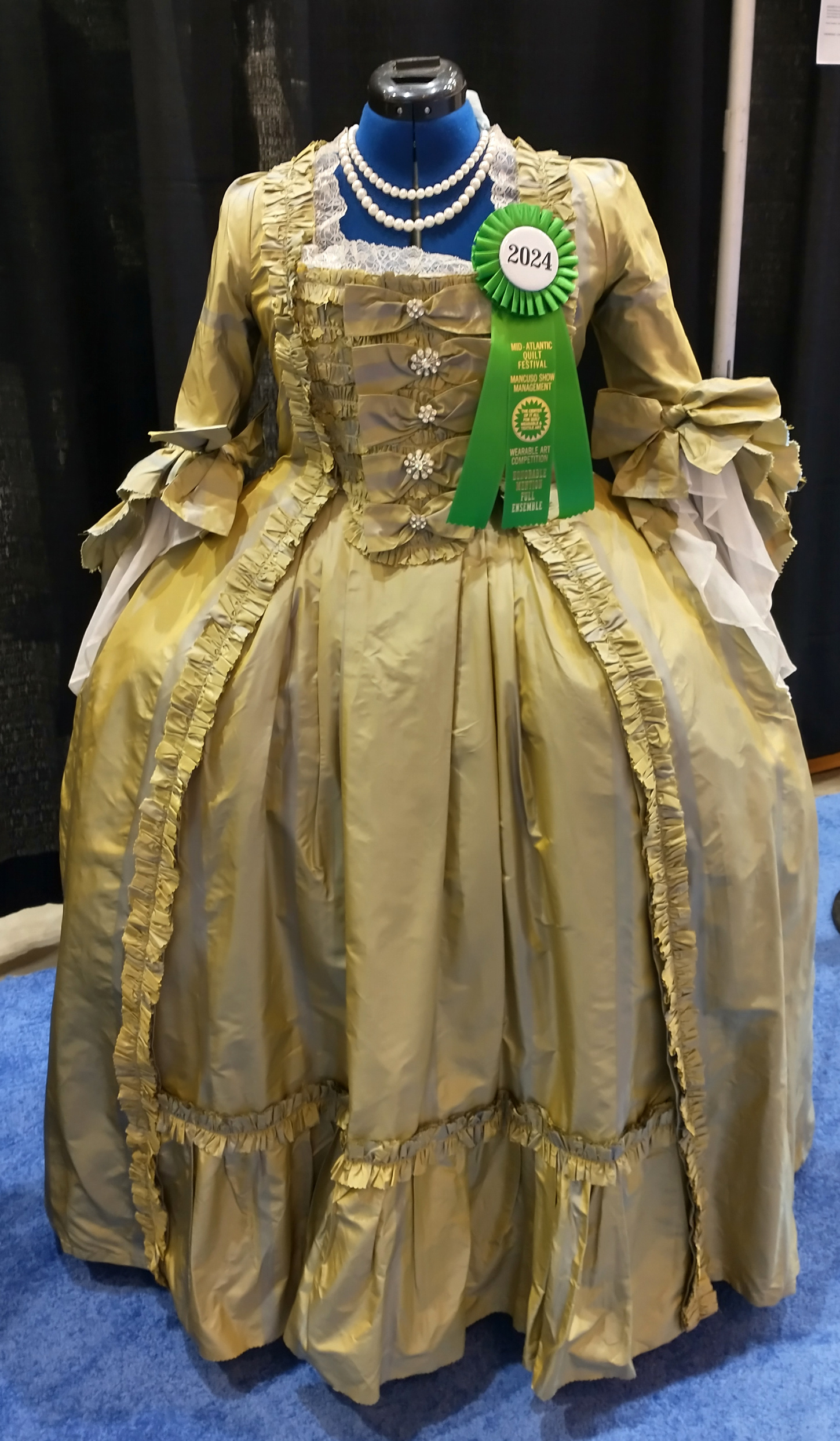
And finally, there were these two amazing dresses in the “full ensemble” category of the wearable art competition. No quilting, but the dresses were amazing. As you can see, both won ribbons.

1957 Vogue Featuring MacNeil of Barra Tartan, by Christine Streenan

18th Century Robe a la Francaise by Christine Streenan

MAQF is a Mancuso show, meaning it is run by a commercial outfit rather than a quilting organization like AQS. I’ve always found the Mancuso shows to be well organized. The variety of quilts is broader than at either AQS or MQG shows in my opinion. Both the style and quality vary within the show, but that’s part of the point of a quilt show!

Modified Quilt Labels

I’ve heard for years that I should label my quilts, and I get it, especially because I have inherited some quilts without labels. However, since I donate most of my quilts, I have spent a good bit of time lately removing those labels I worked so hard to make and attach. I suppose I could leave the labels on, but it seems inappropriate to have my name on a quilt that I donate. 

Here’s my current compromise.

After finishing a quilt with binding, I use my sewing machine’s lettering function to stitch my initials and the year in a corner of the quilt, as inconspicuously as possible. This fulfills my need to sign my work without putting my name out there in a way that might cause recipients to feel they need to find me and thank me. My husband points out that I may also want to know when I made a particular quilt and this meets that need as well.

It turns out several of my friends didn’t even know their machines would do this. I know nothing about any machine except my Bernina, but it does have programmable letters and numbers. It is not an embroidery machine. So if you’re interested in this idea, check your machine to see what it might do for you.

And of course there’s always the trusty Pigma pen for signing!


Mounted Over Canvas

When I asked for suggestions recently about how to display some of my map quilts, the majority suggested mounting over canvas or on the front of canvas. This one was already faced, so it’s staying as is.

However, I researched online to find out what others are doing, and here’s what I found.

  • Cindy Grisdela, whose work I admire, has a tutorial on her method for attaching art quilts to canvas. Here’s the link. Her method is way complicated but does leave the option of removing the piece without (much) damage in the future.
  • A tutorial on another site suggests using heavy duty velcro attached to both the quilt back and the canvas. There’s more to it than that, but velcro is the basic idea. She also glues other stuff to the canvas around the quilt in some cases. Here’s that link.
  • Finally, Susan Carlson has a more sophisticated velcro option or instructions on mounting the whole thing over stretcher bars. She discusses other options as well, and this link was my favorite of ideas I found on the internet.

Of course there are lots of YouTube videos as well, but I haven’t the patience for those.

So, with the help of my husband, I mounted this floor plan over stretched canvas.

It’s not as neat as I would like–I may try to tuck and glue the corners a bit more–but I’m satisfied with it for a first try.

This is the floor plan of the house our daughter’s family just left after 9 years. Of course they have many fond memories there, so I made this “map” of the floor plan for them.

Have you tried mounting quilts on stretchers? Over canvas? Suggestions?

More Orphan Blocks

First, I found this on the blog from Frances Arnold, a fellow quilter as you can tell:

How true!

And the same seems to be true of orphan blocks. Here’s the box with mine, despite my having made multiple quilts from them recently.

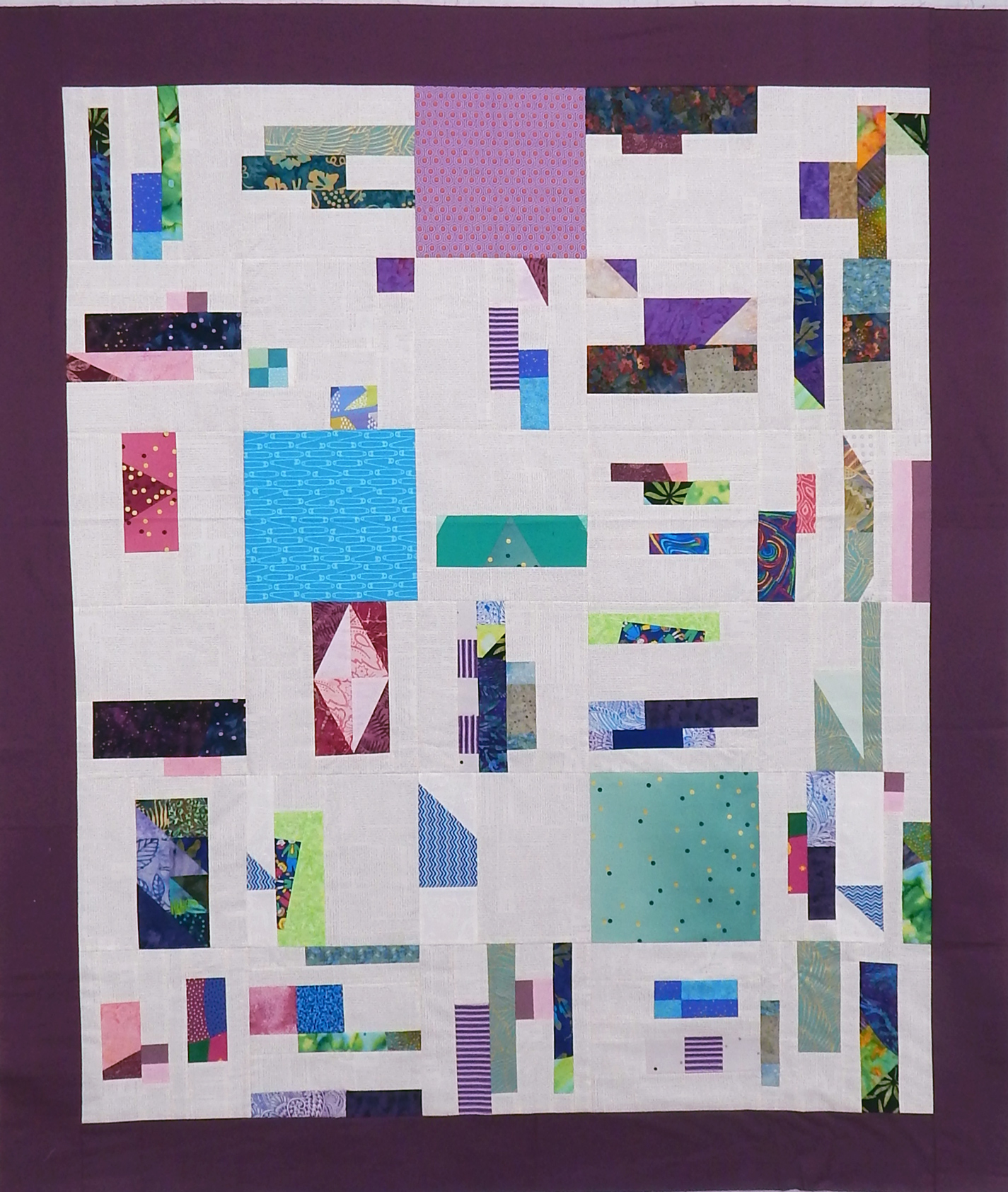
Here’s the latest top made from orphan blocks. It will go (eventually) to Flying Horse Farm, a camp for children with serious illnesses.

Blue Sky and Sunshine, 60″ x 72″

And here are a few more made from orphan blocks.

Quilt made using orphan blocks and the BQ5 pattern from Maple Island Quilts.

But look back up at that full orphan box. I think orphan blocks must follow the same rule as scraps!

What do you do with orphan blocks?

Some Fun Bags

I’ve been eyeing this canvas fabric ever since Studio Stitch got it in, and finally I bought it and made some bags.

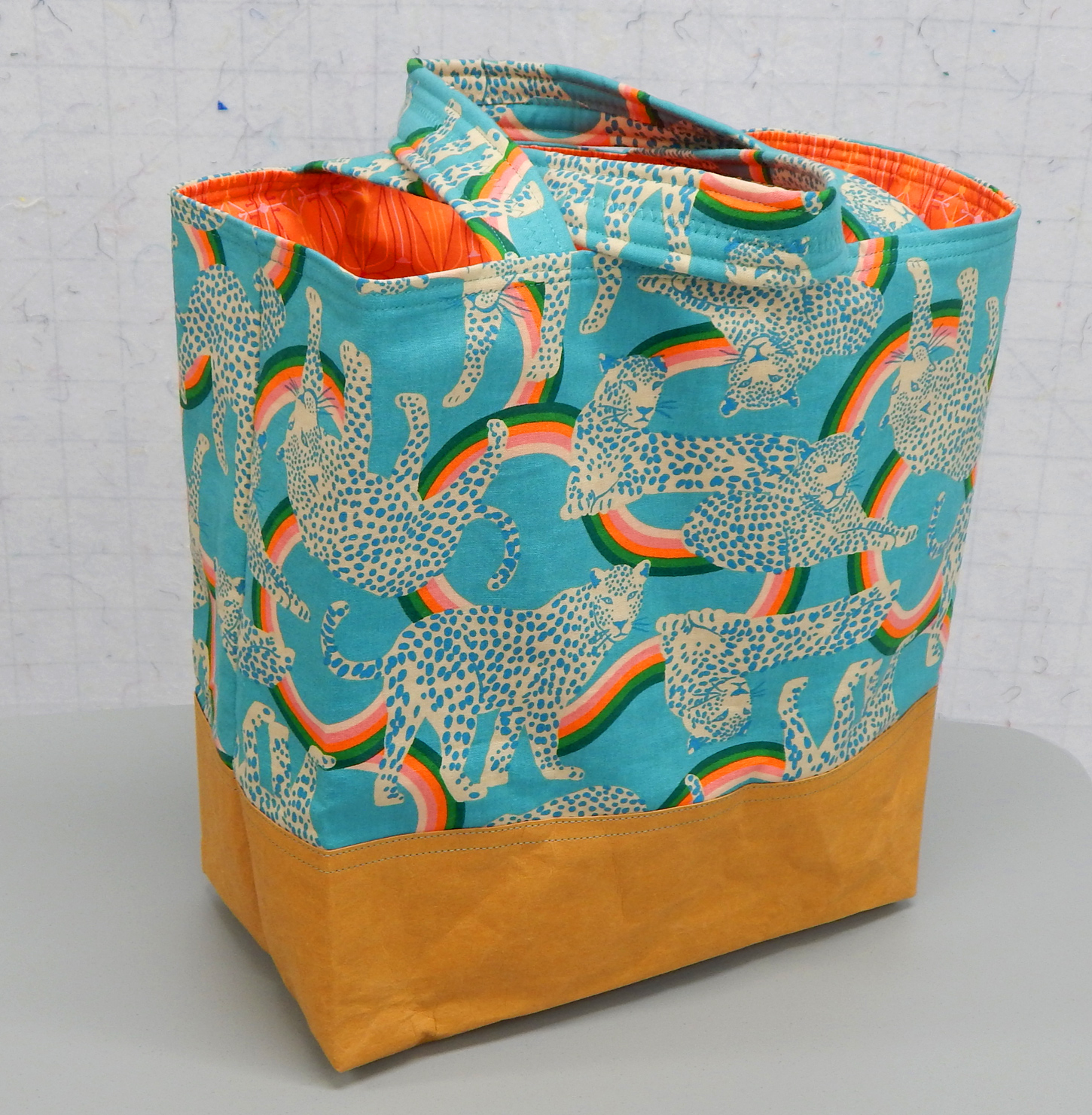
First up was a tote bag from a free pattern I’ve used many times. You can find it here, on the Bijou Lovely site, still available for free. The instructions are clear and well illustrated. I added a Kraft-Tex bottom panel, which is a little more complicated, but it won’t be any trouble if you’ve worked with Kraft-Tex before.

There was a little fabric left, so I made a BIG pyramid bag using another free tutorial, available here. This is another one I’ve made many times, but usually as smaller bags to hold jewelry or the like. This one is about 13″ high and I’m going to use it as gift wrap. (I avoid disposable gift wrap, but that’s a story for another day.)

I can recommend both of these patterns if you are in the mood to make bags. I did use my serger to finish the interior seams on the pyramid bag, but that’s the only “unusual” piece of equipment. I’m pretty sure you could just zigzag those seams anyway!

Another Fun Pattern

Every once in a while I find a fabric I just MUST buy. Then it can be a challenge to decide how to use the fabric to highlight the reason I love it. I recently used the BQ2 pattern for a couple of these fabrics and I like the way it worked out.

The first fabric I just “had to have” is Wild Blossoms by Moda. Here’s a picture from the Moda site. It may not be clear on my blog, but you get the idea. It’s an ombre print across the width of fabric.

I modified the dimensions of the blocks in the BQ2 pattern because I had exactly one yard of the feature fabric, and here’s the final quilt.

The second “must have” fabric was this cat print designed by Chong-A Hwang, whose designs I frequently admire.

I had enough of this fabric to make a twin-sized quilt for one of our guest beds. I hope the guests like cats!

I recommend this pattern for big prints you want to show off. The pattern is well written and the blocks are big so the quilt is quick to make. I’ll probably be using it again.

Anybody else out there have favorite patterns?

Why I Use Polyester Batting!

A friend recently asked why I use poly batting. The reasons mostly have to do with the aesthetics of my quilts. I use thin, high quality, polyester batting, NOT to be confused with the awful stuff available at the big box store. So here are my reasons:

Main reason: Polyester batting doesn’t shrink. Years ago, when I started designing my own quilts, I used polyester batting to minimize distortion when the quilt is washed. If I’m going to all the trouble to get the design just the way I want it, and make all the points match, I want all that to show, even after the quilt is washed. In short, if I design it, I don’t want the design distorted.

Here’s an example of a quilt where I worked hard to get things straight and square.

Of course this is based on Piet Mondrian’s paintings, and particularly on the Mondrian dresses derived from them

That said, I prewash only selected fabrics, so there’s likely to be some shrinkage of the fabric anyway. At least shrinkage is minimized if the batting doesn’t shrink, too.

Second reason: After hefting quilts made by other people using cotton batting, I appreciate the light weight of polyester batting! I hadn’t realized the difference until I was involved in hanging quilts. Most of those were traditional and had cotton batting. The heft of some of them was amazing.

Above is a king sized quilt I made years ago. It would have been very heavy with cotton batting. Yes, I’ve heard that cotton batting “breathes” and poly batting doesn’t, but do you really feel the difference when you’re sleeping under it? And if you do, is it good or bad?

Third: Poly batting doesn’t crease as easily or hold onto folds after it’s unfolded. Since most of my quilts are stored folded for months at a time, it makes a difference. Also, it’s good to avoid hard folds when I’m shipping a quilt somewhere. The quilt below is one I use for teaching, but it lives in my quilt closet the rest of the time. I like being able to take it out and find it’s ready to go without having to “hang out” the folds.

With all that said, not just any batting will do. I use Quilter’s Dream, a high quality batting available in several lofts. They even make a poly batting from recycled plastic bottles; it’s called Dream Green. I’ve used some other brands and found some of them to be good quality as well, but Quilter’s Dream is my current choice. Which brings me to a final consideration: Request loft, the thinnest, is still suitable for longarm quilting if you choose polyester. The thinnest loft in cotton doesn’t work with a longarm. (By the way, Quilter’s Dream makes excellent cotton batting also, if that’s your jam.)

And finally, there are a couple of exceptions. One of the places I donate quilts is a camp for seriously ill children and they want cotton or 80/20 batting. Thankfully, my quilter stocks it so I can get it easily for those quilts. And when I fail to match points despite my best efforts, I sometimes ask for cotton batting and then wash the quilt as soon as it’s finished 😀 Distortion may not be all bad!

Opinions, anyone?

Pattern Review: Strip Search

I found this pattern at Five Little Monkeys and it turned out to be as much fun as it appeared to be! The pattern said that, if you followed the instructions exactly, none of the strips would try to line up, and that was right! This means the only thing to “match” is the corners where the blocks come together, but really, the blocks are big so that was easy. Easy and fun–that’s what we like!

Here’s the first quilt I made from the pattern. I thought at first that the blocks needed sashing. However, that was not an improvement, so I removed the sashing and just added a border. The blocks are about 15″ square, so this was a good size quilt.

The second quilt is for Quilts of Valor and will be just the right size without a border. This is just a picture of part of it so the pattern of the strips shows. It isn’t finished yet.

And finally, here is a quilt I made to be used on one of our twin beds with a pillow sham.

This is an excellent pattern for using 2.5″ strips, either from scraps or a jelly roll. The instructions are clear and work well if they’re followed carefully. I recommend it!  

These folks developed the Stripology ruler so they recommend it, but it isn’t necessary for this pattern. Here’s a source for the pattern if you can’t get it at your LQS.