Hanging for Photos

One of my current goals is better photos for my blog and for submitting to shows. I’ve tried numerous set-ups over the years. The very best was when I could hang them in front of the barn. I had a hanger that was easy to put up and take down, and the outdoor light was perfect. That was years ago, and the barn was sold with the house.

A blogging friend recommended a photo backdrop stand. I got the specific one she suggested, but it hasn’t been sturdy enough to suit me. It seems the quilts always wobble.

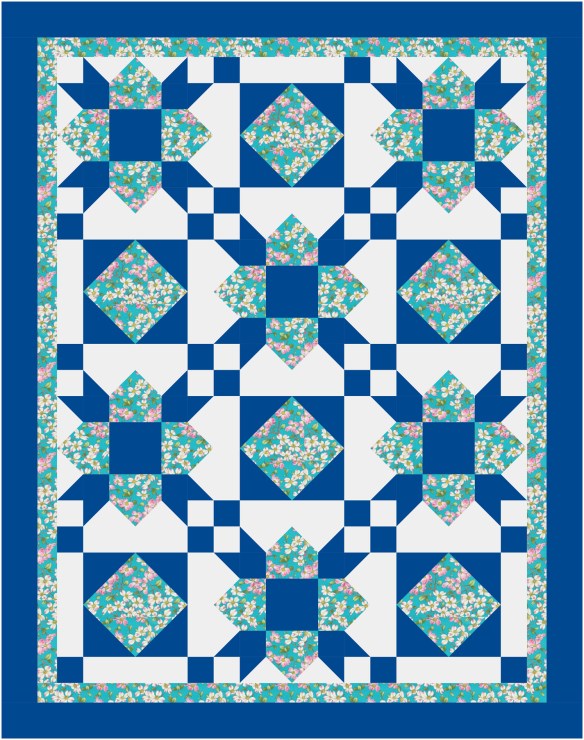
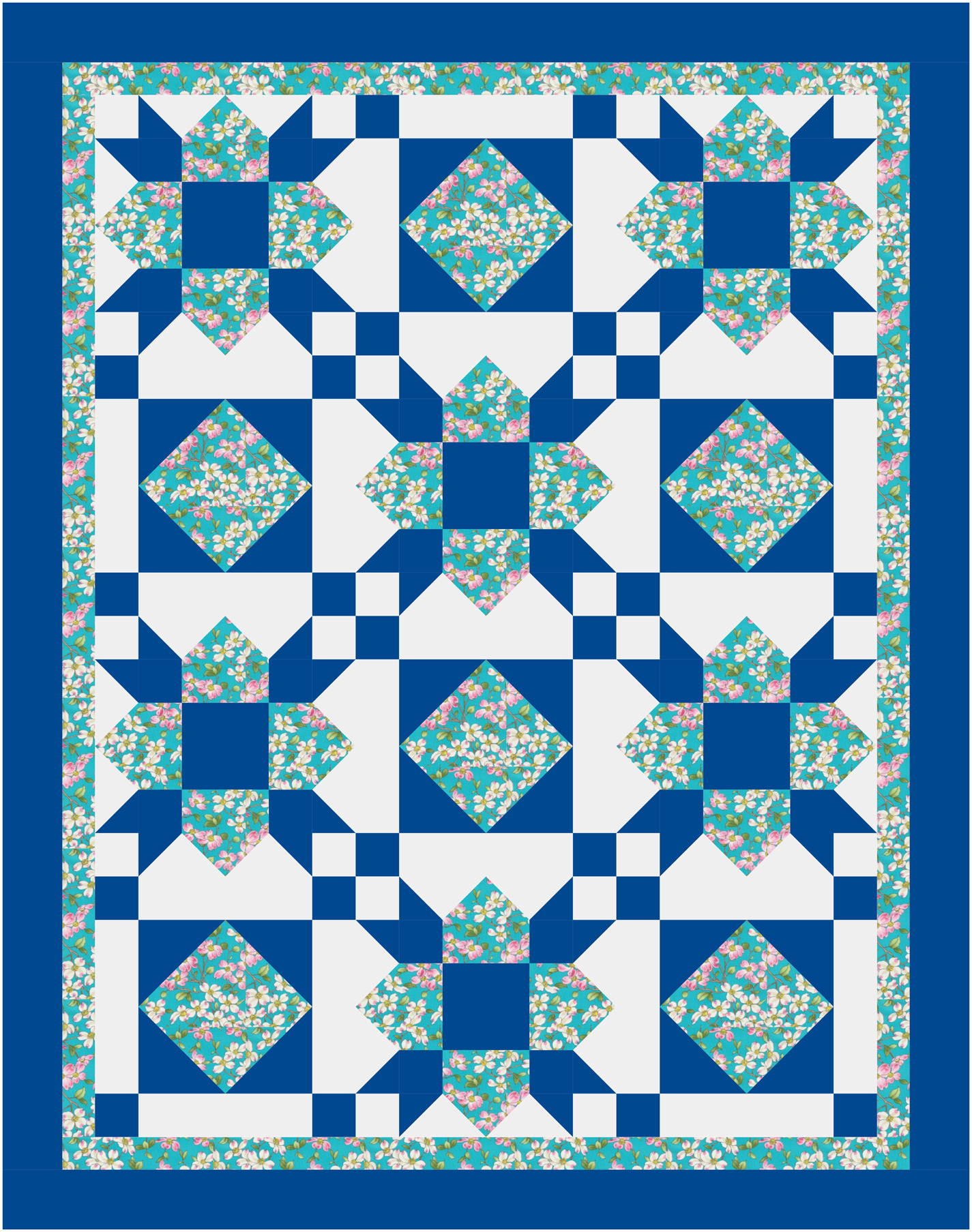
There are many chandelier quilt patterns out there, but this one was free on the Free Spirit website

Sometimes the finished quilt will cling to my flannel design wall. It’s not perfect, because the flannel is free floating, so the bottom of the quilt waves with the flannel, but it sure is easy.  It does work well for small quilts.

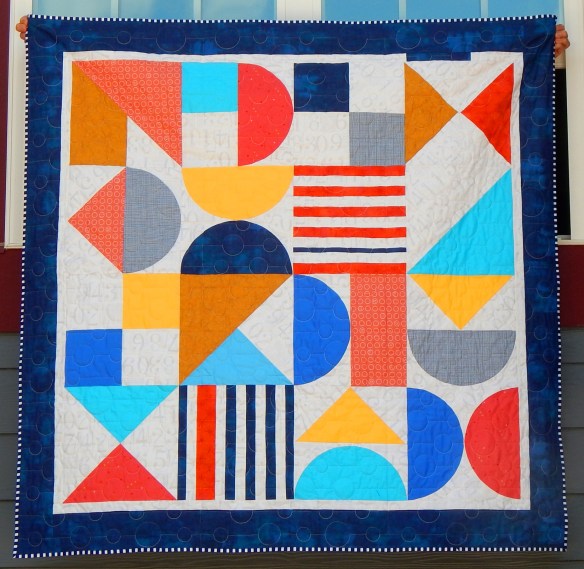
And then there’s the time-honored tradition of having the husband hold the quilt. Mine eventually got tired of holding them out the window, so I had to quit. I did like having the outside light and the house backdrop while it lasted!

I’ve even hung quilts in various settings for “glamour shots”, but they’re only for fun, not for submitting to shows.

I’m still searching for a way (preferably an easy way) to take nice square, straight-on photos of quilts. All of which is to say I’m trying another way to hang and photograph quilts.

Somewhere I found out about the Hang It Dang It quilt hanger, so I got my local quilt shop to order it for me. My husband had some concern about needing a small nail to hang it on, but he got it figured out and the system works just fine! It is easier than previous methods and it does, indeed, hang the quilt level.

In the example above, you can see that I stood on a stool to hang it, but sure enough I could do it all by myself! I will need to de-clutter around the area to take pictures for submissions, but it’s looking like an improvement so far.

Now I need to get out the tripod and the fancy camera so I can align the shot correctly, and maybe I’ll be ready to go on better pictures.


An Experiment

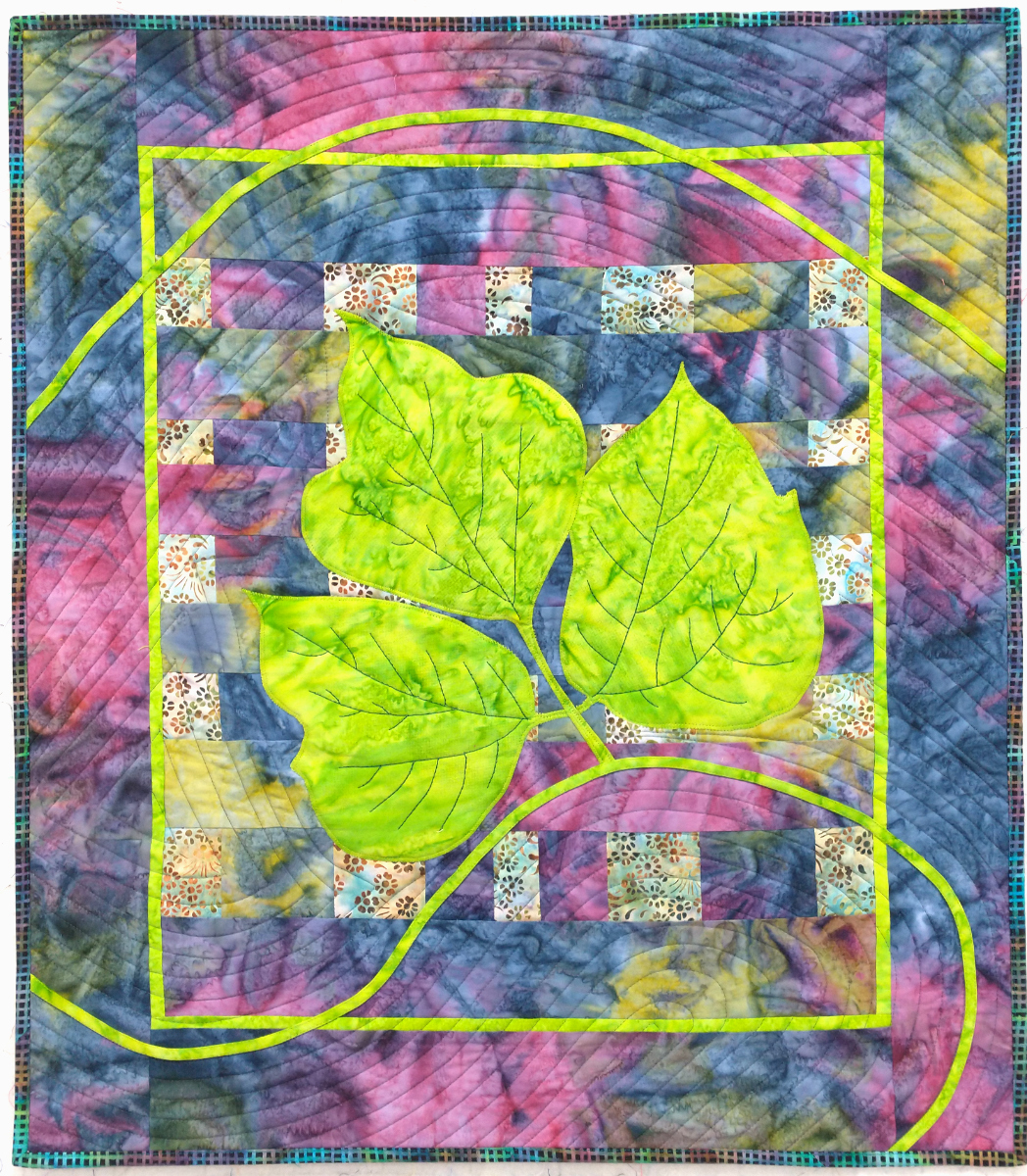
In line with my resolution to play more, rather than just producing, I decided it was time to use this interesting fabric. I got it who-knows-where with the idea that it would make a good print to mix with solids in an art quilt.

I had about1/3 yard of this fabric and wanted to make small pieces, so I split it in half with the idea of making two quilts with different moods.

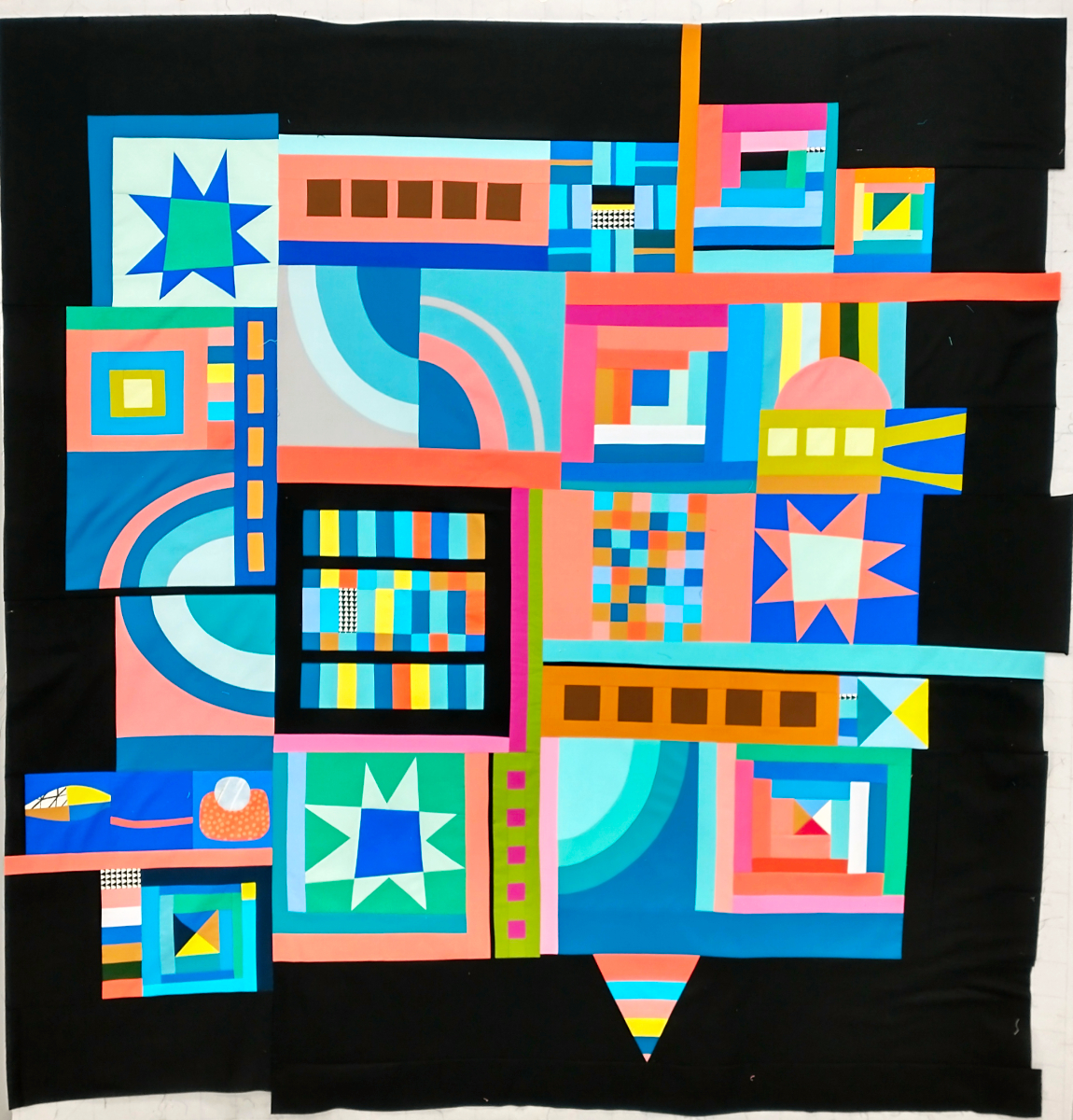
For the first quilt, I chose colors that matched or coordinated with the inspiration fabric, plus a little orange for a pop. I cut rectangular blocks and tried many different arrangements. Here’s the final layout.

After I quilted it, I still wasn’t satisfied that it had much zip. Also, I was tired of making facing for quilts and hoped to do something more interesting to finish it.

I finally found some large rick-rack in my stash and thought it might be good a good edge finish. After a couple of experiments, I did a narrow zigzag all around the edge of the quilt…

…then applied the rick-rack with a straight stitch.

I’m not crazy about this, but I’m not required to love every experiment, just to try it.

Quilt Stats

Name: Just Add Orange

Finished size: 18″ x 24.5″

Designed and made by: me

Why: Just for Fun

A Class with Lyric Kinard

I’ve been a fan of Lyric Kinard for years. Her work is amazing, and she is constantly supporting other artists through her newsletter, classes, and example. So when she offered a low cost online workshop to help artists clarify goals for the coming year, I signed up! (She was doing this abbreviated workshop at low cost to raise money for those affected by Hurricane Helene in Western North Carolina.) Here are a few of my take-aways.

The first session of the workshop was on clarifying one’s goals as an artist, specifically for the coming year. After working through the exercises, I decided I need to play more. Somehow I’ve gotten into the habit of judging my day by how much I produce rather than how much I learned. I enjoy trying new things, so that doesn’t make sense.

Then the question is what to do with the quilts I make just for fun. I have some fun quilts that I like, but I’ve never submitted them anywhere. Here’s one, just because this post needs some photos!

Trees, 9.5″ x 9.5″, done just for fun

So I decided I need to submit to more shows. I set a goal of getting more rejections! Because that means I at least tried.

Lyric’s second session was about principles of design, and of course I realized I know this. But what do I do with it?

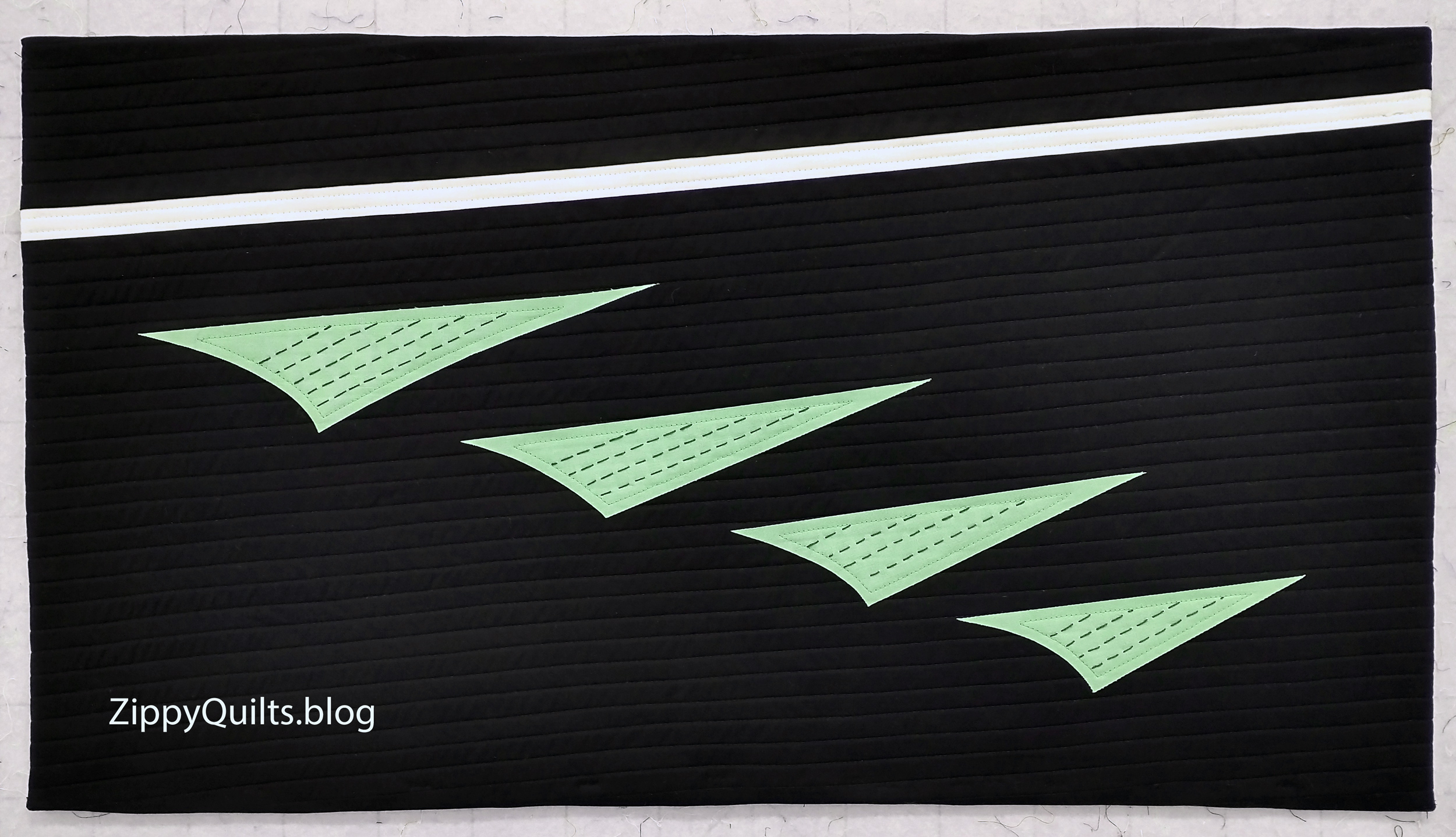
Then Lyric continued with an explanation of how to critique an art work in light of these principles. She used my quilt for critique in one session because I was the only person present who had submitted something (in response to her request). Here’s the piece I submitted.

Lyric explained that her version of critique describes how the principles of design are exemplified in a particular quilt (or other work of art). It specifically does not include giving an opinion about whether you like or dislike each element; it’s just a description.

So what did I learn from this critique? I noted the importance of each element of design in my quilt and learned that the solid line at the top stops the movement created by the green triangles.

Most revealing was Lyric’s request that anyone in the class say what they think of when they see the quilt, and people said things like “zoom!” That let me know that my quilt gets its message across.

Overall, Lyric’s workshop was helpful in getting me to commit to submitting my work more often. Her idea of critique and her example were very useful in helping me look at my work. Yes, I did take a basic design class years ago, but I haven’t been consciously using design principles to analyze my work.

Lyric has taught her version of art critique for years, but she now has a new book on the topic. I’m linking to her site, where you can find that and her other books. Looks like the critique book is electronic only at present, but I believe there’s to be a hard copy soon. Also, if you get a chance to take a class with Lyric, I recommend it!

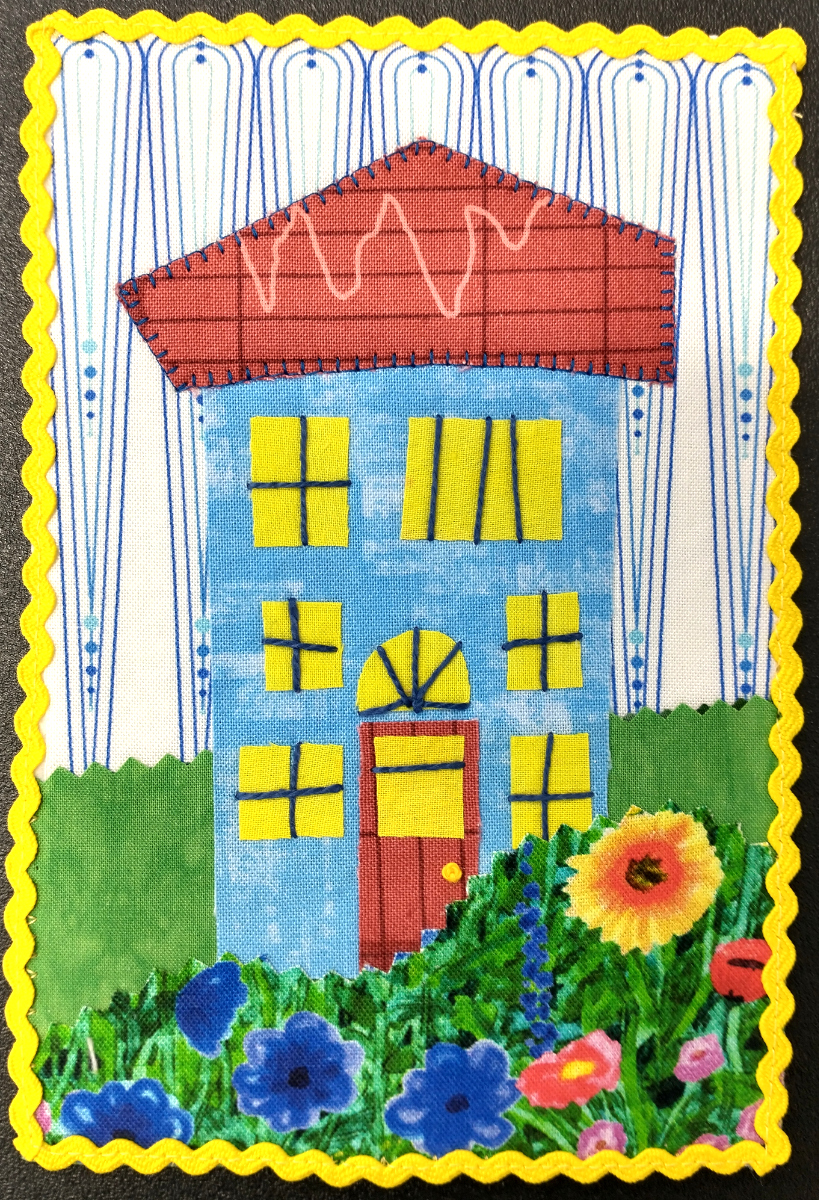
And finally, I have already submitted something! The picture below is of a postcard I made for the Sisters Outdoor Quilt Show fundraiser, and submitted in response to their call for entries!

House Card, 4″ x 6″


A “Finish” From 2014

This started as an art quilt in 2014 because I had some fabrics that were translucent and had a sheen. I thought they would make great fish.

I pieced strip sets and then joined them with curved seams to make the background. I inserted some gold streaks to represent sunlight in the water.

Then I appliqued the fish onto the background, and decided it wasn’t good enough. Who knows why?

My original plan was to add lots of beads for bling, but when I found this during my studio de-clutter, I decided against that. It’s going to be a donation quilt and I expect some kid will like it just fine. No beads on kid quilts, so it’s good to go.

Gotta know when to keep going on a project and when to move on to the next one. I just took a class with Lyric Kinard to focus on what comes next. You’ll be among the first to know!


Repair–The Fifth Finish

Yes, “Repair” is the name of this pattern, by Eudaimonia Studio. I especially enjoyed that instructions are given for both “precise” and [deliberately] “imperfect” styles! In case you can’t guess, I certainly chose the imperfect directions, which encourage cutting off of points every chance you get–ha! Then I arranged the blocks semi-randomly rather than in one of the multiple suggested layouts, and here we are.

Here’s the back with the hope that you can see the wonderful panto quilting done by Linda Nichols. The design is called “Mid-Century Squared” and I think it’s perfect for the quilt.

Quilt Stats

Name: Repair

Finished size: 57″ x 71″

Design by: Eudaimonia Studio, available here

Pieced by: me

Quilted by: Linda Nichols

This was an enjoyable project and I recommend the pattern–it was easy and fun.

The 32-Piece Quilt

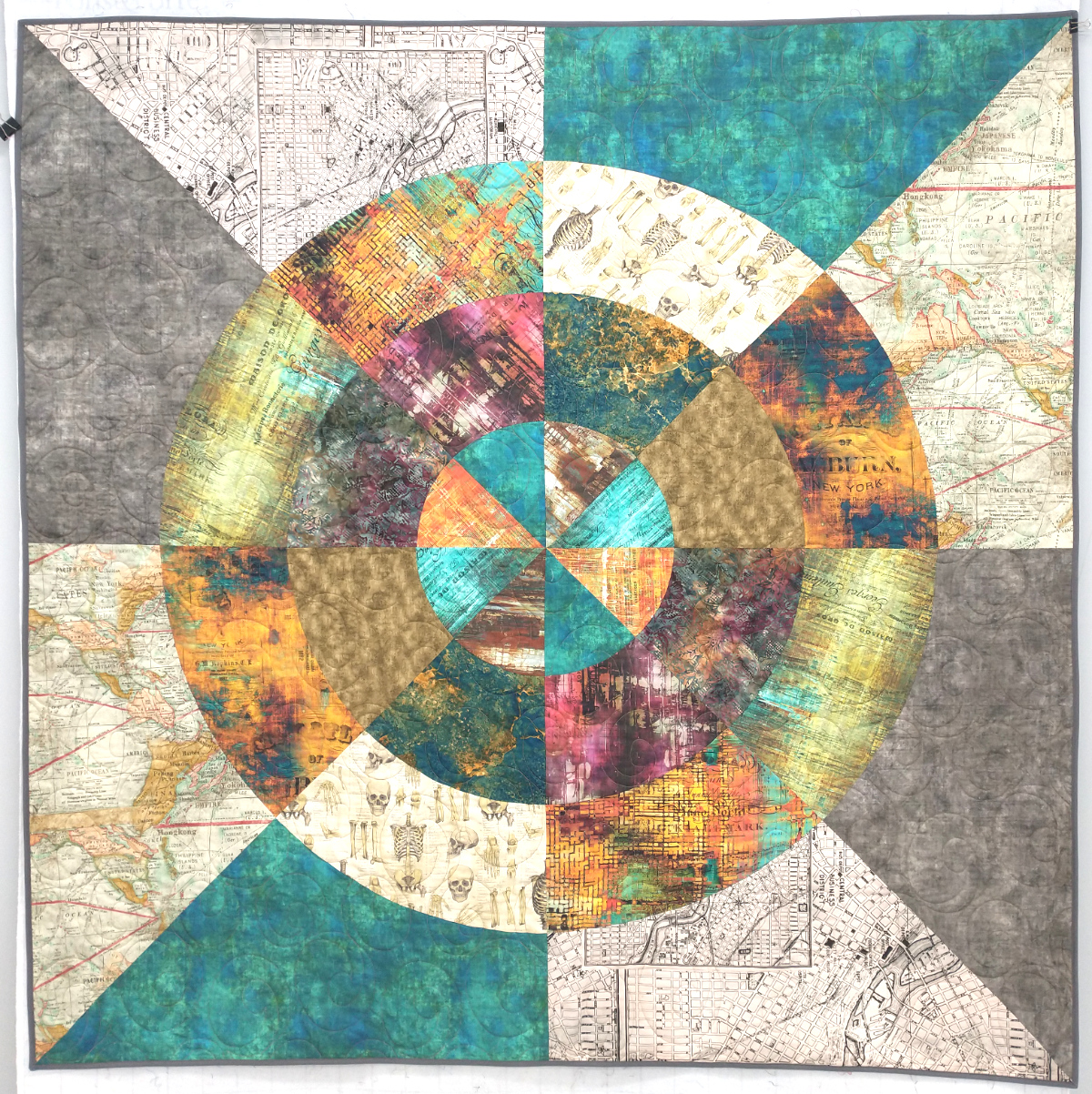
I first saw this quilt hanging in a shop I visited while travelling. It was made in the original dark colors as designed by Tim Holtz, but it was striking. I downloaded the pattern (available free, here) and procrastinated for a few months.

Finally I gathered my Tim Holtz fabrics and made my version in lighter colors.

The only difficult part was getting the fabrics cut in the correct orientation. The name of the pattern is “Curious By Nature”. Once I got the pieces cut, it went fast because there are only 32 pieces!. I love the quilt and loved making it. Did I mention I love this quilt?

And here’s a picture of where all 8 points come together at the center. I take little credit for this, because the pattern included shaped points that made this possible!

I love those Tim Holtz fabrics–they’re so wierd! And did I mention I love this quilt?

Quilt Stats

Name: Curious By Nature

Designer: Tim Holtz

Finished size: 61″ x 61″

Pieced by: me

Quilted by: Linda Nichols

Second Finish

I’m usually behind on binding quilts for several reasons that I’ll spare you. Anyway, that makes it look like I’ve made a lot of quilts in quick succession, when really I’ve just procrastinated. Then I get around to binding a bunch of quilts at once and people think, “Wow, you’re really productive!” See how that works? Ha!

This is the second finish of 2025. It’s called “Ice Cubes”. I got the idea from a quilt by Zen Chic (her pattern here). I made it to use scraps, and mixed white and cream neutrals for the background. It made a good “leaders and enders” project.

Quilt Stats

Name: Ice Cubes

Finished Size: 54″ x 54″

Design: Inspired by a Zen Chic pattern

Pieced by: me

Quilted by: Linda Nichols

More to come!


The Elizabeth Quilt

When I straightened out my studio for the new cabinets, I found some “leftover” fabric sent to me by my blogging friend Elizabeth (OPQuilt). Then a short while later I learned that she had torn up her studio looking for fabric to bind her pomegranate quilt. Oops, I realized it was the very same fabric! I contacted Elizabeth to let her know I was the culprit and we both got a good laugh out of it.

Here’s Elizabeth’s picture of the original fabric:

Photo courtesy of Elizabeth Eastmond

And here’s her pomegranate quilt, pattern available here.

Photo courtesy of Elizabeth Eastmond

Then, since I’d found the fabric, I decided to use it for a donation quilt. One of the places we donate has a particular need for quilts for older boys, and I thought these green-gold-magenta fabrics would be perfect. I added a couple of fabrics from my stash for variety and was ready to go.

After looking through patterns, I selected this one by Elizabeth herself! It’s available in her PayHip shop, here.

Photo courtesy of Elizabeth Eastmond

And now my version of the quilt, after adding fabric from my stash for the borders.

Last but by no means least, here’s a little bundle of scraps to be passed on to a scrap-loving friend. I wonder what will happen to these fabrics next!


First Finish

Here’s the first finish of 2025, made last year but finally bound now.

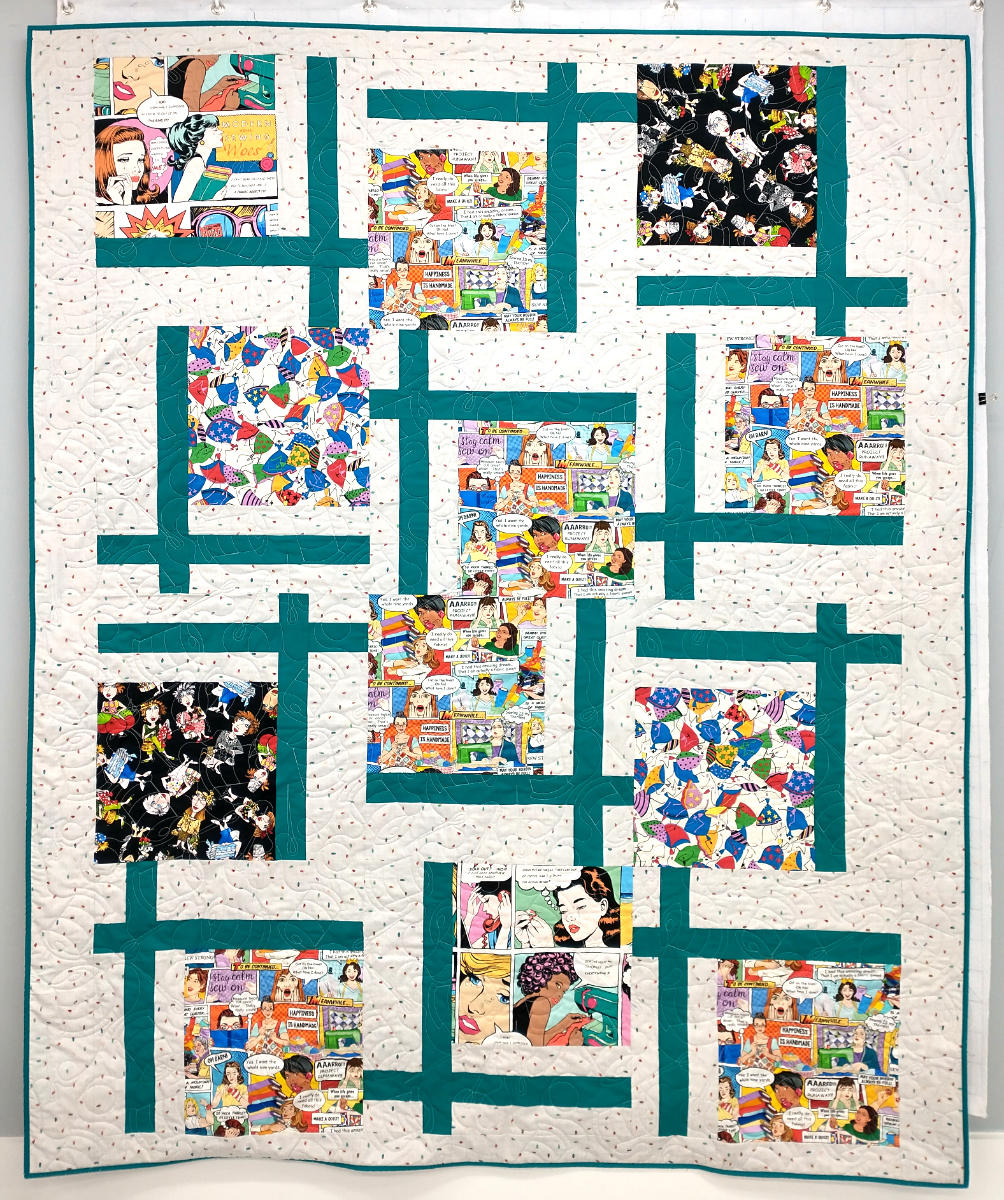
This was made from the BQ2 pattern (available here) to make use of the sewing-themed fabrics I’ve collected.

Hopefully you can see the spool, needle, and thread in the quilting pattern

Quilt Stats

Name: Quilt Drama

Finished size: 63″ x 77″

Pattern: BQ2, by Maple Island Quilts

Pieced by: me

Quilted by: Linda Nichols

Now to binding the rest of the quilts!

A Variation

The change of year got me even before the year changed! When I scheduled this for January 5, WordPress defaulted to 2024 and I didn’t catch it. So you probably got this last Sunday, but it was intended for January 5 2025, and here it is now!

I’ve said before that I make a practice block before deciding to make the whole quilt, and here is another situation in which I’m glad I did.

I bought this pattern, only to realize that it’s just a variation on a Karla Alexander quilt I made years ago.

It has the same problem as the original pattern: it’s difficult to get curves to lie flat when both the concave and convex sides are cut the same (i.e., with no seam allowance on either). So, as you hopefully can’t tell from the picture, nothing lies flat here:

Additionally, I don’t care for this look. Sure, it might be better when the rest of the colors are added and mixed up more, but I’m over it already. So I re-arranged the blocks:

This quilt includes some of my favorite Alison Glass fabrics, so I was determined to find a way to make it work. I went to dinner, then came back and just put the other fabrics from the collection up on the design wall to see how it all looked.

I decided to use the blocks I’d made so far as a panel. I put a little border around the panel to set it off from the background blocks.

The following day, I cut up and rearranged some of the remaining fabrics, then sewed it up.

The finished top is about 57″ x 68″

I love it! It’s nothing like what I started out to do, but it’s satisfying to me. And I’m really glad I made the sample blocks because this way the fabric wasn’t wasted.