Latest Finishes

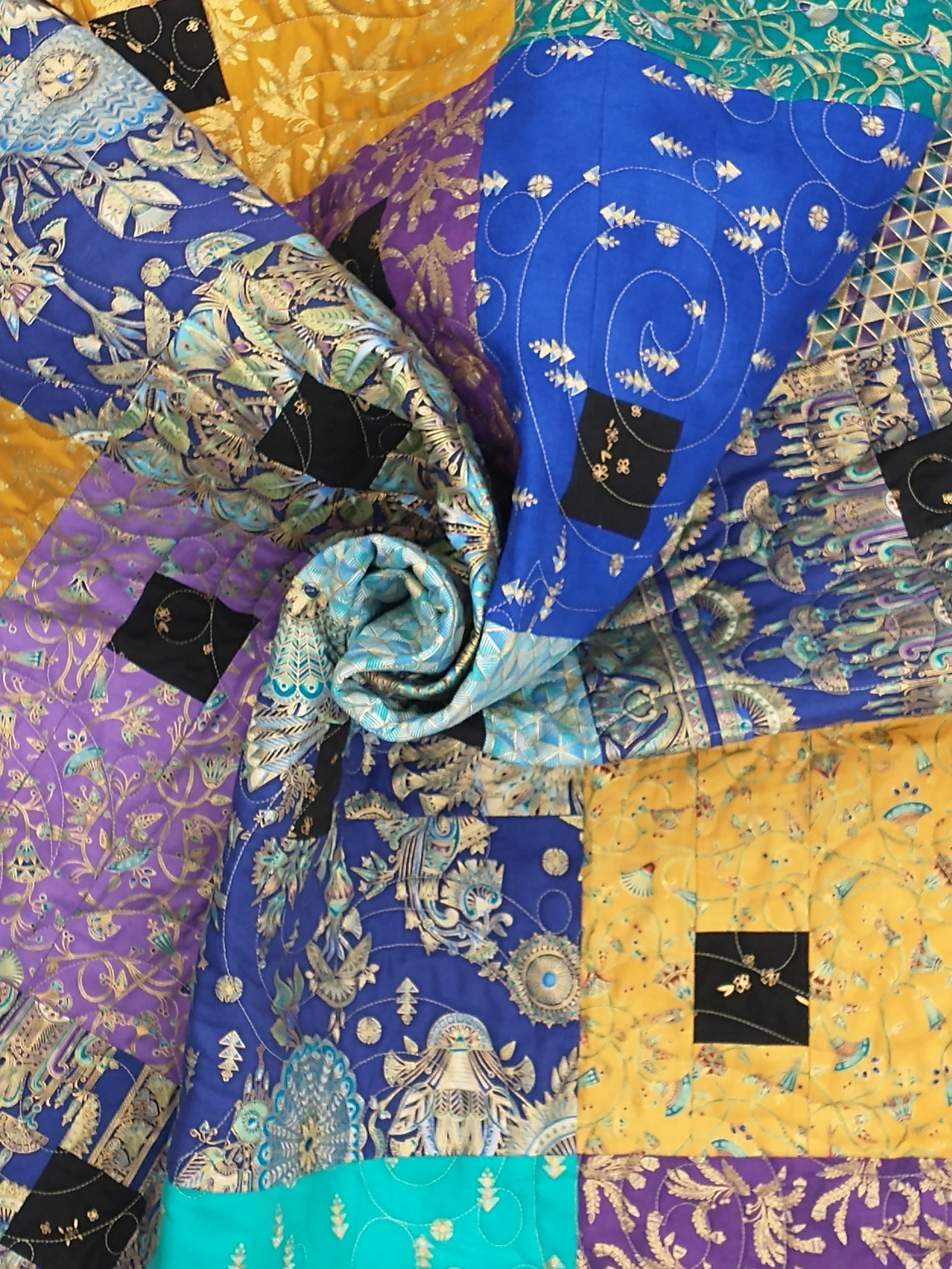
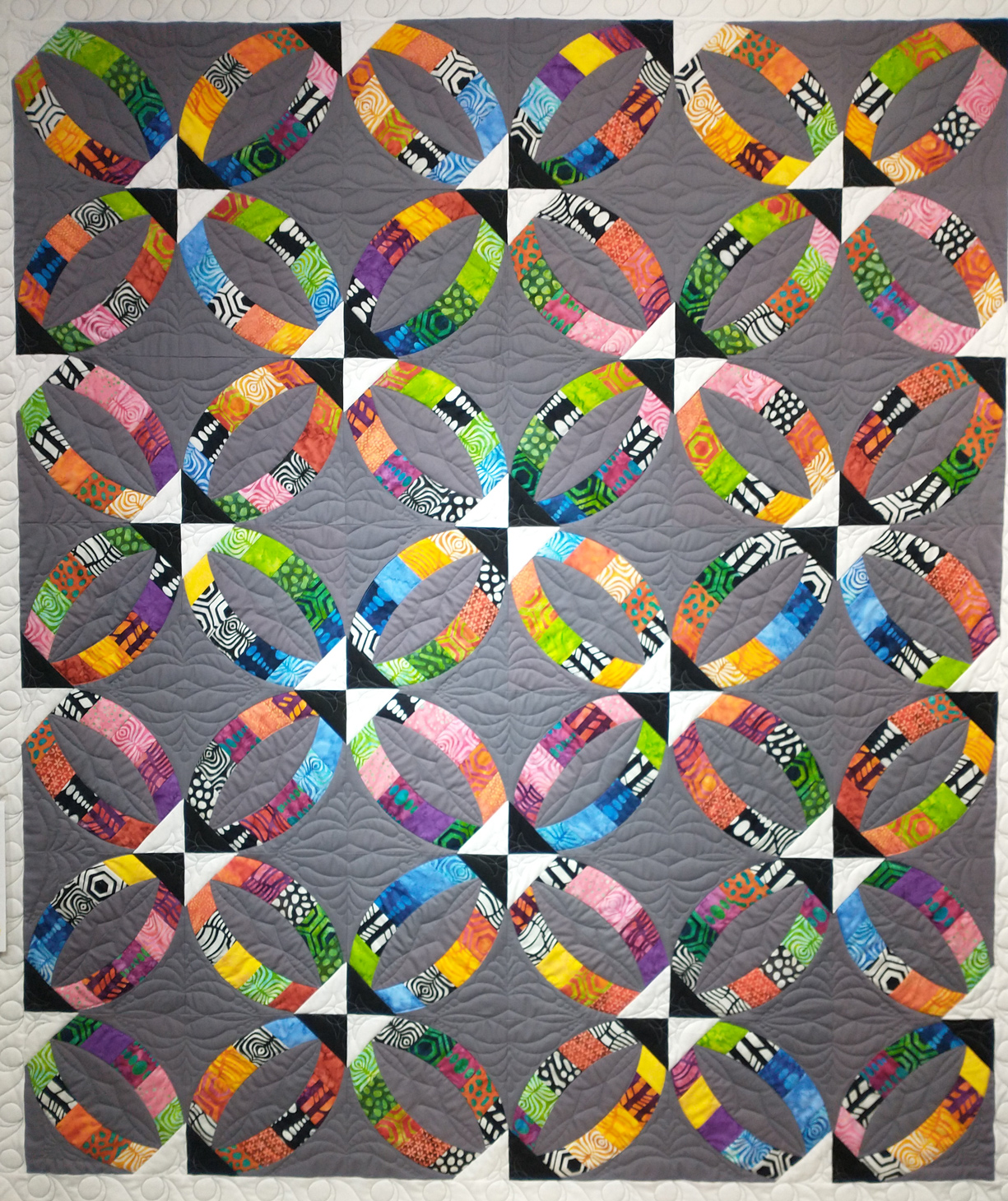
This first quilt was made to display the beautiful fabrics from a line called Ancient Beauty, by Robert Kaufman. A friend and I found fat quarter bundles of this in a shop we visited while travelling, and the fabric was just too beautiful to leave there.

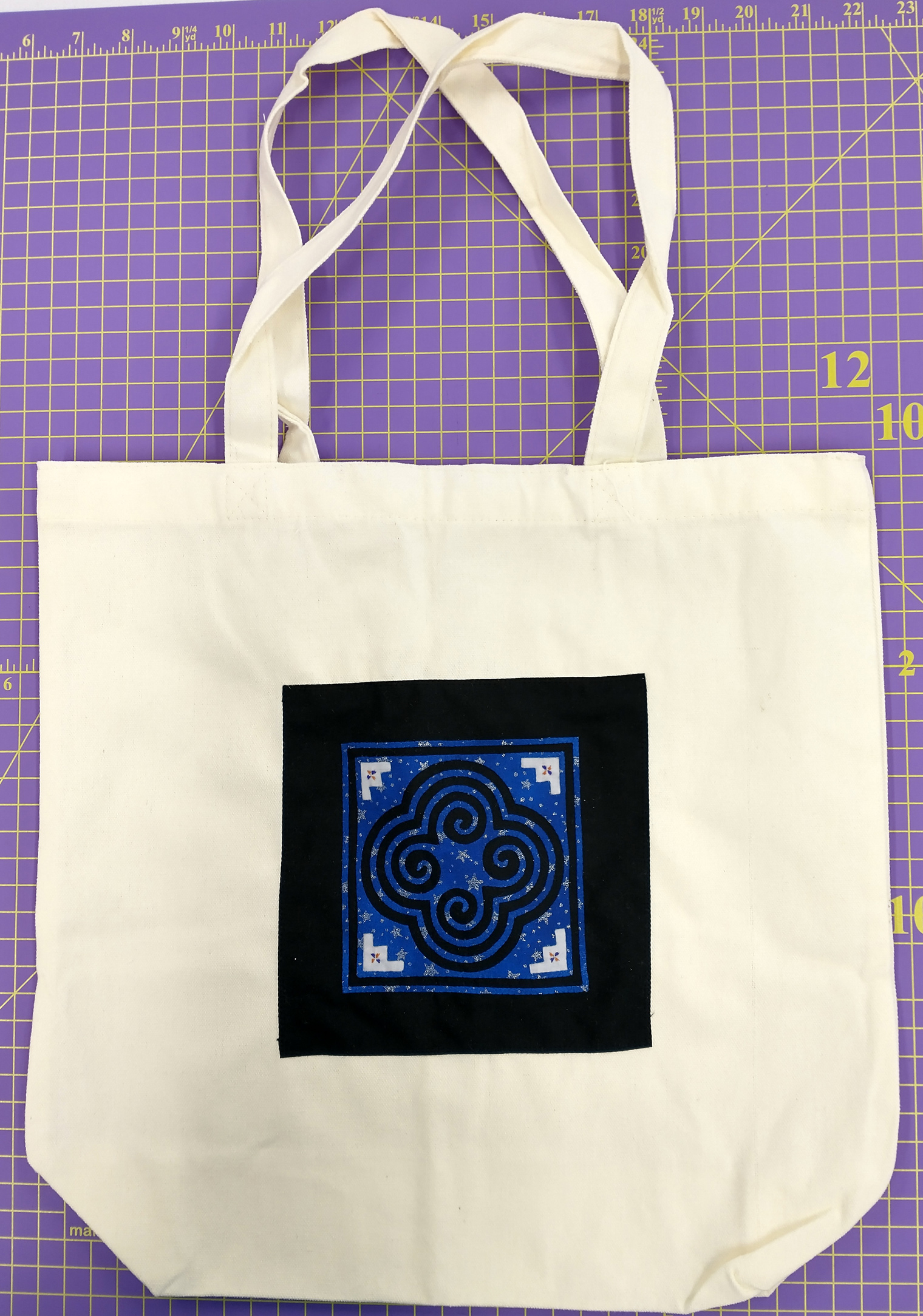
Here’s the swirl picture:

Quilt Stats:

Name: Ancient Beauty

Pattern: tic-tac wall quilt from the book Cozy Modern Quilts by Kim Schaefer

Finished size: 51″ x 61″

Made by: me

Quilted by: Linda Nichols

The second quilt is the “Indonesian ethnic” one made after I watched a lecture on ethnic fabrics.

Quilt Stats:

Name: Indonesian Ethnic

Pattern source: Block design by Carole Lyles Shaw for some blocks; Gwen Marston style stars for some blocks; overall design is mine

Finished size: 60″ x 68″

Made by: me

Quilted by: Linda Nichols

Ethnic Fabric Lecture

As I mentioned a few weeks ago (here), I found an interesting-looking lecture on the use of African fabrics in quilts. Offered through Creative Spark, it is called African Fabrics for Contemporary Quilts, Crafts, and More.

My friend Laura agreed to sign up for the lecture too and we scheduled a time to view it together (from different states). The lecture was specific to African fabrics, and we both had some of those in addition to some other interesting fabrics we hoped to use.

We both enjoyed the lecture. Laura was happy to learn the meaning of some of the designs in her African fabrics, and I was happy to hear Carole Lyles Shaw‘s take on “cultural appropriation”. The question presented was whether it’s acceptable for individuals who are not of African descent to make things with African cloth. Carole’s response was that cultural mixing goes on all the time, so it’s perfectly acceptable for anyone to use the fabric. However, the designs should not be used without attribution, which of course is a basic principle across creative endeavors.

The other presenter for the lecture was Lisa Shepard Stewart. She’s obviously in favor of everyone being able to use African fabrics, because she has an online shop to sell them!

There were two bonus patterns at the end of the lecture, one for a notebook cover and one for a small quilt.

When I went back to my stash, I decided I didn’t have enough different African fabrics to make the small quilt. HOWEVER, a friend gave me this wild fabric from Lunn Batiks several years ago and it seemed to have enough variety all in one piece. And batiks are an ethnic fabric with a long history of use in quilting, so here we go!

I made some Gwen Marston-type stars, and some of the blocks from the bonus pattern (designed by Carole Lyles Shaw), and combined them into this:

The top is finished, but you’ll probably be seeing it again when it’s quilted and bound.

As for using fabrics from different cultures, I’m with Carole: we’ve been a cultural melting pot for years. Nobody questions whether I can use cottons from India since I’m not of East Indian descent, or whether to use Japanese yukata fabric in quilts. And we’ve been using Indonesian batiks for years. Cultural appropriation is a legitimate concern, but that’s not what this is. As a friend once said, “Worry about something else.”


Incubator Quilts

A Ronald McDonald House near me requests quilts to be placed over preemie incubators in the NICU. They suggest 36″ square, so I made a few. They’re all from “orphan blocks”, and most were quilted by Linda Nichols (though I quilted one myself–gasp!).

Here they are:

And they all have this pretty backing:

Another use for orphan blocks 😀

Car Inspiration!

On a recent trip to Indiana we stopped at the Auburn Cord Dusenberg Automobile Museum. It was much more interesting than you might expect for a quilter, so here are some examples of inspiration I found there. I enjoy history and design, so even though I’m not an old car buff, I had a good time at the museum and was somewhat reluctant to leave even after two hours!

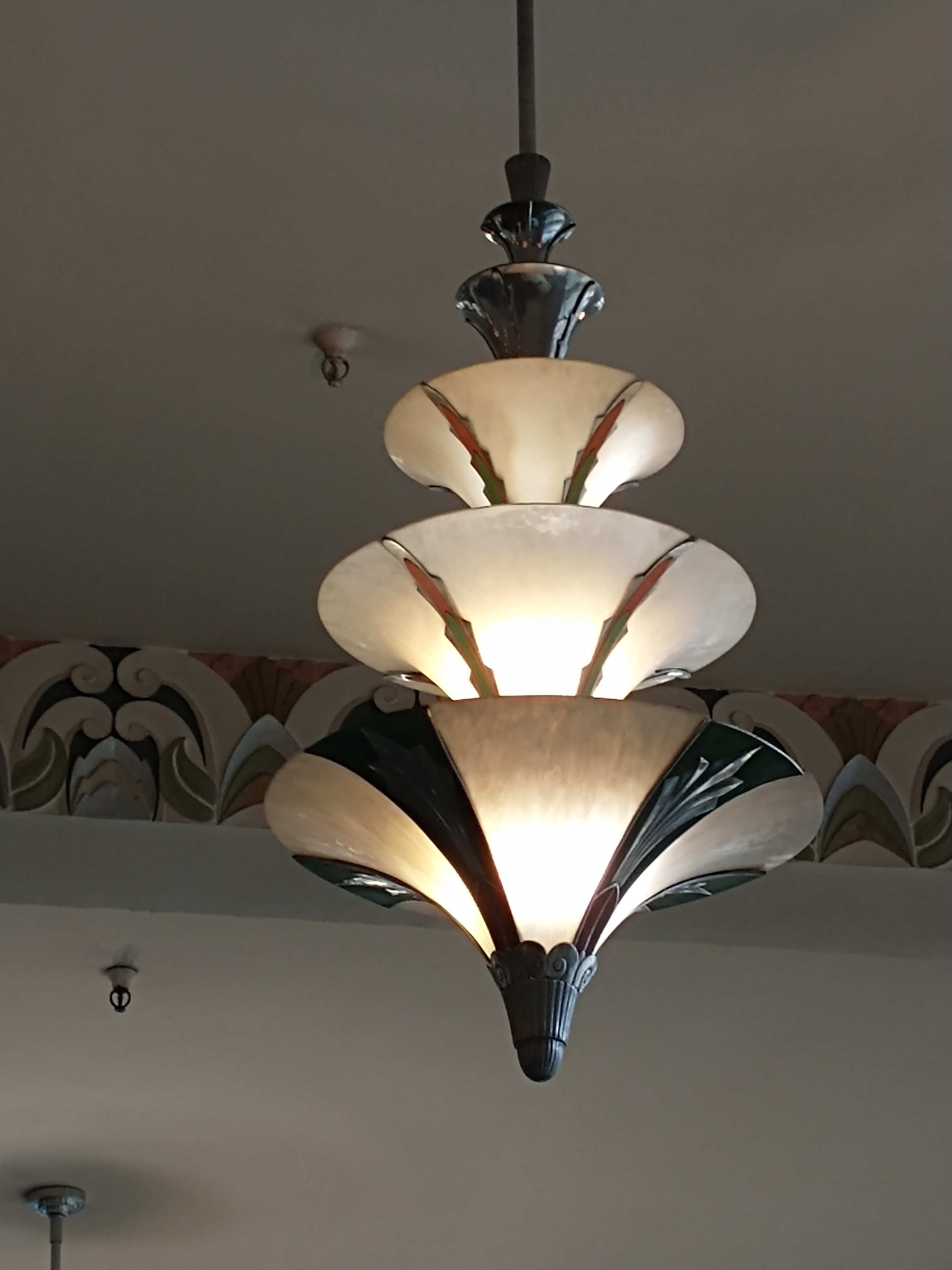
First, the museum itself! The building was originally a showroom to which car dealers came in the early 20th Century to be convinced to sell automobiles made by the Cord company. And what a showroom it was! It was huge, and its art deco details have been restored. Here are a few of my favorite examples.

The chandeliers were the first thing I noticed!

Here’s a broader view of just one part of the showroom, showing the detail on the beams, the columns, and the grand staircase. And look at that Italian terrazzo floor!

Museum displays explained that, up until World War II, there was quite a market for American made luxury cars. And I do mean luxury–many of the cars were meant to be driven by a chauffeur! To my surprise, these luxury cars were many different colors. I took these pictures because I liked the color combinations and plan to use them for inspiration.

Then there was a car that belonged to Frank Lloyd Wright, whose work I admire. Mind you, I don’t much admire the man, from what I know about him, but his work was wonderful.

The car is “Cherokee Red”, a favorite color of Wright’s. I investigated and learned that there is more than one Cherokee Red, even within Wright’s work. Here are a couple of references, in case you’re as much a geek as I am (looking at you, Gwen).

Here is an article explaining Wright’s Cherokee Red and including several examples.

And here is an article about the PPG palette now used at Fallingwater. It includes “Fallingwater Red” which is the version of Cherokee red used in that house. I have bookmarked this so I can use the palette for a future quilt!

If you’re in northern Indiana, this museum is worth a visit, even if you aren’t much into cars.
 

An Easier Hanging Sleeve

Hanging sleeves for quilts are required for most quilt shows and instructions are available many places online. I have for years used the instructions from the American Quilters Society website, as I consider them the definitive resource for such things. Recently, however, I’ve made a few tweaks that I think make the process easier.

Here are my changes, step by step. If you aren’t already familiar with how to make a hanging sleeve, go to the AQS site for basic instructions. These are just my changes.

  1. Use leftover quilt backing (108″ wide) to reduce the number of strips that have to be joined.

    I often buy backing in 3-yard packs, and that means there’s some left over that’s still 108″ wide

  2. Use two rulers to add up to the 8.5″ width needed for a regulation quilt sleeve and cut a strip 8.5″ x width of fabric. Cut whichever way gives you the longest strip. In this case, I had a full width of fabric, so I got a strip 108″ long!
  3. If you’re making sleeves ahead of time, just stop here and roll up the fabric for storage. If you’re ready to use it for a sleeve, measure across the width of the quilt and cut a length of sleeve 1″ less than that. (Most instructions say to cut the width of the quilt then hem the ends, but that’s unnecessary.)
  4. Now serge or zigzag the ends of the strip to finish them. Most modern machines have the equivalent of a serger stitch, so you don’t necessarily need a serger to do this.

    Just serge the ends to finish the edges rather than hemming.

  5. Fold the sleeve lengthwise, wrong sides together, and press lightly so the fold opposite the raw edges can be seen. Either join the raw edges with a 1/4″ seam or serge them together.
  6. Baste 1/4″ from the folded edge of the sleeve, opposite where you just joined the raw edges. This allows for the ease required in the sleeve so the quilt will hang flat when a big pole is put through the sleeve.

    Left arrow points to the basting; right arrow points to the seam joining the raw edges

  7. Now re-fold the sleeve, still lengthwise, so the basted seam is on top and the seam that joined the raw edges is on the bottom.
  8. Attach the sleeve to the quilt back by hand. Note that the way the raw edges were joined puts the long seam on the outside of the sleeve, facing the back of the quilt. It’s thus out of the way.
  9. It’s possible to avoid half this hand work if you think waaaay ahead and put the top edge of the sleeve under the binding as you attach the binding, but really, who plans like that?
  10. After attaching the sleeve, remove the basting stitches

One more thing: After the quilt show, remove the sleeve to be used on the next quilt! Making a hanging sleeve still isn’t my favorite thing to do, but it’s easier with these little modifications.


More Circles

Here’s another quilt made from circles cut out of orphan blocks.

I asked a friend whether to re-design the whole thing or have it quilted as is, and she said it would be fine if it had a really interesting quilting design. She here is the Aboriginal panto, done by Linda Nichols in gold thread.

Quilt Stats

Name: More Circles

Finished size: 50″ x 72″

Design by: me

Quilted by: Linda Nichols

The good news is that a big pile of orphan blocks just went to a guild that’s making small wallhangings for the doors in a nursing home. That leaves me with only a few hundred to do something with 😀

Snowmen On the Way!

Studio Stitch is having a Christmas in July event, and I asked to make something with a snowman for it. After searching through available patterns, we selected this cute wall hanging (or table runner, maybe) by Sandy Fitzpatrich of HissyFitz Designs.

I’ll be teaching this in July, but the patterns started selling as soon as the class sample went up, so the shop is re-ordering. If you’re comfortable with fusible applique there’s no need for a class, since this is pretty easy. However, that cute cardinal in the center block needs to be assembled separately, on a special applique sheet, and then fused to the block.

The pattern is available from Studio Stitch, either in person or by mail, and I’ll be teaching the class July 27. There are other fun holiday-related classes planned, as well; you can see them on the shop’s website.

For Special Little People

My latest quilts are for two special little people. The first is a “big boy” quilt for the boy who’s going to be a big brother. The second is for the baby, who isn’t here yet!

First, here’s the Big Boy quilt. His Mother says he likes Mickey Mouse, but when I looked at those fabrics it seemed like he’d outgrow them too fast. However, he’s playing with a ball whenever we see him, and his Dad coaches football, so his quilt has a team sports theme, with basketballs, footballs, and baseballs.

That blue baseball pennant may or may not be hiding a little boo-boo…

The baby’s room has a Sesame Street theme! I guess that’s coming back around, because I found the fabric with no difficulty.

Both quilts are backed with light-weight poly fleece so they feel yummy. There’s no batting, so they’re light enough to be dragged around and made into tents. And the designs of the tops are simple, allowing the fabrics to shine.

So, after 10 years of making children’s’ quilts for a number of young friends, here are my recommendations:

  1. Choose a fabric that is likely to interest the child for the next 5 years.
  2. Use a simple pattern. Nobody’s looking at your piecing; they’re looking at the cute fabric. Ask me how I know.
  3. Also, use a simple pattern because who EVER starts these things with time to spare?
  4. Back with poly fleece and don’t add batting. Feedback from my grandkids tells me this is the most practical, kid-friendly way to do it.

Anybody have anything to add?

I Took Another Class

I love taking classes, even though, after 40 years of quilting, I often know most of what’s being taught. Most teachers have a technique or perspective that adds something to my skills, and sometimes a class is an opportunity to make a quilt I wouldn’t make otherwise.

Therefore, I signed up for David Sirota‘s Zoom class on paper piecing, in which we made the storm at sea quilt. Or rather, I made some blocks and perhaps others made the whole quilt. Whatever.

That being said, I DID make a whole Storm at Sea quilt back in 2019. I used Deb Tucker’s tools and it came out just fine with no hassle.

Love at Sea was made in 2019 using Deb Tucker’s tools.

The heart design in the quilt is a modification of Storm at Sea done by Marti Michel years and years ago; I just copied it. Eventually I gave the quilt to a friend for her new baby.

Anyway, David Sirota’s class. I took it because he’s a master paper piecer, and I’ve been doing a lot of New York Beauty blocks, which surely require paper piecing. I thought I might learn something, and I did!

David has some excellent advice on “the paper” for paper piecing and some nice techniques for accomplishing the piecing as well. Much of it is available as videos through his website. (Are they even called videos these days, or are they now called YouTubes?)

The class was well run and David is an interesting teacher. His techniques worked quite well.

So why did I make only one block? I simply lost interest in the project after I’d learned what I could from it. The block joins a number of other “orphan blocks” set aside for future projects.

The good news is that one of my guilds recently set out a call for orphan blocks. I’m going to look that up and see how many I have that meet their requirements!

Class With Cindy Grisdela

When attending the Mid-Atlantic Quilt Festival this spring I took a class with Cindy Grisdela and attended her lecture about color. Both were worthwhile.

Cindy’s class was based on her Full Wild quilt, which she entered in QuiltCon. Here’s a picture of her with the quilt, taken from her blog:

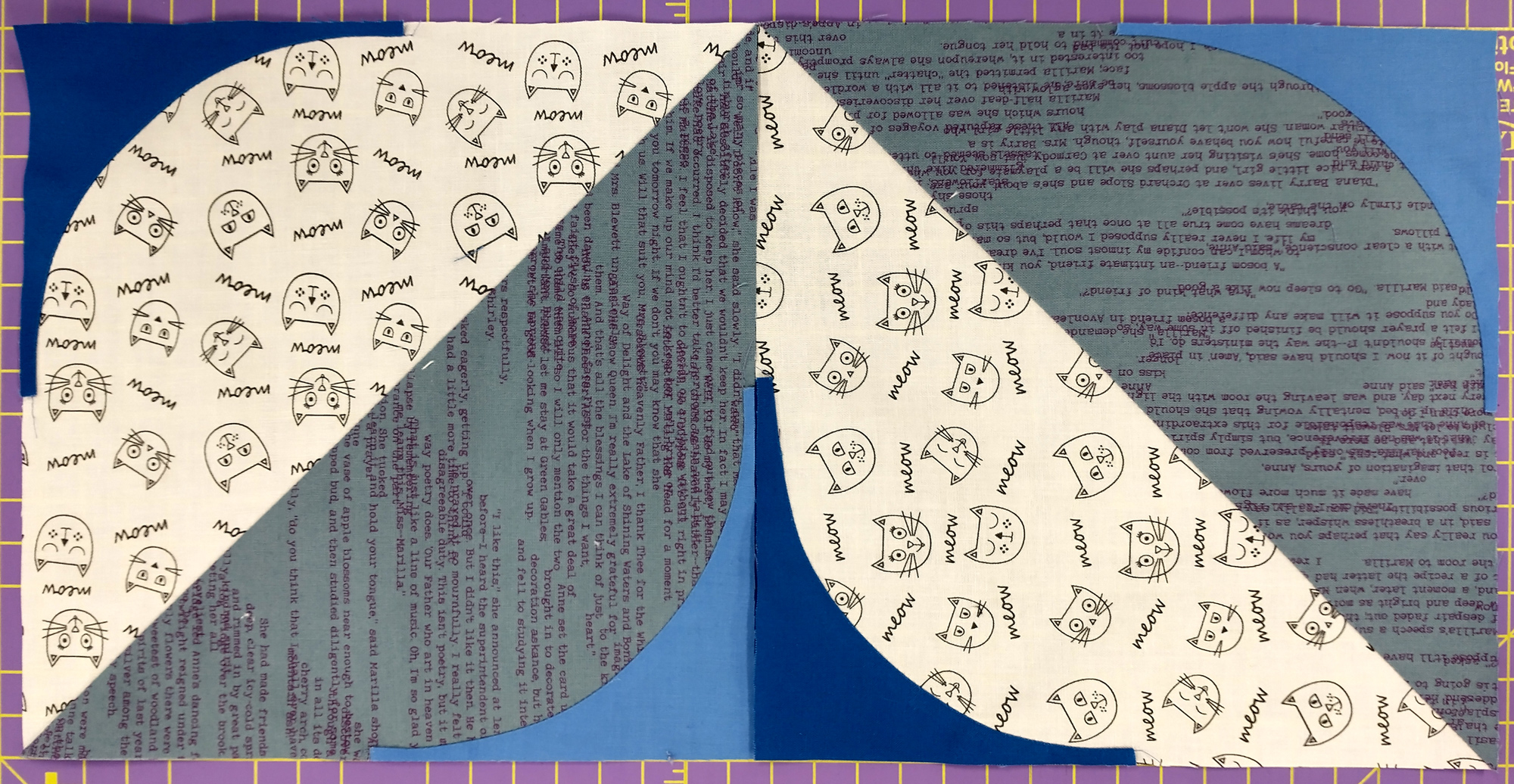
When I got home I wanted to let most of the blocks I made in class rest for a while, but I did make a small wall hanging with one of them. It’s called Drip, and I’m not crazy about it but I just had to do something with one of those blocks!

The rest of the blocks I put away because I want to consider what other colors to add. My usual problem is using TOO MANY colors, so I tried to restrain myself. Now I want to add more colors. Here’s a picture of some of the blocks just before the blocks were put away–they aren’t joined yet.

To be continued.

In her color lecture, Cindy suggested making a color wheel, saying it would be interesting to see what you had in your stash. Here’s my snapshot of her color wheel.

When I recovered from the recent quilt show (Heart of the Triad, blog is here), I decided to make a more elaborate color wheel. I drew it in EQ8 and printed templates from my drawing.

This was a fun project, AND I had all of those fabrics right here in my stash! I couldn’t resist using the light grey Tula Pink fabric with all the fun colors as background. The color wheel finished about 18″ square.

Anyway, I enjoyed Cindy’s lecture and her class, and I recommend both if you have the opportunity to attend.