A Little Quilt Trip

A friend and I joined a group bus tour from near her home in Ohio over to the AQS quilt show in Lancaster, PA. There were several stops along the way to see the sights in Pennsylvania on the way to the quilt show and back. We particularly enjoyed a tour of Amish country with a knowledgeable guide who was from the area.

Quilt on display at an Amish shop

We agreed that the best thing about the bus trip was not having to drive ourselves, though that also meant that we weren’t able to set our own itinerary. We both decided we won’t be doing another bus trip. However, it was great to get to spend time together, so we enjoyed the trip overall.

Here are a few favorites from the AQS-Lancaster show, which was wonderful.

This first was my favorite from the SAQA (Studio Art Quilt Associates) exhibit:

Grasshopper Path by Paola Machetta

And I especially liked this quilt in the special exhibit of quilts from Ukraine:
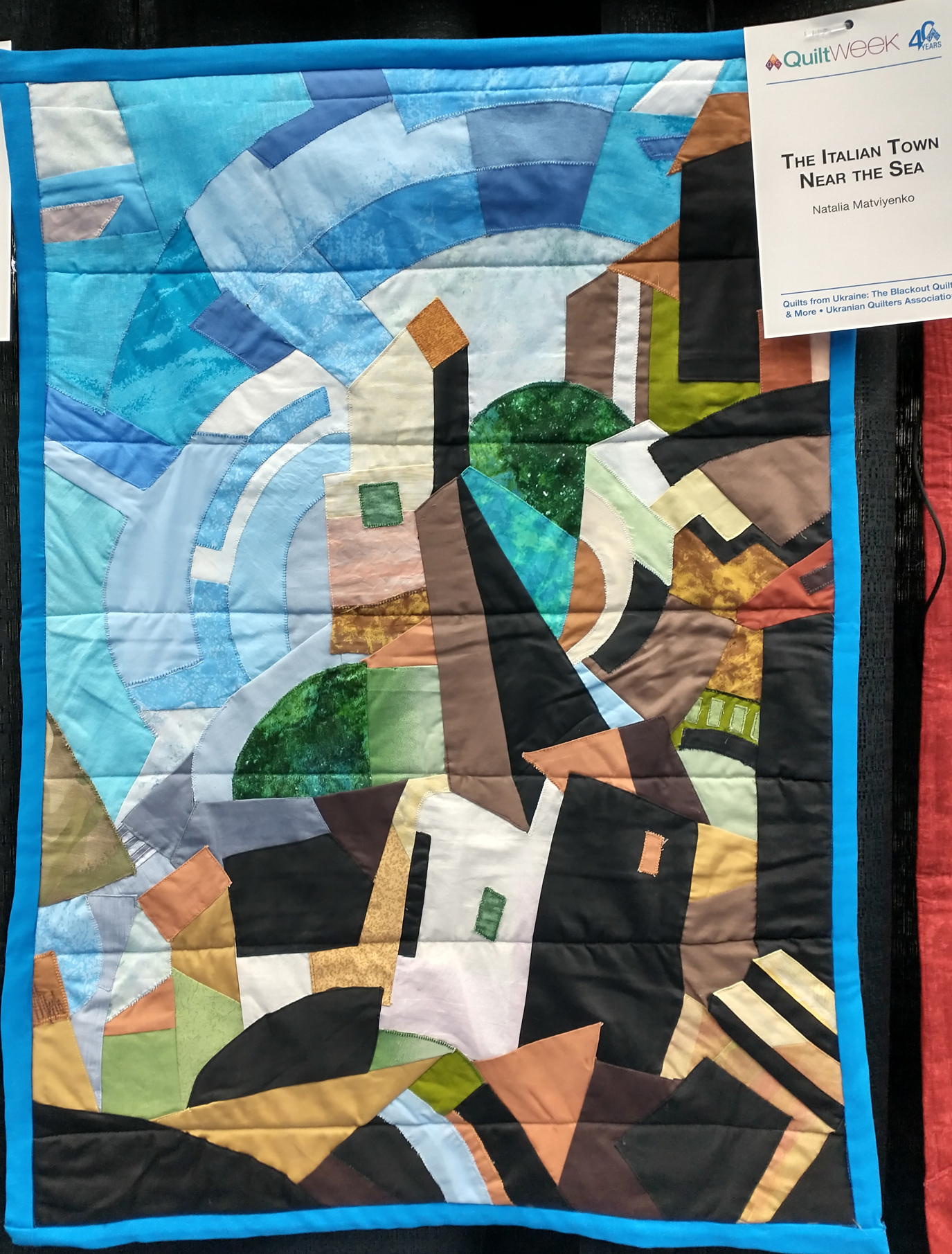
The Italian Town Near the Sea by Natalia Matviyenko

There were, as usual, many wonderful quilts in the AQS contest. Here are a few of those I loved.

With my recent interest in ethnic fabrics, I was interested to see this quilt. There’s a lot of wonderful hand work in this quilt, and it was quilted on her home machine.
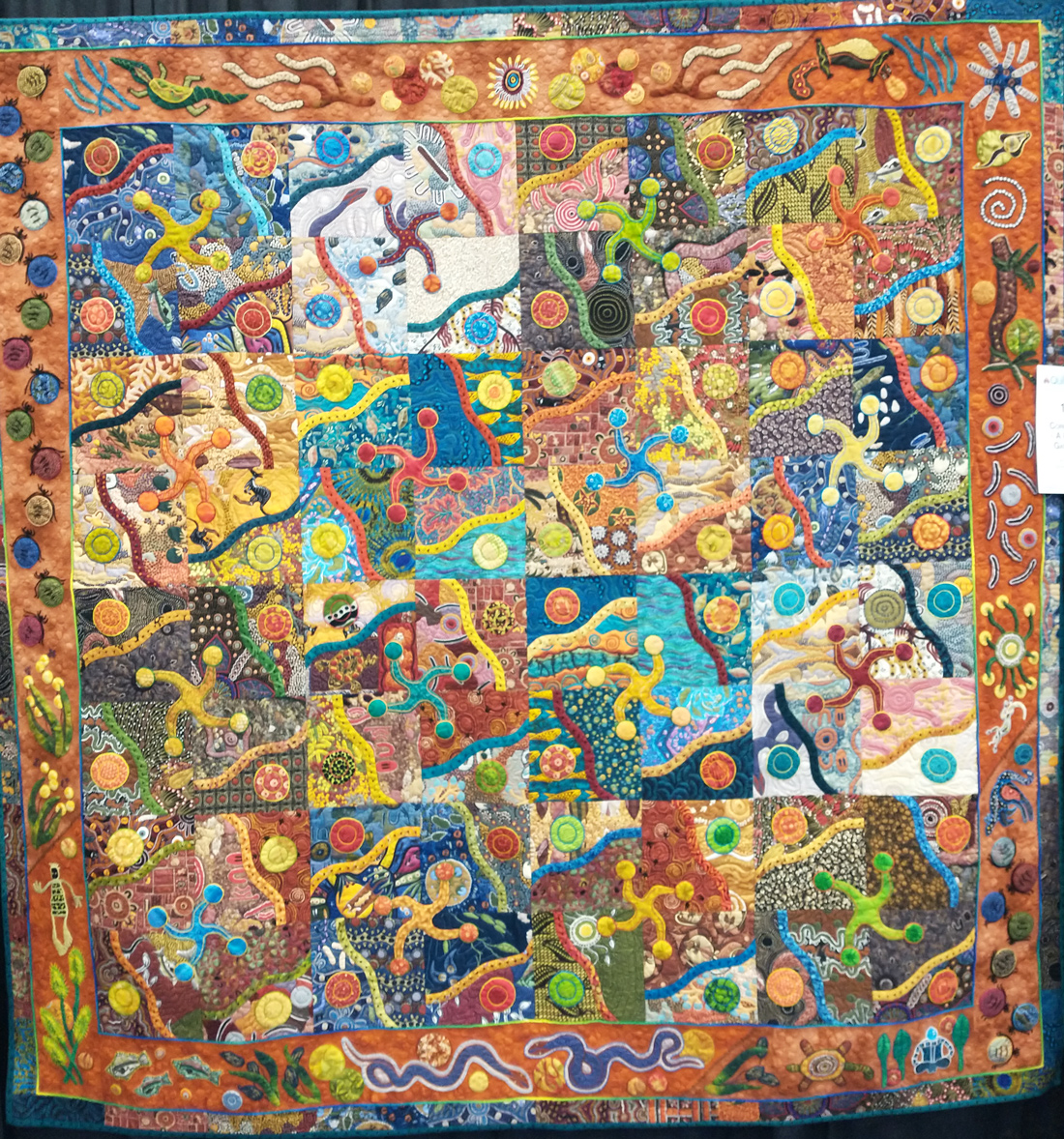
Corroboree–A Festival Gathering by Ann Horton

The next quilt was made from a pattern published by the Modern Quilt Guild. I like how the pantograph quilting contributes to the design.
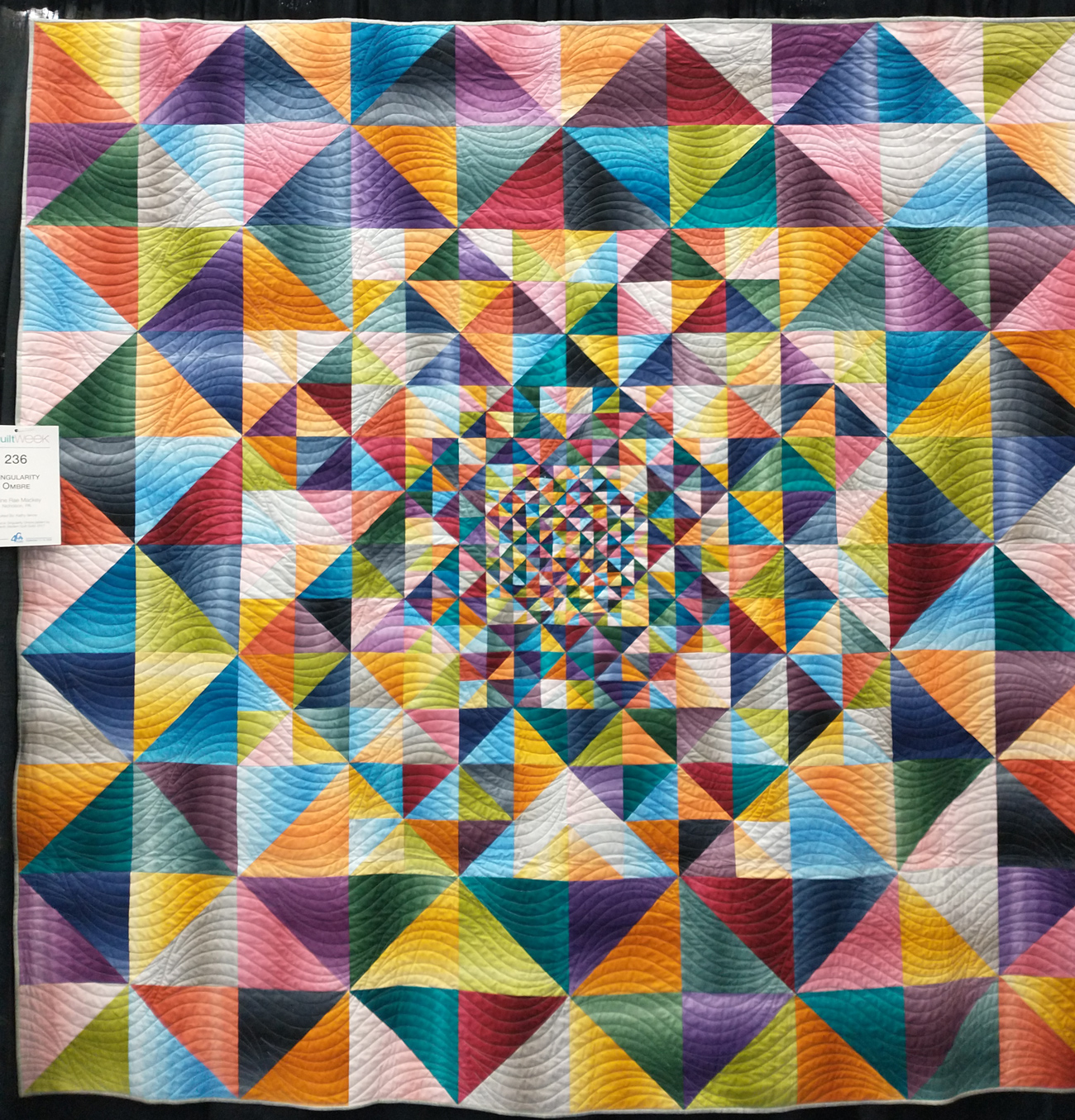
Singularity Ombre made by Elaine Rae Mackey

The symmetry of this next one appealed to me, and she quilted it on her home machine.

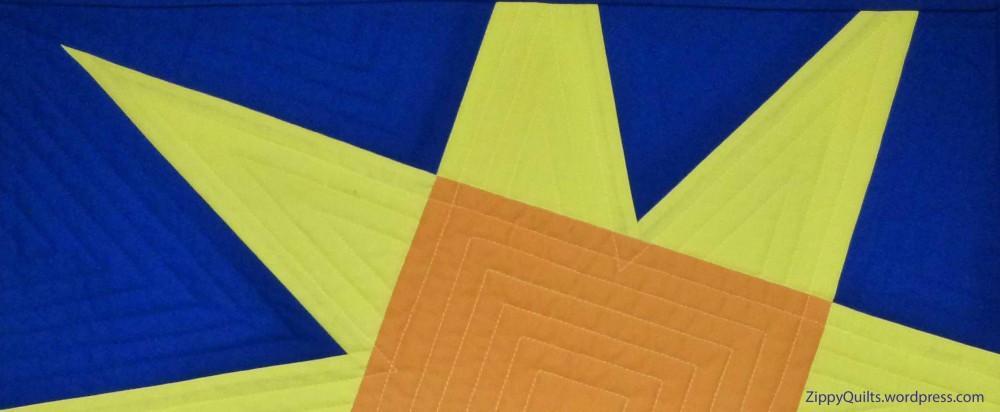
20 To Life by Robin Thomas

I love the graphic quality of this next one, though I wish it weren’t quilted so heavily. I realize dense quilting is “in” at the moment, but in this case I think it detracts from the overall design.

Releasing Joy by Patricia Caldwell

 I loved this next quilt with its strong colors and diagonal lines.

Simple Switchbacks by Kathy Tolbert

Another graphic quilt that caught my eye:

Ohio Star Reverb by Linda Selby

I don’t think any of my choices above were big winners, but there’s a post with actual professional photos of those here, and they are well worth seeing!

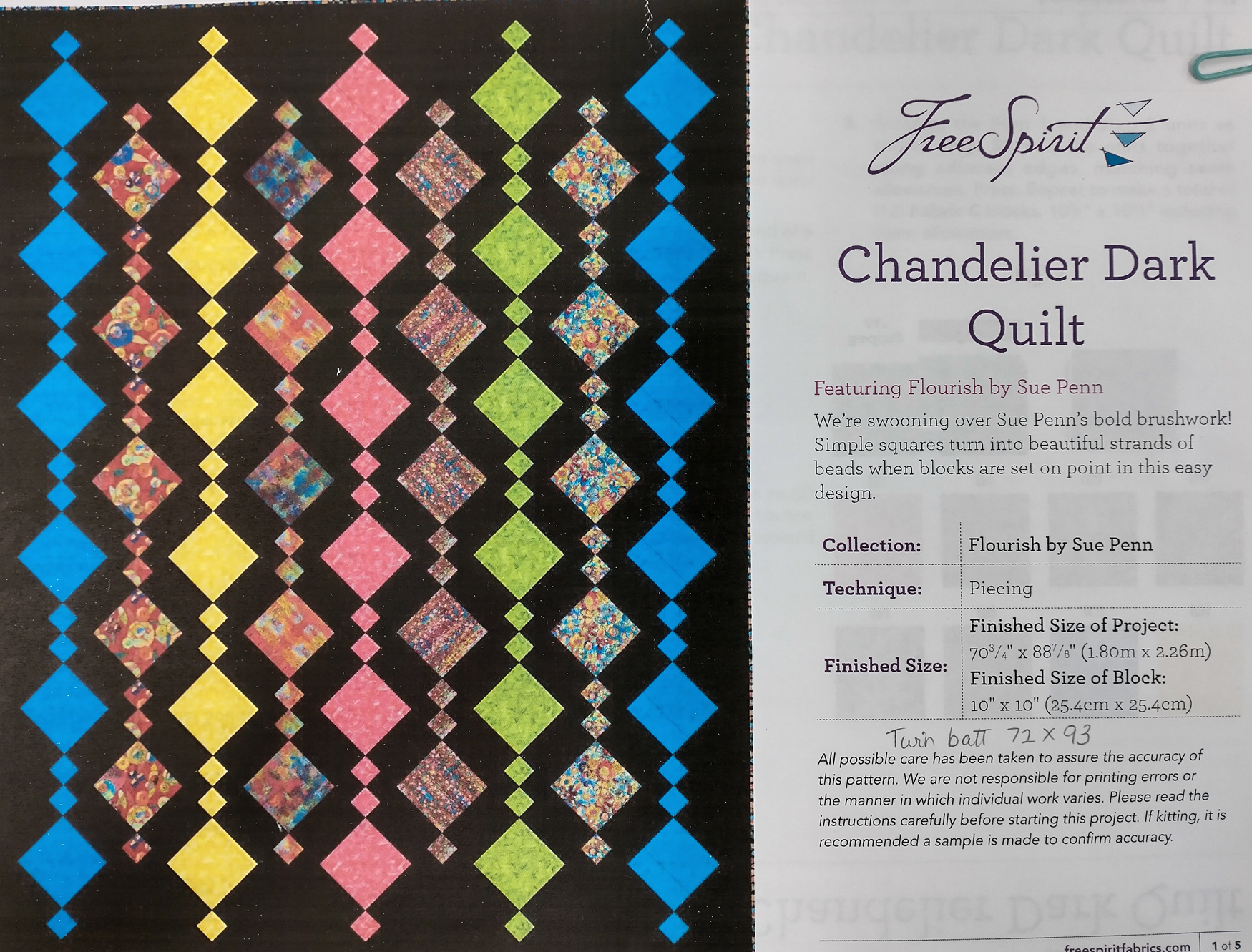
Chandelier Quilt

I’m a fan of much of the fabric designed by Chong-A Hwang for Timeless Treasures, so when this collection went on sale, I bought it.

I have NOT joined the current trend to catalog the amount of fabric in and out of the studio each month. If I see and and know I will use it, I buy it. If I use up fabric or scraps from stash, that’s great but I don’t deduct from the total. I do have a general idea of the way things are going by the increase/decrease in empty space where I store my fabric.

Klimt fabric by Chong-A Hwang

Anyway, I went looking for a quilt design to use the fancy fabric, and settled on this Chandelier Quilt pattern, free from Free Spirit.

And here’s the finished quilt, which I must say I like!

Check out the quilting by Linda Nichols, which I think enhances the design:

Quilt Stats

Name: Chandelier

Pattern: Chandelier Dark Quilt, available free on the Free Spirit website at the time I am writing this

Finished size: 57″ x 77″

Pieced by: me

Quilted by: Linda Nichols

From Inspiration to Quilt

When we visited the Auburn Cord Duesenberg Automobile Museum in June I took some pictures of cars just for their color schemes, thinking the color combinations would be interesting for quilts.

About 6 weeks later, I decided it was time to try a black and green quilt based on the car on the right. Then I became fascinated with the green vents on the side of the hood and wanted to use those shapes. Here’s how I did it.

I started drawing in Electric Quilt (EQ8, which is quilt design software that I use a lot).

Eventually I decided to trace the photo so I could get the exact shapes. I therefore cropped the photo in Adobe Photoshop……and imported the cropped photo to EQ for tracing! I can’t get a clear picture of the line drawing, but here’s the colored drawing. You can see I took a couple of “artistic liberties”, but the car is certainly recognizable.

Quilt drawn and colored in EQ8

After tracing the photo, I decided on the size I wanted for the quilt and printed a full-size pattern, again from EQ.

Then there was a pause because I didn’t have a large enough piece of the wool blend felt I use as batting for my art quilts. I first read about it in a book by Sue Bleiweiss and have used it ever since. There’s an explanation of it on Kestrel Michaud’s blog here. (Kestrel’s blog is well worth seeing in any case; her art is amazing!)

And there was a trip to the LQS (local quilt shop) for the exact shade of green, or as close as possible.

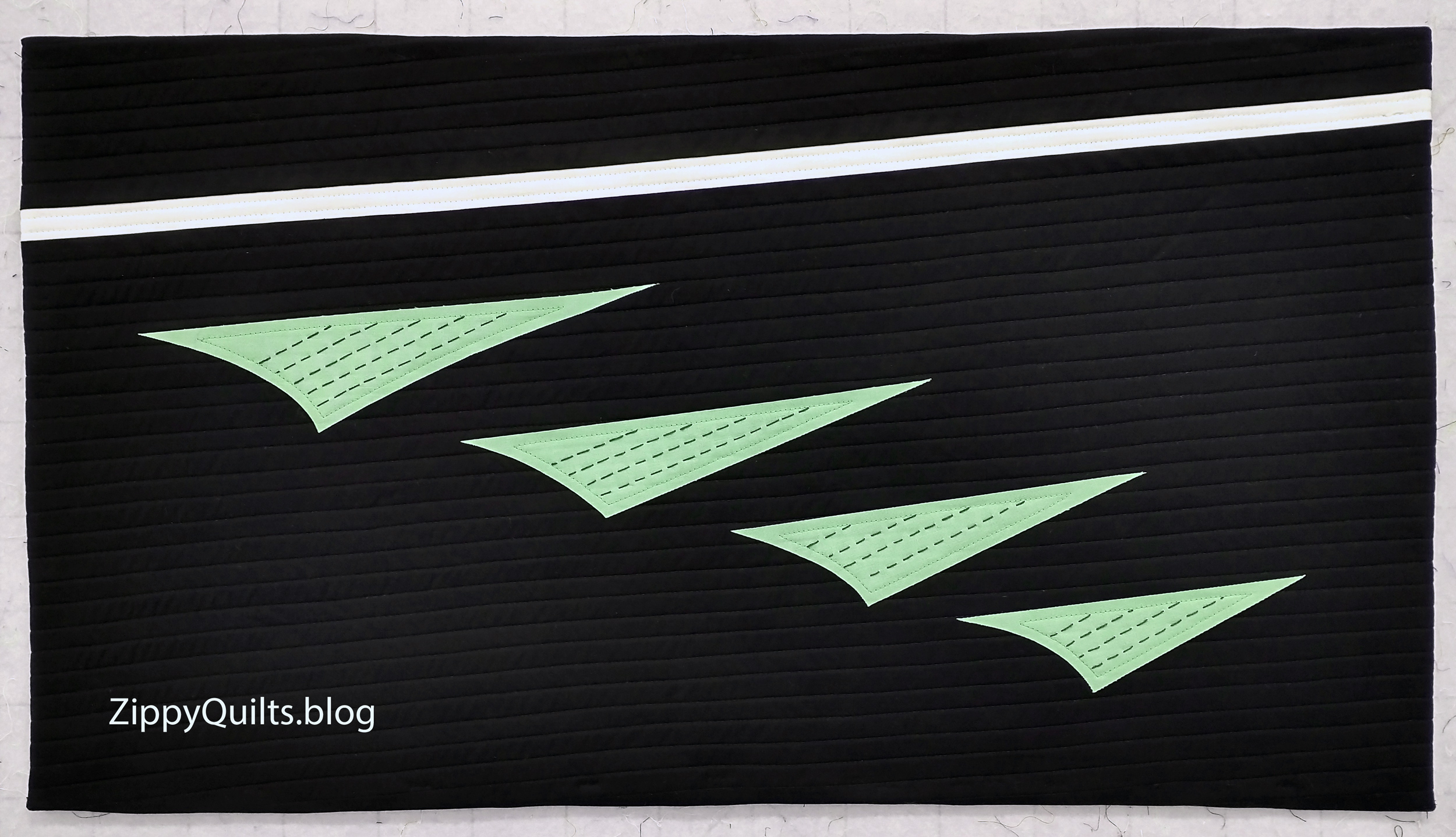
After that pause, I inserted a strip of white fabric in my black background, then quilted the top in lines parallel to the insert. I used some fun backing.

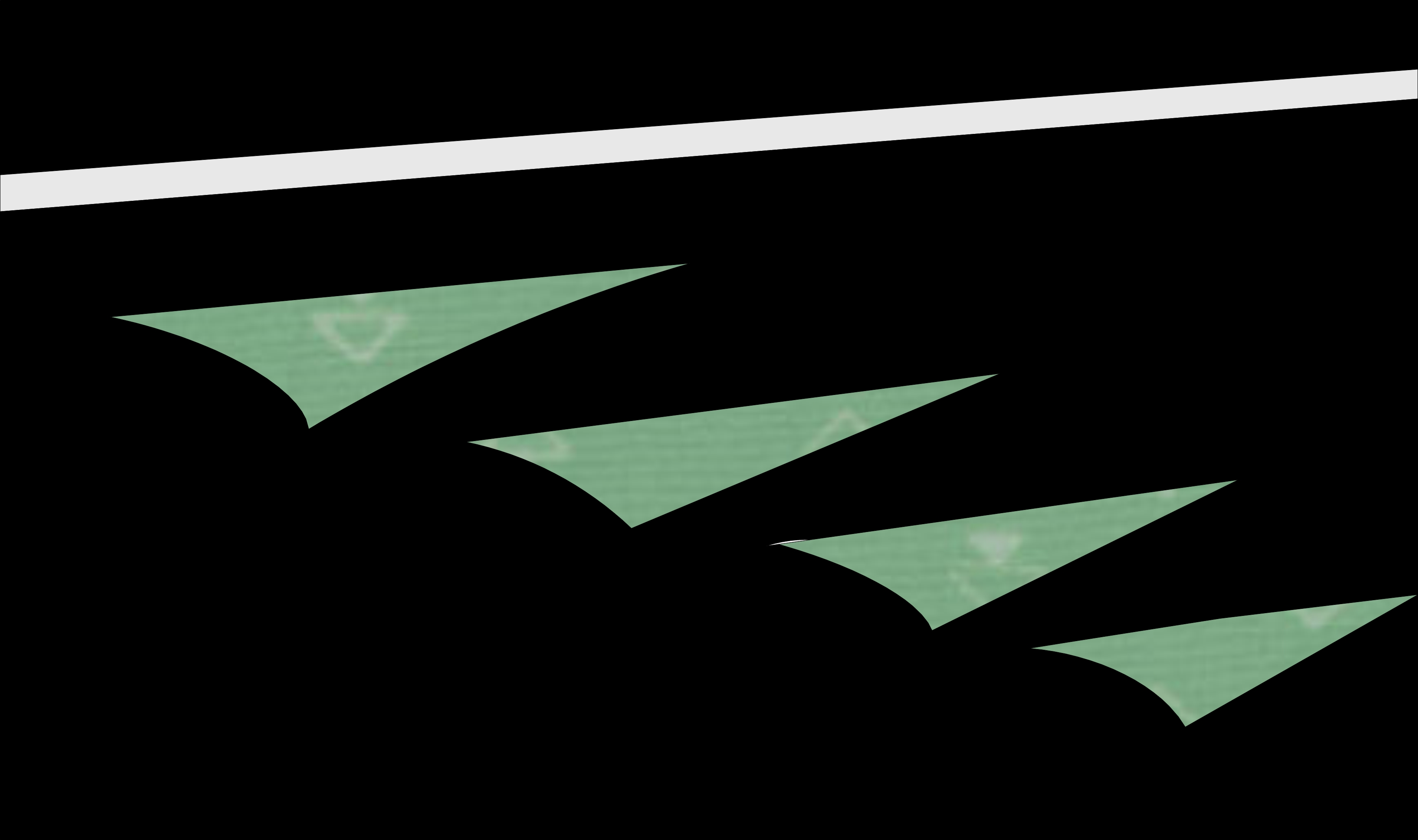
Then I traced, reversed, and fused the green shapes onto the quilted top. Still channeling Sue Bleiweiss, I topstitched these shapes

I tried out a number of different ways to mark the vanes, since they add interest to the original shapes.

I decided on hand stitching with dark green perle cotton.

.I used Terriy Aske’s method for facing the quilt. Tutorial here.

And it’s complete!

Quilt name: Phaeton

Finished size: 16″ x 29″

Designed and made by me, based on a car (Phaeton is the brand) seen at the Auburn Cord Deusenberg Automobile Museum

UFO Progress

Creativity is allowing yourself to make mistakes. Art is knowing which ones to keep.        –Scott Adams

I got a number of fun suggestions regarding my UFOs, and I’ve actually started work on them. Here’s what I’ve done with three of them so far..

#2 Leaf pounding from long ago.

One reader suggested that this would make a good potholder because stains would just look like the forest! I loved that suggestion, but the batting is poly, so I ruled it out. Eventually I decided this had been used to practice free motion quilting and thus had served its purpose. It went into the scrap bag that goes to folks who make dog beds stuffed with scraps. These are donated to a local shelter.

#3 Feedsack cloth.

The weave is too loose to be good quilt fabric, so I made two dishtowels. Bet that was the fate of a lot of feed sacks back in the day!

#5 Mola blocks

These are kind of a motley crew when seen together, so I won’t be using them all in one project. Laura suggested putting the 3 purple ones together in a table runner, and I’m thinking about that.

Meanwhile, I looked back at a pretty handmade purse I bought at the same booth…

Purse made by Hmong crafters

…but that was a lot of work for somebody and I’m not making one of those.

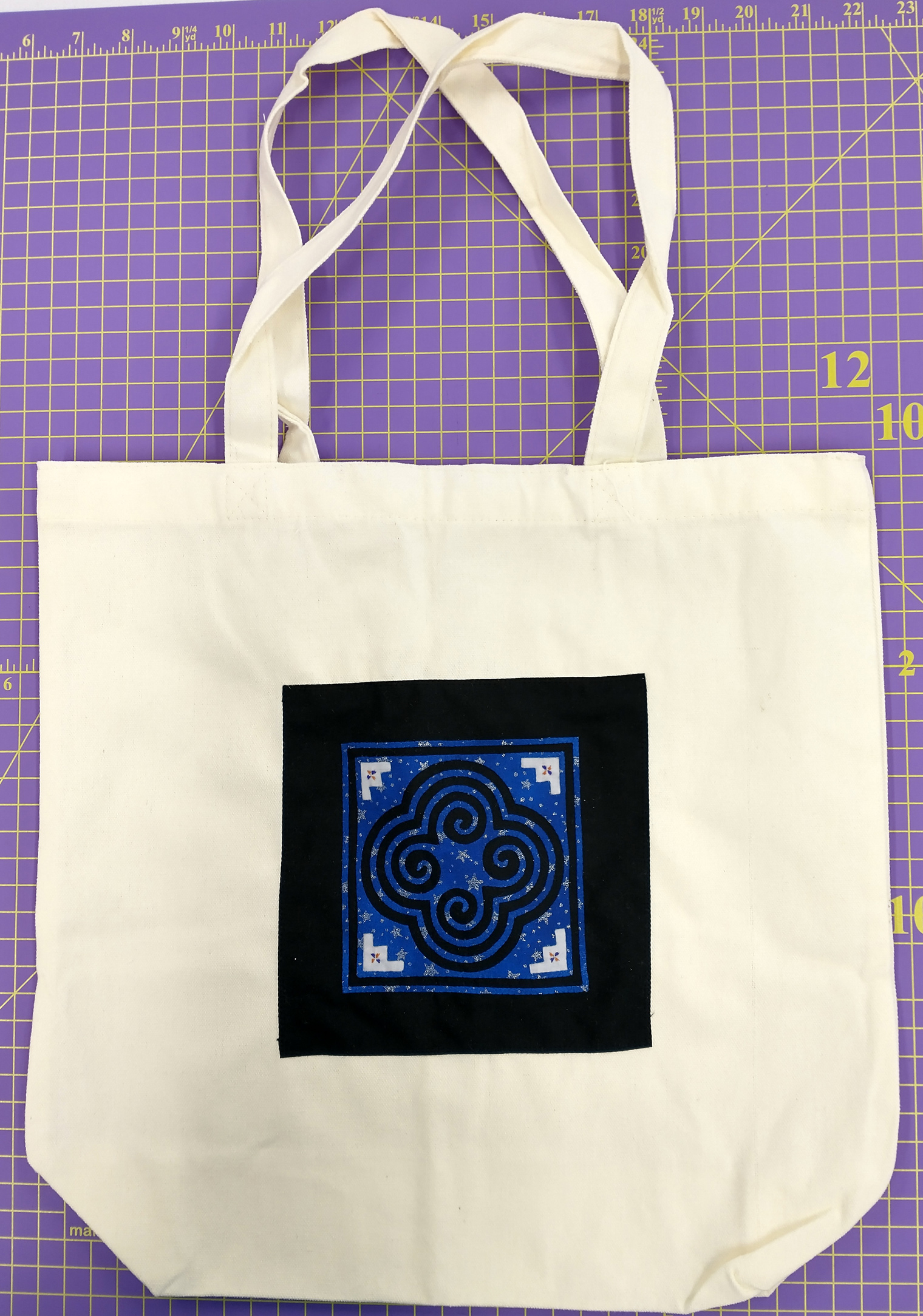
So for starters I pulled out one of the pre-made canvas bags I sometimes use to make gifts out of orphan blocks and made a decorated bag with the blue block.

To be continued!


Why I Make A Test Block

A fair number of the “orphan blocks” in my (large) collection were made to try out a pattern before cutting the whole thing. I’ve learned (the hard way) to do that for several reasons:

  • Some blocks may turn out to be not as much fun as they look like, and I’m doing this for FUN
  • Sadly, some patterns come with inadequate or inaccurate directions
  • When I make a test block (or two), I haven’t wasted much time or fabric if either of the above problems results in a decision not to make the quilt
  • I once cut out an entire version of Storm at Sea only to find that the cutting directions were wrong. Oops.

And for those who don’t know the Storm at Sea quilt, here is my successful version, made at a later date using Deb Tucker’s tools.

Love at Sea was made in 2019 using Deb Tucker’s tools.

Here’s the pattern I tried out most recently.

I love Zen Chic designs and liked the look of the curves in this one. I made a couple of practice blocks out of scraps. The directions were excellent and the curves were easy to piece.

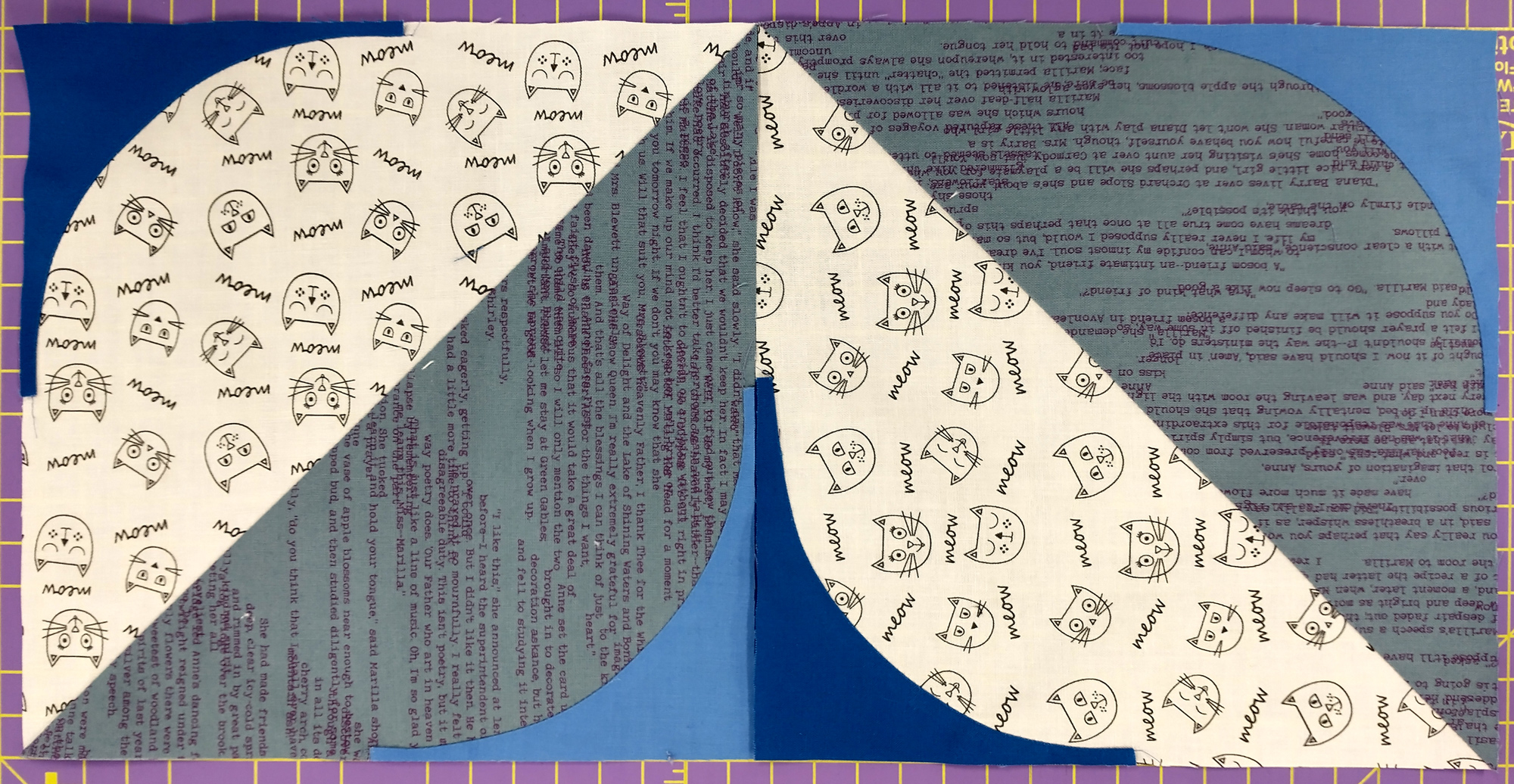
My practice blocks turned out well

In looking at my practice blocks, I noticed two things:

  • Although the blocks are fair size, there WILL be 8 points coming together at each intersection
  • There are clever little hourglass shapes at the intersection of the blocks, and THOSE have tiny curved points that must match for the quilt to look good. I hadn’t noticed that until I made the test blocks!

    Eek! Look at that lovely hourglass shape with curved sides!

I’m not about to sew something that requires that much precision for 64 blocks! So I have two more blocks for the orphan collection.

That’s why I make practice blocks, and possibly why I have a big orphan block collection 😀